🎙 Secured Podcast
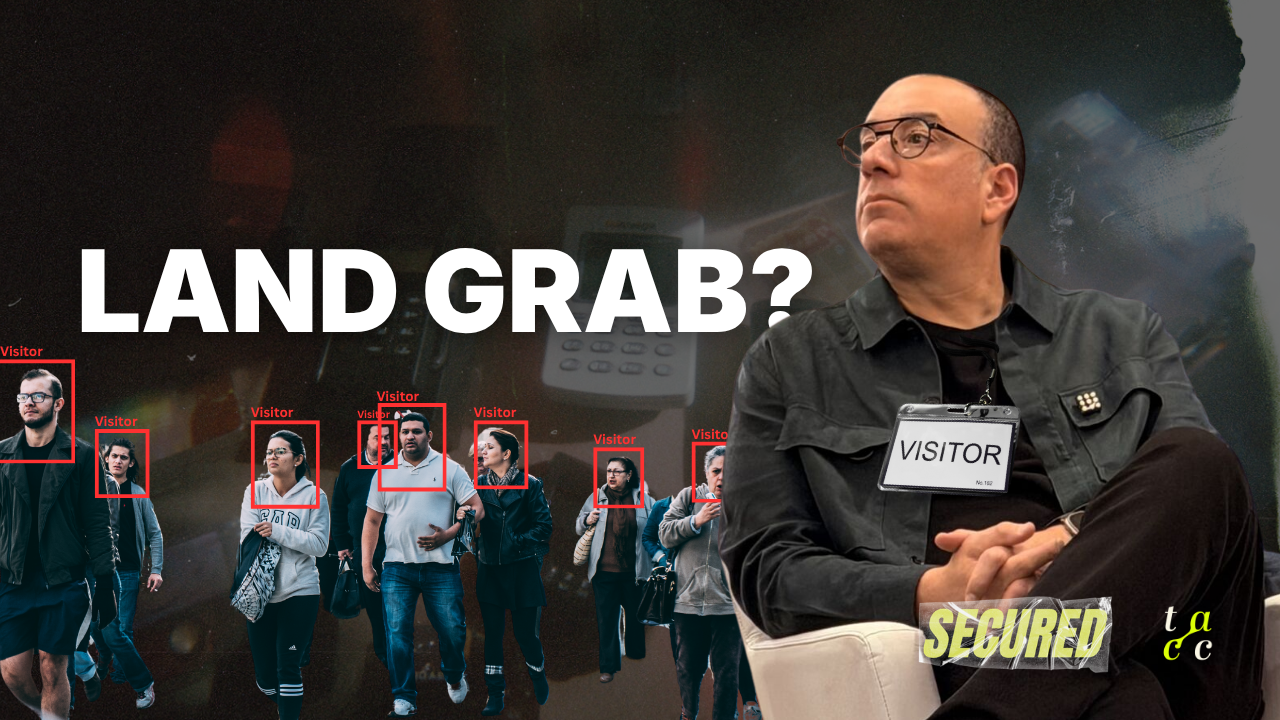
Episode 34 | Visitor Management Isn't a Product Category. It's the Land Grab.
Is “visitor management” really its own category, or have we been calling access control something else? Lee digs into where the line gets blurry, from compliance and contractors to hospitality and even robots, and shares why he thinks the industry may have lost its right to win in some areas. Listen here.
🫣 Premium member-only content
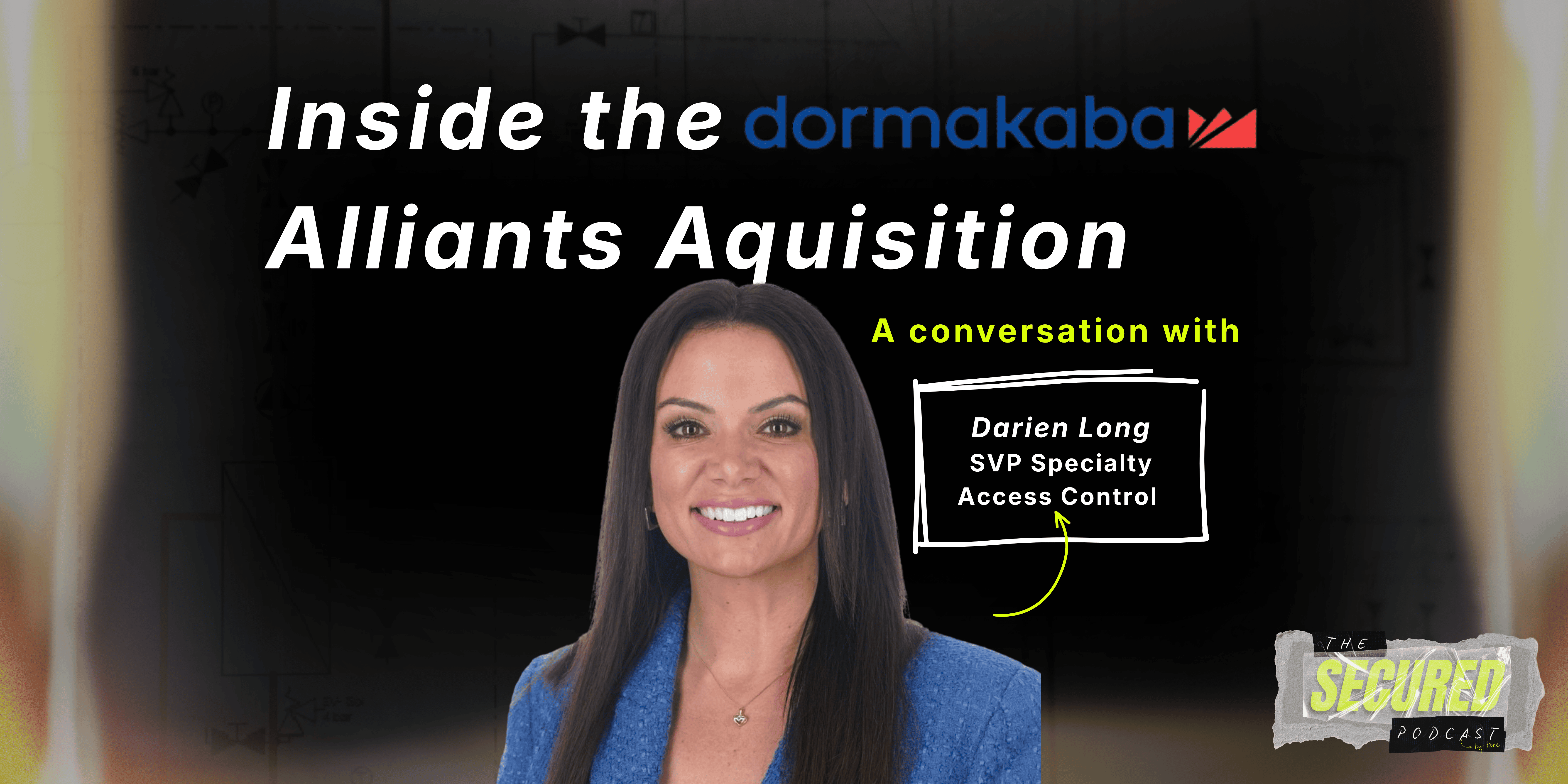
Inside dormakabas Alliants Aquisition with Darien Long, SVP Specialty Access Control
The door is becoming one part of a much bigger hospitality experience. Lee sits down with Darien Long of dormakaba to unpack the Alliants acquisition, the “power of choice,” and where Agentic AI fits into the future of hospitality.
📰 The Access Control Executive Brief 156
Tony Dong | Why Access Control Executives Need to Think Like Macro Investors: Part 1
Access control executives can’t afford to look at the industry in a vacuum. In Part 1, we look at the bigger macroeconomic picture, including foreign currency risk and what it means for a global company like ASSA ABLOY.
✍🏻 Articles
Ellie Portugali | Access Control Security: Why One Captured Device Shouldn't Burn the Whole Fleet
What happens when one connected security device is compromised? This piece looks at blast radius, device keys, issuer authority, and the uncomfortable reality of offline access, arguing that security has to account for what happens after something breaks, not just how we protect it before it does.
Brooke Erickson | Part Two: Designing for Orchestration
Orchestration cannot stop with the technology. Part Two looks at how organizations can design goals, structures, and leadership expectations around the work that actually happens across functions, and why shared accountability may be the missing piece.
Teresa Wu | The Credential Revolution Panel at LEGIC connect26
There is a lot of talk about interoperability. But what does it actually take to make it work in the real world? Teresa moderated “The Credential Revolution” at LEGIC connect26 to dig into that question, and the conversation got into some of the friction the industry still needs to solve.
Brett Keller | The Seconds After the Alert: Where AI Ends and Human Judgement Begins.
AI has changed what security systems can detect. But detection is only the first step. The real challenge is what happens after the alert. Verification, context, human judgment, and a clear response strategy are what turn a detection into meaningful action.
🚨 Breaking News
- Rhombus launches a POE single-door controller
- EliseAI just raised again from Andreessen Horowitz and Bessemer Venture Partners, roughly 13 months after a $250M Series E at a $2.2B valuation.
Secured: Episode 34
This week on Secured, Lee looks at Rhombus’ new single-door controller, EliseAI’s continued growth in multifamily, and three stories from The Secured Brief covering macroeconomics, AI alerts, and the future of credentials. He also challenges the way the industry thinks about visitor management, asking whether it is really its own category or simply another way people interact with access control and identity. Then, ahead of ACS26 in New Zealand, Lee shares the story behind how a cold email eventually led to the event and what makes New Zealand’s security industry so unique. He closes with a look at this year’s theme, Our Mainstream Moment, and why he believes the industry is entering a much bigger chapter. Listen here.
Don’t miss the latest premium member content in the community
In this conversation, Lee sits down with Darien Long, SVP of Specialty Access Control at dormakaba, to talk about the company’s acquisition of Alliants and what it says about the broader shift happening across the hospitality ecosystem. They get into why dormakaba chose to acquire rather than build or simply partner, the “power of choice” for customers, and how access control, identity, mobile credentials, digital check-in, payments, and software are increasingly connected. The conversation also explores where Agentic AI actually fits into hospitality and how it could take transactional work off hotel teams so they can focus more on the guest experience.
This is a two-part series looking at why access control executives need to think beyond the industry itself and pay attention to the bigger macroeconomic picture. In Part 1, we look at bottom-up vs. top-down investing, how currencies and credit conditions can affect the industry, and ASSA ABLOY’s exposure to foreign currency risk. In Part 2, we shift to interest rates, bond yields, and debt, looking at Allegion’s debt structure and what a higher-rate environment could mean for refinancing, acquisitions, buybacks, and dividends.
For those unfamiliar with investment styles, there are broadly two ways professional investors try to beat a benchmark like the S&P 500. One is bottom-up analysis, where the focus starts with the individual company. The other is top-down analysis, where the starting point is the macroeconomic environment.
Bottom-up analysis is probably the more familiar of the two. This is where analysts dig into the idiosyncrasies of a specific company: revenue growth, margins, free cash flow, competitive moat, management quality, debt structure, and valuation. You see this in price targets, detailed discounted cash flow models, and sum-of-the-parts analysis.
Top-down analysis works in the opposite direction. Instead of starting with the company, you start with the broader environment: interest rates, inflation, currencies, credit conditions, fiscal policy, commodity prices, and business cycles. Investors like Ray Dalio are closely associated with this kind of thinking, particularly the idea that economies move through repeatable debt, credit, and liquidity cycles.
In reality, this is not an either-or decision. Bottom-up and top-down analysis sit on a continuum, and most serious investors use both. A company can look attractive on its own numbers, but if rates rise, credit tightens, or currency moves start cutting into earnings, the bottom-up model can change quickly.
I think this matters for access control executives because the industry can sometimes be insular. It is just the reality of any specialized community. When you spend your career around integrators, manufacturers, dealers, distributors, credentials, doors, panels, locks, and software platforms, it is easy to treat access control as its own silo. But access control is merely one slice of the broader industrial economy, and industrial businesses are highly sensitive to the macro cycle.
What happens in Washington through the Treasury, Federal Reserve, or Congress can affect borrowing costs, construction activity, acquisition financing, and customer budgets Because this is also a global industry, currency movements matter too. A company that sells in dollars, euros, Swedish kronor, pounds, etc. can see reported results move for reasons that have nothing to do with product execution.
That is what today’s two-part brief is about. We’re going to walk through a duo of beginner-friendly examples of where macro analysis can help you as an access control executive. The first is ASSA ABLOY and foreign currency risk, especially given the recent U.S. dollar volatility. The second is Allegion and debt management, specifically whether higher bond yields and rising interest rates could affect its ability to borrow and fund acquisitions, buybacks, and dividends.
Both companies are global and acquisition-heavy, operating in a sector where capital allocation is critical for scale. Currency moves, rates, and yields can act as either headwinds or tailwinds, depending on how each company is structured. The executive value-add is not pretending you can forecast every macro variable. It comes from understanding the transmission mechanism: how currency and credit conditions flow through the business, and how that should affect your view of valuation and risk.
Understanding the Foreign Exchange Environment
Before looking at any specific company, the first thing to understand is that lookback periods can heavily influence your FX analysis. A quarterly view may matter for executives because that is how most companies report results, but a one-year view can give better context for whether a currency move is just noise or part of a larger trend.
For example, the U.S. dollar has recently strengthened, with the WSJ Dollar Index up 1.62% over the past year, but some broader measures have also shown meaningful dollar weakness since the start of 2025, depending on the index and starting point used. That is why I like looking at multiple periods instead of anchoring to one chart. The basic mechanic is straightforward once you get this figured out:
If the U.S. dollar appreciates, U.S.-based exporters can become less competitive abroad because their goods and services become more expensive in local-currency terms. Foreign revenue also translates back into fewer U.S. dollars. If the U.S. dollar depreciates, the reverse happens: foreign sales translate into more dollars, and U.S.-made exports can look cheaper to overseas buyers. The same logic applies to non-U.S. companies in reverse, depending on their reporting currency and cost base.
Right now, the major global FX pairs are being pulled by rates, inflation, energy prices, and geopolitics. The euro, for example, has recently come under pressure, falling from nearly $1.20 in August to just below $1.14, while the dollar has been supported by higher U.S. rate expectations and safe-haven demand according to Reuters.
For global access control companies, revenue, costs, acquisitions, and debt can all sit in different currencies. FX may not change whether a product is good, but it can absolutely change how profitable that product looks once results are translated back into the reporting currency.
ASSA ABLOY’s Currency Risk Is a Tolerable Problem
On paper, 2025 for ASSA ABLOY looked fairly modest: sales increased only 1% to SEK 152.4 billion. But that headline figure hides what was actually happening underneath. The company had 5% acquired growth and 3% organic growth, which is solid for a mature global industrial. The reason reported sales barely moved was currency. Foreign exchange reduced reported growth by about 7%.
ASSA ABLOY reports in Swedish kronor, but it sells across the world. A lot of its earnings are generated in currencies like the U.S. dollar and euro. When those earnings are translated back into SEK, exchange rates can either inflate or suppress the reported numbers. In 2025, they suppressed them. That is called translation exposure, and ASSA ABLOY generally does not hedge it. So, if the dollar or euro move against the krona, the effect flows directly into reported results.
There is also transaction exposure, which is more operational. That happens when the company manufactures or sources products in one currency but sells them in another. For example, if components are sourced in euros but the finished product is sold in dollars, a currency move can affect the actual economics of the sale, not just the accounting translation. ASSA ABLOY says this kind of exposure is likely to grow over time as production and sourcing become more global and optimized.
You can see the impact in earnings. Reported EPS fell 6% to SEK 13.23, weighed down by negative currency effects. But excluding those comparability items, EPS actually increased 2% to SEK 14.34. The underlying business was still progressing, but currency made the reported result look worse. If you want a more detailed analysis, check out S&P Global’s April rating.
ASSA ABLOY also has subsidiaries around the world. When exchange rates move, the value of those foreign assets and liabilities changes once translated back into SEK. That can affect equity, net debt, and the debt-to-equity ratio. Depending on where the debt and assets sit, leverage ratios can move for reasons that have nothing to do with whether management borrowed more money or repaid debt.
In 2025, currency effects actually helped reduce net debt because ASSA ABLOY’s debt is mainly denominated in USD, EUR, and SEK. If the exchange rates move favorably, reported net debt can fall even without a big operational change. If they move the other way, reported leverage can rise.
One wrinkle here is that ASSA ABLOY does not appear to manage currency risk the same way Allegion does. Allegion has historically used tools like foreign currency forwards and cross-currency swap contracts. ASSA ABLOY, by contrast, seems more selective. It acknowledges the exposure, but its 2025 report suggests it hedges only a limited portion of current currency flows and handles hedge accounting more case by case under internal treasury guidelines.
At first glance, you might ask: why not hedge more? If currency knocked 7% off reported sales growth, why not just neutralize that? The answer likely comes down to how ASSA ABLOY is built: it is extremely decentralized. This is not a single operating company with one clean production base, one main export currency, and one neatly defined exposure.
Instead, ASSA ABLOY is a global serial acquirer with local businesses, local management teams, local costs, local revenues, and local balance sheets. In that structure, a lot of FX risk is naturally offset inside the operating footprint. If a subsidiary earns revenue in euros and also pays workers, suppliers, leases, and taxes in euros, hedging back to Swedish kronor may just increase accounting complexity.
There is also a culture aspect. ASSA ABLOY is more of a capital allocator and serial acquirer than a tightly centralized operator. Its model is to buy good local or regional businesses, plug them into the broader group, and let them continue operating with a fair amount of autonomy. In that kind of structure, trying to centrally hedge every currency exposure can become expensive, imprecise, and administratively heavy. You end up managing the hedge book instead of managing the business.
The key distinction is between economic exposure and accounting exposure. Translation exposure can make reported Swedish-krona sales, EPS, equity, and net debt move around. But if the underlying local businesses remain healthy, that does not necessarily mean the economics (free cash flow) deteriorated. Transaction exposure is more serious because it affects real margins when costs and revenues are in different currencies. That is the part management should care about more.
So, I would not automatically criticize ASSA ABLOY for hedging less aggressively than Allegion. It may be rational given the structure of the company. A more centralized company can hedge more cleanly, while a decentralized serial acquirer may be better off tolerating reported FX noise...
Stay tuned for Part 2, coming next week.
I read Mike Gillespie's breakdown of the Flock camera compromise last issue. Great piece on surveillance, data, and public trust.
It also left me with an engineering headache.
Because once someone physically holds a connected device, I want to know exactly where the bleeding stops.
The reporting didn't establish a fleet-wide compromise. But if you design connected security equipment, you'd better have an answer for the worst case: can capturing one edge device hand an attacker the keys to the kingdom?
We've seen this movie. In the 2013 Target breach, attackers reportedly walked in using credentials stolen from an HVAC contractor. (Because obviously the path to payment systems runs through the thermostat.)
Blast radius has to be designed, not discovered. Otherwise you're chasing a perimeter after the system's already breached.
For access control, that means looking past the firewall — interrogating the reach of every credential, device key, and issuing authority.
We've been reading about Aliro 1.0, and it keeps dragging me back to three questions: What makes an issuer trustworthy? What evidence should buyers demand? And whose neck is on the line to deliver it?
My starting point is containment. If one device is captured, prove the others are safe. If an issuer is compromised, show me which doors it can open — and how fast that authority dies.
Individual device keys. A shared fleet secret is a synchronized self-destruct button. Individual keys isolate compromised hardware — if the backend actually limits what each device can do.
Separate verification from issuance. In signature-based designs, a reader only needs the public key. Capturing a reader shouldn't turn it into a credential factory.
Scope the issuer. Separate signing authority by customer or site. Useless if every reader trusts every issuer blindly.
Yes, this takes more work. And sure, everyone loves buying expensive solutions to lock up their keys. But an "unstealable" key is useless if the system blindly approves a bad request to use it. Protecting the key is the easy part. Shouldn't we protect its usage too?
The offline door is where marketing promises go to die. "Revoked" is a comforting button to click in an admin portal. But a disconnected lock in a basement doesn't magically know that Dave from accounting just got fired.
Unless someone physically walks an update to that door, Dave's badge still works.
Short-lived credentials limit the bleeding. On-device checks stop replay attacks. But neither of those mechanisms actually taps the lock on the shoulder to say Dave is gone.
Someone has to own the whole answer.
Issuer, manufacturer, integrator, enterprise — each owns a piece. But the customer needs one named owner, or every vendor just passes the buck.
Working on offline access taught me one thing: assume it breaks.
A trustworthy issuer proves what their authority can reach, how misuse is detected, and how that authority dies.
That's the conversation I have with teams before it's their device that goes dark and never comes back.
In Part One, I made the case that orchestration cannot stop with the technology. If the outcomes we want depend on people, information and expertise moving across an organization, then we also have to look at how the organization is designed to support that work. Goal setting gives us one practical place to start.
Most organizations set goals vertically. Enterprise priorities move into functions, then teams and individual accountability. But when you look at how the work required to achieve those goals actually gets done, much of it moves horizontally. It passes between functions, teams and people with different priorities, information and capacity. We account for the vertical structure more than we account for the work happening across it.
Shared or cross-functional goals are not a new idea, but I think they become even more important when we look at our organizations through the lens of orchestration. Imagine two functions sharing an outcome where neither can call itself successful unless the other succeeds too. Instead of separate metrics that eventually roll into the same enterprise priority, both have responsibility for the shared outcome and the work between their individual areas of ownership. The same approach could create shared accountability across several teams when the outcome depends on all of them.
Shared accountability also asks leaders to pay attention to what is happening outside their own function:
-
How is information moving between the people responsible for the outcome?
-
Where does a decision made by one team create more work or friction for another?
-
What does another function need from mine that I may not see if I am only looking at my own goals?
A team can hit its numbers, and a leader can deliver exactly what was expected of them while the work between functions is still breaking down. Orchestration requires leaders to see more of that work and understand how the decisions made in one part of the organization affect another.
That brings us to the people navigating it. Structures and shared goals can support orchestration, but people still have to do the work. What might an orchestrator already look like in your organization today? There is no single profile. It could be the senior leader who notices two functions are solving different versions of the same problem. It could be the person who asks one more question because a decision still does not make sense, or the leader who recognizes when expertise from another part of the organization is needed before a decision is made.
Organizational research has studied versions of these behaviors for years through areas such as boundary spanning, employee voice and team reflexivity:
-
Boundary spanning examines how people and teams reach beyond their immediate areas to exchange information, coordinate and build relationships across boundaries.
-
Employee voice looks at how people raise ideas, concerns and useful challenges within an organization.
-
Team reflexivity looks at how teams examine their objectives, strategies and ways of working, then adjust based on what they learn.
These are different areas of research, but they help us recognize some of the behaviors orchestration requires. People reach beyond their immediate area, bring information into the conversation, question assumptions and help different parts of the organization understand the work together.
Some roles are explicitly designed to work across an organization, but orchestration is not confined to a title. These behaviors can show up in different functions and at different levels. That leaves us with questions about whether we recognize people doing this, whether we develop those capabilities and whether people have enough room in their roles to use them.
It also changes how I think about the skills we expect people to bring to this work, many of which still get grouped together as “soft skills.” Communication, influence, curiosity and relationship-building shape whether people can work across functions. Unfortunately, I have seen these capabilities become some of the first things we sacrifice when pressure increases. If we expect people to orchestrate across connected environments, we need to think differently about how we develop, value and incentivize the skills that allow them to do it.
That is why orchestration cannot stop at technology. Better connected systems raise the expectation that we can see more, understand more and coordinate action faster. The organizational question is whether our leaders and operating models can do the same.
Are our goals, structures and leadership expectations being designed for the work our environment now demands?
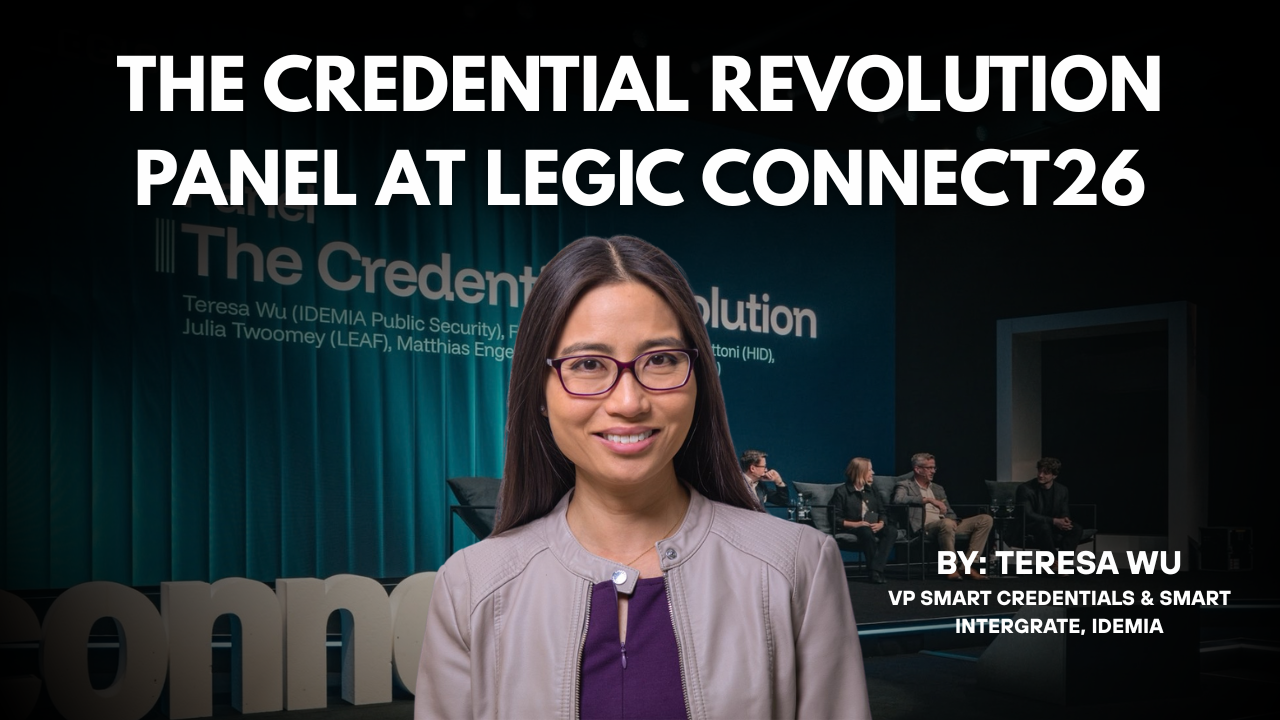
On 17 September 2026 at StageOne in Zurich, I moderated “The Credential Revolution” at LEGIC connect26. The panel brought together Gerald Grattoni from HID, Nelson Henry representing Aliro and the Connectivity Standards Alliance, Julia Twoomey from the LEAF Community, Matthias Engelke from NXP Semiconductors, and Felix Pütz from LEGIC.
During our preparation, I shared with the panelists that I was not looking for polite agreement. I wanted to surface where perspectives diverged, where friction remains, and what is still preventing the industry from moving faster. That was the spirit of the conversation.
It Starts with How It Feels
We started with a simple question: what should the credential revolution actually feel like to the person seeking access?
The answer was consistent: effortless, secure, and largely invisible. People do not want to think about protocols, key management, or the logo on the reader; they want access to work. Convenience is what users see, but trust is what the infrastructure must deliver.
Standards Are Complementary, But Friction Remains
Aliro, the Connectivity Standards Alliance specification for mobile credentials and reader communication, and LEAF, which supports interoperable physical credentials, address complementary layers. Aliro defines how phones and wallets interact with readers; LEAF helps credentials operate across certified devices.
At the same time, the panel was candid about the friction that remains. Mixing vendors can still complicate certificate and key management, reader firmware, backend integration, and migration. Felix had made an important point during our preparation: credential evolution is not primarily about introducing another form factor. It is about raising security while making diverse technologies easier to deploy, manage, and evolve.
Technology Choices in the Real World
We also considered in-app credentials, mobile wallets, NFC, Bluetooth Low Energy, and Ultra-Wideband. NFC is proven, while UWB enables compelling hands-free experiences. For most enterprises, however, the question is which combination can scale across mixed reader environments without requiring wholesale infrastructure replacement.
Standards may be global, but deployment is always local. Security still has to hold up during offline operation and account for revocation, certification, regional requirements, and commercial realities.
The Question the Audience Helped Choose
Midway through the session, I let the audience choose a question the panelists had not seen:
“If you could remove one structural or commercial obstacle tomorrow that would most accelerate true multi-vendor interoperability, what would it be?”
The answers exposed connected barriers: proprietary systems, vendor lock-in, uneven customer understanding of security, and the absence of a modern open option at every layer. Standards can expand rather than constrain business, but interoperability will scale only when open foundations are supported by credible migration paths, informed customers, and business models that reward choice.
Looking Toward 2030
Looking toward 2030, the panel outlined a practical agenda for the next 18 months: bring identity stakeholders together, define a shared vision, preserve choice across credentials and connectivity technologies, and create migration paths that reduce complexity and total cost of ownership. Standards bodies must listen to implementers, while providers define the secure platforms that long development cycles require.
Customers cannot replace complex installed infrastructure overnight. The industry therefore needs open but governed architectures, harmonized provisioning, and staged migration paths that improve security while preparing for post-quantum cryptography and other emerging requirements.
What I Took Away — and What Partners Should Too
Three signals stood out to me—and they matter to every partner trying to turn this vision into something deployable.
First, security remains foundational, but strong cryptography alone is not enough. Trust also depends on provisioning, lifecycle support, revocation, and scalability. New credentials must raise that entire security baseline while making the experience feel effortless to the user.
Second, technical compliance alone does not create interoperability. Standards need clear boundaries, and solutions must account for provisioning, upgrades, failures, version changes, end-of-life transitions, and vendor migration. The practical test is simple: can one component be replaced without breaking the wider solution?
Third, physical access and broader identity are converging around one governable identity—not one dominant form factor. Cards, wallets, and in-app credentials will coexist across NFC, Bluetooth Low Energy, and UWB. Organizations that keep physical and logical access in permanent silos will struggle to govern that choice consistently.
The panel did not pretend the hard problems were solved, but key industry players discussed them openly before the partners who must implement the answers.
The credential revolution will advance through practical choices about security, governance, migration, and user experience—not through a single technology. Progress depends on credentials that work across form factors, standards that create meaningful customer choice, and migration paths that support trusted access for people, devices, robots, and digital agents.
I left the stage encouraged. By bringing a little spice into the exchange, we moved beyond polite consensus and closer to the questions the industry still needs to answer.
Artificial intelligence has changed what security systems are capable of detecting. Cameras and analytics can identify people, vehicles, movement, perimeter crossings, and other events within seconds, helping bring potentially important activity to a user’s attention faster than ever before.
That progress is significant, but detection is only one part of the security process. An alert still leaves an important question unanswered: What happens next?
From my experience working throughout the security industry, I believe some of the most important conversations around AI are moving beyond detection itself. As analytics become more capable, the focus increasingly turns to what happens in the seconds between an AI-generated alert and an actual response. That space between detection and action is where technology, human verification, and a clear response strategy have to work together.
Detection Is Only the Beginning
AI-driven analytics can process large amounts of video continuously and identify events that match specific criteria. Instead of requiring someone to constantly monitor every camera, the system can direct attention toward activity that may actually matter.
But identifying an event and understanding its context are not always the same thing.
Consider a person entering a commercial property late at night. An AI-enabled system may correctly recognize that someone has entered a restricted area, but it may not explain why. It could be an employee working late, a cleaning contractor, someone who entered the wrong area, or a situation that genuinely requires intervention.
The technology has identified the event. The next challenge is determining what it means and what should happen because of it.
The Seconds Between Alert and Response
This is where human verification can become an important part of the process. Once an alert is generated, someone may need to determine whether the activity is legitimate, whether intervention is necessary, and how the event should be escalated.
I don’t view AI and human monitoring as competing approaches. Their strengths can be complementary. AI can continuously analyze information, recognize defined events, and bring relevant activity forward. A trained person can add context and judgment before deciding what should happen next.
When those pieces work together, an alert becomes more than a notification. It becomes actionable information.
Designing the Response, Not Just the Detection
For dealers and integrators, this creates an opportunity to expand the conversation with customers.
Much of the discussion around video security has focused on what a camera can see, record, or detect. Those questions remain important, but another deserves just as much attention: What does the customer want to happen when something is detected?
One customer may want a notification sent to a phone. Another may want an event reviewed before anyone is contacted. Some environments may benefit from remote intervention, while certain situations may require escalation according to an established procedure.
Understanding those expectations before deployment can be just as important as selecting the technology itself. A strong security solution should not only recognize an event; it should support a response appropriate for the customer, environment, and level of risk.
The Human Element Still Matters
There is a great deal of discussion about what artificial intelligence may eventually replace. In security, I think it is equally valuable to ask what AI can help people do better.
AI can reduce irrelevant information requiring human attention, identify defined events quickly, and help operators focus on situations that deserve a closer look. Human judgment provides something different: context. Security situations involve people and circumstances that do not always fit neatly into predefined categories, and two visually similar events may require completely different responses.
The future may not be about choosing between artificial intelligence and people. It may be about building systems in which each handles the part of the process it is best equipped to manage.
From Detection to Action
As AI, analytics, cloud services, and remote monitoring continue to develop, I believe our industry should look beyond detection accuracy alone. We should also consider how quickly an event can be verified, how much useful context is available, and whether the system ultimately helps produce the right response.
The ability to detect something is valuable. The ability to understand what was detected and act appropriately is what turns that technology into a security solution.
Those few seconds between an AI alert and an actual response may seem like a small part of the process, but as our systems become smarter and more automated, I believe those seconds will become increasingly important.
👀 As Seen In the Secured Community 👀
📰 Industry News & Insights
Jon Polly shared a roundup of the latest developments surrounding Flock Safety, including reports that the company is offering voluntary severance packages and is weighing a potential sale. The conversation raises questions around who in the ALPR and broader security market could potentially be interested in acquiring Flock, and whether its network and scale remain attractive amid the company’s recent challenges. Read more on the reported buyouts. Read more on the potential sale.
🗯️ Interesting Topics
Lee Odess shared that Sonny is back in the security industry with a new venture, Verdun AI.
Lee also highlighted EliseAI’s latest funding and growth in the multifamily market, noting the company’s traction in a space where many other platforms have struggled to gain momentum. Read more.
He also resurfaced the conversation around Apple’s continued push into the smart home, with reports of a new smart home hub featuring a display, personalized user recognition, and integration with Apple’s broader ecosystem. The move puts Apple into an increasingly crowded smart home market alongside Google and Amazon.
🤝 Deal Activity
Tony Dong shared his prediction that deal activity could slow as higher rates and bond yields create additional headwinds for LBOs and mergers of equals. He expects the deals that do move forward may increasingly involve stock or cash transactions.
💼 Jobs & Opportunities
Susan Rouser shared an opening at DOOR for a Growth leader. The role is focused on B2B growth strategy, navigating ambiguity, and driving measurable results. View the opportunity.
We are just a few days away from ACS26. The Access Control Summit, is heading to New Zealand in 2026 October 6 & 7th, hosted in collaboration with our city-host, Gallagher Security.
Registration is still open! Sign up here.
Speaking at the event? Go here.
On the fence? View some testimonials from previous years here.
🗣️ Your Voice Matters.
Share your feedback, suggest topics, and tell us what questions we should be answering. Help us shape future issues and contribute to the conversations that move the industry forward.
PS: I am sure some of you may forward this, but please do so sparingly and encourage others to sign up here: https://www.tacc.me/secured Thank you!