Volume 105 | June 20, 2025
Reminder: If you want to access the Members only audio version, please go to this link and use invite code sxst3gkbkn to sign up.
Welcome to Brief 105!
If not "open," then what?
"Then what?" is a fair question. I heard it repeatedly at ACS25, in a Slack thread, and again on LinkedIn, where I've been vocal about my take: calling your platform or product "open" is lazy and needs to stop. It shows a lack of effort and appreciation for the profession of marketing and branding to find brand language that you can own, is differentiated, and meaningful to customers.
We have better options available. We should be using them.
This is about telling your story in a way that resonates with customers. It's about language that reflects what you stand for and what makes you different. It's about owning your position.
And you can't own "open."
In access control and across the broader security-tech industry, the word "open" is overused. It's become generic. If you're trying to signal flexibility, transparency, choice, or interoperability, there are clearer ways to do it.
Ways that say something about who you are.
So, instead of complaining or tearing down those who are using it, I want to bring some solutions and build something up. Let's start answering the question: if not "open," then what do you say?
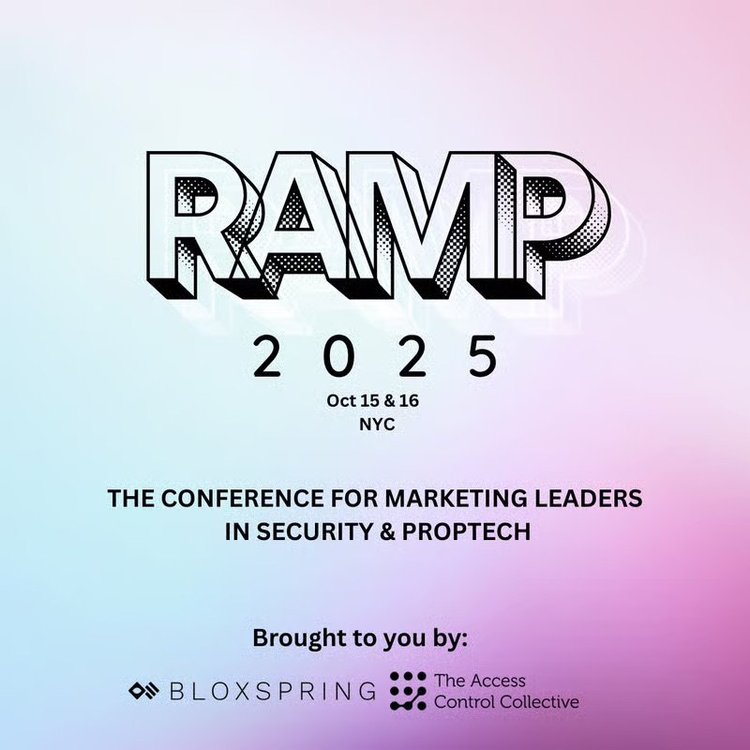
As you read this Brief, keep in mind if this kind of conversation resonates with you, we’ll be diving even deeper into these topics at RAMP, October 15–16 in NYC. Email us here if you want to join the waitlist.
Quick note before we dive into the Brief. I’m gearing up for a packed travel schedule to close out June and kick off July. Here’s where I’ll be:
-
Mexico City for Expo Seguridad and a SIA Start Ups in SecurityMeet Up– June 25
-
Istanbul and Ankara, Turkey with the team from Ones Technology and Any2Any– July 8–11
-
San Francisco/Bay Area for 10 meetings– July 14–18
-
Sydney and Melbourne, Australia with Inner Range, Wesco and LSC and then New Zealand with Gallagher Security – July 21–25
If you’ll be in any of those areas during those dates, I’d love to connect.
Let me know.
Alright, to the Brief.
PS: I am sure some of you may forward this, but please do so sparingly and encourage others to sign up here. Thank you!
If not "open," then what?
Let's start with a framework.
Frameworks give you structure. They help you define, communicate, and reinforce your brand consistently, especially when the market is noisy and full of commoditized claims, like open. There are a ton of them out there, but here's one you can use as a foundation.
When companies say "open," they're usually trying to communicate a few core values:
-
Interoperability, meaning their system plays well with others.
-
It's not closed or proprietary.
-
Transparency means the system is inspectable, understandable, and free of opaque or black-box components.
-
Accessibility and inclusivity, where users of many kinds can engage with and benefit from it.
-
Modularity allows the system to be extended or customized.
-
And most importantly, freedom. Customers want control. They want a choice. They want to adapt the technology to their needs, not the other way around.
If that's what you're trying to say, then find language that actually says it. Because "open" on its own doesn't mean much anymore. It doesn't carry emotional weight. It doesn't tell a story. And it certainly doesn't differentiate.
So what are the alternatives?
If your focus is on interoperability, look to terms that highlight compatibility and integration. Words like connected, compatible, interlinked, adaptive, composable, extensible, plug-and-play, or ecosystem-ready are more specific and meaningful.
If transparency is your goal, choose language that fosters trust and conveys clarity. That could be visible, transparent, traceable, inspectable, decoded, or clearline. These terms do more to show that your system is trustworthy and open in function, even if you don't say the word.
When your differentiator is flexibility, you want to emphasize adaptability, modularity, and configurability. Try words like flexible, dynamic, modular, reconfigurable, shapeable, unbound, or versatile.
If you're looking to communicate user freedom and empowerment, lean into autonomy. Use terms like empowering, unrestricted, decentralized, self-directed, or owner-first. These show that the customer has real control.
If your message is ecosystem-driven or rooted in inclusion, position yourself as a leader who is integrated and collaborative. Words like federated, collaborative, inclusive, bridge-building, platform-neutral, or invite-first can be much more effective than relying on the vague idea of "open."
But don't stop at one word.
The goal is to create a brand language cluster. Choose three (some will say five, but I'd recommend three) words that work together to define your voice. They'll give you consistency across marketing, sales, product, and recruiting, and more importantly, they'll help customers remember who you are.
Here's an example:
Composable. Transparent. Empowering.
That tells a story of a platform that adapts to the customer's needs, makes its workings clear, and gives the user control.
Here's another version with a bit more edge.
Unbound. Interlinked. Owner-first.
Now you're telling a story about breaking silos, connecting systems, and putting the customer in charge.
The test is in the usage. Swap out your "Our open [insert product]" copy with "Our composable [insert product]" or "Our interlinked system" and see how it sticks. Try it in customer meetings, on your website, or in the Member Slack (you'll find a community willing and able to help). Pay attention to what sticks.
Avoid the empty trend words like "Synergistic." Words like this might sound impressive (and ChatGPT will offer them), but if you can't explain it in real-world terms, it won't resonate. Instead, listen to your customers. In testimonials, in sales calls, in onboarding, how do they describe the benefits of what you've built? If they say "open," ask what they mean (more on that below).
That's where the good language lives.
Now, who's doing this well?
There are plenty of standout examples outside our industry. Brands that communicate openness without saying "open" at all.
Stripe uses language like "composable," "modular," and "programmable." They make backend infrastructure feel flexible and human.
Figma talks about multiplayer design and shared spaces. They build collaboration into their brand without resorting to obvious language.
Twilio focuses on outcomes: scalable, global, and instant. They emphasize what openness enables, not the concept itself.
Shopify talks about independence and customization. It's your store, your rules.
Notion describes its product as a connected workspace built from blocks. That's modularity in action.
The common thread? They all communicate values like interoperability, transparency, flexibility, and user empowerment, but they use language that's specific, memorable, and distinct.
Now, to "listen to your customer." Please do not confuse what I am saying. I often hear, "In our customer surveys, or when I am on sales calls, the customer says they want an open system." No doubt, but that is because they, too, are struggling with how to articulate what they need and want. It is your job to dig a bit deeper and understand what they are trying to solve.
Don't believe me?
There are several strong, well-known examples from the market where companies chose not to echo customer language literally and, as a result, created sharper, more resonant branding and, in some cases, legendary brands. These cases show how interpreting customer intent, rather than repeating their words, can lead to stronger positioning and lasting differentiation.
Take Apple, for example. When customers asked for computers that were "simple" or "user-friendly," Apple didn't just call its products easy to use. Instead, they launched the now-iconic "Think Different" campaign. That phrase didn't emerge from usability feedback; it came from understanding that Apple's customers saw themselves as creative outsiders, rebels, and visionaries. The brand message wasn't about ease of use. It was about identity, ambition, and worldview. By going beyond the literal ask, Apple elevated the conversation from product utility to emotional alignment.
Slack is another great example. When early users were looking for a "better chat tool" or an "email alternative," Slack could have positioned itself as just that: a replacement for internal email or clunky intranet messengers. Instead, Slack chose to brand itself around a bigger idea: "Where work happens." That message reframed Slack as more than a communications tool. It became the infrastructure for modern collaboration. They saw that customers described a feature, but what they really wanted was a transformation in how teams operated.
Again, look at Notion took a similarly strategic approach. Their early users requested a flexible, all-in-one workspace. Something that could replace documents, spreadsheets, and task management tools. Notion could have called itself a "flexible workspace" like everyone else. Instead, they invented a unique internal language: "Everything is a block." That simple phrase provided users with a new mental model and vocabulary. It explained the product while making it feel different and ownable. In doing so, Notion didn't just describe flexibility; it also demonstrated it. They embodied it in product structure and language.
Tesla is another case where branding diverged from what customers said they wanted. Early interest in electric vehicles centered on their environmental friendliness, sustainability, and eco-consciousness. If Tesla had followed that language, they might have sounded like a Prius competitor. Instead, Tesla focused on performance, autonomy, and speed. Tesla even introduced features like Ludicrous Mode. They branded around the idea that "electric doesn't have to mean compromise."The emotional pitch was freedom, not responsibility. Tesla sold desire, not duty.
Airbnb also made a pivotal branding move. Customers initially turned to Airbnb for practical reasons, such as cheaper lodging or more authentic experiences. The early value proposition could have centered on price or convenience. But Airbnb built its brand around something deeper: the idea of belonging. "Belong anywhere" became its rallying cry. It wasn't about the room or the cost, it was about the feeling of connection and inclusion, which resonated on a far more human level.
And Stripe, again. Developers praised its clean APIs and easy setup. It's better than clunky legacy processors. However, instead of calling itself a payment processor or focusing on the checkout flow, Stripe positioned itself as a "financial infrastructure for the internet." That's a category-defining statement. Stripe didn't brand around the task; it branded around the system it was enabling. The company continues to use phrases like "programmable money" and "composable primitives." Language that signals depth, possibility, and ownership of a larger mission.
What all of these companies have in common is that they listened to customers but didn't limit themselves to repeating customer language. They dug deeper into the insight behind the words, the emotional drivers, the unmet expectations, and the new identities and used that to craft sharper, more differentiated messaging. They didn't describe what customers said they wanted. They described what customers would feel if the product were delivered at its best.
Good branding is never just about parroting back feedback. It's about translation, not transcription. The brands that lead are the ones that take what customers say and reframe it into something bold, meaningful, and uniquely theirs.
In short, the best brands don't say, "We're open." They show it. And they do the work to say what they actually mean.
So, let's raise the bar.
We don't all have to agree on how fast the industry is changing or where it's going. But we should agree on this: we owe our customers and our brands better language than "open."
We can do better. We should do better. Let's do better.
Check out the latest jobs from:
-
Ambient.ai (Field Engineer)
-
Badgepass (Director of Channel Sales)
-
Gallagher Security (EVP of Americas Security)
-
HID (5 of them)
-
Kastle (9 of them)
-
Wavelynx (Marketing Manger)
Every quarter, I get the same question from executives across the globe: "How's everyone else feeling out there?"
Until now, we've all been operating on gut instinct and isolated conversations (and some fortune-telling). But the physical access control industry deserves better than educated guesses when making critical quarterly decisions.
That's exactly why we created something that didn't exist before exclusively for Members: the Quarterly Sentiment Report.
This isn't just another industry report. It's the unified pulse check our industry has been missing, built by leaders for leaders.
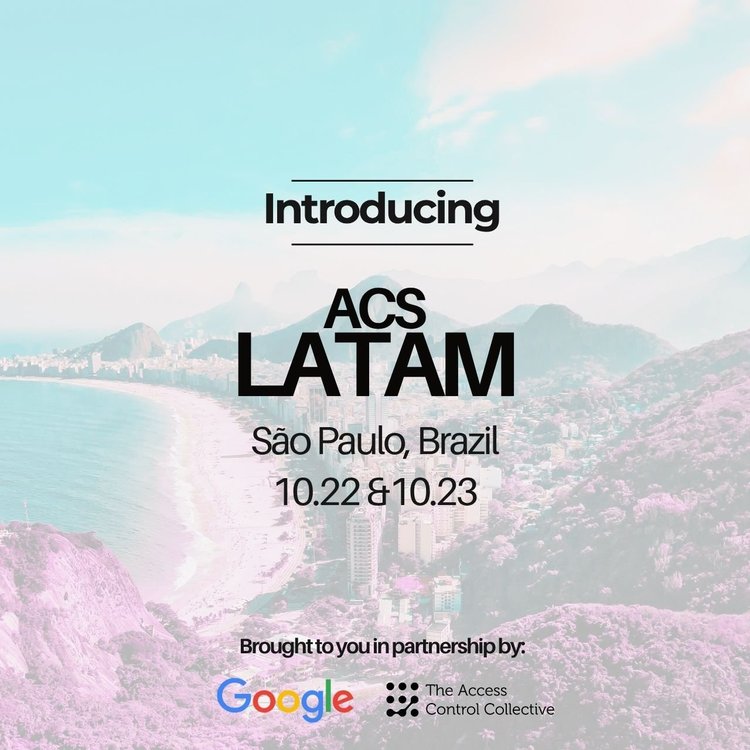
We're thrilled to announce that we're bringing the ACS format—with a twist—to the Latin American market in partnership with Google. We'll focus on the tremendous opportunities in Latin America, exploring digital transformation, managing change, and the impact of mobile credentials. The event will bring together 150 end users (both large and small), along with regional channel partners and ecosystem players. We'll host it at Google's spectacular facilities, delivering the high-quality experience you've come to expect from ACS Events. We're seeking one or two sponsors to join us. If you do business in LATAM and are interested, please reach out to me here.
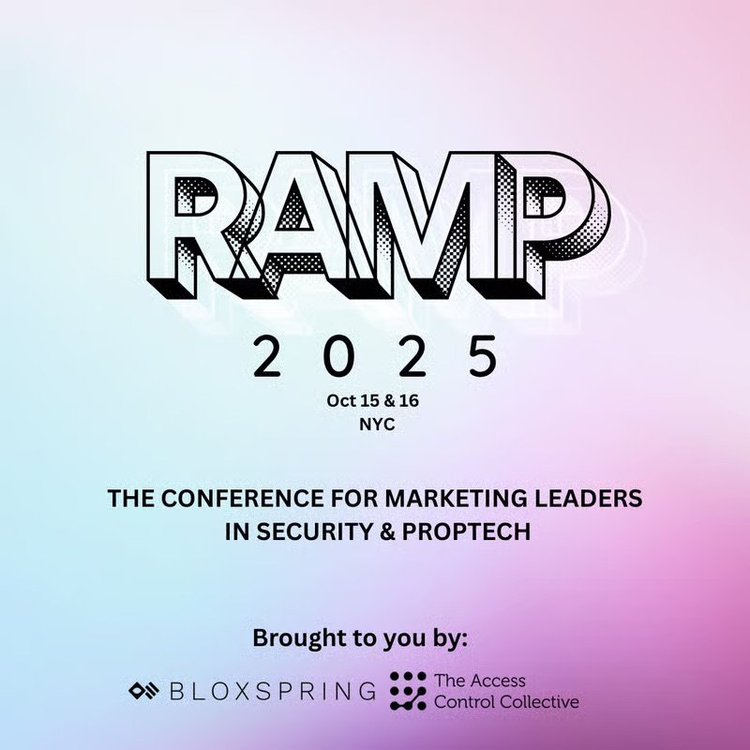
We're excited to announce our partnership with BLOXSPRING, a leading global PropTech PR firm based in the UK, to launch an innovative marketing and communications conference for our industry. This carefully curated event will bring together marketing professionals to sharpen their skills through keynotes, expert panels, interactive roundtables, and strategic networking opportunities. We've already secured participation from industry leaders, including LinkedIn, HubSpot, 6sense, and other major platforms, who will share cutting-edge strategies and insights. Our mission is simple: to foster collaboration, drive innovation, and elevate marketing standards across the PropTech landscape through world-class content and education. Stay tuned for more details on speakers, agenda, and registration! In the mean time, email us here if you want to join the waitlist.
