
Volume 122 | November 18, 2025


Click on the above image and use code sxst3gkbkn to hear the audio version.
Reminder to JOIN the The PhySec Collective community Slack channel to network, engage, and be part of something big! You can sign up here.
This is a story of both familiar and new storyline threads. It’s a story about a market with momentum.
I am on my flight home from The Security Event Asia, or TSE Asia for short, somewhere over the Pacific, and on my way through San Francisco to Washington, DC. I am feeling that familiar mix of end-of-year emotions I get come November/December: pride, exhaustion, gratitude, loneliness, and excitement. Late in the year, I usually start to feel “it.” And this year, I definitely feel “it.” The long flights. Hotel rooms. Nights away from my family. The constant motion. The intellectual engagement. The people. The food. The drinks. The sites. It all wears on you and fills you at the same time.
It is a strange dichotomy. I love traveling, meeting new people, seeing old friends in their home markets, learning from local cultures, and experiencing the business rhythms that are the “different here”, yet also strangely familiar. I also appreciate the history. I love discovering places that are brand new. I also feel the weight of being gone. Maybe I love the dichotomy itself. I am not sure. However, I do know that I really personally like it (my father worked the same way, so maybe it’s just as simple as that), and I also know that to build a global brand and an industry platform based on community, we must be out in the world. We must meet the market where it is and not just blogging from a basement in Pennsylvania behind a keyboard and using LinkedIn to make it appear to be something it’s not.
This is especially true for what we are building at The Access Control Collective (TACC for short). We are creating something different. A modern digital media company built on community, content, global engagement, with experts as personalities, and a blend of physical and digital experiences. Our early strategy, more like an idea, was thin. I admit it. But the execution has been and continues to be thick. Moving into 2026, the strategy is thick too. And the plan to execute it is even thicker.
Community will be at the center of everything. Partnerships will be the multiplier. If you want to engage, engage. Because we want to engage.
We will share more about 2026 soon. But first, Hilary and I are off to ISC East and then the Security Investor Conference. Before that, here is what happened at TSE Asia and why it matters. I cover the sessions and major threads throughout all of them, as well as conversations in the halls and over meals.
SE Asia has a real opportunity, and I believe this region tells an essential story about where our global industry is headed.
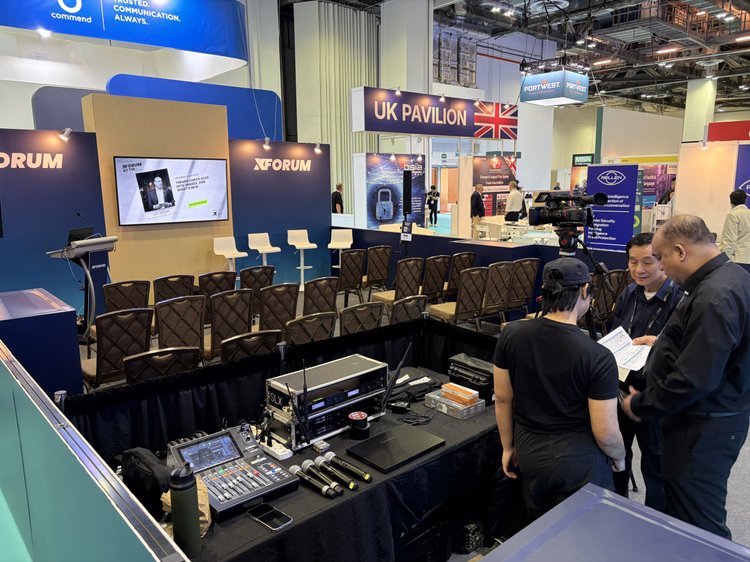
Across every panel and conversation at the XForum at The Security Event Asia, five themes consistently emerged as I took notes.
First, convergence; now it is no longer a prediction, but a reality. Physical and cyber, IT and OT, Identity and infrastructure had a sense of reality here, rather than a hypothetical, aspirational view. No doubt there are still plenty of examples where that’s not true, but every speaker shared examples of how the walls between disciplines have already fallen (and they were significant projects with repeatable results). I was also pleased to hear about the changes in procurement models and the need for more standards to evolve, maximizing their impact. However, the operational world is definitely blending, driven by convergence.
The platform era is here (more mature here than I thought). Platform was our “word of 2026,” and incapable hardware, customer demands, enterprise software, and lower barriers to entry are driving it. Hardware still matters, but the center of gravity has shifted to software, identity, and enterprise platforms. Capital is also seeking recurring revenue models, which are allowing many in the market to build and invest. APIs. Data. Automations. The platform race is fully underway, and it’s going to be even more so in 2026.
“Openness” or at least the willingness to be it is no longer optional. The call for open APIs and shared standards echoed through nearly every session. But it was different here. Geographic fragmentation is slowing adoption. Having more openness, APIs, and business models is allowing the market to capture these opportunities. I am also convinced that more open APIS would open up a new channel called local developers who want access to build many of the solutions our traditional industry will never create itself. It was interesting to hear how governments wish to achieve interoperability and are pursuing it. Openness or at least acting as if is becoming the new competitive advantage, but that window of opportunity will only be open for so long before it becomes an expectation.
Geography and politics are making resilience a mandate. Regular topics of discussion ranged from climate pressure, urbanization, natural disasters, and geopolitical tension, all of which are forcing a demand for resilient systems in data centers, utilities, telecom, and transportation, which is accelerating. But it wasn’t just a physical conversation. It included cyber, and it was refreshing.
SE Asia is becoming the world’s fast-forward button. There was a real feeling that SE Asia is the litmus test of global relevance. This feeling was built around urbanization, diversity, the appetite for integrated systems, and the willingness to pilot (try things). “If it works in SE Asia, it will likely work anywhere.” The region is a testing ground for scalable solutions.
Those were the key themes that ran through the 15+ panels and 40+ voices heard on stage.
Now I’ll get into what I picked up around what makes SE Asia unique.
I am going hammer on this one. Fragmentation as a feature. As I mentioned above, “If it works in SE Asia, it will likely work anywhere” attitude feels real (“feels” because there’s still work to be done for it to scale to real. But all the ingredients are there). The region’s diversity is often described as a challenge due to its varied regulations, capabilities, and maturity levels. Sounds daunting, but this fragmentation creates an ideal environment for localized innovation. And that localized innovation can scale globally.
Data sovereignty and cloud pragmatism. Was everywhere. There is a tension between cloud adoption and local data control, as it (irregardless of desire) will not be homogeneous across countries. This is an area of the world that will adopt global standards and deploy them with a localized twist around (see Singapore, Malaysia, and Thailand‘s Personal Data Protection Act/PDPA vs GDPR) hybrid deployments (on-site and cloud), ensuring data residency and flexible architectures. This model seems built for modern use cases and needs.
Speed is a competitive edge. I heard the term 'modular' used a lot. Modular data centers. Modular access control. The philosophy of design is to enable rapid deployments. The region moves quickly, and the belief is that it’s their advantage in the new era of physical security, as they move faster than most Western markets.
Government modernization equals opportunity. Governments and operators are modernizing their infrastructure at a rapid pace. There isn’t a lot of legacy infrastructure to contend with. This attracts capital, Startups, interesting Integrators, and Global players. This is ripe for a platform-oriented anything.
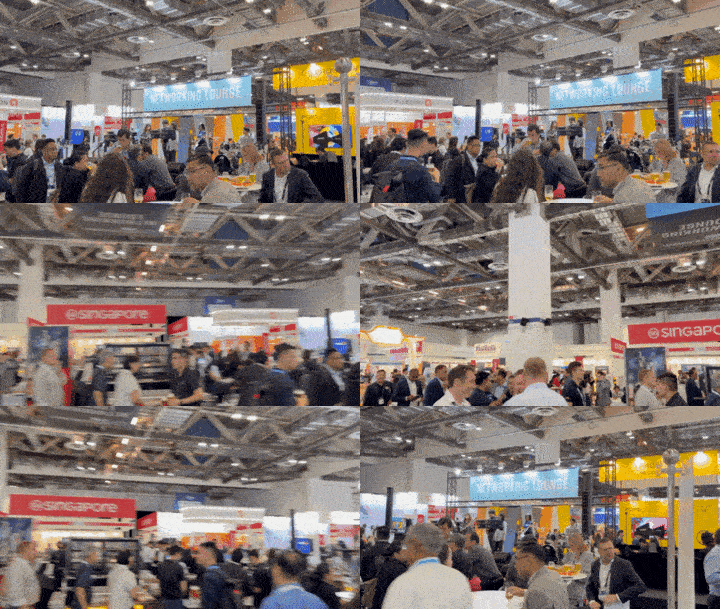
I really enjoyed this XForum (this is our 4th). Hilary and I continuously tweak the format to make it relevant and have a built-in self-improvement mechanism and expectation (for instance, we will be adding in a brief opening statement from speakers on where they stand or their view on the subject of discussion. Great idea by Evan Zinger of Azure Access. Thank you. The XForum format encourages candor. The SE Asian audience asked more questions than any other region this year. The people who attended did so with intention. They were seated, engaged, and part of the Forum. The combination of booth design, open space, and interactive formats proved effective. If it looks like I’m enjoying myself at these, it’s because I am. To the panels…
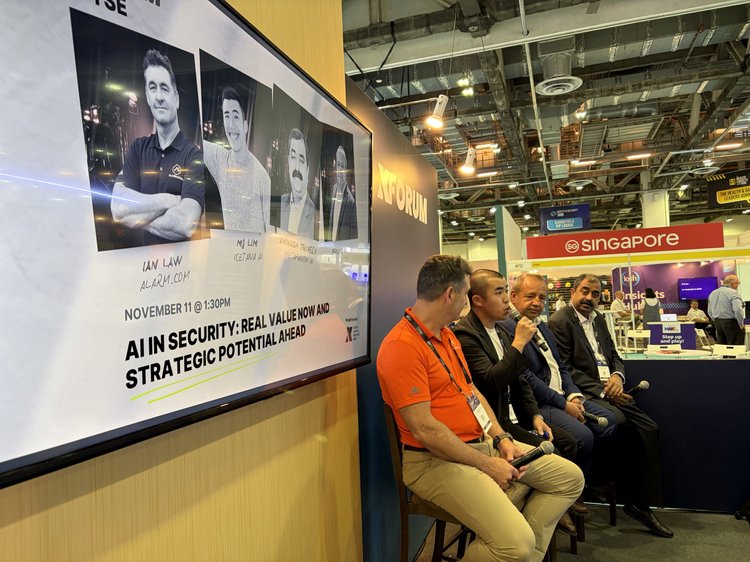
Global and APAC Trends Panel
A lot was covered here: Urbanization and digital transformation are fueling demand. Data sovereignty. Talent gaps. Modular deployments. Public-private collaboration is essential. Governments can be either enablers or blockers, depending on the standards.
Critical Infrastructure Panel (1st one)
Leading critical infrastructure use cases in the area are data centers, renewable energy sources, telecommunications, and water systems. Success comes from early engagement, strong cyber posture, and scalable digital upgrades. Incremental modernization often beats a 'rip and replace' approach.
Data Sharing and APIs Session
Open APIs unlock innovation, particularly in regions with resource-constrained integrators (that seemed to be a common theme). Many systems are still siloed. Governments and major buyers should promote transparency and openness. The opportunity for third-party developers is enormous.
Biometrics and Identity Session
Biometric adoption varies widely across SE Asia. Trust depends on product quality (massive concern over cheap Chinese products) clarity around templates, and transparency about retention. The future will be multimodal and adaptive. Privacy frameworks are developing quickly across the region.
Critical Infrastructure Case Studies (2nd one)
Real-world examples demonstrate that digital access accelerates recovery and minimizes downtime. National transport systems and the German Stealth initiative demonstrated that public-private tooling, handbooks, and frameworks help drive widespread adoption and can be used locally.
Video, IoT, and Predictive Tech Panel
Predictive maintenance and IoT extensions give new life to legacy systems. Digital twins. GIS. ServiceNow integrations were mentioned ofteb. Vendors must present clear ROI narratives tied to uptime and maintenance reduction.
Biometrics, Identity Frameworks, and Interoperability Panel
Governments will lead regional baselines. Companies must design for flexibility across markets. Mobile credentials and dynamic QR codes influence user expectations in SE Asia.
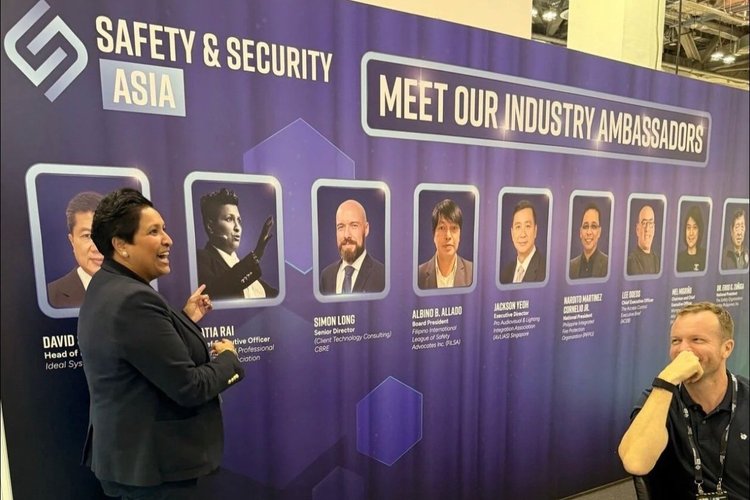
After all of that, here is the story I walked away with in summary….
SE Asia is not just another region. It gives us a glimpse into the future and I think the future takes on this persona:
-
It forces vendors to embrace openness due to its proximity and density.
-
It rewards platforms.
-
It punishes slow-moving companies.
-
It lifts integrators who collaborate early.
-
It attracts investors who recognize the pace of modernization.
-
It demands modularity.
-
And it encourages cross-border learning.
The region is faster, more integrated, more digital, more identity-centric, more open, and more collaborative.
The opportunity is enormous. I am just not sure a lot of the HQs in North America and Europe are fully aware. Most have just labeled the region “emerging” and invest accordingly.
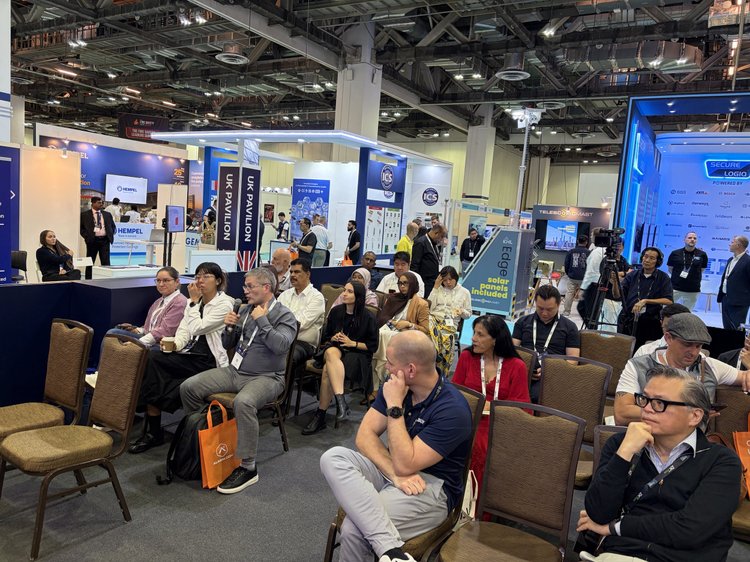
Something else that I heard over and over again was a call to action for vendors, integrators, governments, and even investors (came up more that you’d think) should do now.
Here is a quick hit on what…
Hardware and software vendors need to build cloud-ready systems with local deployment options, exposed APIs, platform first mentality, modular and flexible hardware, and clear data models that are extensible.
Integrators need to engage earlier in the project cycle, offer lifecycle partnerships and management capabilities, and invest in data and software skills (not just 3rd parties, but your own).
End users need to require openness, fund pilots, build frameworks, and treat regulation as an enabler.
And to my investors out there…startups are the ideal proving ground for combined identity, access, video, and operational platforms. Fund them. There are plenty to fund. These localized deployments can scale globally (unlike years past). They just need some fuel.
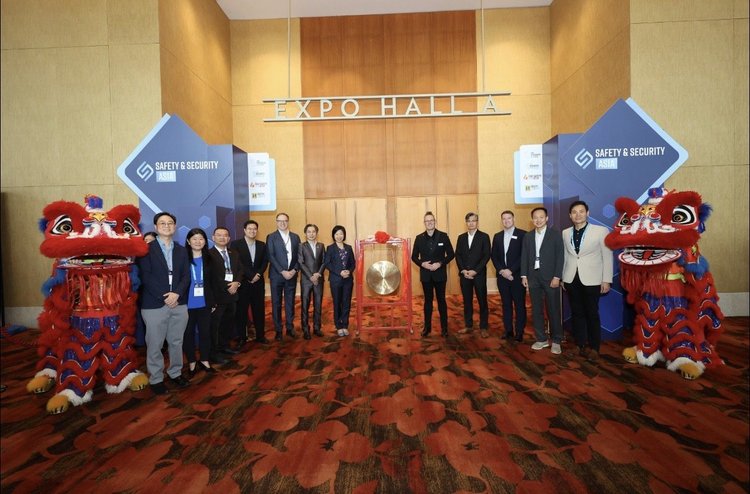
In the end, TSE Asia reminded me why I keep getting on planes, why this community is everything, and why this work matters. It also reminded me why the global nature of our industry is the very thing that makes it so powerful.
We are building something new with TACC. Something global. Something community first. Something rooted in people, stories, and shared progress. And Southeast Asia is a big part of that story.
Thank you to the following people and companies for participating in the XForum:
-
David King from Advancis Identity Solutions,
-
Richard McClellan from Advancis Software & Services GmbH,
-
Bruno Alsina from ALCEA,
-
Bede Lau from ALCEA,
-
Ian Law from Alarm.com,
-
Gaoping Xiao from AMAG,
-
Evan Zinger from Apollo Security,
-
Richard Low from Apollo Security,
-
Anand Chandrashekara from Axis Communications,
-
George Dionisopoulos from Barkers Fencing,
-
Adam Savage from Barkers Fencing,
-
Shawn Leo from Chubb,
-
Steve Riley from Comelit PAC,
-
Benjamin Tay from Future Elements Technology,
-
Mike Margrain from Gallagher Security,
-
Ben Italiano from ICT,
-
MJ Lim from Icetana AI,
-
Heikki Hiltunen from iLOQ,
-
Avinash Trivedi from Metafusion AI,
-
Elson Lim from Milestone Systems,
-
David Carta from Telaeris
And whatever this was that I ate??? It was simple, amazing, and I can’t wait to have it again.

PS: I am sure some of you may forward this, but please do so sparingly and encourage others to sign up here. Thank you!
