
Volume 134 | February 17, 2026


Click on the above image and use code sxst3gkbkn to hear the audio version.
Reminder to JOIN the The PhySec Collective community Slack channel to network, engage, and be part of something big! You can sign up here.
I was in Seattle last week visiting SAFR, part of RealNetworks. I went there to answer one question: do they have the right to win?
For context, SAFR is led by Rob Glaser, founder and CEO of RealNetworks. Glaser spent ten years at Microsoft in executive roles before founding RealNetworks in 1994 and launching RealAudio, the first commercial audio streaming solution for the internet. He essentially pioneered the technology that turned the web into a multimedia platform. In 2020, he put $10 million of his own money into the company to support its pivot into facial recognition and computer vision. Under the new SAFR President, Charisse Jacques (and a random fact uncovered when we met: Charisse and I went to the same middle school in Florida), the team has expanded into access control, retail loss prevention with SAFR Guard, and workforce management. SAFR is not a startup guessing at a market. This is a technology company with 30 years of building platforms, making a deliberate move into physical security. I had no idea.
What struck me was the culture of innovation. The depth of talent and resources they've assembled. But more importantly, they showed me something I hadn’t fully grasped before: the difference between electronics and intelligence.
We’ve spent decades optimizing electronic access control with better readers, faster controllers, and more credentials. But that’s hardware thinking. For the majority of the industry, the real opportunity isn’t in electronics. It’s in intelligence. I’ve said this a lot lately, but identity owns the future, and SAFR is taking it even further by being human-centric.
That shift, from managing doors to understanding identity and behavior, that’s the game we should all be focused on.
So, in the short term, do they have the right to win? Yes. 100%. The question for me is time horizons. The technology, leadership team, and vision are all there. Time, team expansion, and go-to-market execution will determine the rest.
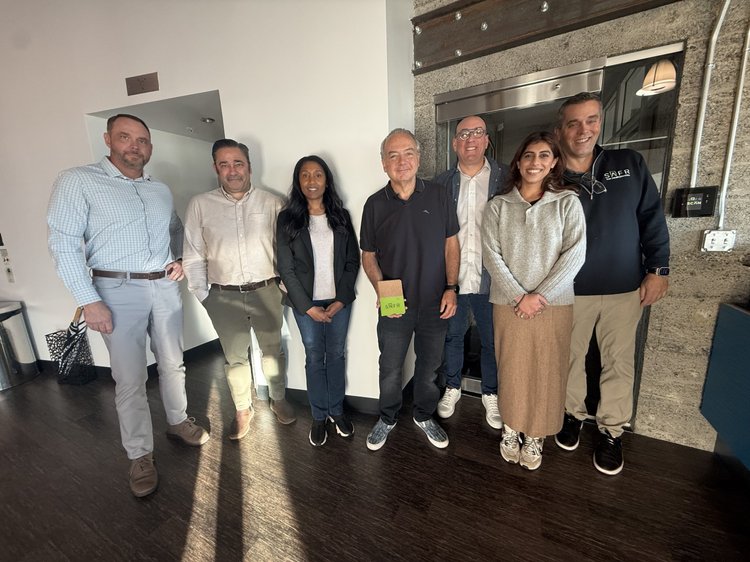
Pic of the team at SAFR at their HQ.
The visit triggered something bigger for me. Something I’ve been circling for a while and want to plant a flag in the ground on:
Biometrics, everyone in the biometrics industry has a story problem, not a technology problem.
I’ve written about this before. The dystopian narrative around biometrics is organized, loud, dry, and productive (also effective). They deliver easy-to-digest, emotionally resonant stories about bad actors using facial recognition technology to commit terrible acts. And to be clear, those stories are well-documented and real. The bad actors are bad actors.
But here’s the thing I’ve come to find by going out to the market and meeting the people where they live and work: not everyone is a bad actor. Most people in this industry are good people looking to solve real problems and add value. They’re building systems that eliminate friction, enhance safety, and deliver better experiences at the door and beyond. It may not sell blog subscriptions to write that, and that's probably why you don’t hear enough about the good in our industry, but it doesn’t mean they don’t exist. In fact, they are the majority.
The problem is that the industry has no mainstream story to compete with the dystopian one. It SUCKS at marketing and communication. Instead, the biometrics world fights over technical specifications. “My system has 46 points of the face versus your 32.” Stop. It’s terrible. That’s not a story anyone outside this industry cares about. It doesn’t move a buyer. It doesn’t move a legislator. It doesn’t move a consumer. Sure, it is right, but it is not productive.
The dystopian side has narrative discipline. The utopian side has spec sheets. Woof.
That has to change.

SAFR Scan in action.
And here’s what I want to propose: a reframe of a category distinction that gives the industry a rallying point and a story worth telling. Introducing human-first biometrics.
The distinction is between human-first biometrics and system-first biometrics.
Human-first biometrics means the person decides when, where, and how their biometric credential is presented. The system receives it vs. capturing it. The human is the agent, not the subject, and, with that, initiates and controls.
System-first biometrics is the opposite. The system scans and captures. The system decides. The human is a data point.
Same technology. Different design philosophy. Different values. Different story.
This matters because the current debate lumps everything together. Every facial recognition deployment gets painted with the same surveillance brush. Companies doing responsible, consent-driven, privacy-respecting work get dragged into the same headlines as the worst offenders. The industry has no language to separate itself. Human-first biometrics gives the industry that language.
Think about the parallel to what is happening in our broader industry. We are moving from hardware-first to platform-first, and that reframe is changing how companies position themselves, how buyers evaluate solutions, and how capital flows. The companies that adopted platform-first thinking are winning. Those who resisted it are now facing structural decline.
Biometrics needs the same kind of category-defining moment. Not a new product or a new standard, but a new story.
Human-first biometrics says: we don’t surveil people. We empower them. We don’t capture faces. We authenticate humans. We don’t collect data for the system’s benefit. We protect a person’s identity for their benefit.
Honestly, say it outloud. It sounds great, and I do believe it will work. It’s a story the mainstream can understand. That’s a story a legislator can support. That’s a story a consumer can get behind.
Don’t we want that?
And companies like SAFR, which are building with encryption, liveness detection, edge processing, and privacy at the core, already operate this way. They just don’t have the language for it yet. Nobody does.
So what do you do next?
I want this to be more than a Brief. I want human-first biometrics to become a rallying point for the companies doing this work responsibly. A frame that the good actors can adopt, define, and defend.
The dystopian narrative won’t stop. It shouldn’t be, as accountability matters. But the responsible side of this industry deserves a story that’s equally compelling, equally digestible, and equally organized. Human-first biometrics is that story.
If you’re building biometric solutions and you lead with consent, privacy, and human agency, you’re building human-first biometrics.
Own it. Say it. Use it.
The industry doesn’t need better technology to win this debate. It needs better language, and better language starts with a better frame.
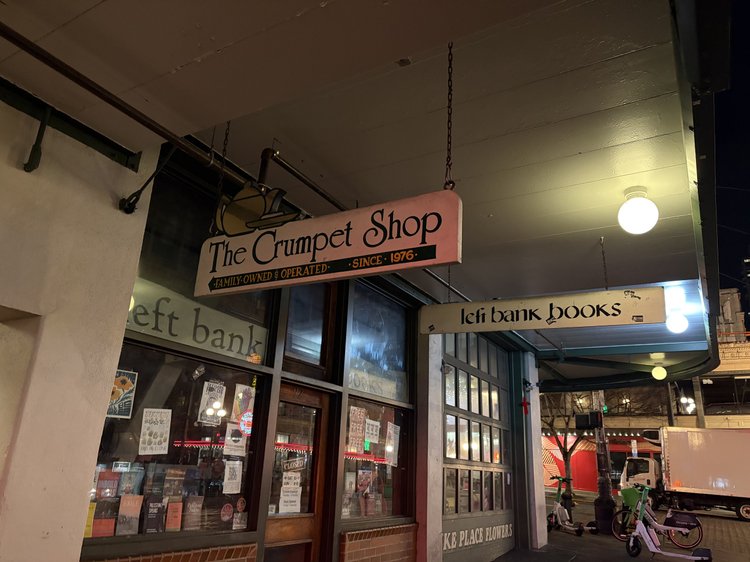
Thank you to the SAFR team (Rob, Charisse, John Cassise, Brad Donaldson, Chris Carlson, and Divya Taneja for having me out. Always love meeting companies where they live and work. And I’m grateful for the opportunity to do it. This visit gave me more than a company assessment. It gave me clarity on something the entire industry needs (and also an opportunity to stop at one of my favorite spots, Crumpet Corner. Next time you’re in Seattle, check it out. You’re welcome.
PS: I am sure some of you may forward this, but please do so sparingly and encourage others to sign up here. Thank you!
