Volume 14 | May 2, 2023
Welcome to Volume 14 of the Access Control Executive Brief titled "My 20% Challenge." I look forward to the discussion this topic creates. This story concerns the seldom-discussed human impacts on our business, especially when managing risk. We coddle technical and imaginary excuses of why we do not progress in adopting technology, aggressively growing markets, and invoking change. It has massive downstream and secondary effects on how we show up as an industry, and you can draw hard lines to things like adopting cloud and mobile computing, safe schools, and women in security. More on that below.
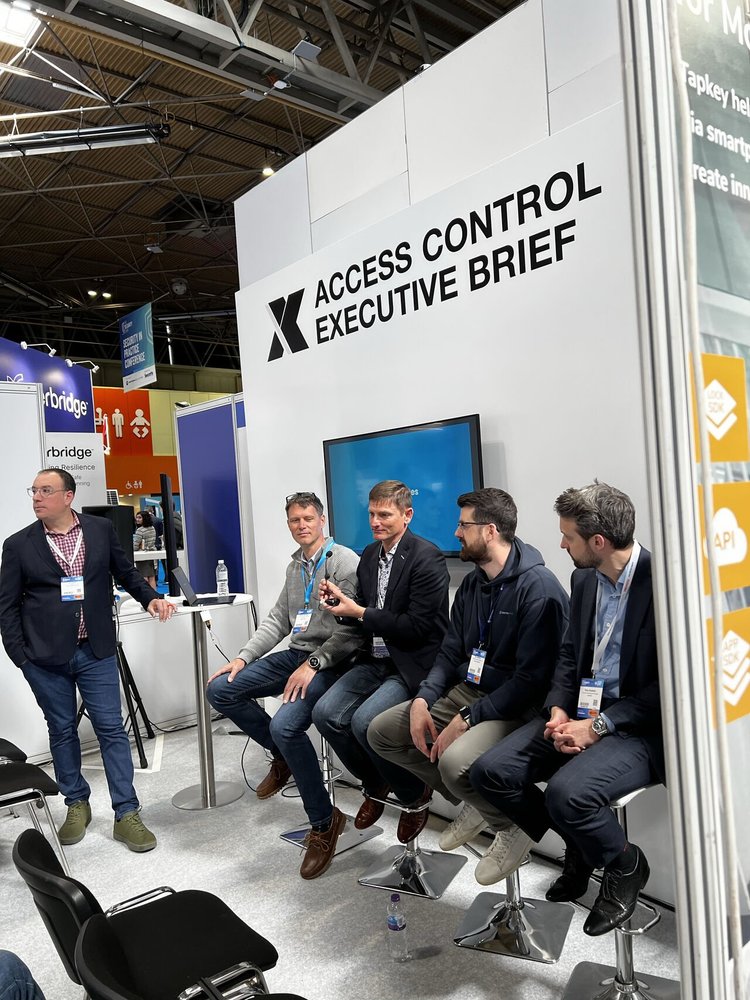
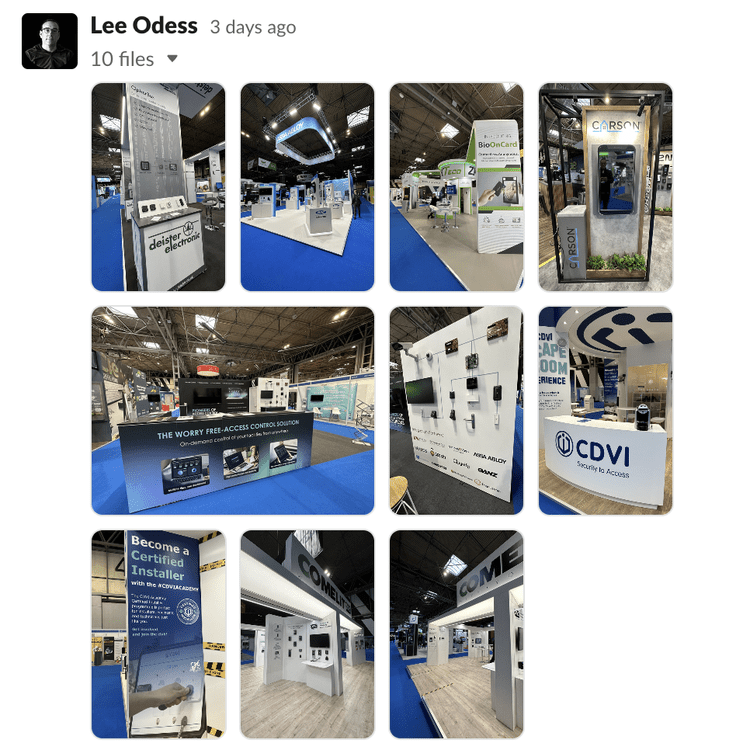
Fresh off The Security Event in Birmingham, UK, where in partnership with LenelS2, Tapkey, Sentry Interactive, and Wavelynx, we brought a "theatre-styled" booth on the show floor. I am happy to report it was an absolute success! For those of you on LinkedIn and active in our Slack group, I am sure you have seen the posts, but if not, I capture them below. Thank you, LenelS2, Sentry Interactive, Tapkey, and WaveLynx, for the partnership in making it happen. Next year we will do it bigger and more activated.
Next up? PSA TEC in Dallas May 1-4 in Dallas, Texas to present along with Brittany Board, Director of Technology Partners at The PSA Network, Peter Boriskin, Chief Technology Officer – Americas of ASSA ABLOY and Dan Rothrock, President Security & Safety, Americas of Zenitel on the future of security (titled “Upcoming and New Security Technologies.”
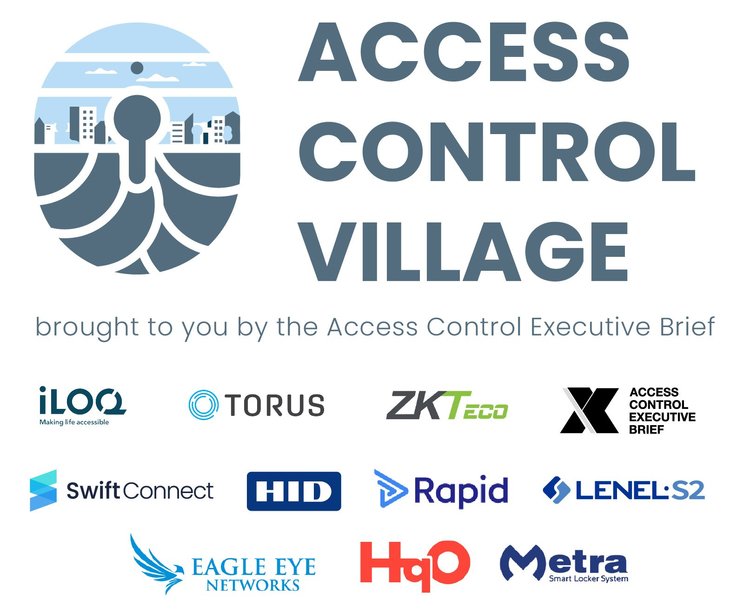
Then it is off to London for The Access Control Village at CREtech London with iLOQ, Torus, ZKTECO USA, HID, SwiftConnect, Rapid Global, HqO, Eagle Eye Networks, Metra and LenelS2 on May 10th and 11th. Then I return to London the week after for IFSEC.
On CREtech, I am excited to let this group know that for CREtech New York, “the Built World's Largest Innovation and Sustainability Event,” the Access Control Executive Brief will be the exclusive partner of The Access Control and Smart Lock Village. I will be curating the two days and we agreed to make NY bigger with a huge stage, more booth space, tons of activation, and more. CREtech NY is on September 19-21 at Javits Center. If you want to be part of the village, please email, Slack, or text me (+1-202-999-8180).
As a follow-up to the last Briefs announcement launching an annual and exclusive Access Control Summit, we are on! The website is live, and I signed the agreement with the AIADC as the location, and I am excited to have Antony Slumbers join us as the keynote speaker. You can find Antony's bio here, but as a quick overview, Antony is a “globally recognised speaker, advisor and writer on proptech and space-as-a-service.” You can tell by the use of a “s” versus a “z” in recognised that Antony is from the UK and with all that is going on in commercial real estate, I wanted to bring in an expert to share his thoughts, insights, and advice on where the market is today, tomorrow and where to It will be held on 9/28, with a reception the night before on 9/27. On the 28th, we will have all-day programming centered around where access control and smart locks are today and in the future. There are no sponsors for ACS. Instead, I am selling tickets to cover the costs. For Individual Members of the Access Control Executive Brief, you will get 50% off, and for those that are Corporate Members, your entire company gets 50% off. I am excited to do this with the industry. We have a voice and point of view. We just need to get them out. I look forward to seeing you there!
A couple of other reminders of upcoming IRL opportunities to get together a community:
-
PSA TEC: I will be there on Wednesday only. If you are going to be there, please let me know!
-
CREtech London: Along with iLOQ, Torus, ZKTECO USA, HID, SwiftConnect, Rapid Global, HqO, Eagle Eye Networks, Metra and LenelS2 we are creating The Access Control Village to demonstrate what today and tomorrow looks like for the global real estate market on May 10th and 11th. Please join us and also come to CREtech to get more involved in the proptech community.
-
IFSEC: is being held on the 16-18 of May 2023, at the ExCeL London. I will be speaking on the 17th (Security Tech Talks Theatre, IFSEC) on Big Tech and global trends impacting access control and then on the 18th (FM Theatre, Facilities Show) on Bridging the gap between FM and Security. If you are going to be at IFSEC, let me know. I’d love to meet up!
-
ELF: The European Locksmith Federation Convention is being held in Helsinki June 8th-10th. I will be presenting on the future of security. If you are attending or are based in Finland and want to meet up, please let me know.
-
CREtech New York: More to come!
-
ACS 2023: Let me know if you plan to attend!
I hope you enjoy the Brief, and I am excited to get on Slack with you and discuss it!
Thank you,

PS: I am sure some of you may forward this on but please do so sparingly and encourage others to sign up here. Thank you!
My 20% Challenge

*Warning: broad strokes painted below and done on purpose. There are examples where below is not true, but I believe that is the minority.
All we need is 20%. That is all. Just 20% to invoke a massive amount of change, and meet this opportunity head on. But, before we get into that, lets set the stage….
When I think about what gets in the way of progress and full embrace of opportunities in front of the access control and smart lock industry, two things are connected, pervasive, but seldom discussed. If we focused on these two things, we could fundamentally transform our industry versus letting the market around us transform it.
They two are:
-
Incentives are "a thing that motivates or encourages one to do something." Most of our leaders are incentivized not to inject risk into managing, leading, and executing our businesses.
-
Demographics are "statistical data relating to the population and particular groups within it." I believe that some of our leaders are at an age and point in their lives where the idea and thought of injecting any risk into how we manage, lead, and execute our businesses is a burden, goes against how they want to live their lives, and is personally too risky so in turn decisions are made that reflect that.
Sure, there are plenty of other obstacles to go along with these two - resources, customers, the channel, or a long list of technical reasons - but if we were to look deeper into the access control and smart lock industry, we would find the human side of our business not only drives a lot of what we do but mostly, gets in the way.
You would also find that we need to do more to change that.
I want to be clear that this is not a story about ageism or sexism. As many of you know, I'm a 46-year-old "executive" in our industry. By definition, I'm one of whom I'm talking about. So I am not attacking anyone with this. Instead, this Brief is my attempt to have an honest conversation, out loud, about what gets in our industry's way regarding change and risk. This Brief attempts to go beyond the excuses and technical reasons we all kick around and make a genuine effort to talk about some of the elephants in the room. We can all have this back office conversation out front by saying it out loud. I have talked to enough colleagues in our industry to know that many of you agree with what I will say.

Incentives and demographics influence and persist in how we make decisions, make investments, allocate resources, and how businesses are led or, more accurately, managed.
An older group of successful people leads our industry and are incentivized to manage businesses with moderate to no risk.
The Current State of Executives Incentives + Older Executives = Low-Risk Taking, Willingness to Try Things, and Adopt Change
Will you make risky decisions if you receive a bonus and equity based on incremental growth or are five or even ten years from retirement?
If you live in a city or town where you or your partner are from or your kids go to school, are you willing to risk failing and possibly having to move or find a new job?
What if you live in a city where this is the best company to work for? Are you going to take an honest look, put all that aside, and roll the dice?
I can promise you most are not.
And who is to blame them?
Think about your own life and business plans. Would you?
Some of you would, but many would not.
And this is why I'm excited to see and celebrate leadership changes at a handful of legacy businesses within our industry, such as dormakaba, HID, LenelS2, and acre. Of course, there is still work to do at some as they need to go deeper, but it's a great start.
This moment is about the time I get one of the low-risk taking leaders in our industry to tell me, "Slow and low risk isn't all bad. Look at all those bad start-ups." Ok, I get it, but even if I was to agree (which I don't) that "start-ups are bad," it still doesn't change the fact that your situation is still true. Going slow, plodding, and having a low-risk appetite can benefit some businesses. Especially for those rewarded for doing so (note: this is what most institutional investors look for when investing in our industry's public company).
But we have gone too far and have taken it to the extreme.
Just like we believe start-ups need to dial back venture-backed, breakneck spending, and growth initiatives, the legacy industry needs to dial back the conservatism and inject some risk.
I'm not saying we should just run our businesses with a high level of risk. What I am stating is that:
-
We need to find the places where we can
-
Allow some calculated risk
-
Manage ourselves, the investor, and the street appropriately to expect some risk
-
Bring some new into our businesses
What got us to where we are today will not take us to where we need to go with the massive opportunity in front of us."
Risk does not need to be binary - risky or conservative (like it doesn't need to be a binary decision of security or convenience). It doesn't even need to be even. It just needs to exist. I don't know; can we inject 20% risk and change? I think we can.
I have seen and worked for companies where just 20% risk results in exponential change and long-term growth. (See Lutron Electronics).
Who knows, maybe by injecting 20% risk into our industry, we will make schools safer, increase job opportunities, and have fun along the way.

Here's how these incentives and demographics manifest into how we show up day to day and get in the way of us commanding the space we occupy:
-
We have a well-known, seasoned, dare I say, older workforce, especially at the leadership and executive table and even more at the C-Suite. Your propensity to take risks decreases as you age. Couple that with an industry that has worn low risk-taking and lack of adopting anything new as a badge of honor, and you get low risk-taking and lack of adopting anything new without affirmed known results (which in turn means not risky).
-
Instead of showing self-awareness, we like to point fingers at others as the reasons we are not changing like we need to be to meet the market opportunities where they are at.
-
Recently I had two high-ranking executives at large companies tell me how their sales team is and why they can't move to sell "cloud" based solutions. When asked, "Why don't you change your sales team," I was given the same look my son gives me when I make him shower - he knows he needs to, but he doesn't want to. There answer? "It's hard." The effort and work it takes to make organizational changes is a lot. You have to want to make this type of change, and I wonder if their boss will want to make a change like this. It 100% is hard. It's also why they are put in the position of being an executive - to do the hard things. But put the work aside and think about the personal impacts. We should discuss a local community impact, like in the neighborhoods where these leaders and executives live. That is a genuine concern that I am empathetic about. I get it, but we aren't working on alleviating this concern.
-
Here are three of our other favorite "blame" hits we use that go beyond our own sales team:
-
The channel or the customer. It is always their fault. Right? (No!) We say, "They aren't open to change. They aren't asking for change. They are too busy for change." My thought? Sure, there are pockets where that is true, but it doesn't have to be. There are plenty of other pockets where it does not. Plus, sometimes you must build those pockets and create the channel or demand you know is required. Again, that's hard and expensive (in most cases). But those that do it will reap the reward. But if you are incentivized to keep things status quo and project frustration versus working on grabbing the gold, you will continue to do the same as you did yesterday... And then complain about it.
-
We create "industry boogie men" that don't really exist, but we create and manifest them to have something to shadowbox versus work on the real reasons. What type of boogie men? The aforementioned "industry culture" is one. So is the "we can't attract or find the right talent." Or the "what we know is best. It's security. They (whoever they are) wouldn't get it." Or "the channel owns the customer. We can't talk to them. Why? Because it has always been that way." All made-up excuses distract from the actual work that needs to get done.
-
We blame the technology itself when in fact, the technology is a symptom of our inability to challenge the incentives that have been put in place to keep old products around longer than they should because we want to make those margins, reap the rewards of the work we did, or don't want to admit that we invested in something that had a shorter shelf life than our PowerPoint we presented stated. Who wants to risk being wrong? (Regardless of how many leadership books you've read, no one wants to put their job at risk by telling their leadership team they were wrong. So what do we do instead? We iterate off of old technology, treat everything as a feature of yesterday's tech stack, and quietly die inside when with fake celebration posts on LinkedIn about how excited we are that "We have a mobile wallet!"
-
-
Want a great example of our risk aversion and how it shows up deep in organizations? Walk the show floor at any trade show and look at the booths. Count the number of hinged panels, locks, and readers.
The reality is that regardless of data or metrics, we are human beings. And many people make personal decisions when agreeing or not agreeing to do something. I've heard it directly from CEOs of large companies:
-
"I don't want to deal with the blood in the street that this decision will make."
-
"I only need to be right 51% of the time."

Our industry has had the luxury of a bull market for the past ten years, but we have a $70 to $100 Billion opportunity in front of us and a changing customer looking for us to do what we do and more. That will take us to look beyond a strategy deck and in the mirror. Here are some ideas of what looking in the mirror can result in:
-
Set sales target KPIs, including 20% coming from new products introduced in the last 1-3 years. Not just with your sales team but from the CEO down. Then align your incentive programs to support it. Yes, this will cause some work by everyone, but if you do this, demand it, and then reward it…I will bet my house the results will come.
-
Break off a team with the right makeup and mentality to drive into new markets and technology offerings. If your current team can't do it, you are using broad strokes and assumptions that get in the way of finding those that can, and you are not doing the hard work of finding those that can. You may need some people from outside your company, but I know you have some there already, too, that can do it. If you don't do this, they will probably leave anyway. Why not invest in the business and them? I get it; if they do this, you commit to doing the new thing and have to deal with what that means to the old thing. Yes, that is what happens. Go deal with that.
-
Promote someone under 42 and put them on your leadership team. I bet whomever you are thinking about is more ready than you want to admit. Your prejudices that "they can't" or "need more experience" has more to do with "you being afraid of what it says about you" and a false replacement theory story you are telling yourself.
-
And while you are at it, support hybrid work. Do it full throat.Change the culture of how the company works. Do not just do "you can work from anywhere" hybrid work messaging and then make people come to the office three days a week or silently do that by calling meetings and giving currency to those in the office or close proximity to you. You will find different and additive talent if you fish outside the traditional ponds you fish in (that pond is your office or local market). You can let different people take leadership positions that may never move to your HQ. For instance, how many leaders would hire a Chief of Staff who lives 1,000 miles from you? Or how many legacy companies have an executive team that lives in a different state? Most don't and won't because it's different and complex to make work. But the upside can be exponential. Will it? You will know when you try.
-
Kill a product line that has been your money-maker but does not support your long-term technology or market strategy.Some money-making boat anchors get in the way of innovating because you spend so much time trying to make them work with modern needs. You must also invest more in the new because you support the old. This decision will be painful initially, especially regarding immediate revenue and some of your channel partners who love certain products. Still, in the long run, you will build an innovation engine and culture of progress. We need to do this more in our industry.
-
Start to communicate and manage your board, investors, and whoever needs to hear that you are going to start to invest more in the future - Software as a Service models, community building, hiring a Chief Marketing Officer, and a rebranding of the org, acquire companies for both talent, market adjacency, and technology, or invest in R&D versus giving dividends or repurchasing stock.
What else can we do? I’d love to hear your ideas and thoughts.

Sometimes the hard thing to do is not solved by a math problem but by looking in the mirror, being ok with doing something a bit riskier, and getting comfortable with the level of work to tell the internal story of why. The reward can be so so much sweeter.
If we continue on the road we are on as an industry, we will not only miss the enormous opportunity we have in front of us, but we will inevitably fail. The failure won't come from taking a risk; the loss will be from risking everything by doing nothing but being status quo.
I believe we can do it. Here's to 20%.
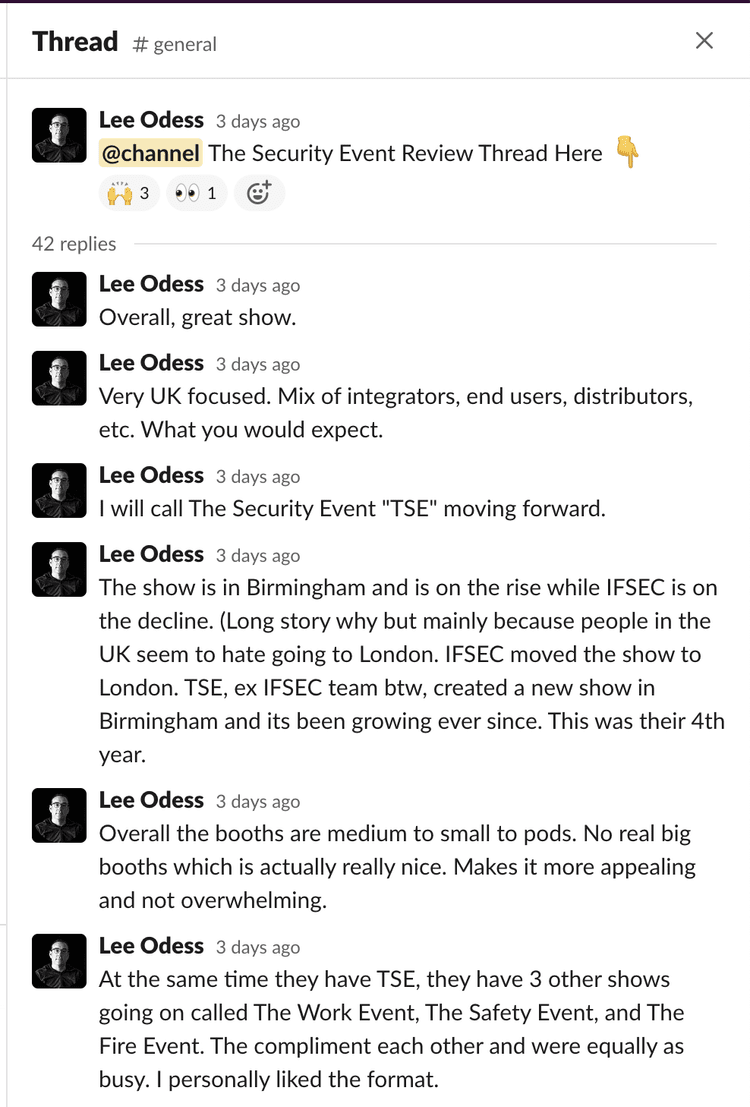
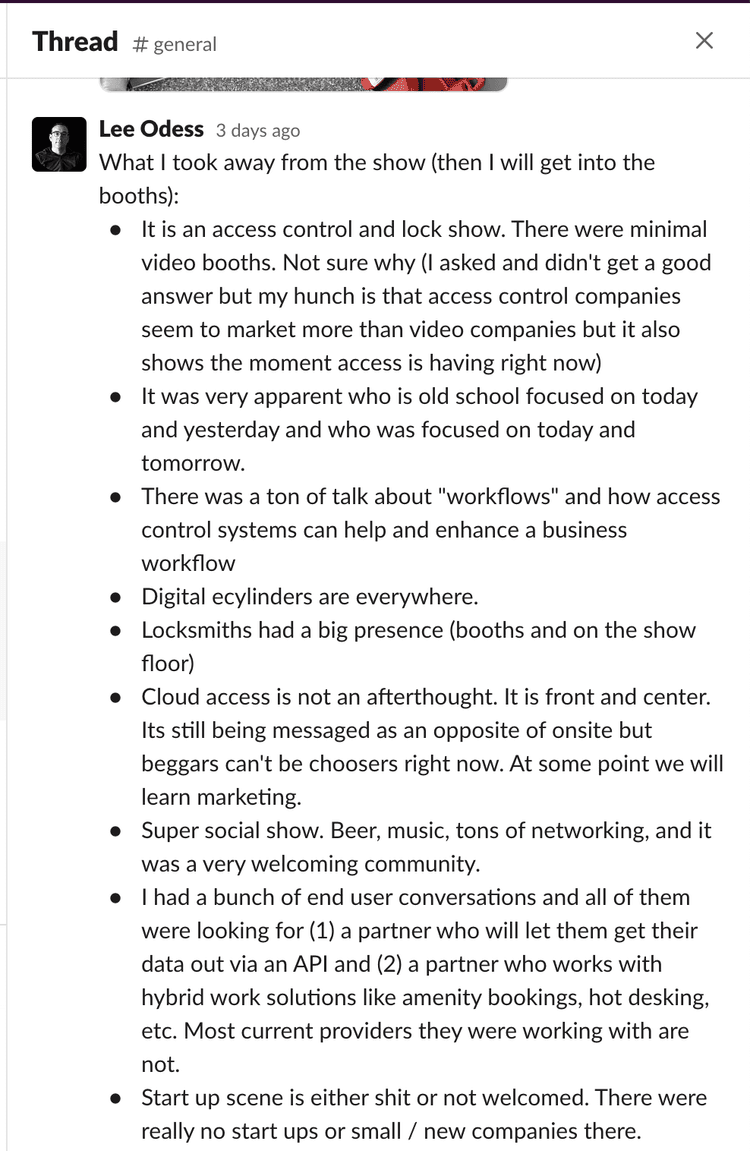
The Security Event Recap as Seen in the Slack Channel
Below is just a glimpse of the 30+ post show report. To see and read more, please join the Slack group here.