Volume 21 | July 10, 2023
So, what did I miss? All joking aside, I am grateful for the opportunity to spend quality time with my family and disconnect. These past two weeks have been great for me, my wife, and my kids. Ultimately, everyone benefits as I feel refreshed, focused, and ready to return to work (remember when "return to work" just meant "I was out of the office"). The rest of the year is going to be fantastic. I have a lot of exciting things coming up that I can't wait to share.
During the long airplane rides, I planned several future Briefs on a variety of topics, including:
-
As promised, a follow-up to Brief 20, Brief 21, and 22 will include my analysis and observations of what's currently happening in the North American and European access control and smart lock industry.
-
The transformation of proprietary physical access control systems into enterprise software systems: how it unlocks greater user experiences and value.
-
With the move to enterprise software, who is our industry App Store? Is it Allegion, dormakaba, or ASSA ABLOY? Or is it iLOQ and Kadass? HID or Wavelynx? Or is it Apple and NXP? Brivo or Openpath? Or is it NiniID and Sharry? Hivewatch? HQO, Cohesion, SmartSpaces, or a million other apps? SwiftConnect, Tapkey, Bitwards, or Soloinsight (I doubt it will be Seam)? Or someone else like ServiceNow or Salesforce or Workday or ADP? (Side note: if you compare what's going on to PSIMs, you're missing what's happening and using yesterday's old lens and truths.)
-
Other topics include: Why we should move to hybrid and why that's probably best for customers and applications, and what we can learn from Amazon's bad and great user experience, how the internet has accustomed us to paying for convenience. And finally, how systems change by moving to prompts instead of historical set and sit it.
UPCOMING TRIPS & OPPORTUNITIES TO CONNECT
I'm excited to announce that I plan several trips and hope to meet some of you in person. Here is my travel schedule:
-
July 13: Madrid, Spain. I'll be in town for a wedding, but I would also love to meet with the local access control and smart lock industry to get a feel for the market.
-
July 19 & 20: San Francisco/Bay Area, US. I'm thrilled to present "The Future and Trends Impacting Access Control and Smart Locks" at the ASIS International SF Bay Area Chapter monthly meeting. I'm also scheduled to meet with Spintly, Safetrust, Oloid, and more.
-
July 25-27: Sydney, Australia. I look forward to meeting with Torus, Goki, smartlox, Daltrey, and Inner Range to deeply understand the market, companies, people, and culture.
-
July 28: Hamilton, New Zealand. I'm set to meet with Gallagher Security at their HQ, but I would also love to meet with others in the area.
-
August 14-15: SIA acceleRISE in Denver, Colorado (US). I am sponsoring the happy hour on Monday, August 15, from 5:30 pm to 7:30 pm at Wynkoop Brewing Company. Please stop by and say hello. Additionally, I am excited to share the stage with Erica Grant, CEO of Quantal Security, as we discuss Digital Transformation: The Generation Game- Maximizing Opportunities and Mitigating Risks for Your Future Success. acceleRISE is shaping up to be another amazing event.
Please let me know if you live or work in any of these cities. I'd love to get together, learn more about you, your business, and the market.
And then there's September, which is packed with events. I will provide more information on those events later. In the meantime, check out the Access Control and Smart Lock Village at CREtech NY and the Access Control Summit in Washington, DC.
Thank you.

PS: I am sure some of you may forward this on but please do so sparingly and encourage others to sign up here. Thank you!
Access Control and Smart Locks: A Deep Dive Into North America

Welcome to Brief Volume 21. As we discussed in Volume 20, the purpose of the previous Brief was to discuss the changes and trends in the access control industry on a global scale, with a focus on North America and Europe. The article explored the shift from a security-focused industry to one that includes the mainstream market, the adoption of software as a product, and the impact of digital transformation. You read about industry-wide changes and the new opportunities and challenges that arise from these changes. The Brief also provided insights into how companies can embrace these changes and adapt to the evolving industry.
In this Brief, I will dive deeper into North America, specifically focusing on Access Control and Smart Locks. So let's jump right in.

Overall observation 1: The North American access control and smart lock industry is being forced to deliver a broader value proposition, and at an accelerated pace unseen before.
If it sounds like I am repeating myself, it's because I am. Repetition is necessary because the Old Truths of our industry ("going direct is bad," "comparing middleware to PSIMs," and "mobile is about putting your card in the phone -aka incremental") are deeply ingrained. The New Truths need emphasis and a voice. I'm here for it.
Remember that the market (i.e., in general, you, we) can handle doing multiple things simultaneously. Our focus has been exclusively on high security for decades, which we've done well. However, with the mainstream market now involved, we cannot be defined solely by the high-security cottage industry value proposition. We must embrace both cottage and mainstream markets. This new way of doing business includes new expectations and opportunities for target markets, channels, products, services, curiosity, communication, and more.
In North America, all stakeholders in our industry are starting to recognize the need to choose between "doing one or the other" or "doing both." Companies shaping the future of access control and smart locks will choose to do both.
Brivo Systems (enterprise data) and Liftmaster (delivery) are good examples of companies in our industry doing both.

Overall observation #2: We have two business worlds simultaneously - online and offline.
The online world was once a support function of the primary way we conducted business: offline. While parts of this are still true, and the traditional offline community tries to underplay it, the online world is equally, if not more important, to how we conduct business now and will become the primary way we do business long term. We are in the early innings of these, both existing simultaneously, but they are already converging and accelerating.
Although you can see aspects of this globally, it is far more prevalent and significantly impacts how business is done in North America.
To understand how we got here, let's go back a bit. Up until COVID, our industry was primarily in-person and analog. We used outside sales teams, and trade shows & conferences, counter days, lunch and learns, "battle cards," and indexed to offline. We eventually used digital tools, but they were introduced in a way that supported the offline community, like magazines used websites. The offline community uses PowerPoint, CRM systems, ERP, email, and remote video services to do demos to help close offline business.
However, the way customers discover products, how investment dollars flow, how the sales process is supported, expectations on how systems integrate, how we determine responsibilities, how we network, how we communicate, how we value trade shows and conferences, and everything else is being transformed by digital technology. While digital transformation was inevitable, the pandemic accelerated the prevalence of online adoption, as it did with other aspects of our business.
Please note that traditional business methods will be around for a while. We are in a long period where traditional and modern business ways coexist. There is and will be room for both for the foreseeable future.
Using modern tools as part of their business strategy is a no-brainer for new entrants in the access control and smart lock industry. They do not even think about it. But for legacy companies, it is like learning a new language at the age of 50. It is not easy, and most of them still have the mentality and mindset that supports their offline processes instead of seeing this as a business reboot. This needs to change.
Some companies are doing this right. For example, Openpath, now Avigilon Alta, was the first to do so. Many point out that their technology was the key to their success. However, that was not the only reason. They had a wealth of knowledge and skills and were willing to invest in hardcore SEO and digital content. They went where the industry was not: online. They were early, and one could argue that they had a substantial ROI, and subsequently, they gained significant valuation when Motorola Solutions acquired them.
HID Global hiring Phil Coppola as their mobile evangelist is a prime example of how analog and digital product marketing and messaging coexist. The work Phil is doing, leveraging LinkedIn and YouTube to tell mobile stories that counter the core business HID has had over the years, is formidable, brave, and effective.
Wavelynx exemplifies how "everyone is equal regarding the internet." Companies a tenth of the size of the historical industry leaders can compete and control the narrative resulting in significant ROI, just like news bloggers such as Puck can compete with the NY Times in the media world.
At Salto Systems, you can tell there is a culture of curiosity, experimentation, and empowerment. They were early with content like podcasts and creating digital communities leveraging social media platforms like Instagram.
Spintly is an excellent example of a company outside of the United States leveraging the power of LinkedIn as a network and social media site. Using LinkedIn, they built a network of influencers in North America. They bridged their ability to gain market awareness and, ultimately, customers, making the transition from India to North America less risky than the historical offline ways companies would grow.
Whether you like the data or not, Kastle Systems' "Back to the Work Barometer" worked so well, coming out of the pandemic, that most media outlets cited and are on the Bloomberg terminals. The historically offline company would not have been as effective if it were not for the online effort of telling real-time stories with data. Talk about earned and viral media. You cannot replicate this in the analog world.
acre security's rebranding is an excellent example of a company building its brand for the online world. Their colors, look, feel, and resources, especially the website, show that they are looking at how they appear online, not just as an extension of yesterday or offline but as an entity on its own. What used to be the tail (online) wagging the dog (offline) is now clearly the dog.
As mentioned earlier, this transformation is not specific to North America. So why am I calling it out here? The reason is scale and focus. Most companies worldwide consider the US an opportunity and are either pursuing it now or researching how to do so, and it will be soon.
While some choose to open an office in one of North America's big cities like New York, they do so only after building an online presence. An online presence knows no borders. A small startup in Austria or Australia can gain momentum by telling relevant and repetitive stories at low or no costs. Leveraging the online marketplace is a beautiful way to gain market acceptance, and if the strategy supports it, they can eventually add on a physical offline presence.
Recent news of Defigo, NineID, Kaadas, and many more show that the internet has made the economics of entering the US market less expensive. It's a shame Nexkey was two years too early, and the same goes for August Smart Home and its locks. They were all onto something - timing is everything, and there's no better time than now.
So, what does it mean?
It means there are new rules, new opportunities, and a need to take it seriously with absolute focus. It means you need to invest time, money, and human capital in offline AND online activities. It means you cannot and should not treat the online world as an iteration and support of your offline efforts. The online business opportunity is its own animal. Treat it as such.
It also shines a light on and clarifies who is faking it. If you are using a marketing automation system to post generic messaging company-wide on LinkedIn, stop. You look foolish, it is not effective (well, maybe for the marketing manager and their bonus tied to activity and not results, but it is not for your business), and you are wasting time, money, and an opportunity.
How do I think it will unfold?
Both will continue to exist in parallel universes in aggregate for the next three-plus years. The high-security traditional business will continue to fight or ignore it because they will see 8-12% growth (inertia) using tried and true offline business tactics.
Some legacy companies will invest heavily in online resources and processes and see massive benefits to their businesses that, at some point, will make the offline investments they are making need defending.
In the next three years, our industry will be predominantly defined by what happens online, just like it is offline. Again, this does not mean that the offline will go away. We will see a good amount of investment in new offline approaches. For example, trade shows. We will continue to see what we see right now in big trade shows. They are not going to go away. They are just being refactored to what they should be at this point in time. When there was no alternative way to bring large groups together to showcase, network, and get an education, the value was in large trade shows. Now? I can do just that online and for far less of an expense. But where online falls short is in the deep human connections and experiences that, as humans, we deeply desire. These shortcomings are why we need to reconsider how we do trade shows. They have a place. It just won't be the same as it was before. This is why I am investing heavily in offline marketing, storytelling, and events such as The Lounge at ISC West, The Theatre at The Security Event, and my conference called the Access Control Summit. It's not that offline is dead. It is just going to be different. This is also why most companies need to take control and do their own shows but do it in a way that supports their online efforts, not just offline.
Want even more proof that we live in two worlds - online and offline? Look no further than me and my business. Five years ago, I could not do what I do today. I have a decent network of connections online, and if I believe my headlines, it's all I need. But every time I go to an event, I am reminded of how many people I do not know and how important having a presence AND a strategy for both online and offline is. Could I do one? Sure, but I desire to do more than be in a cottage. I want mainstream. And to get mainstream, you need to do both. The same goes for you.
Interestingly, after writing this Brief, I saw this post on LinkedIn explaining whats happening right now in B2B marketing overall. Makes you think, doesn’t it?

Here are some additional observations on North American access control:
-
There is a growing demand for vertical solutions that deliver added value beyond security in high-density areas, such as multifamily, commercial real estate, and enterprise (tenants and spaces). These verticals have become part of the hospitality industry overnight, and legacy product offerings no longer meet customer needs. This transformation has had a significant impact on the access control industry in North America, forcing legacy systems that don't adapt to either leave those verticals, become commoditized, or offer a more comprehensive feature set through software to meet customer demands. However, in some verticals, such as multifamily, the market has become closed. Being a multifamily access control software company in North America is impossible. You are either a lock manufacturer with an application built for the multifamily vertical (e.g., Allegion, dormakaba, or Salto Systems) or a data and property management software company that has incorporated access control as a feature of your more prominent software solution (e.g., RealPage or VTS). This trend is irreversible and will continue to occur in other verticals.
-
Similar to North America's struggles with balancing biometrics, privacy, and convenience, there is an ongoing debate and hesitation around the idea of being "open and interoperable."In contrast to Europe, the North American market knows what it wants. Still, it is unwilling to put in the effort or make sacrifices to its legacy businesses to achieve it. We will unlikely see "open and interoperable" in our lifetimes. Instead, we can expect a level of integration and openness that is higher than before but still not quite where it could be. And for now, that is deemed acceptable.
-
The Introduction of Powerful Apps and Middleware. Several companies, such as BraXos and Detrios, have come and gone in North America. However, the situation is different now. As the market verticalizes and expects us to act as an enterprise software industry, the power dynamics in North America, which were previously controlled by hardware such as locks, readers, controllers, and Physical Access Control Software (PACs) companies, have shifted. The power shift will now be towards both Apps and Middleware companies. The question that arises is, who will be the industry app store? I will be discussing this in a future brief.
-
It has never been easier to be in the access control industry. Even lifestyle companies that haven't been relevant in years are feeling optimistic. Mid-tier players who previously had difficulty breaking into the traditional high-security market are still trying to enter the industry even though the world does not need another access control system. Despite this, they continue to try. While there is a difference between being successful at scale and simply being in business, as I have mentioned before, the reduced barriers to entry and more significant customer base make it easier than ever to try. Who will succeed when the tide turns? That is a conversation for another time.
-
We are currently in the early stages of consolidation. Many legacy companies are at a crossroads, considering their next steps. Should they abandon specific markets and verticals that require a product and feature set that was never intended for the system they provide? Should manufacturers build the technology, or should they acquire talent and technology?
It will be fascinating to watch as those verticals and markets demand localization, niche solutions, and quick responses to demands. Fundamentally, legacy providers are not set up to be nimble, and new companies need more resources to grow as fast as they need.
In addition to traditional M&A activity in North America and a video company like Hanwha Vision adding an access control company (which is the worst-kept secret in the industry), I believe we will see a large player from Europe purchase a brand in North America to make its entry more significant and easier to transition (LenelS2is up for sale). My guess is Vitaprotech Group.
-
The impact of mobile wallets from Big Techs on manufacturers' business, system expectations, and customer relationships.
Big Tech's entry into the North American access control and smart lock industry has had a significant impact, making the industry unpredictable overnight. Historically, the legacy players could control the message, speed, and success as they saw fit. The large incumbents were the kingmakers of the industry. However, as Big Tech starts to lean into our industry, they challenge those old conventional truths. They become the kingmaker, inject new business models, and create friction in the channel and with end-users. Although some of the changes may not stick because some old truths are norms, change happens faster than usual, which becomes disorienting.
-
We are also seeing increased demand for mobile access that will shift the adoption rate of technology like never in the past 30 years. Very few features have been introduced into the access control industry that gets stakeholders' attention and can unlock budgets. After the initial fever, the hype will slow down, and a practical rollout will occur. Once "everyone" has it, there is no real news to share. However, those who shift to the value it creates sooner than later will see another boost of opportunity and excitement. That is the inflection point. Mobile Wallets as a key are the journey, not the destination.

For Smart Locks in North America:
-
What's the ‘Matter’ impact? It's encouraging to see the industry, especially the smart home industry, come together and align on what's best for the consumer (even if it's only partially). However, my concern is how robust demand will affect hardware manufacturers, specifically smart locks. Unfortunately, it won't be positive. The fast lane to commoditization and the end of brand identity is significant for smart locks. I anticipate declining margins, increased competition, and a price race to the bottom. While this is excellent news for consumers, it's terrible for lock manufacturers.
-
ASSA ABLOY's acquisition of Spectrum Brands (Kwikset), and the sale of Yale and August to Fortune Brands, have been completed. This will have a significant impact on the North American market for two reasons: (1) The incentive to rationalize the purchase will force investment and a need to do things differently, and (2) The introduction of new players, both by Fortune Brands, now a real player in retail, and by other brands globally, who believe that now is the perfect time to get into the US market. Previously, the dominant players on retail shelves and online made it difficult for others to make a significant impact. Now, the deck chairs are shuffling, and seeing how they end up will be interesting. These changes are primarily positive for consumers, the industry, retailers, and stakeholders. We may even see the introduction of a smart lock (see below). I'm interested to see what ASSA ABLOY does with the Baldwin brand, as it's a juggernaut luxury brand that has yet to be greatly appreciated.
-
There is a high level of complacency among incumbents in the smart lock industry. The lack of innovation beyond the technical indicates how unsmart these locks have been. This issue will become even more apparent with new players like iLOQand Kaadas entering the North American market. Both companies are making significant technological and business innovation strides, impressive with their development speed and market traction. These companies will break market norms, and watching from the sidelines will be exciting. And I don't believe they will be the only two.

Overall, what may sound like frustration about the state of our industry in North America is more of a tone of excitement. I am thrilled about the current transformations happening in our market. It is rare to witness a $10 billion (again, we only have bad data so we use it) industry undergoing such a massive shift and even rarer to have the opportunity to contribute to it. Here’s to it being $100 billion.
What are your observations and insights? Where do you agree or disagree with me, and what perspectives am I missing?
In Volume 22 of In Brief, I will delve into my thoughts and observations on European access control and smart locks.
Tickets Are Now On Sale for the Access Control Summit 2023!
With over 50 Executives and Thought Leaders from all over the globe, ACS23 is the must see event of the year in the physical access control and smart lock industry. Click here or on the image below for more details or to buy a ticket at 50% off because you are a member.
What is ACS? Why should you go? Who is going to be there?
Click on the image below to find out.
Join the access control and smart lock industry's most influential executives and thought leaders at the premier event of the year!
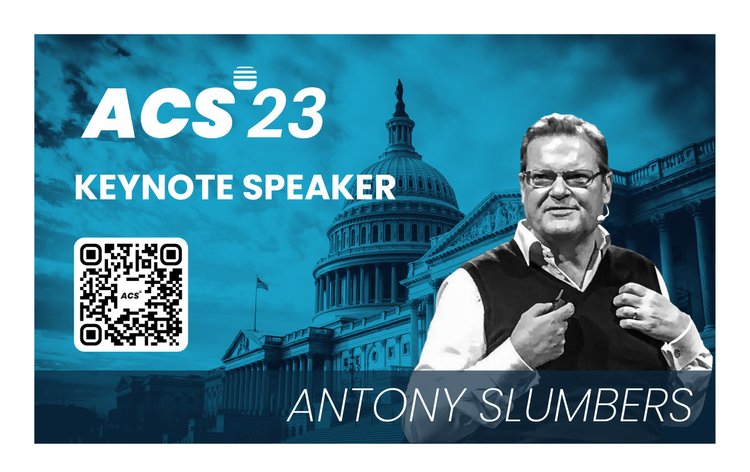
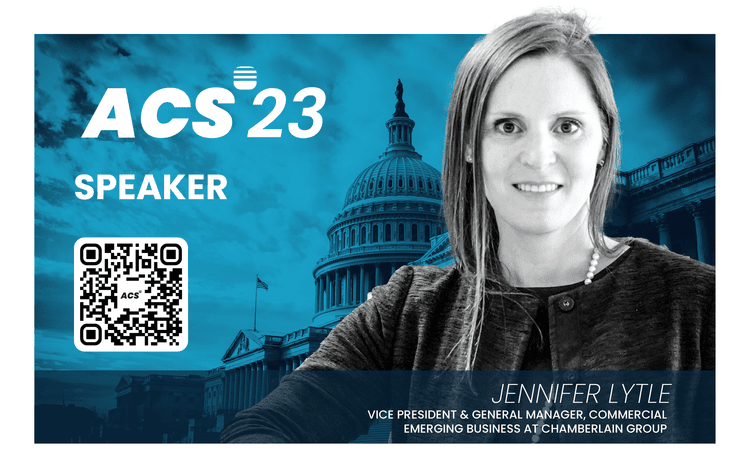
Examples of the 40+ speakers scheduled to be there:
We will be bringing the Access Control Village to CREtech New York. More information coming soon!