Volume 22 | July 18, 2023
Welcome to Brief Volume 22! I do not know about you, but for me this summer is quickly moving along fast.
As discussed in Volume 20, the purpose of the Brief was to discuss changes and trends in the global access control industry, focusing on North America and Europe. The Brief explored the shift from a security-focused industry to one that includes the mainstream market, the adoption of software as a product, and the impact of digital transformation. The Brief provided insights into industry-wide changes and the new opportunities and challenges that arise from these changes. In Brief 21, we focused specifically on the North American access control and smart lock industry, highlighting the need to embrace both high-security and mainstream markets, the importance of online and offline business worlds, and the impact of Big Tech on manufacturers' businesses and customer relationships. Among other observations, I also provided thoughts on the industry's consolidation, the impact of mobile wallets, and the lack of innovation in the smart lock industry.
In this Brief, I will dive deeper into Europe, specifically focusing on Access Control and Smart Locks.
Before we jump into it, more reminders of…
UPCOMING TRIPS & OPPORTUNITIES TO CONNECT
I'm excited to announce that I plan several trips and hope to meet some of you in person. Here is my travel schedule:
-
July 19 & 20: San Francisco/Bay Area, US. I'm thrilled to present "The Future and Trends Impacting Access Control and Smart Locks" at the ASIS International SF Bay Area Chapter monthly meeting. I'm also scheduled to meet with Spintly, Safetrust, Oloid, and more.
-
July 25-27: Sydney, Australia. I look forward to meeting with Torus, Goki, smartlox, Daltrey, and Inner Range to deeply understand the market, companies, people, and culture.
-
July 28: Hamilton, New Zealand. I'm set to meet with Gallagher Security and ICT at their HQ!
-
August 14-15: SIA acceleRISE in Denver, Colorado (US). I am sponsoring the happy hour on Monday, August 15, from 5:30 pm to 7:30 pm at Wynkoop Brewing Company. Please stop by and say hello. Additionally, I am excited to share the stage with Erica Grant, CEO of Quantal Security, as we discuss Digital Transformation: The Generation Game- Maximizing Opportunities and Mitigating Risks for Your Future Success. acceleRISE is shaping up to be another amazing event.
I look forward to bringing back the insights and observations I learn from the visit.
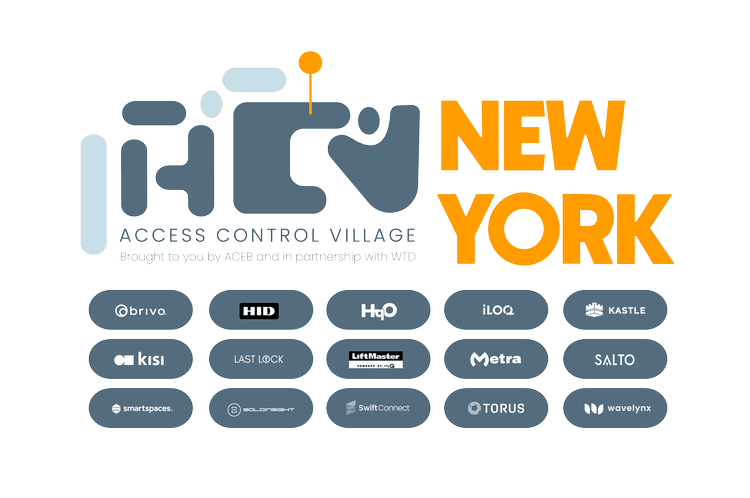
The Access Control and Smart Lock Village at CREtech NY is shaping up to be fantastic. Building off of a successful event in London, I am thrilled to welcome (and thank) the following companies for partnering on the show presence at CREtech NY: HID, HqO, iLOQ, Kisi, Last Lock, Liftmaster, Metra, SmartSpaces, Soloinsight, SwiftConnect, Torus, Wavelynx, Brivo, SALTO Systems, and Kastle Systems. We will have floor space showcasing all these great partners and a stage with 30 different presentations and thought leadership focused on the value of access control and smart locks to the real estate community. More to come (especially content)!
Lastly, Access Control Summit in Washington, DC. The event features 55 speakers from all over the globe, celebrating our industry and telling a great story of where we are today and where we are headed tomorrow. On September 27th, there will be a reception overlooking Washington DC, and on the 28th, a fast-paced and impactful full day of talks. The networking opportunities will be unparalleled, the event's look and feel will be on point, and the conversations will be one-of-a-kind. Everyone is welcome to join, but there are only 150 tickets available to be in the room. Visit https://www.leeodess.com/acs23 to purchase tickets or learn more about the event. Members get 50% off the ticket price. See you there!
Thank you and back to the Brief!

PS: I am sure some of you may forward this on but please do so sparingly and encourage others to sign up here. Thank you!
Access Control and Smart Locks: A Deep Dive Into Europe

Overall observation #1: The European commercial access control and lock companies understand that they are in the hardware and enablement business and that software companies are not a burden (see North America) but an added value contributor to the ecosystem and seen as a viable channel that delivers massive long term return on investment.
The result is a crumbling moat for the legacy hardware business built off the border by border fragmentation and specialization. Although most are partnering, in some cases lock companies are acquiring software capabilities to do it fast versus trying to do it internally (see DOM working with Tapkey or ISEO and Sofia Locks). The European access control and lock market is responding to end-user demand, and the industry is seizing on the opportunity. Great examples of both the legacy hardware industry working well with software players are dormakaba's dKey, any2any, KIWI, Smart Spaces, Bitwards, Parakey, DESI, CoreWillSoft, HID, Salto Systems, and many others. On the flip side, the rate of this change exposes the companies that are not executing this way. Hardware and software partnering is becoming the de facto way business is done. The two benefits that stand out to me for the entire market are an increase in velocity and rate of change, with the positive outcome being a broader market capture.

Overall observation #2: The high-security market in Europe heavily relies on multinational companies, particularly those from North America, and even more so on tech-focused multinational companies opening offices throughout the continent. For the past ten, if not more, years, this has been a boom, and most of them have been served up on a silver platter by global security integrators and manufacturers. The recent slowdown raises concerns about its impact on all stakeholders.
As everyone feels the slowdown, our industry will continue to expand beyond high security and sees more mainstream adoption, appetite to diversify, open up to new relationships, and look to new disciplines like IT and enterprise software will only get greater. Companies that have already shifted focus to the local enterprise or specific verticals such as residential or critical infrastructure or prioritizing teaming with technology companies, rethinking the old truths of how products are priced, sold, and brought to market, are starting to reap the benefits. There are also plenty of examples of how other stakeholders will fill the gap if the legacy integrators fail to take advantage of the opportunity they find themselves in. This is also why North American manufacturers such as Brivo and Verkada are bulking up their in-country resources and human capital. The market is expanding, and their channel can no longer be the "managers" of these companies' growth.

Overall observation #3: An example of this new opportunity is another overall highlight for the European market: the retrofit market.
For example, the United Kingdom, Germany, France, Sweden, Finland, Spain, and others are all seeing a massive focus on existing structures, challenging the conventional wisdom of how our industry targets, sells and services its products. Most of the companies I have spoken to are not doing retrofit instead of new construction but in addition. Unlike the North American market, where there is an adverse reaction and institutional antibodies to e-cylinders and add-on DIY interior locks, Europe has an explicit acceptance. For reference, look at iLOQ and Nuki(and there are more). This is not just a technical transformation; it is a business transformation. It changes the sales process, like pre-sales, value proposition stories, pricing, channels, etc. You do not have to look far to see this opportunity's size. Anyone you talk to knows we are at a tipping point of broad adoption. The software solutions driving fantastic user experience and clever hardware to support it will make the mainstream market respond.
Overall observation #4: There needs to be more online marketing spend and prioritization in the European access control and smart lock industry.
This is true globally, but it is even more apparent in Europe, where little to none is done by the incumbent legacy players, and a large group of newer companies use it to gain awareness efficiently. Conversations with some of the legacy players and many of the new technology companies have boiled it down to three factors:
(1) A lack of investment (or interest) by the leadership teams of large incumbents. This is especially true for those headquartered outside of North America. In other words, Europe and North American leadership teams overseeing people in Europe do not prioritize digital marketing as a growth lever in their business and need to show more interest. This lack of interest, coupled with an inability for marketing teams to internally sell the story of why to their bosses, creates too much friction, making it difficult to convince anyone otherwise - so they stop and continue doing the same thing they have been doing for years, supporting the outside sales team and doing in-person events. It is a shame because the legacy industry could benefit significantly from digital marketing, and we must put the resources in place. As the moats go down technically, so do they in marketing and messaging.
(2) Europe is enormous, fragmented, complex, and differentiated from country to country. Mixing these four with a lower-than-desired total addressable market when you focus on one country creates a reduced ROI and a difficult circle to square: "Where and how do we spend efficiently with the biggest ROI?" Understanding and setting proper expectations on customer acquisition costs is going to be vital.
(3) Lastly, it is easier to keep doing the same thing year after year when the expected result is incremental. There needs to be more in the new bucket (opportunity, expectations, innovation, markets) to make the legacy thinking comfortable with a new way of doing things.
Good news? This will not sustain.

So, what does it mean?
In many ways, Europe is leading the innovation around what our industry will look like. Specifically, North America should look at how the ecosystem works together in Europe and adopt this practice today. Europe has genuinely put what is best for the end-user at the center, showing high self-awareness. It will ultimately be on the right side of history, being industry leaders versus managers of their business and afraid to do "new."
European companies should be a bit louder and prouder of their work here. I know it may be a culture thing :)
How will it unfold?
In one word: Confidence. Ultimately, software is making the world smaller, forcing new ways to do business, and challenging the conventional wisdom of our industry (the software is eating the world part). Europe's short-term successes in showing the rest of the world that we can and should evolve with software and the end-user at the center will allow other parts of the world to follow suit. Sure, the days ahead will not be easy, and we will not see a market turn on a dime. Still, I believe that in the end, we will see Europe's acceptance of software-centricity on its home turf embolden itself as they come to the North American market and ramp up even more what they are doing at home.
Take this lightly at your peril.

Additional Observations on European Access Control:
The introduction of formidable startups and software solutions opens up the small-to-medium-sized customer market that has forever been underserved. This market expansion is significant for all companies in the industry and supports the view that the potential market size is 6 to 7 times larger than what's being reported.
While Proptech and Worktech are global, the European markets are organizing and taking this go-to-market strategy to an entirely different level. The European Proptech and Worktech market is far more mature than North America. Most of these companies are becoming the front-end user experience applications for the access control industry and are seen as necessary to how places function. National pride in supporting local companies, relationships hard to build unless you grew up there, a deep understanding of the market nuances, and a necessity of focus have created this. Examples of companies are Sharry in Prague, essensys in the UK, Commuty in Belgium, Pilar Technologies in the Netherlands, any2any and KIWI in Germany, and Parakey in Sweden. I would suspect a good amount of M&A activity in this space as adoption continues to increase by end users, the local in-country venture capitalist community continues to be minimal, and tangential businesses flushed with cash look to put it to good use.
Additional Observations on European Smart Locks:
The consumer smart lock market is tough in Europe due to the different openings from country to country, language localization needs, and the long list of integration partners needed. Unlike in North America, these constraints make expanding and achieving exponential growth nearly impossible. Outside of a few examples of smart lock companies using an added approach to the existing locks at the door we see moderate to slow growth. Yes, the market has many options, but only a few have or will see exponential success. Consumer smart locks will be better suited not coming from the traditional lock industry. My money is on startups and Big Tech.
When it comes to the electronic adoption of locks in the commercial space, that is a very different story. From everything I am hearing and seeing, small to medium-sized businesses are adopting electrified locks and adaptations (e.g., electronic cylinders and keyways) where the openings are a bit more standardized, cost pressures are lower, and the value propositions and ROI are higher. The biggest constraint right now is the adoption by the locksmith and integrator communities. For every example where you can show me how this is not true, 100 others would support my statements. The result is a manufacturer community forced to go out and build demand independently, then shove it back to the channel to execute for installation. I do not see the manufacturers slowing down. The end-user demand will drive the manufacturers to invest more in business development, reshaping the market dynamics of how products are sold and distributed. I am told this often when global companies explain how their European entities operate differently than European. Then all it takes is one trip to the UK, France, Germany, or Sweden to see it in living color.

In Conclusion
The recent changes have left many of us with more questions than answers about the future, but the size, scope, and action already in motion are undeniable.
It's reminiscent of an old, deep-rooted iron-mongering industry that has been awakened. The European industry was predictable for a long time, with people throwing up their hands at statements like "That's just how it is in [insert country]." However, like most industries at an inflection point impacted by digital transformation, old European truths are being challenged, and new ones are emerging.
What is clear is that, just like many European kings, queens, and empires of the past who built their castles with large thick doors, deep moats, and walls of perceived impenetrability and immortality, they eventually found that some forces were too strong to keep out.
Nowadays, these places in Europe are mostly called monuments and museums where tourists go to hear tales of "how it used to be."
We will soon see similar monuments and museums celebrating the good old days of the European access control and smart lock empires of the past. They have built the same castles with similar thick doors, deep moats, and walls of perceived impenetrability and immortality, only to find that digital transformation is too strong to keep out.
Tickets Are Now On Sale for the Access Control Summit 2023!
With over 50 Executives and Thought Leaders from all over the globe, ACS23 is the must see event of the year in the physical access control and smart lock industry. Click here or on the image below for more details or to buy a ticket at 50% off because you are a member.

What is ACS? Why should you go? Who is going to be there?
Click on the image below to find out.
Join the access control and smart lock industry's most influential executives and thought leaders at the premier event of the year!
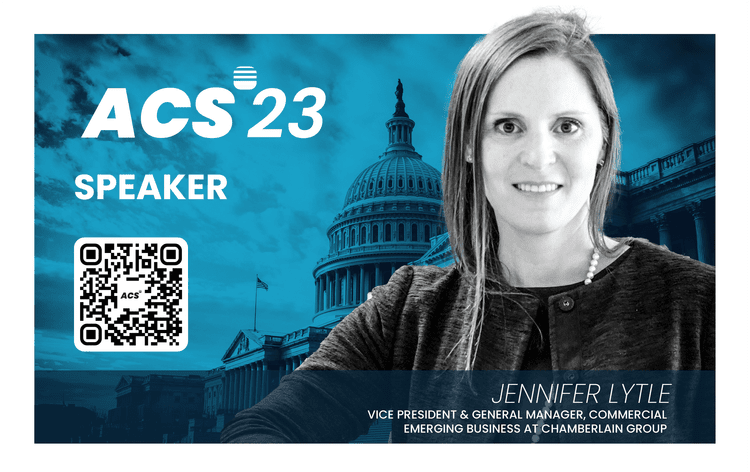
Examples of the 40+ speakers scheduled to be there:

We will be bringing the Access Control Village to CREtech New York. More information coming soon!