Volume 23 | July 31, 2023
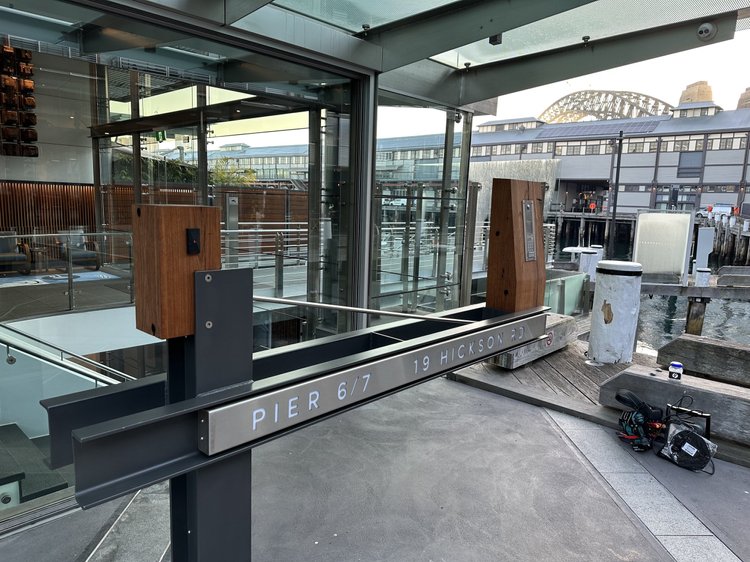
Welcome to Brief Volume 23! I I would like to express my gratitude to Torus, GOKI, smartlox, ICT, and Gallagher Security for hosting me during my visit to Australia and New Zealand last week. In the coming days, I will share my observations of the market and insights on the companies. Most of the pictures in this report were taken during my trip.
Back to the Brief…
As the wave of digital transformation begins to impact our legacy high-security industry, expanding us into the mainstream market, we will face implications and changes that go beyond the technical realm.
The impacts of digital transformation will increasingly make our industry resemble the enterprise software industry, and with it will come adoption of some of its attributes and norms. This new direction brings change, new truths, and even more unknowns, which in turn raises questions.
One question I have been pondering is: who will be the access control app store?
In the end, the words and definitions we use are as important as the technical capabilities of our products. As an industry, we have not prioritized the language we use, both internally and externally.
I will be critically important that we do. Otherwise, someone will do it for us.
This brief attempts to answer this and other related questions. But before we jump in, here are some reminders...
UPCOMING TRIPS & OPPORTUNITIES TO CONNECT
-
August 14-15: SIA acceleRISE in Denver, Colorado (USA). I am sponsoring the happy hour on Monday, August 15, from 5:30 pm to 7:30 pm at Wynkoop Brewing Company. Please stop by and say hello. Additionally, I am excited to share the stage with Erica Grant, CEO of Quantal Security, as we discuss Digital Transformation: The Generation Game- Maximizing Opportunities and Mitigating Risks for Your Future Success. acceleRISE is shaping up to be another amazing event.
-
September 6-7: CEDIA Expo in Denver, Colorado (USA). I will presenting a Smart Stage Session: Unlocking the Future – A Journey from Mechanical to Smart Locks. Thank you to the team at Kaadas for the invitation to present at CEDIA.
-
September 12-13: GSX in Dallas, Texas (USA). I will be joining Rob Lydic with Wavelynx and Brandon Arcement with SwiftConnect on a panel discussing The Impacts of the NFC Wallet on the Security Industry. Thank you Wavelynx for the invitation to be on the panel at GSX.
-
September 27-28: The Access Control Summit in Washington, DC (USA). We have updated the agenda online and you can find it here (Bert Hart and Hilary Gallagher crushed the design and layout of this page - thank you both). At the bottom of this Brief is an overview of the panel discussions, presenters, and fireside chats. The event features 60 (up from 55 last time I sent a Brief) speakers from all over the globe, celebrating our industry and telling a great story of where we are today and where we are headed tomorrow. On September 27th, there will be a reception overlooking Washington DC, and on the 28th, a fast-paced and impactful full day of talks. The networking opportunities will be unparalleled, the event's look and feel will be on point, and the conversations will be one-of-a-kind. Everyone is welcome to join, but there are only 150 tickets available to be in the room. Visit https://www.leeodess.com/acs23 to purchase tickets or learn more about the event. Members get 50% off the ticket price. See you there!
Thank you and back to the Brief!

PS: I am sure some of you may forward this on but please do so sparingly and encourage others to sign up here. Thank you!
Who Will Be the Access Control App Store?
Historically, Physical Access Control Systems (PACS) have been our industry's analog app store or even better, a marketplace. PACS were, and in the high-security portion of our industry, still are the center of the wheel from which all third-party hardware and software spoked out from. More or less, PACs were the distributor and primary place where customers discovered and bought the vast majority of what was needed.
As our industry has started to shift to be more software-centric, we are starting to see some of these legacy PACS, with their adoption of cloud and mobile computing, introduce "marketplaces" where customers can select what systems they want to "turn on" and have their PACS integrate with (See LenelS2 Elements Marketplace).
But will that become the industry norm? Will we see PACs continue to dominate, or will other companies like acre, Genetec, Brivo, Kastle Systems, and Openpath follow LenelS2's lead and create their own app store or marketplace? What about lock companies such as Allegion, dormakaba, Salto Systems, ASSA ABLOY, iLOQ, and Kadass? Or reader, controller, and credentialing companies like HID or Wavelynx? Could it be Big Tech giants like Apple, Google, Samsung, or even Amazon? Or technology enablers like NXP? What about newcomers like NiniID, Sharry, Hivewatch, or Ambient.ai? (For the sake of going back in time, let's exclude PSIMs from consideration.)
Could tenant engagement apps or building management companies like Envoy, HqO, Cohesion, or SmartSpaces be the ones to lead the charge? Or perhaps middleware players like SwiftConnect, Tapkey, Bitwards, or Soloinsight (although I don't believe it will be Seam)? Or will the Enterprise Software 300-pound gorillas like ServiceNow, Salesforce, Workday, ADP, or even Eptura take the lead? Or will everyone have their own app store or marketplace?
As you can see from my questions, there are many possibilities to consider.
The ship has sailed on the consumer side of the industry, so I won't spend much time on it. The App Store for smart homes is dominated by ecosystem players like Apple, Google, Amazon, Comcast, ADT, and others. I believe this dominance will only become more entrenched. There are custom home and niche market players like Crestron, Josh.ai, and others that serve the high-end 1% of the market. Once you buy into their systems, you're locked in. However, that market is not large enough to drive the commercial market. The only impact the consumer market has on commercial business occurs when the market bleeds up into small and medium-sized businesses and users' expectations of how systems should work, such as ease of use. The ProAV market serves boardrooms and conference rooms within government and enterprise verticals, but it has minimal impact on the commercial access control market. I don't believe this will change any time soon.

In the commercial access control and smart lock market, we are in uncharted waters. In my opinion, for the majority of the market, no one, new or legacy, in our industry will be able to create the App Store.
I think it will come from outside our industry.
There will be marketplaces that end users and integrators use in the high-security market, but we are talking about the entire market here (think the $70B mainstream market, not the $10B cottage high-security market). Although there will be plenty of legacy companies in our industry that will introduce this feature, they will be wildly underfunded and even worse, under-appreciated. This will result in minimal effectiveness as customers start to see the value in our industry embedded into much larger ecosystems where we become a feature and earlier in the discovery funnel.
We just don’t have the permission, skillset, reach, and appetite to make a marketplace or App Store matter at scale. We see it as a feature, press release fodder, or add-on service to our core offering, not a product. Hell, we can’t even prioritize listing integrations properly on a website, and don’t get me started on our inability to keep that list updated.

So, where will end users or customers go to discover and select smart locks or access control systems in the future? Who will be the "app store"?
First, let's define what we mean by "app store," as there are differences among them.
An app store is a digital distribution platform for software applications, typically for mobile or desktop platforms (which are defined below). It is usually a platform where users can browse, download, and install applications for a particular operating system or device, such as the Apple App Store for iOS or the Google Play Store for Android. Historically associated with mobile devices like smartphones and tablets, the app store model has expanded to include other platforms like desktop computers and even smart TVs like Samsung's Smart Hub. This model has been successful because it provides a centralized location for users to discover and acquire software, while also providing a revenue stream for developers through app sales and in-app purchases.
In the context of the access control industry, imagine if an industry app store (looking at you, Mercury Security) existed. This platform would allow users to browse, download, and install applications, middleware, and platforms for physical access control systems. Such a platform would provide a centralized location for customers to discover and acquire access control solutions, while also providing a revenue stream for developers. Furthermore, it would incentivize more developers to create software solutions for our industry.
To make things even more complicated, there are different types of app stores.
As we previously discussed, we typically think of consumer-facing app stores when we consider enterprise apps. However, there are three other types of app stores on the internet.
The first type is marketplaces. These are web, mobile, or desktop applications that facilitate the buying and selling of goods or services. They are more general and can involve a wide variety of products and services. Examples include Amazon, Rakuten, Mercado Libre, and AliExpress. Microsoft's commercial marketplaces, AppSource and Azure Marketplace, and Salesforce's AppExchange are examples of enterprise marketplaces.
The second type is third-party app stores. These are external enterprise app stores that act as app aggregators. They can contain apps that were not approved by Apple, and/or run only on jailbroken or unlocked devices, as well as apps that were uploaded by the developer or ISV themselves. While they can be quite large and popular, they also carry risks of security and privacy. GetJar.com and Aptoide are examples of third-party app stores.
The third type is internal enterprise app stores. These are typically used by companies to build and maintain an internal app marketplace of their own. They are typically used as a catalog for workers in the enterprise to discover and download corporate-sanctioned and secured mobile apps. In the old days, we called this the Intranet.
Understanding the different types of app stores is crucial to developing and implementing a successful app strategy.
In addition to defining the different types of app stores and marketplaces, we should also define some other terms that are sometimes confused with applications: Platforms, Operating Systems, Middleware, and Applications.
Platforms are technology-based services that facilitate exchanges between different groups, usually customers and producers. They provide an online infrastructure or interface that enables interaction, transaction, or sharing of content or services. Digital platforms often benefit from network effects, where the value of the platform increases as more users join, which in turn attracts even more users. Examples of digital platforms include:
-
Social Media Platforms: Services like Facebook and Instagram that allow users to connect, share content, and interact.
-
E-commerce Platforms: Services like Amazon and Alibaba that facilitate the buying and selling of goods.
-
Service Platforms: Uber and Airbnb are examples where services such as transportation and accommodation are provided.
-
Content Platforms: Platforms like YouTube and Netflix where users can create, share, or consume video content.
-
Development Platforms: Github or Docker, which provide a platform for software developers to collaborate, store, and share code.
There are no platforms specific to the access control and smart lock industry.
Operating Systems (OS) are software that manages computer hardware and software resources and provides various services for computer programs. It serves as the bridge between the users and the computer hardware. Common examples of operating systems include Microsoft Windows, macOS, Linux, Android, and iOS. Each of these operating systems can run on different types of hardware and provide a unique user interface. Key functions of an operating system include:
-
Managing hardware resources: This includes the CPU, memory, disk drives, printers, and other peripherals. The OS coordinates all the hardware for the user's needs.
-
Facilitating User Interface: OS provides a user interface, which could be command-line based or graphical for easy interaction between users and the machine.
-
Managing files and directories: It provides a way for users to create, write, read, and delete files.
-
Process management: The OS manages multiple processes running on the computer, ensuring each gets enough CPU time and doesn't interfere with other processes.
-
Security: The operating system also handles security for the overall system, ensuring unauthorized users do not access the system.
Z9 Security or Mercury Security would be the closest thing we have to an OS in the access control and smart lock industry.
Middleware is software that acts as a bridge or intermediary layer between different applications or systems. It allows for communication and data management between disparate applications. In other words, it links different software applications together so they can interact and work together. Common types of middleware include web servers, application servers, content management systems, and similar tools that support application development and delivery. It is typically used most often in complex, distributed environments. Here are a few functions of middleware:
-
Simplifying complexity: Middleware can simplify the development process by providing useful services in a way that's easier to use and more standardized. Developers can then focus on the specific purpose of their application rather than the nuts and bolts of how all the systems communicate.
-
Enabling communication: Middleware can help different applications and systems communicate with each other. This is particularly useful in a distributed system where different parts of the system may be running on different platforms or in different locations.
-
Managing data: Middleware can also handle the movement and management of data between applications and systems. It can handle things like data conversion, data mapping, and data transformation.
We are starting to see the introduction of middleware companies such as SwiftConnect, Oloid, Tapkey, Bitwards, CoreWilSoft, RemoteLock, and DoorDeck in the access control and smart lock industry.
Applications are software programs designed to perform specific tasks for users. They can be developed for various platforms, including desktop computers, laptops, tablets, and mobile devices. Applications enable users to do a wide range of things, from productivity tasks (like word processing or email) to entertainment (like streaming movies or playing games), and even specialized professional tasks (like access control or building management systems). Here are a few types of applications:
-
Desktop Applications: These are programs that run on a desktop or laptop computer. Examples include Microsoft Office, Adobe Photoshop, or video games.
-
Mobile Applications: These are programs that run on mobile devices like smartphones or tablets. They're usually designed with a touch-friendly interface and often leverage features of the device like GPS, camera, or accelerometer. Examples include Instagram, WhatsApp, or Google Maps.
-
Web Applications: These are programs that run in a web browser and don't require installation on the user's device. They're typically accessed over the internet. Examples include Gmail, Google Docs, or Facebook.
-
Hybrid Applications: These are apps that combine elements of both web and mobile applications. They're often written using web technologies (HTML, CSS, JavaScript) and then wrapped in a native application using a platform like Cordova or React Native.
While they have always been around, applications, also sometimes called “ecosystems,” are starting to gain traction and shift the power structures of who is the ultimate interface used by customers on a daily basis. Soloinsight, Cohesion, Sharry, Smart Spaces, HqO, Any2Any, and many others are considered applications in the access control industry. When you move to a vertical focus you start to see lock manufacturers building their very own applications such as the multifamily vertical and the likes of SALTO Homelok and Allegion’s Zentra. You can also describe some PACS as an application.
What is the definition of a Physical Access Control System (PACS)? Is it a platform or an application?
PACS is a combination of both hardware and software. Hardware components include locks, readers, and controllers, while the software manages these devices, sets rules, policies, calendars, and logs data.
Whether it is a platform or an application depends on the system's scope and capabilities. If the system has simpler scope and capabilities, it is considered an application. However, if it integrates with other security and building systems and provides APIs for customization and expansion, it can be considered a platform. A platform serves as a foundation on which additional functionalities or applications can be built and integrated.
Most PACS in the industry would be considered an application, but some might be considered a platform due to the integration with other systems and APIs for customization and expansion.
You have the right to participate but you have to do it differently than previously done.
Where is the opportunity for our industry?
I believe the opportunity lies in two areas:
-
Our PACS (Physical Access Control Systems) becoming adept at going deep into verticals using software as a differentiator. However, at some point, you should hand off the experience to other applications to go deeper or wider than you can or want to go. You have the right to participate but must do it differently than previously done.
-
Hardware should focus on enabling software in a way that allows for mass adoption. Similar to the previous point, a revenue share in the upside software creates through service agreements. You have the right to participate but must do it differently than previously done.
-
Our industry should embrace middleware companies as enablers and a channel. Too many in our industry are resisting the inevitable evolution of middleware companies as viable solution providers for customers. Embracing them means creating programs, looking at different pricing schemes, and speaking positively about them when they are not in the room. I believe some of these middleware companies are better defined as system integrators with independent software vendor capabilities, but it’s messy right now as we normalize the “new.” The faster we get here, the better for everyone, including and most importantly, the end-user.

How do I believe all of this will end up?
Ultimately, I believe we will live in two worlds: old school and new school. For a period of time, the old school will continue to exist. It will even continue to be a larger part of the market.
Until it is not anymore.
As the mainstream market continues to grow, mixed with the changing attitudes of the customer market to more vertical-specific solutions driven by software, desires for integrated systems, and new players entering the market offering the latest and greatest, the cottage high-security market will conform, and the digital transformation will do just that—transform our industry into one of enterprise software centered on safety, security, and convenience.
It is a classic case of when, not if.
And with all that change and enterprise software form, there will be places for customers to go, discover, select, pay for, cancel, change, and manage their enterprise software stack.
Of which, in that stack, will be physical access control systems and smart locks. We will not be an isolated island of risk and protection; we will be an integrated part of a solution set delivering exponential value while delivering on a very important utility—keeping bad people out, locking and unlocking.
Who will be that Enterprise Software app store?
It will be exactly who we think it will be - Apple, Microsoft, Workday, Salesforce, ADP, and a long line of enterprise software solutions that aggregate applications that work with their front end that those enterprises already use to manage and operate their business.
We have not lost the configuration business, yet, but we are about to lose the system admin and management interface to a much more integrated and streamlined interface that is doing much more than just access control.
You are already seeing it happen. Take Microsoft Places and Genetec, HID, Kastle Systems, SwiftConnect, Johnson Controls, and LenelS2.
It is also going to be whichever building management system or tenant engagement system wins the bulk of the market in the commercial real estate and multifamily verticals. I personally believe the tenant engagement application becomes a feature of the larger building management system, workplace management, or human resource management software as it is going to struggle to stand alone and demand the premium they believe they deserve.
But we are a long way away from all of this being solid. And that’s the good news…
We have the opportunity to engage and help shape the new normal.
The question is, will we stop fighting internally over the $10B legacy business and work together to capture the $60B opportunity in front of us?
It starts with the language we use.
Tickets Are Now On Sale for the Access Control Summit 2023!
With over 50 Executives and Thought Leaders from all over the globe, ACS23 is the must see event of the year in the physical access control and smart lock industry. Click here or on the image below for more details or to buy a ticket at 50% off because you are a member.
What is ACS? Why should you go? Who is going to be there?
Click here or on the images below to see the agenda and find out more.
Buy tickets here.
Join the access control and smart lock industry's most influential executives and thought leaders at the premier event of the year!
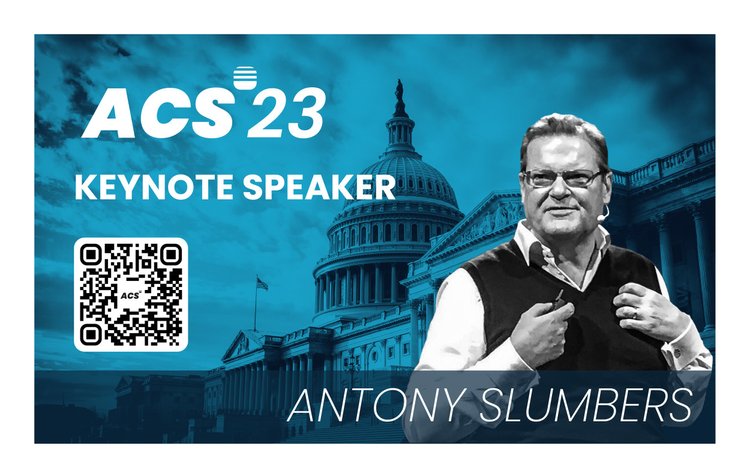
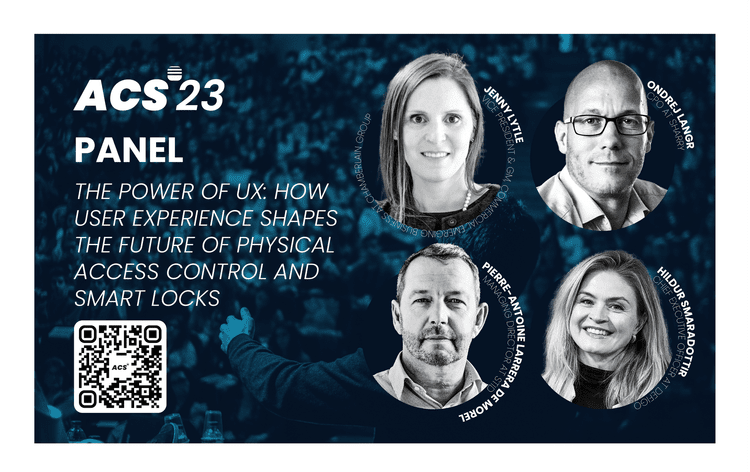
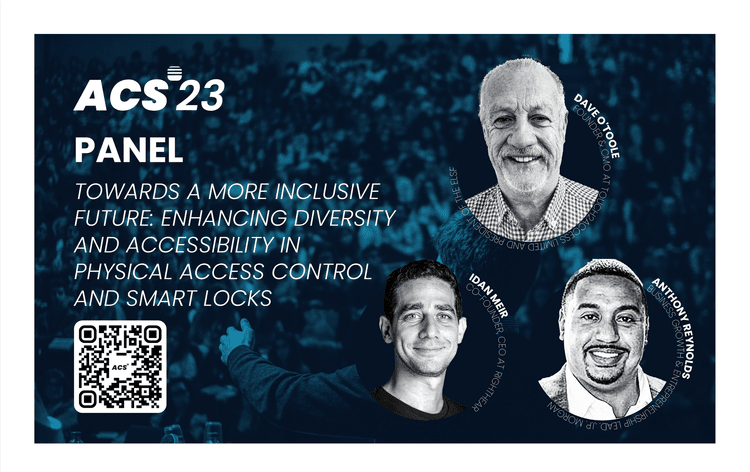
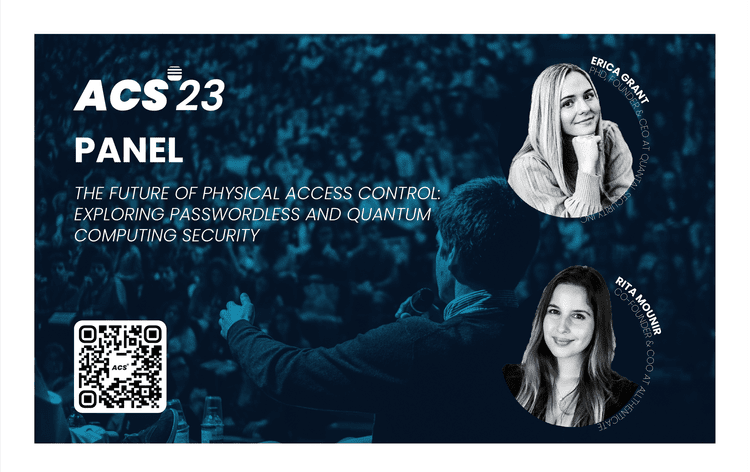
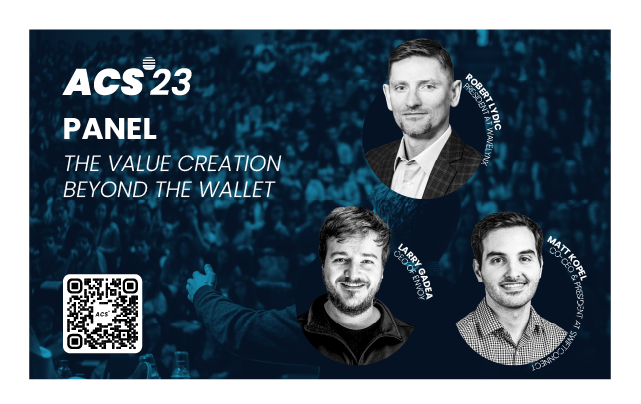
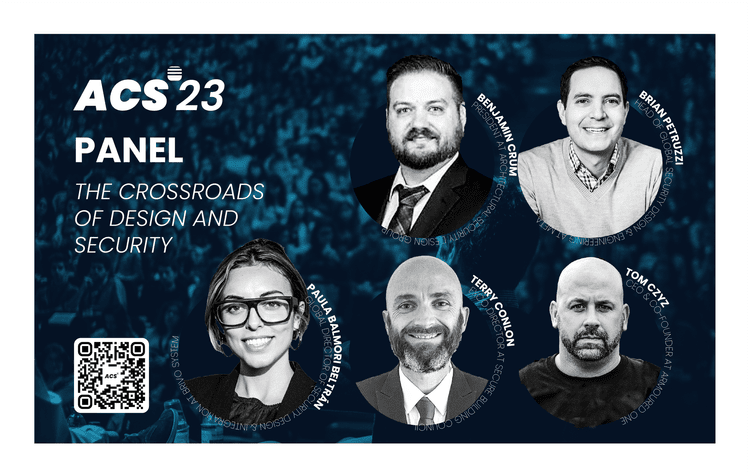
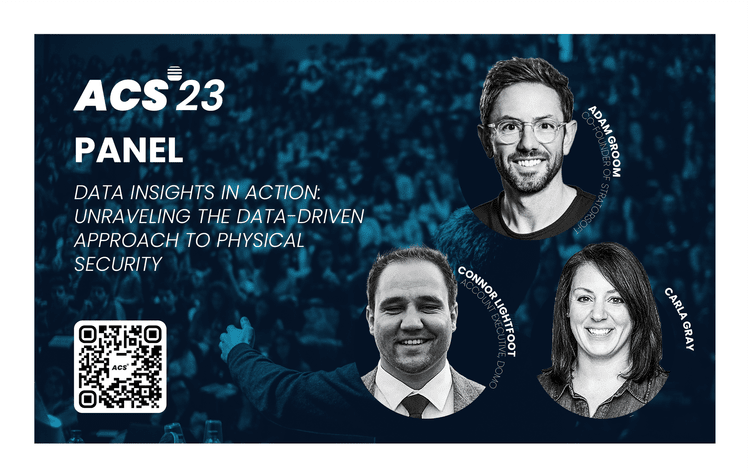
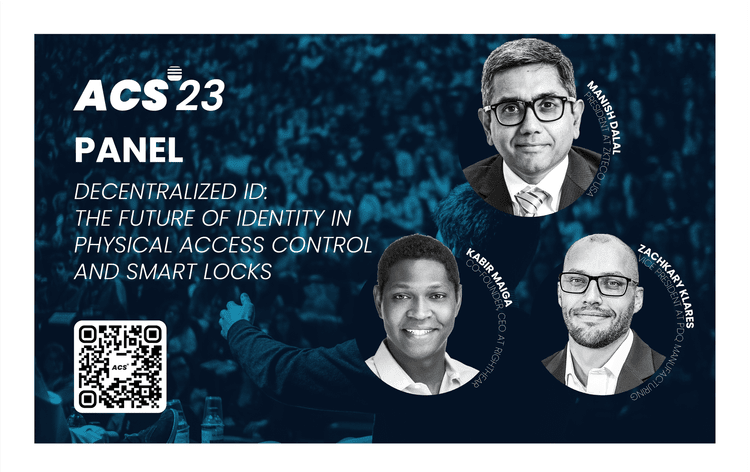
Example of the Keynote and our panel discussions below. We will have 60+ speakers between panel discussions and 1:1 fireside chats.
We will be bringing the Access Control Village to CREtech New York. More information coming soon!