Volume 25 | August 31, 2023
Welcome to Brief Volume 25! This Brief is part 2 of a 2-part series. In part 1, I shared my overall market insights, observations, and thoughts on the Australian and New Zealand markets. In Part 2, I discuss my thoughts, comments, and provide a SOT (Strengths, Opportunities, and Threats) from my meetings with Torus, Gallagher Security, Goki, smartlox, and Integrated Control Technology (ICT). You will also find some of the discussions that have been happening on the Access Control Executive Brief Slack group. I touch on the OSDP hoopla, ADT Commercial acquisition, and comment on "cloud being net negative."
And, of course, I need to highlight ACS23! The response has been nothing short of crazy. Since we last spoke, PSA has partnered as the official Integrator Consortium Partner. I am thrilled that PSA sees this event as a valuable resource for their integrator companies. It is also an excellent way for participating manufacturers to network and discuss with these members. We are about 50 tickets away from being sold out, and I'd love to have this community be the one to jump on those tickets and fill up that room. The agenda has been updated on the website HERE, so please check it out. Please let me know if you have any questions about ACS23!
And lastly, I recently posted about a partnership with the Intersec Expo coming up in January in Dubai. The Access Control Executive Brief will be the official activation partner of their Thought Leadership Pavilion. Long and short, when you sign up directly with Intersec and join as a sponsor of the Pavilion, you and I will work together in putting thought leadership presentations at the show, digital activations before, during, and after, and an opportunity to collaborate on other ways to make this show the most impactful for you and the attendees.
UPCOMING TRIPS & OPPORTUNITIES TO CONNECT
-
September 6-7: CEDIA Expo in Denver, Colorado (USA). I will present a Smart Stage Session: Unlocking the Future – A Journey from Mechanical to Smart Locks. Thank you to the team at Kaadas for the invitation to present at CEDIA.
-
September 12-13: GSX in Dallas, Texas (USA). I will join Rob Lydic with Wavelynx and Brandon Arcement with SwiftConnect on a panel discussing The Impacts of the NFC Wallet on the Security Industry. Here is a quick video discussing what they plan to cover. Thank you, Wavelynx and SwiftConnect, for the invitation to be on the panel at GSX.
-
September 27-28: The Access Control Summit in Washington, DC (USA). We have updated the agenda online, and you can find it here. At the bottom of this Brief is an overview of the panel discussions, presenters, and fireside chats. The event features 60 speakers from around the globe, celebrating our industry and telling a great story of where we are today and where we are headed tomorrow. On September 27th, there will be a reception overlooking Washington DC, and on the 28th, a fast-paced and impactful full day of talks. The networking opportunities will be unparalleled, the event's look and feel will be on point, and the conversations will be one-of-a-kind. Everyone is welcome to join, but there are only 150 tickets available to be in the room. Visit here to purchase tickets or learn more about the event. Members get 50% off the ticket price. See you there!
Thank you and back to the Brief!

PS: I am sure some of you may forward this on but please do so sparingly and encourage others to sign up here. Thank you!
Part 2: My Thoughts on 5 Companies I met With in Australia and New Zealand (plus other tidbits)
I was thrilled to see the response from the local access control and digital lock community in Australia and New Zealand when I reached out to let them know I was coming to town. I was hoping for at least three meetings to rationalize the trip, but in the end, I was able to book seven in the end (Daltrey was the other to meet but I did not cover in this Brief and Inner Range had to cancel). Here are my thoughts and impressions.

Upon arriving in Sydney and freshening up, I had the opportunity to meet one-on-one with their CEO, Trent Loebel. Before I jump into the conversation, here is a little background on Torus. I jokingly describe Torus as "the company making key management sexy again." Torus is "a global provider of smart key management solutions for all industry sectors. You can read more about them online. In 2020, Torus rebranded from C.Q.R.i.T in the US (yeah, that is right…C.Q.R.i.T…woof). The markets they serve are commercial real estate, government, education, hospitality, and many others. Overall, their clear value proposition revolves around operational efficiency and what companies/buildings do to manage their physical keys and do it with technology.
Here is my SOT analysis and thoughts:
Torus Strengths:
-
Leadership and overall team. Trent is a leader who clearly understands who the customer is, the problem they are solving, and their value proposition. They have transparent TCO and ROI stories. The team that I have met is of the same pedigree.
-
Use of technology and sex appeal of product. I have spent time getting to know the competitive landscape, and it is either an old bunch with an inferior product or a new bunch with good tech but very early in their launch. Torus sits right there as the fighter brand. And yes, I used the words "sex appeal" as a descriptor of their product. It is an excellent example of using design to create a great user experience. Do you need the blue lights? No, but do I want the blue lights? 100%. It separates them from the crowd. It makes it memorable. It also gives it more perceived value which is important.
-
Ecosystem. Torus has built the APIs and connectors needed to work with the broader market players and deliver the customer's desired solution. More importantly, they have the mentality to be good partners.
Torus Opportunities:
-
Only two options are needed. Be the lion. This category (really) needs only two options: a low-end with no-frills options to satisfy the price-conscious side of the market and another option that leans more technology forward and captures the lion's share of the market with good margins and a broader total addressable market (TAM). I don't see Torus as the low-end with no frills, but I can see how they can be the standard for the general market.
-
Nontechnical execution. Putting a sales, business development, marketing, and channel strategy sufficiently get the market's attention to put the capital in place to adopt the solution.
-
Global reach. There is a "Kleenex-like" opportunity here for a brand to dominate the market globally vs. disparate offerings per region. The moats to enter a market have more to do with expense than technical or regulatory requirements.
Torus Threats:
-
Noisy market. Can Torus break through all the market noise about going mobile and tell a good story about key management? It is challenging to sell a niche product.
-
Do customers care? Other solutions on the market could be more sophisticated. Does the market care enough to listen or value this category enough?
In Summary
As mentioned in Brief 24, Torus was gracious enough to host a dinner with customers, specifiers, and the ecosystem in attendance after meeting one-on-one. The dinner was a real treat as I was able to meet a wide variety of local stakeholders, get a crash course in the market as well as an opportunity to share my thoughts with a new group of people (one of the attendees also happens to be part of the Nexus Labs). I am grateful to Torus for opening up their customer base and allowing me the opportunity. Plus, the food was excellent, which never hurts. We had a great roundtable discussion of overall trends and the reality of the market right now, as well as one-on-one conversations where I got a ton of information on the commercial real estate smart building market and another on the health of the data center vertical. Both mirror much of what I have seen and heard in Europe and North America. There is a ton of desire for technology and optimism, a lack of delivery around user experience by most companies, especially with mobile, a need for interoperability, and frustration with the mobile wallet rollout, costs, and requirements. There is an opportunistic feeling with some pressure that "it" is about to pop off, mixed with a sense of resolution that things never happen as fast as we think or desire.
In summary, my overall impression of seeing Torus and their team in action locally on their home turf solidified what I already thought: this is an excellent company with great people, with the right solution, working in a tough market of key cabinets. While everyone is touting how keys are dead, they are working on the reality that they will never disappear. They have to be adequately managed in conjunction with other modalities. They are the literal "and" company of industry. They need to get the word out fast, as they can be the Kleenex of our industry.
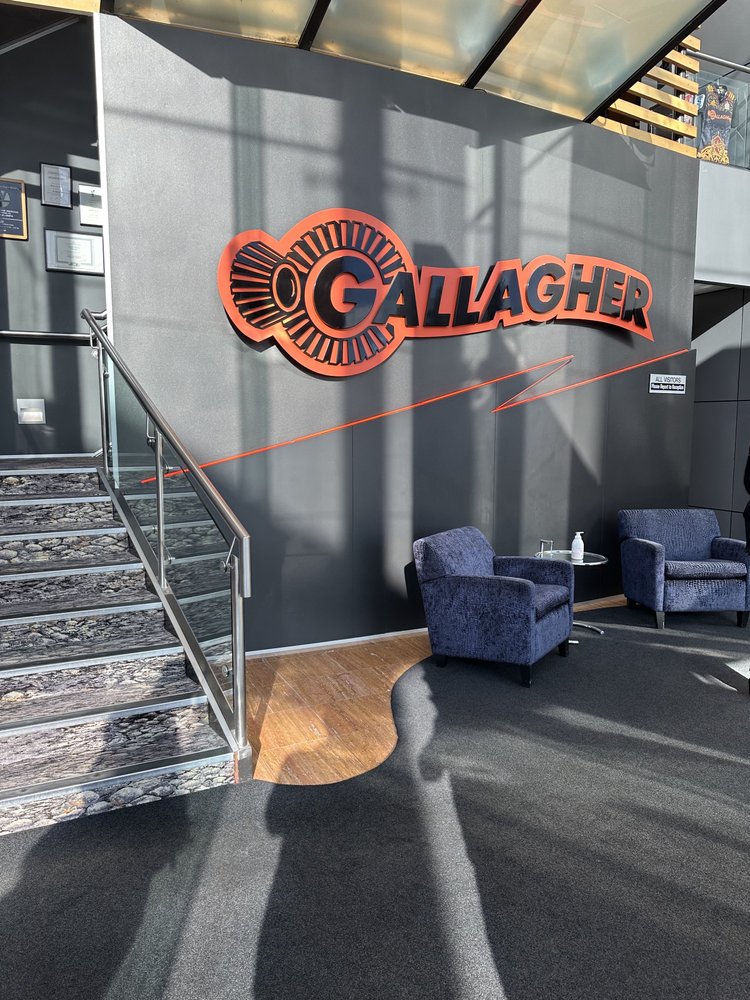
After sending a cold email to the team at Gallagher Security about my impromptu trip to Sydney, I was happy to receive a note back from Evan Morgans (CMO) with the invitation to visit their headquarters in Hamilton, NZ. Ignorantly and without checking logistics, timing, distance … frankly, anything… I said, "Yes!" and started to book my flight to Auckland (the closest airport and 1.5 hours north of Hamilton). I am glad I made the trip. I felt Gallagher Security would be gracious and welcoming with their time, but I was blown away. I recognize that what I do for a living is new and weird for the industry, so I am never sure how I will be received. I have had the opportunity to meet Sir William Gallagher (President at Gallagher Holdings Ltd) a handful of times over the years at trade shows, and he has always been very open, proud of his company, and gracious with his time. This aspect of their culture is set at the top and pervasive throughout the organization.
The morning of the visit, I was picked up by Steve Bell, CTO, and Pascale Howell, Customer Research Manager. Seeing that we had a 1.5-hour drive, it gave me an excellent opportunity to learn about their background, the company, and New Zealand as a whole.
Upon arriving, I was met by their marketing, PR (thank you, Miriam Shaw and team) and facilities teams, who were putting up an American flag (lovely touch). From there and throughout the visit, the team was very gracious with their time over coffee (flat whites for the win), lunch (fish and chips are no joke there), drinks (I recommend the local gin), and dinner. I will spare you all the details, but they all came into the office on a Friday, usually meant for remote work, and they spent the entire day and most of their night with me. Thank you. Meant a lot to me.
Beyond the food, drink, and networking, I had the opportunity to take a factory tour, meet with their entire value stream team (also known as product management) and technical team to get a product and service overview, which included a roadmap discussion, meet with the marketing and communications team, and do a company-wide presentation for those in person and globally remote. If I could get fully dipped into Gallagher Security, I was.
Here are the highlights:
On the comprehensive tour of their onsite factories, including security products and farming, I was educated on the number 8 wire.
What is the number 8 wire?
To me, and for my colleagues in North America, it reminded me of our duct tape, but more meaningful as it is how the Kiwis describe their mentality. And it is also true of Gallagher's founding story and the mentality they bring to the market. It is a great metaphor and insight into how they look at the market. For more on the founding story, check out that here.
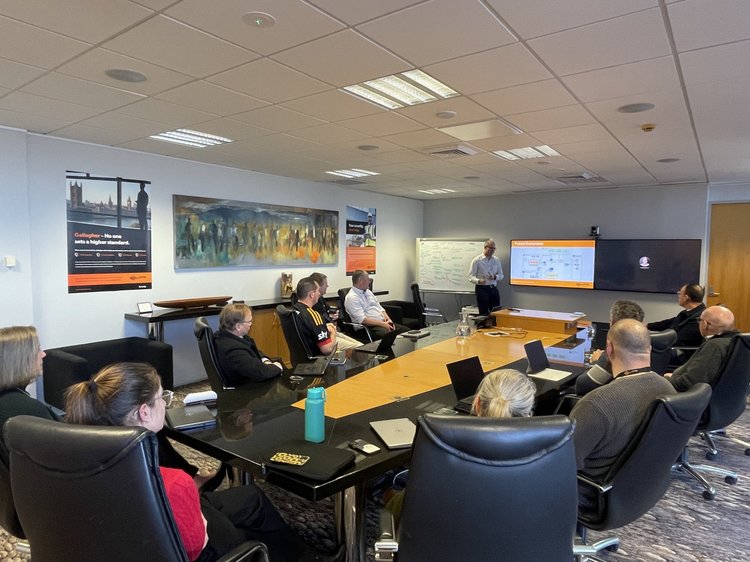
I next had a meeting with their technical and product team, or what they call Value Stream Teams. They are called Value Streams as a way to keep them focused. They want to "build products to create value" and not "we make product and hope it adds value." The presentation by Andrew Scothern, Chief Architect, and the Value Stream teams, led by Meredith Palmer, the Chief Product Officer, was eye-opening. I knew Gallagher Security had a product built for the high-security market but was not sure if it was done in the rear view mirror. Based on my experience with them, I assumed it was made like the other large incumbents, just a little more forward-thinking and a lot more proprietary. But I was wrong. Seeing how the system is architected and developed and having the opportunity to discuss the vision gives me confidence they will be relevant as the industry goes more enterprise software and is looking for broader integrations and more conveniences while being steep in security and safety.
That said, what gives me some pause is more around how it's packaged and brought to market. More on that below, but the opportunity that Gallagher has ahead is one of leadership and a question of desire and appetite for risk. A systematic culture was presented to me in several ways and can be summed up by the adage “measure twice, cut once.” In this case, it may be “measure 4 or 5 times and cut once if needed.”
When I mention the leadership opportunity Gallagher has in front of itself, I'm speaking to the leadership opportunity the security industry needs from the prominent high-security players like Gallagher. Gallagher is one of the large high-security players and has the chance to lead the industry in how it thinks of the security market, go-to-market strategies, the value creation stories we tell and deliver, how we view certification and training, who we certify and train, and how we leverage omni marketing to match how our changing customer discovers. We treat architectures like cloud and mobile as iterations off of yesterday products and that is a mistake. Gallagher has the leadership opportunity to lean harder into the future and not iterate off of yesterday's models or sit around and wait till the market matures and the risk is either low or already gone - even if "the customers aren't asking for it." My answer is, "You are talking to the wrong customers, and sometimes it takes guts, leadership, intuition, and the appetite for some risk."
Here is my SOT analysis and thoughts:
Gallagher Security Strengths:
-
Team and talent on board. Impressive, diverse, and hungry group of people. It is hard to get that impression via their website, on social media, and just at trade shows—something you need to see firsthand in person at their factory.
-
Technical vision and know-how. The presentation on where they want to take their systems is one of the best I have seen. All the questions were answered. I recognize that saying it and doing it are two very different things, but it was impressive to see the vision and building blocks figured out to get there. Will the business keep up or hold back the technical advancements? They are typically in conflict, and we have not seen Gallagher stretch the art of the possible regarding business risk. They could if they wanted to. The engine is big enough.
-
Investment in nontechnical areas. The marketing and branding team is more significant than most of the public companies I visit and is empowered by their CMOs to go and do so. Also something most public companies do not do. Notice I used the acronym CMO. That stands for Chief Marketing Officer. That sets them apart from many companies and shows their commitment to the discipline.
-
Resources they have at their disposal. They do not have to play the public game, so they can maximize resources appropriately where they can get an ROI. They can serve the market, not shareholders. They have the presence of other public companies (they punch above their weight). I'd love to know their revenue per employee compared to their competitors.
-
A rich history that has had many "acts. Can they do another as the market gets impacted by a digital transformation?
Gallagher Security Opportunities:
-
Going beyond high security. As mentioned in my writing and conversations, there is an opportunity to go beyond the $10B high-security market, and it will need more leadership from Gallagher to capture it (Gallagher Security revenue is roughly $325M+). Their SMB product (just a name. A bad name IMO, but a name. It is not for small to medium size businesses) is built right and has all the potential. It is being treated as an add-on or for the "future." At what point does their lucrative bread-and-butter business become a burden like every other incumbent? It's better to get in front of it and lead than play catch up or worse. See all the writing done on Innovators Dilemma for more on this topic. “SMB” is their future.
-
Innovation over iteration. The innovation is there, but as I stated, they value iteration. This strategy comes from the culture of what got them to where they are today. That is fine and should be celebrated, but I want to know if they have incentives for growth. How would 20% of new products and innovation prioritized in their business shake things up? Again, that 20% will either be taken from or gained by them.
-
Go to market strategy and in market motion. Which leads me to this. Will they innovate here? The market is ripe for it and is more straightforward than it may seem. The hardest part is the willingness to make the changes, deprioritize some old truths, and inject some new. They can make the necessary changes as a private company that does not have to kowtow to the public markets. Again, will they?
Gallagher Threats:
-
The speed at which the market is changing. They are at risk of the market growing around them if they do not move. Are they happy being the alternative to LenelS2 or Genetec, or do they have their sites on much larger markets?
-
Reputation of not being willing to partner. Although they have partners who are all predictable and industry "safe" partnerships, and they have the architected system to support it, there is a perception they want to go at it alone, which keeps people away or unwilling to full-throat partners. That could be a problem. The market sees them as closed. Are they? They do not need to be.
-
Upstarts that are agile and also solid. Well-resourced start-ups, like Genea, are moving up the value stream to the application and single pane of glass arena, which tells a more significant value proposition. Gallagher has a very "industry" story that does not play broadly outside the great mainstream market. For instance, can Gallagher be a workplace optimization and a security platform, or will it only focus on security, leaving the rest to someone else? The rest is far richer, and the space they can command if they want to.
In Summary
I believe there is a leadership gap in our industry by the large incumbent companies that trade in the high-security side of our industry. That leadership opportunity goes beyond technical leadership, which our industry holds onto like a crutch because it's what we know. The leadership opportunity I am talking about has to do with how we communicate, the mainstream value creation stories we tell, how we partner, where we show up, evolving our business practices, how we certify and train, who our channels are, how we build community, how we cultivate talent, how we help foster innovation, start-ups, and help the disruptors succeed, and lastly, how we incentive and empower our internal teams so we do not rest on our laurels and 50-year-old technology but blend it with modern practices and use cases. Our large incumbent companies that trade in the high-security side of our industry are falling short on this. They are responsible for either leading or making room for others to lead.
Gallagher Security has the opportunity to lead here. They have the resources, reputation, and team to do it. The question is, do they have the desire? I hope so, and from the conversations that I have had, they do. Go do it.
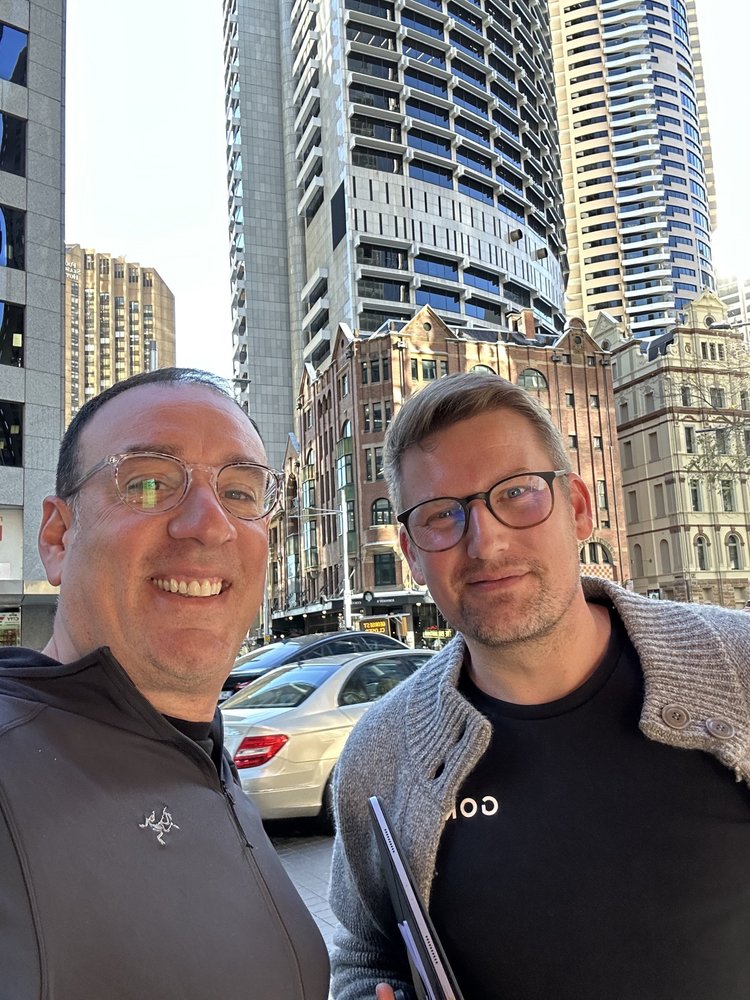
I had the opportunity to have a long and productive lunch with Jack Bowcott, CEO of Goki. I am reminded that you can have 700 Zoom meetings with someone, but they do not equal one meaningful in-person meeting. It is why I travel like I do. For more background information on Goki, go here.
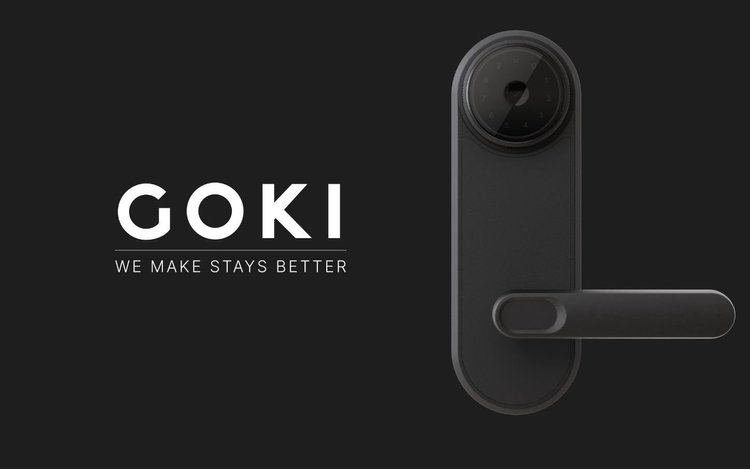
I am very impressed by the work Jack Bowcott and the team are doing at Goki (they recently introduced an integration with Oracle). Goki is a hardware-first, hospitality-focused access control, and hardware manufacturer (although they OEM/ODM their locks, they are to their specifications). Their roots are in the hostel market, but as they have gotten traction, so has their solution in up-market hotels. They are working within the cracks of the more prominent lock players in the market as they leverage their takeover of hardware and software products. It is a good strategy, given their size and the resources they have as a start-up company. They are hyper-focused on the entire workflow with automated check-ins, access, and guest communication, and they are easy to retrofit. They are taking advantage of the unsophistication and vulnerabilities in some locks on the market by giving easy-to "add-on" devices such as their SmartDisc or soon-to-market smart handles that can automate a mechanical lock. They also focus heavily on building relationships and smothering the customers with customer service that other providers can only give if they sell through a channel. I like what they are doing but wonder about the long-term outcome, given the amount of capital they will need to raise to go global and the incumbents' stronghold on large national chains like Marriott, Hyatt, and Hilton. All that said, maybe those incumbents will see Goki as a great way to go downstream.
Here are my SOT analysis and thoughts:
Goki Strengths:
-
Vertical focus. I love a company that focuses and goes deep into a vertical like hospitality. Hardware in the hospitality market needs a renewed focus, especially regarding locks, as they are not truly "smart," and the cost to retrofit is too high, so I am bullish on the opportunity for disruption in this market. I also do not think it will come from an incumbent, so Goki has as much of a chance as anyone to be the one.
-
Playing small ball. Goki has shown the ability to move fast to requests, which makes their customers happy and brings a level of nimbleness that the legacy providers have yet to provide to this market. I also believe their in-country manufacturing, mixed with their proximity to the Asian manufacturing markets, gives them an advantage. Most of their business is in Europe, and they are starting to get interested in North America. Like many companies at their stage, their success and failure will come down to managing their resources, primarily capital and time. Goki is in an interesting position and point of time in their growth.
-
Control of hardware and software. Goki's aesthetics are carefully thought through, delivering a nice-looking user interface. At first, the hardware gave me the "Latch vibes" (note: not the business but the look, feel, and vision of the hardware - they all clearly use Canva), which is/was well received by the market. Salto Systems pioneered aesthetics, and Goki is looking to build off of that. It is an intelligent play, and they are showing that good design is equally desired as anything technical. Like the convenience and security conversation, as an industry, we have yet to prioritize it, and more companies that come into the industry that do will be forced to respond.
Goki Opportunity:
-
Smart growth. There is an opportunity to own the APAC region hospitality market before expanding into Europe or North America. In other words, focus on the regions at hand. They may not need to go to the US and other markets yet.
-
Expand to the whole building with add-on features beyond access control, then go to other verticals. The way hospitality works today is going to be wildly different than tomorrow. At the center of that change is access control. It is both a utility and an enabler. Getting a solid foothold in access control will allow Goki to expand horizontally. Do they move more into a broader experience application or focus on the hotel's need for increased operational efficiency? Or is it something else? All in all, the good news is they have options.
-
Channel creation. A great way to reduce the global expansion burden is to activate the right channel type. Goki has an opportunity to rethink who the right channel partner is, as they must have the burden of bringing along legacy programs. A good mix of traditional and new would do the trick.
Goki Threats:
-
They run out of money. It is expensive to do hardware and software. It is nearly impossible to raise enough money. You can tell that Jack loves the hardware. CEOs like Jack are better off designing and creating products and solutions for other companies with the sales team and dollars to market intensely (looking at you, Gallagher Security, and ICT). Still, they need help to go deep into a vertical, and this team can do it.
-
One bad customer. I always worry about a company at their size that gets a decent size customer and ends up being a custom development shop for them or wraps up all their time and energy into servicing them. It gets in the way of scaling at an early stage.
-
Market leaders wake up. What happens if one of the large companies in the space wakes up to the opportunity, is resourced better, and uses their luxury position of having time and money? Which Goki does not have.
In Summary
Goki has all the potential to make a dent in the hospitality space. They are focused on the vertical, have a great product market fit, balance their hardware and software capabilities, and leverage their proximity to help them with manufacturing. They are a great M & A target for someone looking deep into the hospitality market with a competent team. You will get one part product and another part team to build a vertical focus for a company willing to take on hardware and software. Ultimately, Jake is a technologist who likes to make "stuff." He's done a great job so far and I’d love to see what he can do with unlimited resources.
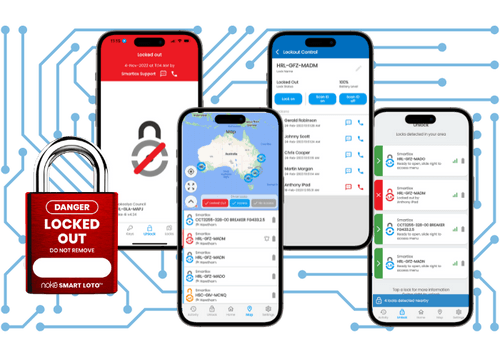
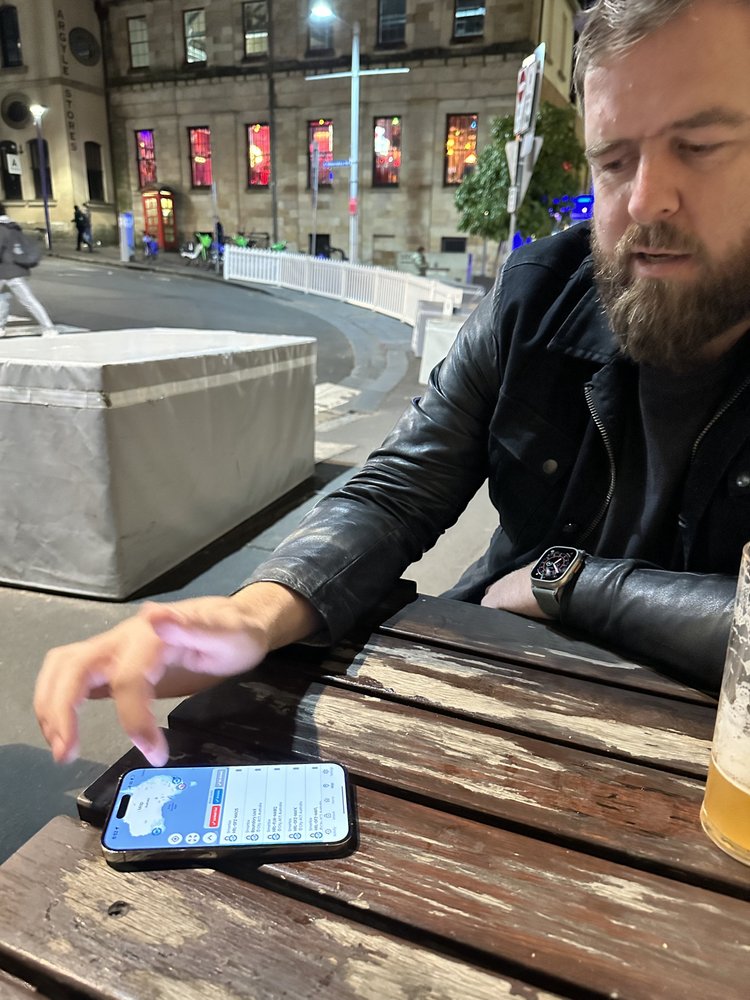
And speaking of my love for our industry's highly focused niche markets, meet smartlox. Headquartered in Canberra, the Australian Capital Territory, smartlox is led by Brent Wijnberg. Brent was gracious enough to train into Sydney and meet me for a few (?) beers and conversation.
Although other prominent players have a presence in Lockout/Tagout (LOTO), they are typically not software and mobile-first companies but hardware companies that have added software as a feature and treat mobile as an accessory. Smartlox decided to use red-painted NokēBluetooth smart padlocks. The premise here is to convert historically analog products, processes, and procedures into digital products, processes, and policies. It is a prime example of a nascent industry being digitized.
They focus on the "dirty jobs" industry - mining, rail, infrastructure, and transport. One use case we discussed was electrical boxes on chair lifts at ski resorts. Using their digital LOTO locks, they can confirm the power is shut off before the downstream electrical box is opened and worked on. There have been cases where technicians' messages were relayed via walkie-talkie, the latency caused a timing problem, and line workers were electrocuted. Now? The downstream lock will unlock once and only the power upstream is cut and the cabinet is locked. Like many companies intensely focused on a nuanced vertical in our industry, once you get moving on the use cases, you quickly realize how massive an industry opportunity it is. It is also why we all know the $10B marketing sizing that Omdia did in the past is not worth the paper it is written on.
Here are my thoughts on their SOT:
Strengths
-
Focus and depth in solution and verticals. They are going deep, building relationships, and a catered solution set for these verticals. There are no competing use cases sucking up resources, so they can intensely focus on delivering needed features others can not rationalize spending the time and effort on. This focus is a secret weapon on how a small company and team can take over a vertical.
-
Do not come from the industry. When you meet with Brent, you realize the burden that many companies in our sector carry with them of legacy thinking, concerns, and all the reasons why they can't exist. Between the focus and lack of constraints, it feels like an uncontested lane to the hoop (there is little in their way of winning in this category).
-
Team. When you meet Brent, it is undeniable that he is exceptionally relatable, thoughtful, and focused on what the objective is here to win. He has also partnered with a group of creative people he has known for years from other business ventures they had. They are not worried about being the next Gallagher Security or chasing every opportunity. Their focus is on growing their market share in the LOTO business.
-
The deployment model has a low level of effort. I was impressed to see the initial starter kit they put together to get a customer up and going quickly. All it was was five or ten padlocks, an app download, and a quick start guide to get the ball rolling. There needs to be a high level of effort required to get going. It looks like a great SEO and industry-specific trade show go-to-market opportunity with low customer acquisition costs.
Opportunities
-
Geographic market growth. This niche, unlike hospitality for Goki, has limited boundaries. Seeing the low deployment model, the word-of-mouth opportunity with this customer base, and the sheer size of companies globally, the ability to expand globally looks like a fruitful endeavor.
-
Broaden team for coverage. Iron is hot, and balancing the proper investment to have feet on the street with a digital presence seems critical right now. This effort may spark the need to bring on some capital as they could slam dunk specific verticals, like mining, to be the standard.
-
Channel build-out. They are starting to see traction from large players like Convergint, but this solution's low level of effort and niche focus allows them to work with work safety consultants and contractors who are the trusted voices. This product can be something other than a security channel go-to-market strategy as it focuses more on health, wellness, and safety. Still, it does look like a market that, if I were a security integrator, I'd look to target a single salesperson to penetrate the market with. Could LOTO be an entry point or a loss leader in construction, heavy machinery, industrial, and other "dirty job" markets? Looks like it could be.
Threats
-
A single source of locks is Nokē. I got to know the founding team at Nokē years ago and thought Janus acquiring them was a great fit. But as much as they may try an OEM for 3rd parties, it's not a core part of Janus's business. Janus is a self-storage company that has technology. OEM'ing for 3rd parties is not a side hustle, and I worry about that when it comes to smartlox. It probably works at the volumes they are doing now, but as they scale, it would seem like a weak link in the chain that needs to be shored up as they grow. It is an opportunity for other padlock manufacturers.
-
Capital. Brent expressed that they have done a great job of maximizing their capital, and from what I can infer, it looks like that. But if they are going to take advantage of the opportunities in front of them, they are going to need more resources. Given the market conditions and lack of institutional investors in the early stages of start-ups, it is a delicate dance right now. Still, the fact that they are seeing growth are software-centric (aka. don't make hardware) and are RMR-based should be an attractive investment thesis.
-
Incumbent competition. At some point, the incumbents may seize the real market opportunity and put resources towards growing this market. They can bundle or, even worse, take a loss for a while, which puts pressure on smaller, more stand-alone businesses that need the margins to survive.
In Summary
Where Jack at Goki is the perfect definition of a technologist, Brent Wijnberg is the ideal definition of an entrepreneur. He and his team saw an opportunity and went for it. They've done a great job of finding a niche that needed the care, love, and attention to drive more value (and reap its rewards). It will be interesting to see their journey and whether they want to go bigger or keep it as a profitable and manageable business. You can easily see how this can become something like Knox Box - highly specialized, hard to compete with, and an excellent cash cow business. I hope they avoid getting pulled into other verticals or start to go deeper into buildings and try to be a full-suite access control provider. They also need to derisk themselves by having a single source on the lock. They should either find their own OEM or ODM or source multiple locks. They should not go out and integrate with a bunch of different padlocks, as the simplicity of their kits is a differentiator that makes it easy for them to get traction. The padlocks are a means to an end (that end being software). And lastly, relationships are hard to break. Their focus allows them to build deep relationships with a market that's been an afterthought or side hustle by many. If they continue to go deep, they can be the Kleenex of LOTO (and Brent, all your dreams of being the Kleenex of LOTO will have come true 🙂).
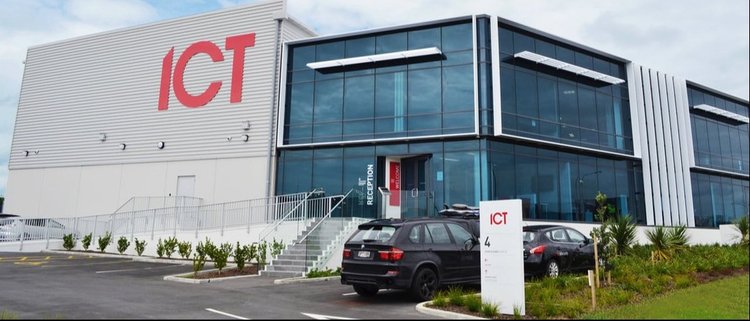
Integrated Control Technology (ICT)
Due to plane delays getting me to Auckland late, I jetted up 20 minutes north of the airport to meet up with Haydan Burr (CEO), Damian Butters (CTO), and Sarah Thompson (CPO) for dinner. I hoped to get a tour of their facilities, but given the time, we decided to make it a dinner. My exposure to ICT leading up to the meeting was limited to the North American team. I never understood what value they brought, the origin story, or how this "little" company out of New Zealand would be relevant long term. Happily, over dinner, I got the entire story. I am grateful that their leadership team took the time out to meet (and Haydan driving me to my hotel after dinner), and it reminded me how important it is to spend time with those who are setting the culture and strategies. It also reminded me how hard it is for companies to do so globally.
Given its roots and approach to the market, ICT is an interesting company. Hayden (CEO), from New Zealand, spent much of his career living and working in Canada successfully in the intrusion detection industry. So when he left Canada and moved back to New Zealand, he rebooted an idea and concept to bring access control, tightly coupled with intrusion detection, to market but done with a modern technology architecture. That means it has built-in APIs, business models, and processes to be onsite, in the cloud, and part of a broader ecosystem. My take is that the system was built for yesterday, today, and tomorrow. It was also constructed heavily for the channel and administrator. The go-to-market strategy has taken on, especially in North America, an old-school feel, making it play more to the yesterday and today way that many in our industry bring new things to market - they shove it heavily through all the old and then wonder why it does not see different results. Now, the today and yesterday part of our industry typically pays for the opportunities of tomorrow, and ICT is no different. They methodically stayed focused on their strengths - home territory, Canada, and in the cracks of the market where they could win the mindshare and wallet where others were not. And it paid off in an opportunity to have a PE firm invest the capital they need to move from focused, slow, and tactical to broad, tactical, and exponential. It will be interesting to see the direction ICT goes. They have all the opportunity to lead either in the mid-market or deep into verticals. The product is there. It has too much old-school horizontal feel with legacy go-to-market mentalities that help grow in the $10B high-security market (eating into the existing market while benefiting the modest growth our industry sees in the high-security sector). Still, with some tweaks to the solution offering, an aggressive marketing plan, and a demand generation strategy, they can go from "just another" to something special. The demographics and incentives are there at ICT. Now comes to execution and desire. I think they can do it.
Here are my thoughts on their SOT:
ICT Strengths
-
Modern technology built without a lot of baggage. They created this right architecturally to be a horizontal security play. I was given the impression that bolting on 3rd party ecosystem solutions is not a problem, so the potential as we move into this next phase as an industry is there. They can bolt on vertical features easily and partner where and when needed.
-
System works natively with intrusion detection. It is a nice differentiator from other systems on the market that is attractive to dealers and end users who see value in the two work seamlessly together. There has always been a great desire to see more intrusion contractors do more access control and access control contractors do more intrusion (something of a "super dealer") that can maximize the recurring revenue models. DMP and Alarm.comare other manufacturer examples, and ADT or Tyco are examples of contractors doing such, but most come at the market from the bottom up. I do believe more high-security contractors reluctant to move down the market, specialize in specific verticals, or who won't focus on more mainstream enterprise software solutions are going to have to bundle more traditional security offerings together beyond access control and video, so this is set up nicely to be at the center of that change when it happens.
-
Everything is gravy, especially in the US. It is always nice to be in a position to have the US as a growth market. Although they are not new, as a fighter brand, they can be more nimble and play offense versus the legacy players who are reluctant to change and play defense. The market is much larger than perceived, and these "fresher" players can take a larger lion's share of the new.
ICT Opportunities
-
Fresh capital from a PE Firm. In 2022, ICT took an investment from an Australian-based PE firm, Advent Partner, for an undisclosed amount. What was disclosed was an opportunity for an accelerated global expansion. What matters most is how taking on a PE firm as an investor changes an organization's incentives. It is not a coincidence that there have been recent changes in North American leadership and an investment by a PE firm.
-
New channel opportunity matched with a new program. Our industry has a long history of taking new and disruptive companies, technology, and ideas, shoving them through the old ways of our industry, and then wondering why we see the same historical results. A company like ICT has all the opportunities in the world to balance the old and new by leveraging the old channel to bring business today and create the channel they need to support their plans for the future. Most of those legacy channel partners will be the ones that help them get to tomorrow. Still, they will need a new program that sets proper expectations of how they plan to do business to maximize and take advantage of the opportunity.
-
Tell a rich story digitally and in real life. An aggressive and effective marketing focus is a missing part of the ICT structure. I can appreciate and understand how an aggressive and effective marketing focus can be seen as "nice to have" or "too expensive" when they were self-funding their growth, but given the PE investment, their fresh perspective, and the opportunity in front of them, I hope they prioritize charting that new path forward with great marketing and storytelling. See above about "taking new things and doing old things with it" and why I hope they do something different. An excellent way to start? Hire a CMO.
ICT Threats
-
In the words of DJ Kahled, "Another one." But in this context, the world doesn't need another access control software system focused on high security through a channel, solving for yesterday's use cases slightly better than the legacy guys. So what will be their story, and where do they fit? Will they go after the 5% growth or the 100% growth market opportunity? Or both?
-
Late to the party. They are a bit late to the party, and if you look at the Access Control Topo Map, it's a very crowded party, so how do they compete to be relevant? If I were running strategy for them, I would look at undefended hills in areas like life sciences or financial markets versus markets like multifamily.
-
Investment and know-how in marketing. I spoke about this as an opportunity, but it's so critical that it is also a massive threat with much work and a proper investment to match it. I like the marketing team I have met already. Still, I worry about who drives the overall strategy and running interference regarding the executive or product teams. Most companies that have their CEO or product organization also manage the strategy for their marketing efforts end up being somewhere between mediocre and terrible at best with their communications and marketing execution. On top of that, they will need a leader that "gets them to keep effective marketing talent.
In Summary
Talk about a company poised to do some damage but with a list of ifs attached. They have all the potential in the world, and I like the team, technology, and incentives to go out and do it. Sure, there are fixes needed to some of the products, but with time, that will be taken care of. The success will come down to desire, risk appetite, and execution. They are saying all the right things and have already started to put the team in place to get them to that next level. I hope they pick some verticals and go deep into them with the right ecosystem and channel partners to do some damage. But if they stick the same ways of our industry with a product that is equal to or even better than what is already on the market, I am afraid they will grow but at a pace that is far below what they could be. And if that happens, it is a shame.

In Conclusion - Desire is hard to beat.
Overall, the trip to Australia and New Zealand exceeded all my expectations. I am utterly impressed by the sheer effectiveness of the companies that come out of these small markets (although Australia is a vast land mass, its overall population is small - a 10th of the US). It will be interesting to see what happens to each of the companies listed above. They all have the same potential to be spectacular in their own way, while at the same time, they could end up languishing for a while as a tremendously mature company or lifestyle business. I walked away with the idea that each of them desires to be a growth company and a leader. What I have yet to hear from any of them is being satisfied or fear of what's ahead.
I'll take that desire any day.
(Unfortunately, Inner Range had to cancel, so we could not meet.)
Here are some highlights of news and discussions that have happened over the past few weeks on the Access Control Executive Brief Slack group (if you are getting this Brief, you have been invited, so please jump in and engage or email me for another invite) as well as some timely thoughts on comings and goings of the industry:
OSDP conversation brought on by the Black Hat 2023 presentation by Bishop Fox
-
Based on what I've been told, everything is being handled as part of the process, ultimately leading to improvements. I trust the process.
-
For anyone interested, concerned, or with ideas, I recommend joining the Security Industry Association (SIA) working groupworking on this. Please note that I'm not directing this comment at you specifically, but there has been a lot of criticism from many people who are not contributing or doing the necessary work. Some are simply sitting behind a keyboard and not working together as an industry to help deliver a solution, relying on comments on LinkedIn instead. While that may be entertaining, it isn't effective. If we all work together on this and other solutions, the industry as a whole, and ultimately the customers we serve and protect, will benefit greatly.
-
For those who have tried to engage in the Security Industry Association (SIA) working group but were disenfranchised by a long list of valid reasons, I'd recommend giving it another try. While some companies in the group may be unwilling to put their company priorities aside for the greater good, I have found that there is power in numbers, and the more people we have in the group open to change, the more likely we will see the change.
-
I wish we had more open and honest conversations about how the business influences our technical decisions. We spend so much time discussing the technical reasons we do things, like having proprietary systems, or why we don't have some things, like open systems. A high percentage of the reasons behind many of the decisions made are because of business reasons. Fix the incentives of our industry, and you will fix most problems.
-
This is the beginning of many more standards as the industry transitions from cottage to mainstream. We should collectively embrace it now.
Here are some thoughts on the recent acquisition of ADT Commercial by GTCR
-
GTCR:
-
The leadership team at GTCR has a proven track record and a process/system in place.
-
GTCR likely sees this as a ripe opportunity to take advantage of past experiences, an ever-changing ADT strategy, and current market opportunities.
-
-
-
Market Opportunity:
-
There is a genuine desire for access control service companies, but opportunities are limited, especially at scale. Right now. I field 1 to 2 PE Firms inquiring about this a week.
-
Private equity firms are eager to invest in security service companies at scale, but roll-ups can be difficult. I field 1 to 2 PE Firms inquiring about this a week.
-
The ADT Commercial acquisition is smart and can drive growth and return. GTCR are no dummies.
-
Other commercial access control integrators have an opportunity to build up their service side of the business, as money is currently seeking such opportunities. I'd focus on this.
-
-
-
Other Observations:
-
Manufacturers seek loyal, progressive, and effective large integrators to partner with.
-
As the industry moves towards manufacturers doing more direct deals with end-users, system integrators will have more opportunities to provide professional services. Teaming will be critical moving forward. See Enterprise Software for examples.
-
Large enterprises seek to team with progressive system integrators, which presents an opportunity for those who embrace it early with clear points of view.
-
-
-
ADT:
-
ADT's strength is its brand name, which is more relevant in the consumer market.
-
ADT has continuously changed at the leadership table and strategy whiplash.
-
It remains to be seen if ADT will continue with its current strategy or pivot again within the next 24 months.
-
-
-
Overall:
-
GTCR's acquisition of ADT Commercial is a smart move. I trust them
-
ADT got cash and an opportunity to focus, but it remains to be seen if they will deliver. I don't trust them.
-
-
And lastly, "Cloud" is a net positive for every stakeholder in our industry. Anyone telling you otherwise is not doing the math and has an identity problem.
-
What I mean by "math" is that whenever our industry talks about "change," cloud and mobile included, we do so in a manner where the numerator (change) is different. Still, the denominator (integrator, market, manufacturers, etc.) always stays the same. The only way "cloud" is net negative is if you don't broaden your thinking to understand the need to change the denominator. For all integrators that stick to the old truths and don't change with the transformation, yes, this will be a net negative. But for those that do, the upside is far more significant than the traditional marketplace of our industry.
-
What I mean by "identity" is that, as an industry, many of the conversations we have are clouded by the identity we have with our work. With all the change happening right now, we are looking to point the finger at "cloud" or "mobile" when I feel it's much more significant and broader as the market shifts. There are examples where it is not or is slow to change. But like Borders, Sears, Blackberry, and Kodak, just a few examples of companies that were initially resistant or slow to adapt to the rise of online digital marketing and the broader digital transformation, we will have ours—getting caught up in our identity and emotions as an industry is easy, especially when we feel threatened or uncomfortable. Still, we must embrace the changes and bring in new truths while keeping the old ones supporting the massive opportunity. Let's not analyze this transformation based on our identity but rather be more curious and open to the opportunities it presents.
Tickets Are Now On Sale for the Access Control Summit 2023!
With over 50 Executives and Thought Leaders from all over the globe, ACS23 is the must see event of the year in the physical access control and smart lock industry. Click here or on the image below for more details or to buy a ticket at 50% off because you are a member.

We will be bringing the Access Control Village to CREtech New York. More information coming soon!