Volume 34 | November 22, 2023
Welcome to Brief #34, 2024: The Year for Those Who Look Forward!
Reflecting on the past year, planning for 2024, organizing my upcoming India trip, and my continued engagement in and outside the physical access control industry, it has become very clear that our industry has two distinct groups:
-
Those who hold on to yesterday
-
Those who look forward
We need to focus on those that look forward. That is my plan for 2024. I am done placating the cohort who has invested interest in nothing changing. I am done defending the new based on the old. I am going to champion the voices of change, and I am going to extend a hand to those in the legacy with the desire to be part of the new (more on that below).
We appease and give too much voice to the people and companies struggling with digital transformation.
This Brief is a story about just that:
-
What are the two cohorts?
-
What usually happens when digital transformation sets in
-
How the best technology does not always win
-
What happens to companies when they are too slow to adapt
-
Historical industry examples where one group felt threatened and what happened
-
What to do with that group and how we can lean even further into the digital transformation
-
And a case study on a well-known brand, Disney, and how they've turned the digital transformation corner. While researching, I kept returning to Disney, so I wanted to share some of what I learned
I aim to use 2023 as a starting line for the next 30 years. I encourage you to do so as well. To do so, like at any race, running, biking, or cross-country skiing, we need to put the cohort that can win this race out in front and let the other groups naturally take their spot in their pins. It's not a case of one being good or bad. It's just a case of self-awareness, getting out of the way, and putting ourselves (the industry) in the best position to win.
If, for any reason, I am not meeting your expectations, please feel free to let me know.
Happy Thanksgiving to those of you who celebrate and I will see you next in December.
Thank you!

PS: I am sure some of you may forward this on but please do so sparingly and encourage others to sign up here. Thank you!
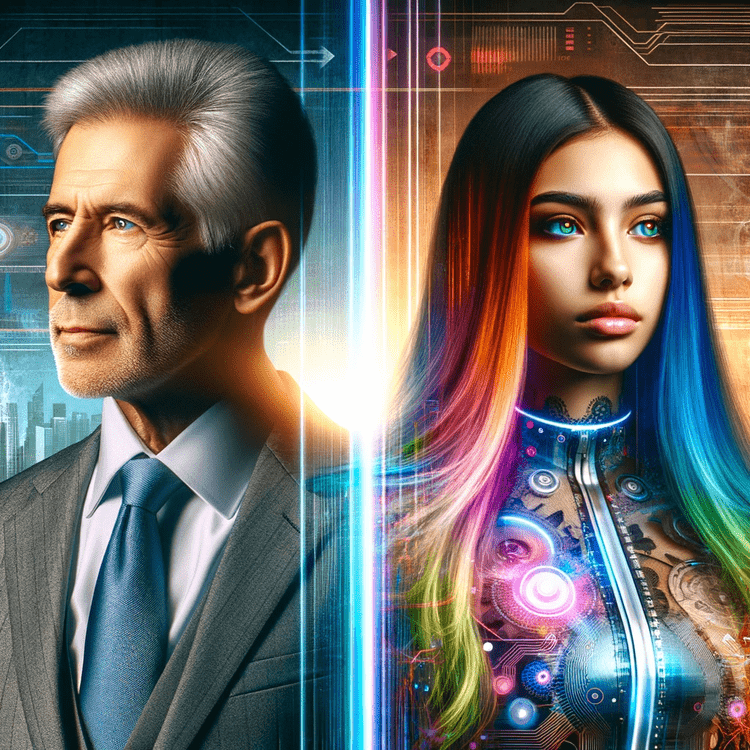
Let's start with the two cohorts.
On one side, you have a group uncomfortable with going mainstream. The way you can spot this cohort is as follows:
-
They use the past 30 years as the lens through which they judge every change happening.
-
They see the digital transformation as a net negative because it threatens their identity.
-
The treatment of cloud, mobile, and AI is a feature iterated off of yesterday's products, set of truths, and norms.
-
A large part of their marketing budget is a physical presence at trade shows, and they have a minimal online presence. They usually also need a Chief Marketing Officer.
-
Their overall message is focused on high-security use cases, and they lack a value-creation story or solution set that supports operational efficiency and revenue generation demands.
-
They focus on the door that does not include people or things.
-
They specify products and solutions based on what they know rather than what they can learn.
-
They raise their hand and nod to support big data, cloud computing, and AI as a megatrend but don't have a strategy to support it.
-
They have project-based business models but need help to include SaaS models.
-
They are 100% traditional channel focus.
-
Their channel program is focused on access to products rather than building community.
Conversely, you have a group that is very comfortable with going mainstream. They are energized by the opportunities ahead. The way you can spot this cohort is as follows:
-
They use the next 30 years as the lens through which they judge the opportunity.
-
They recognize that their customer base has shifted from 100% offline to a large percentage now online, so they focus on meeting the customers where they are.
-
They have flexibility in how they make money. They are not solely dependent on hardware sales.
-
They see the market opportunity to go beyond the traditional high-security market. This includes deep vertical focus and broader markets like small to medium businesses.
-
They have an ecosystem mindset.
-
They build software-, mobile-, AI-, and cloud-first. It is an architecture, not a feature. It is a culture, not just a product.
-
They see data as a product and a tool in which they build value-added services.
-
They focused on a new stakeholder, the consumer. And subsequently are focused on user experience.
-
The channel is seen as an accelerant to their end-user demand generation strategies, not their end-user demand generation strategy.
-
They have different definitions for their truths that include some of the old. For instance, they have a different definition for the enterprise.
This second cohort is our industry's new Mount Rushmore of Power Players. Yes, we should applaud and celebrate those in our industry who built it over the past 30 years and have paved the way for the next 30 years. Still, we need to cut the rope attached to the bags of legacy holding back the industry to become what it needs to be and garner the lion's share of the total addressable market that goes beyond keeping bad people out.
For every customer, the old cohort can show me that they want the legacy. I can show you three to four that are asking for the new.
This global digital transformation and disruption is a net positive. Full stop. Always has been. It always will be. It may not be the majority of how our industry business is done today, but I am happy to die on the hill that it will be tomorrow. And that tomorrow is pretty close in the distant future.
Why am I so sure? Because of the long history of other industries that have gone through the same thing we have.
We are not some special unicorn, unscathed by the laws of business gravity. Anyone who tells you otherwise is probably doing so to rationalize their old-timey blog, has self-identified with what they do in the past versus who they can be in the future, or is feeling threatened. Or all of the above and more.
To be fair, change is hard. It can be disorienting, and seeing that our industry has had a history of being slow and predictable, many don't have the muscle memory to relate to this level of change.
Most leaders in our industry have not had to work through change like this.
But what is seen as pain for one group is pleasure for another. And I am here for it.
Where should we go to get an idea of what to do, a map, or at least bring some insights to reflect on?
External industries.
Let's first start with what happens when there is digital transformation.
When an industry undergoes disruption due to digital transformation, it experiences a series of significant changes that can reshape its landscape. We are going through that right now. Here's a breakdown of what typically happens, in no particular order:
Shift in Consumer Behavior: Digital transformation changes how customers interact with our products, services, and industry brands. This can manifest as increased online purchasing, preference for digital services, reliance on online recommendations, and even social media, like LinkedIn, for decision-making.
The Emergence of New Business Models: Companies and customers will adopt subscription models, on-demand services, or platform-based strategies, which can differ significantly from traditional business models that have built this industry.
Decline of Traditional Players: Companies that are slow to adapt or fail to recognize the importance of digital transformation often lose market share, see a good amount of turnover, and may eventually go out of business.
Rise of New Entrants: Startups and tech-savvy companies that leverage the latest digital tools and technologies can quickly gain prominence, often at the expense of established players. This is not about manufacturers but integrators, rep firms, and distribution.
Increased Importance of Data: Data analytics, machine learning, and AI have become central to decision-making tools. Companies rely more on data-driven insights to inform their strategies and operations. Companies build tools and services to deliver these data-driven insights. Integrators, rep firms, and distribution work to include these tools and services in their offering.
Enhanced Customer Experiences: With digital tools, companies offer personalized experiences, instant feedback mechanisms, and streamlined services, raising customer expectations across the industry. It is only sometimes the best product that wins. More on that below.
Operational Efficiencies: Automation, AI, and other digital tools can lead to cost savings, faster service delivery, and more efficient operations. In some ways, you become faster, lighter, and harder to compete with because you are not carrying around the legacy attributes of your business. For some legacy operations, this means cutting some of the past to make way for new ones.
Changes in the Value Chain: Digital transformation can lead to the disintermediation of traditional facilitators or the emergence of new intermediaries and refactoring how our products and services flow to the market.
New Revenue Streams: Companies will find new ways to monetize their offerings, such as through data monetization, digital add-ons, service level agreements, or upselling via online platforms.
Increased Competition: This is a big one. As barriers to entry lower and the legacy moats recede in many digitally transformed industries, there's an influx of new competitors, leading to increased competition. Digital transformation sees no boundaries.
Shift in Skill Requirements: Our industry has a growing demand for digital skills. This demand is leading to a workforce transformation. Companies in our industry throughout the value chain must prioritize hiring for roles in data science, digital marketing, and UX design over traditional roles.
Consolidation, Mergers, and Acquisitions: As the landscape of our industry shifts and changes, there is increased M&A activity, with traditional players acquiring innovative startups to fast-track their digital strategies or companies merging to better compete in the new digital environment. We are already seeing this formation happen with the likes of LenelS2 and Bosch. Expect to see more of it.
While these are commonly observed in disrupted industries, the exact nature and sequence of these changes will vary based on the specific verticals and geographical region. Unfortunately, the change does not happen simultaneously, like a wholesale change. However, the overarching theme is clear: industries that undergo digital disruption face significant change, and adaptability becomes critical to survival and growth.
We are not impervious to these changes. Even if you have "the best and proven technology."

"But but but…the best and proven technology will win, so we are good, right?"
Unfortunately, that is not the case. I contacted my network to get the
examples listed below, which underscore the importance of strategic marketing, adaptability, user experience, and timing in determining market success, even when a product is technically superior and proven when digital transformation comes knocking. Here are some that resonated with me.
Videocassette Recorders (VCRs): Remember when you were the remote for your family VCR? I do. Betamax, introduced by Sony, was technically superior in video quality to VHS, introduced by JVC. However, VHS tapes had longer recording times and were more affordable, which, combined with strategic licensing and partnerships, allowed VHS to dominate the market.
Personal Computers: The Apple Macintosh in the 1980s was technically superior and more user-friendly than many IBM PC compatibles. However, the open nature of the IBM platform and Microsoft's Windows operating system led to a broader range of software and hardware choices, eventually capturing more market share. It is interesting to reflect on how Apple turned this around in their favor, but at the time, IBM PCs ruled the world in computing. Will we see the same when more standards are adopted in our industry?
Digital Audio Players: Remember the Zune? Before the iPod, other MP3 players like the Rio and the Zune, as mentioned earlier, were technically better. However, Apple's integration with iTunes and its brilliant marketing campaigns made the iPod the industry standard. And the rest is history.
Social Networks: Before Facebook, social networks like Friendster and MySpace existed. Although they pioneered many features, Facebook's simplicity, constant innovation, and focus on the user experience allowed it to overtake competitors.
Operating Systems for Smartphones: (I had to research deeper as I was unfamiliar with the different platforms, so let me know how I did). Symbian and Windows Mobile preceded Android and iOS. However, the user-friendly design of Apple's iOS and the open nature and adaptability of Google's Android OS allowed them to dominate the smartphone OS market.
Programming Languages: (The same with this one; I had to trust my computer science friends here with their feedback). Languages like Ada were technically advanced and designed for high-reliability systems. However, languages like C and its derivatives became more popular due to their general-purpose nature and widespread adoption.
Are there any others to mention? There are a ton. I find these examples dual purpose. They highlight examples for those of you who are blazing the new trails. They also give you examples to build stories upon when you are out in the market. You can fight cohort one messaging about how it will not change.
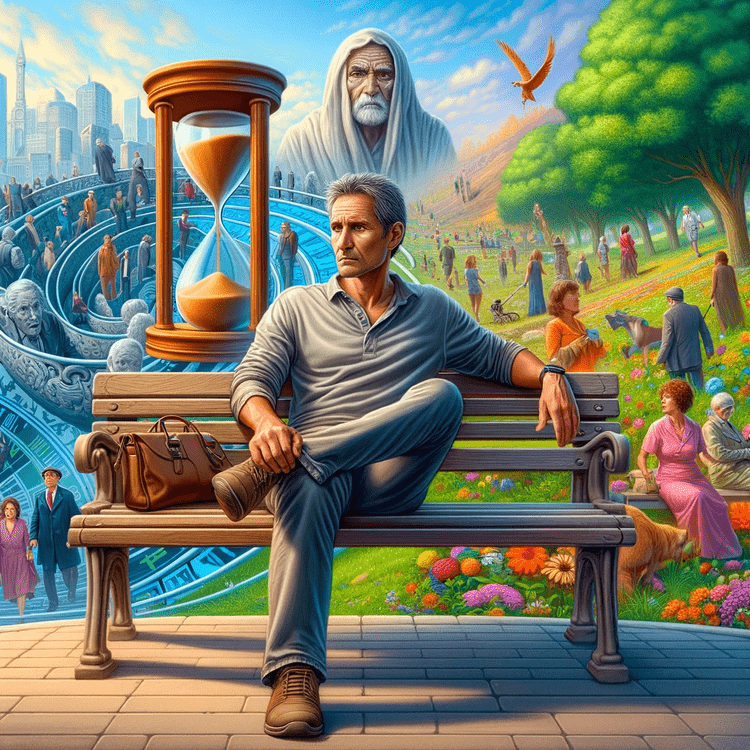
"Ok, ok, I get it. Sometimes, the best technology does not win. But we have shown that we can wait this disruption out, right? We have time. We've always been slow to adapt as an industry."
This typical framing of the past is not valid for the future and needs to stop.
Being resistant or slow to adapt to the rise of broad digital transformation is a self-inflicted death shot to your business. Again, let us draw from other industries and reflect on some well-known examples where their hesitance or inability to adapt led to challenges, lost market share, or even their eventual decline. Here are a few notable examples:
Blockbuster: Side note: I do miss Blockbuster (that is for another post). The video rental giant was slow to recognize the potential of digital streaming and online rentals. While companies like Netflix were moving into online streaming, Blockbuster remained focused on its brick-and-mortar model for too long. When Blockbuster attempted to launch its online service, it was too late to regain the market share lost to competitors. They even had a chance to acquire Netflix at one point. Is there a similar story happening in our industry?
Kodak: Despite being a pioneer in the photography industry and even having early developments in digital photography, Kodak was slow to transition from film to digital. This reluctance was partly due to the lucrative nature of the film business. When Kodak tried to focus on digital, it lost significant ground to competitors. It killed them.
Sears: Once a retail powerhouse, Sears quickly adapted to e-commerce and the digital age. As online shopping grew, companies like Amazon took the lead, while Sears lagged in digital strategy and online marketing, contributing to its decline.
BlackBerry: BlackBerry was once the leader in the smartphone market, especially among business users. However, they were slow to recognize the shift towards apps and more consumer-friendly devices, as seen with Apple's iPhone and Android devices. Despite having superior security and email features, BlackBerry needed to catch up with consumer demands in the broader digital ecosystem.
In clear daylight, these examples highlight the dangers of complacency and the importance of staying agile and receptive to industry changes, especially in the digital age.
Although we know these stories are well known, we fall victim sometimes to "it won't happen to me, that's them." Which is usually a false narrative or what is said right before it happens to you.

"Ok, so we need to change, I get it. If it's so obvious or inevitable, why do some vets or industry blogs we've gotten so used to leaning on for advice feel so differently? They've been right before. Why not now?"
For several reasons. I want to focus on the one not discussed, often because it is not technical and can be uncomfortable because they feel threatened. This is common when change happens, and several industries have experienced scenarios where seasoned professionals or incumbent subject matter experts think they are under-appreciated or sidelined as newer voices and perspectives gain prominence. Here are a few examples:
Education: In rapidly evolving fields, older professors might sometimes feel overshadowed by younger faculty who are more familiar with the latest research methodologies or emerging areas of study.
Technology: With the rapid pace of technological change, older software developers or IT professionals might feel overlooked in favor of younger counterparts natively familiar with newer programming languages or platforms.
Entertainment Industry: Older actors, musicians, and directors often talk about how challenging it can be to find relevant roles or opportunities as the industry favors younger talent or seeks new and contemporary voices.
Advertising: As brands seek to target younger demographics, older professionals in advertising and marketing might feel they need to be more in touch, especially in the digital and social media marketing age.
Sports: Veteran athletes, especially in physically demanding sports, can feel under-appreciated as younger, fresher players come into the limelight.
Journalism: Seasoned journalists trained in traditional reporting may feel sidelined by the rise of digital journalism, bloggers, and influencers who command significant online followings.
Fashion: As trends change, older designers or models might feel that the industry values youth over experience.
These feelings can be exacerbated if a culture doesn't value mentorship or knowledge transfer between generations. Our industry has this appetite. You see mentorship programs like the Security Industry Association's, but we need to transfer knowledge better if we are self-reflective.
And it works both ways. The veterans can also learn from newcomers.
We must promote collaboration between newcomers and veterans to create a richer blend of fresh perspectives and profound experiences.

With that and a great desire to bring the legacy along with the new, as we must have a mixed group of legacy and further, how should we approach the legacy leaders?
Engaging with the legacy technologist or colleague who feels insecure or under appreciated requires empathy, respect, and proactive communication, what most in that generation call "soft skills" (side note: at what point do we see these as "skills?").
Here are some ideas and strategies that can help ensure a positive engagement:
Acknowledge Their Expertise: Recognize their contributions and the value they bring due to their experience. Make it clear that their knowledge is both respected and invaluable. In some ways, we assume they don't need that because they have a title and good pay, but they need this positive acknowledgment more in many ways.
Open Communication: Initiate conversations to understand their concerns and feelings. Having an open dialogue can alleviate feelings of insecurity. It also invites and permits them to have a meaningful conversation that they may not feel comfortable having.
Continuous Learning: Many companies need to encourage and provide opportunities for them to up-skill and learn about the latest technologies. This helps them remain relevant and boosts their confidence. We could use more industry-specific training focused on up-skilling.
Collaborative Projects: Beyond mentoring, assigning and forcing them to collaborate on projects where their experience and the fresh perspectives of newer technologists are needed. This bridges generational gaps.
Promote Inclusivity: Create a work environment that values diversity and inclusivity, not just in age but across all dimensions. We need more of this; you can not just say you will do it. You have to go out and do it.
Define Clear Roles and Update Incentives to Match: Ensure precise roles and responsibilities are updated. This can reduce potential friction and help everyone understand their unique value within the team. Also, many of us are coin-operated to some degree, so put the proper incentives in place to encourage and direct them in the direction you want them to go.
Encourage Reverse Mentorship: There is a massive gap in our mentorship programs. Allow younger employees to teach older employees about new tools, technologies, or perspectives. This fosters mutual respect and helps bridge knowledge gaps.
Leadership Support: Leaders must set the tone. They should actively promote a culture where experience is valued just as much as new ideas. Put some of your young talent in leadership positions. In looking at many of the executives in our industry, we need to do so. Start by attending SIA acceleRISE.
Remember, everyone wants to feel valued and appreciated. By ensuring an environment of mutual respect, continuous learning, and open communication, the legacy of our industry that desires to be effectively engaged and integrated into the evolving cohort of change agents can happen. Again, this can happen. The key part of the last sentence is desire.

In conclusion
While this Brief started by stating that it is time to start focusing our collective attention on the new and the opportunities presented in front of us versus taking a rearview mentality as many in cohort one do, it ends with an ask that we not ignore the legacy but embrace and create an atmosphere where we extend a hand back while pointing forward to bring the ones with the desire to embrace the change with us.
Frankly, it is our leadership responsibility to do so.
A case study of harnessing digital transformation: Disney
I went down many rabbit holes of legacy companies embracing transformation and change. There is a long list of those who did not make it work, but many have. One that stood out to me is Disney.
What can we learn by reflecting on Disney's story? I'll discuss that on Slack. Please join me there.
Disney's history with digital transformation is emblematic of its commitment to staying relevant in the face of evolving consumer preferences and technological advancements. It is fascinating. Here's a brief overview of how Disney has blended physical and digital content over the years:
Website and Early Digital Presence (1990s): Disney launched its first website in the mid-1990s, marking its initial foray into the digital realm.
Disney Interactive (1990s-2010s): Established in the mid-90s, this division focused on creating digital games, interactive content, and online storytelling for Disney's portfolio.
Acquisition of Pixar (2006): Disney's acquisition of Pixar strengthened its animation division and brought in advanced digital animation technologies.
Adoption of Streaming (2010s):
-
Disney Movies Anywhere (2014): A service that allowed users to purchase and stream Disney, Pixar, and Marvel films.
-
Acquisition of BAMTech (2017): This technology company specializing in streaming helped Disney in its later digital endeavors.
-
Launch of Disney+ (2019): This marked Disney's full-fledged entry into the streaming service wars, offering content from Disney, Pixar, Marvel, Star Wars, and National Geographic.
-
Theme Parks and Experiences:
-
MagicBands: Introduced at Walt Disney World, these wristbands use RFID technology to serve as a room key, park ticket, and payment method, streamlining the guest experience.
-
Disney Parks App: Provides guests with real-time information on wait times, showtimes, dining options, and more.
-
Star Wars: Galaxy's Edge: The immersive theme park area introduced a companion app that turns visitors' smartphones into an interactive tool, blending the physical theme park with a digital layer of storytelling.
-
Augmented Reality (AR) and Virtual Reality (VR): Disney Research has invested heavily in AR and VR, resulting in experiences like the "Star Wars: Secrets of the Empire" VR experience at Disney Springs and Downtown Disney.
Direct-to-Consumer Platforms: Beyond Disney+, Disney has expanded with ESPN+ for sports content and acquired a majority stake in Hulu, now under full ownership, diversifying its streaming content.
ShopDisney: Disney revamped its online retail presence, making products from its parks and exclusive merchandise available to customers globally.
The blending of physical and digital content has been a strength for Disney, allowing it to craft immersive experiences that leverage the latest in technology while staying true to its legacy of storytelling. Disney ensures it remains at the forefront of entertainment by continually integrating digital advancements into its offerings, from movies to theme parks. Will it allow them to grow, innovate, and be relevant? History will judge, but my guess (and money) is on them figuring it out.
Here is list of what we have planned for 2024 (subject to change). If any of these interest you and you want more information on them, just reach out.
-
I will continue writing The Briefs 1-2 times a month. Any feedback? Please let me know.
-
www.acalerts.co will officially launch. I am playing around with the model and want to use video more with it. Do you have news? Think of this as a resource.
-
We will continue to engage on Slack. As one member just wrote me “Lee your Slack has been invaluable. I got a visit set up with [name] too get to know him and see if we can work on synergy. He's going to be visiting my factory and we're going to lunch probably next week. I invited another friend to the AC Executive Brief. That friend wanted me to do a bunch of Zoom calls with some long shot customers. I told him to stop messing around, the players are all on Lee's Slack channels.” 😢
-
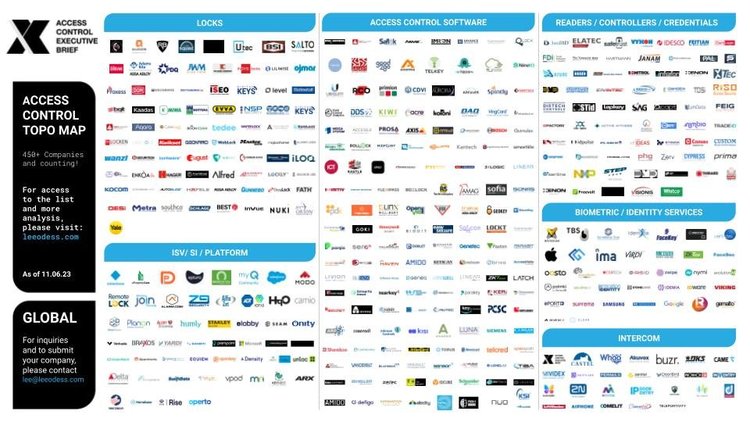
Global Access Control Topo Map will continue to develop. My plan is to break out the different categories and go more in-depth. What do you think of the new design?
-
AC50 Index will launch. We need data and we need to tell our story. I am going to start small but will build.
-
AC Enablements is coming. I want to create a community marketplace for reports, marketing services, and more. We have a deep community and if we work together we can leverage all our strengths.
-
AC Experiences will do an event called #accesscontrol. This influencer event will be held at manufacturers facilities. More details to come but it will be a small group around 25 attendees. Time to redefine “specifier” and “influence.”
-
We have 4 “Whitepapers" in the works but they will be different and done our way. First one? The redefinition of enterprise.
-
I will continue to leverage LinkedIn with more programatic posts and to use it as a way to drive more awareness of trends, news, and Access Control Executive members.
-
I plan to get into the market and visit with company’s. I will do this scheduled outside of events and shows. Next up? India 🇮🇳 late November.
-
I am going to launch a 10 episode podcast that will cover the “and” of our industry. More to come.
-
I am working on an Ebook titled “The Access Control LinkedIn Blueprint: Crafting a Presence that Stands Out.” My intent is to make it no cost to members with a possible webinar and charge non members to access it.
-
I will continue to document the History of Electronic Access Control. The truth is, this is becoming a lot harder than I anticipated. It will not be out in December and I may refund the money I raised. Regardless, I will continue to work on it. It is extremely hard to get the pioneers of our industry to talk, but I am not discouraged. In fact, I am even more determined. It is just taking longer than I like.
-
Here is a preliminary list of conferences and company events where I am speaking. On that, if you would like me to present, moderate, or attend any of your company events, please let me know.
-
January: Intersec in Dubai with The Thought Leadership Pavilion, podcast and videocast on the show floor, and much more.
-
March: MIPIM in Cannes. Still working on the details, but we will have a presence.
-
April:
-
ISC West in Las Vegas. We will not be doing The Lounge but we have a ton planned. If interested in any of these, please let me know.
-
ACS Pop Up: In-Booth Activation:
-
Stage interview format
-
Duration: 12-4pm in partner booth
-
In person, live, and recorded interviews/discussions
-
Scheduled guests for 1:1 topics and panels
-
Engagement with the crowd
-
Comprehensive digital marketing and promotion before, during, and after
-
-
Executive Briefings on Themes
-
Private themed presentations in partner booths
-
Morning sessions (Wednesday & Thursday)
-
Guided booth tours aligned with the theme following presentation
-
Curated list of participants
-
-
A Happy Hour (TBD)
-
Podcast/Videocast on the Show Floor
-
Scheduled podcasts throughout the show
-
Engage attendees through on-Site podcasting/videocasting
-
Comprehensive digital marketing and promotion before, during, and after
-
Sign up information available in 2024
-
-
-
Expo Seguridad Mexico in Mexico City
-
The Security Event with The Forum in Birmingham UK. The response so far has been amazing. We have 2-3 pods left and 3 full days of Thought Leadership to activate on stage.
-
-
May:
-
CREtech London where we will have an expanded “Access Control and Smart Lock Village” and create an immersive Connected Experience.
-
ACS Europe. Location TBD
-
-
August: SIA acceleRISE. We will continue to support this group and it is an honor to be able to sponsor the happy hour every year.
-
September:
-
Legic Connect24 in Switzerland
-
Security Essen in Messe Essen
-
GSX in Orlando
-
-
October:
-
ACS24 in Washington DC
-
OPTECH in Gaylord National Resort & Convention Center National Harbor, MD
-
Securing New Ground in New York
-
Skydd in Stockholm, Sweden
-
-
November
-
December
-
Other events I am thinking about:
-
CONSULT
-
Blueprint
-
APAC region event
-
Latin America event
-
Canadian event
-
South Africa event
If there are other events or initiatives that you believe would be valuable for you, me, or the community, please let me know.
Click on the images below to see some recent interviews made with executives in our industry: