
Volume 37 | December 12, 2023
|
Welcome to Brief #37, titled: A Non-Pedestrian Conversation About the Potential of the LenelS2, Onity, and Supra Acquisition by Honeywell. What a week! First, the news about dormakabba, then the Honeywell news! It made for an exciting weekend. |
|
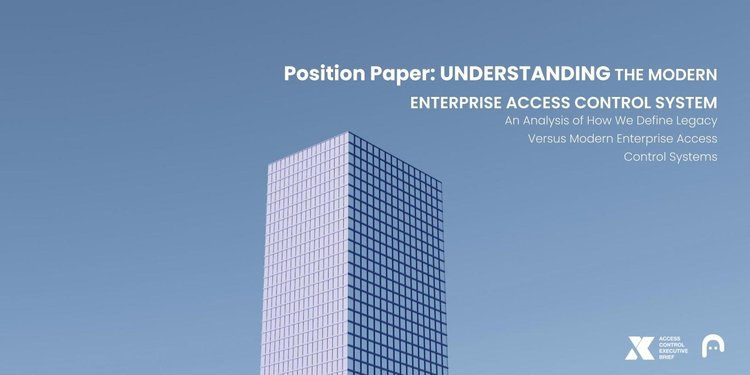
For those interested, I uploaded the first of many positioning papers titled UNDERSTANDING THE MODERN ENTERPRISE ACCESS CONTROL SYSTEM: An Analysis of How We Define Legacy Versus Modern Enterprise Access Control Systems. This paper aims to spark a conversation about the NEW definitions needed to define the modern enterprise. Our industry is well versed on the legacy and uses it as a shield to defend its specs and business. What I wanted to do with this was arm you and the market with something that helps start the conversation of what a MODERN system should include. It does not mean the legacy is terrible...; it just means the NEW is different. Many people are to thank for this, and many of you helped me with feedback and calls and provided your definitions. You know who you are....thank you. |
|
It is posted on www.leeodess.com for public download (free), and I started to promote it on LinkedIn on Monday, Dec 11. I plan to roll out position papers on a variety of topics. Next up: The different types of clouds are different. Please check it out and let me know what you think. It is editable on my end, and I want this to be a valuable tool for you and the community, so please let me know. And thank you, Bert Hart, for the fantastic design. I can't thank you enough. |
|
Thank you, and I hope you have a fantastic rest of the week! I am off to Imperial. Capital’s event, Securing New Ground the rest of the week. If you are there, please stop me and say hello. If, for any reason, I am not meeting your expectations, please feel free to let me know. |
Thank you!

PS: I am sure some of you may forward this on but please do so sparingly and encourage others to sign up here. Thank you!
PSS: If you plan to be at Intersec in Dubai January 16 - 18 or want to be, please let me know, as I will be curating and activating the Thought Leadership Pavilion. It will be 2 full days of presentations, conversations, content creation, and a new spin on this conference. It is one of the biggest and best shows. Thank you, Rick Caruthers, CEO of Galaxy Control Systems, for being the first to sign up. Here is an image of the Thought Leadership Pavilion:

A Non-Pedestrian Conversation About the Potential of the LenelS2, Onity, and Supra Acquisition by Honeywell

Before I delve into the Brief, I want to acknowledge two things:
(1) It's essential to take a moment to celebrate the fact that a company in our industry was recently sold for $5B. The origin story of LenelS2 is genuinely unique, and the fact that it fetched $5B should make us all proud as an industry. To provide some context on the size of this deal, this week Alaska Airlines acquired Hawaiian Airlines for $2B.
(2) Carrier's decision to sell at the peak while simultaneously simplifying their business is a move that could be featured in Harvard Business Review. It serves as a valuable lesson in market timing.
OK, to the Brief.
I wanted to title this Brief: "If Honeywell were doing what Honeywell should have done, then this deal would have never needed to get done." However, as much as that is a story, I want to discuss this situation's implications or potential implications.
I'll begin with what I wrote in Brief 31 from October titled The Need for PE: The LenelS2, Onity, and Supra Story:
"At ACS23, I had the privilege of interviewing Kumar Sokka, GM of LenelS2, and Fayyad, GM of Onity and Supra. It gave us all a front-row seat into what two fresh minds in nascent and meaningful businesses can bring when it comes to strategic thinking, an art of the possible vision, and a modern culture can bring."
"Full stop. If LenelS2, Onity, and Supra were to join forces with a large incumbent, it would be the end of anything spectacular at LenelS2. So people don't get twisted, I'm not saying the end of LenelS2. What I said was the end of anything spectacular. LenelS2 would continue to be in business, and they'd grow moderately. Still, they would be one of many unspectacular physical access control companies we all talk about using the opening line of "I remember when…"
I felt that "This spectacular opportunity needs to be met with spectacular change, and that change will only come from a PE firm."
I hoped a private equity (PE) firm would win the bid 🥹. However, considering that the PE firms in contention were only willing to go up to $3.8-$3.9 billion (confirmed), it's unsurprising that a strategic buyer outbid them.
Now, let's move on to the strategic aspect. As I mentioned, the remaining three strategic options are Allegion, Honeywell, and Everon (ADT Commercial) and their PE Firm, GTCR.
Everon (ADT Commercial) and their PE Firm GTCR seemed ambitious. Still, I was drawn to it because of the enticing incentives and the expectation that they would prioritize driving growth without being burdened by typical public company concerns—[Total tangent, but I'm not too fond of the name Everon 😔].
I heard Allegion was determined to succeed but needed help securing a financial partner. Rumor has it that Wells Fargo couldn't make it happen. Allegion would have been much more exciting and disruptive compared to Honeywell. It would have also been a disaster, but it would have been fascinating to observe and write about. 🤷
Which leads me to Honeywell. My overall sentiment is neutral to slightly positive despite the potential reasons that could lead to a disaster. While it may not turn out well, I prefer to remain optimistic until presented with a compelling reason not to be.
Why?
It is important to note that I am an optimistic supporter of business - especially when a business pays $5B and desperately needs that business. Generally, I give business leaders the benefit of the doubt and view situations as opportunities for progress. However, there are exceptions. These exceptions typically arise from a lack of desire for change and prioritizing shareholder interests over having a vision. This tendency is more common in industrial companies than in tech companies. This information is crucial because it establishes my perspective when evaluating this transaction, which I will discuss further below.
Beyond that, one of the most significant factors is the transformation happening in our industry, which is very different from the past.
Will Honeywell embrace the changes and adopt modern management practices to seize the opportunity in front of them? Or will they stick to traditional industrial management methods and prioritize maximizing shareholder returns?
For now, I hope Jeff Stanek, Kumar Sokka, and new board members like Michael W. Lamach can create a strategy, obtain support and funding, and leverage all these new opportunities to unlock the true potential of Honeywell + LenelS2. It's not about being who we think they are, but who they can become.
There are 5 billion reasons why, and they have until 2025 to deliver.
Otherwise, they may resort to a classic restructuring plan that Honeywell has a history of implementing when they must divert attention from any issues. It has been happening every two years recently, not to mention the constant turnover of talent in and out of the security division, which can be overwhelming.
⏰ The clock is ticking.
It's much healthier to be critical yet optimistic, as it's easy to criticize people (all sugar) but more challenging and enjoyable to engage in critical thinking (more protein).
Let's embrace the complex tasks, have fun, and think critically. Let's start with below.

Why is my overall sentiment neutral to slightly positive?
My neutral to somewhat positive sentiment depends on two factors: the leadership team remaining intact and a sufficient investment being made to justify the $5B acquisition. This investment must go beyond a mere $100M cash per year increase in the bottom line, providing short-term benefits to shareholders and incentives for the leadership team.
To ensure the future relevance of LenelS2's products, the business's investment level should not rely solely on outdated technology.
If this old industrial company wants to transition into a technology company, it needs to make investments. Acquiring LenelS2 alone does not automatically make them a technology company, just as billionaires do not become soccer players simply by buying futbol teams. ⚽️
However, this acquisition does provide them with the opportunity to pursue that transformation.
If they want to, it ultimately comes down to desire and a savviness for investing and navigating the financial markets.
Carrier would never allow it to become what it needed to be. I hope that Honeywell will. And I and others believe they will, regardless of conventional business wisdom and past experiences. Honeywell has no other option.
However, as noted above, for LenelS2 to achieve this, they must modernize their onsite server-based systems. It is widely known that their system carries a significant amount of technical debt. This is a common challenge for legacy products, and I do not envy the task ahead for the product team. Nevertheless, it is necessary work that must be completed. Failure to do so would result in building upon an outdated foundation, primarily focusing on retaining existing enterprise customers and gradually expanding, all to maximize shareholder return. The leadership team at LenelS2 is motivated to undertake this endeavor. What remains to be determined is whether they will be granted the opportunity to do so.
They require a cloud-native offering, and Elements does not fit the bill. They have two options: either acquire one or build one. Making one would be time-consuming, and they don't have the luxury of 5 to 7 years for development. They have a two-year timeframe to develop a strategy and plan and must demonstrate positive momentum.
To address the situation, Carrier should follow the example set by Motorola. Instead of building their cloud offering, they should consider acquiring one, like they did Openpath, to delight their enterprise customers who are becoming skeptical about including a cloud offering in their roadmap. This will provide a clear answer to their security department customers when they inquire about their plan to support cloud technology. We underestimate the need to deliver trust and comfort to our customer base. Why trust and comfort? It is no secret that customers are wondering if the product selections made pre-COVID, the past 30 years, are the solution they need for the next 30 years. Most legacy products are an emphatic no.
LenelS2 is also facing a similar challenge, working with a finance and corporate development department not equipped to handle acquisitions in the $50-$100 million range. They should aim for acquisitions in the $500 million range, although these opportunities are scarce in the industry. But those are limited. Brivo may be a potential candidate, and it will be interesting to see if they pursue this option. It would be bold, and they'd likely have to take Eagle Eye Networks with it. Other options exist in the European and APAC markets, such as ICTout of New Zealand. However, they will more likely focus on companies and services leveraging their onsite systems data and providing a "cloud-like" experience.
They need to reconsider BlueDiamond as a platform for credentials and Bluetooth readers and an IoT data platform that enables rich experiences, automation, optimization, and revenue generation. Blue Diamond's hardware allows the software to deliver solutions. While Blue Diamond is growing and was highlighted in the acquisition deck used by the bankers, it currently has only 50% of its potential and is overly focused on past achievements. As our industry moves from people and places to include things, this is their things play. Also, reliable sources have informed me that BlueDiamond must be updated and carries significant technical debt. It needs more than Botox or a facelift. I am not being critical. I am being realistic that the platform built off of legacy use cases is unsuitable for new demands.

Here are some other interesting tidbits to consider:
Honeywell needed this opportunity much more than it was an opportunity for LenelS2. Honeywell's recent spin-off (where they were happy to let go of Resideo and ADI, which brought them billions of cash) left their global video, access, and intrusion business with less than USD 500M in revenue. So, where were they going to turn? With a surplus of cash, they needed to make a move urgently. That's where LenelS2, Supra, and Onity come in. With a price tag of $5B, LenelS2, Supra, and Onity will gain something that Honeywell Security didn't have - a proper seat at the table alongside their other business units.
LenelS2 became the primary focus of this deal due to its embedded multinational enterprise base and $100M of cash flow. Supra and Onity, although noteworthy, operate differently and are considered cash cows. Onity has attractive logos, particularly in the hospitality industry, but insignificant in the grand scheme.
LenelS2 is the primary leader in this context, and given the current status of Honeywell's Pro-Watch brand, LenelS2 can be considered Honeywell Integrated Security. (Side note: to the marketing department at Honeywell, please don't rebrand LenelS2 to Honeywell Integrated Security. It would be a brand degrade, and outside of making marketing consultants a ton of money and making you very busy, the upside is just not there).

OK, but what about Pro-Watch?
I believe that Pro-Watch, considered the Frankenstein of access control, will be discontinued.
Discontinuation would be an improvement by elimination.
However, the reality is that many enterprise customers have invested a significant amount of money in it, and there isn't a compelling reason to replace it (at least not yet). Unfortunately, there is a considerable amount of technical debt associated with it. The situation worsened when development was moved to India, and development offices in Virginia and Louisville were shut down, err, and relocated to Atlanta. In comparison, LenelS2 offers a more progressive product than Honeywell's complex amalgamation (which is crazy to think about). Perhaps there will be a migration plan to LenelS2 or a viable software solution to enhance Pro-Watch and make it feel more modern. Who knows? What I do know is that it should be considered life support, and it should be used to pay for the investment needed in LenelS2 innovation.
The same can be said about the little-known Vindicator. Vindicator is an access control product utilized by the US military. Like LenelS2, it is also outdated and reaching the end of its lifespan. Although LenelS2 is a suitable migration product, considering the workings of the military, Vindicator will likely remain in use for some time unless Honeywell decides to end its support and enforce migration.
Life support is expensive with a marginal upside. Although the revenue over time does add up so it makes it hard to get off that cycle.

The Integration
The business integration is expected to be challenging and may lead to wasted time and energy, especially for the next six months. While this statement may seem obvious, it is essential to note that it could hinder progress. Based on conversations with various individuals, Honeywell has a track record of poor integration. Due to this concern, there is a risk that it could impede the opportunity for LenelS2's leadership team to demonstrate progress before the 2025 deadline.
There will likely be some reduction in staff, mainly due to the substantial overlap of resources. This is expected to be more evident on the Honeywell side rather than LenelS2. I don't anticipate it happening at Onity and Supra, as they do not overlap. I have not been given any details to substantiate my claim here. I am using intuition of what happens in situations like this, and there is a need to rationalize or pay for an investment thesis.
What about Hardware, Readers, and Controllers?
Initially, there will be no change for LenelS2. However, considering the potential for additional investment and the current state of product and portfolio management, it is susceptible to change. I'll go as far as saying that change is inevitable, given the freedom given to LenelS2's leadership team to take the necessary steps for their fiscal success.
An example of this is focusing more on BlueDiamond, which could involve acquiring companies like Third Millennium. With the recent news about Wavelynx, Third Millennium, one of their suppliers, is facing difficulties, and this could be an opportunity for them to join an organization. I'm not suggesting they should, but it's a possibility worth considering.
Markets
The focus will continue on multinational enterprises, government entities, hospitals, and airports. These sectors are the primary sources of revenue for both companies. I anticipate little change, as neither company intends or can target lower-end markets.
LenelS2's international exposure is less extensive than expected or believed, with only sporadic specifications and multinational clients. The same can be said about Honeywell, although Honeywell has a slight corporate advantage. However, regarding security, I suspect their business is heavily focused on North America. Pro-Watch do not have a significant presence in EMEA, and their product offering is scattered. On a positive note, this presents an opportunity for market expansion, and with the right resources, they can expand significantly outside of the US through both organic and inorganic means.
What about the integrator channel?
And here is an area where I anticipate some resistance: the integrator channel. The significance of their channel partners is less substantial than some may believe, as indicated by industry blogs and discussions among other manufacturers. By most accounts, the reality is that approximately 20% of their integrators account for about 80% of their business. This means that most integrators could come and go without making a significant impact. 80% of their integrators are those who carry multiple product lines, fulfill orders based on specifications, and may even go out of business. On the other hand, 20% of their integrator partners will remain unaffected by this news. Why? Because their customers are not leaving rapidly, and they have an entire pipeline of upcoming projects. Even if my percentages are off, the point is clear: integrators threatening to go doesn't matter as much as we like to believe it does. I understand that it may be disheartening to hear, but this is the underlying truth that nobody wants to acknowledge. If you want to see a change, something must be done, and verbally threatening ain't it.
Smart Building Utopia
Honeywell aims to offer comprehensive building control solutionssimilar to Siemens and UTC. 😴 They showcase impressive PowerPoint decks, deliver keynote speeches at conferences, and provide sound bites on TV. However, it is unclear if the market wants such a system, as the industry prefers best-of-breed solutions. Unfortunately for Honeywell, they need to prioritize this narrative. Honeywell may consider exploring options through acquisitions, for example, cohesion.
Honeywells Bag 💰
Something worth noting is the significant amount of cash that Honeywell currently possesses and their newfound willingness to utilize it. They are expected to pursue strategic acquisitions to expand their product offerings and market presence. As stated above, they may focus on acquiring hardware and software services that complement LenelS2's core product, enhancing its digital relevance and data capabilities. Additionally, they may seek to develop automation and workflow-centric services, commonly called AI.
What about Sine?
Sine, now called Honeywell Forge, is a visitor management product that was a lousy acquisition compared to many others on the market. It is said to need more robustness outside of retail.
Honeywell is interested in this area, particularly regarding compliance. However, there are few options available for them. Acquiring Envoy would be a significant victory for them.

In Conclusion
In conclusion, Honeywell's acquisition of LenelS2, Onity, and Supra presents opportunities and challenges.
While there is optimism that Honeywell can rise to the occasion and make the necessary investments, only time will tell if they can command the space as a leader in the industry. They hope to recognize the transformation happening in our industry and take the proper steps to capitalize on it. Failure to do so would be a missed opportunity and could result in this acquisition being just a blip in our industry's long history.
So the question remains: Will Honeywell show up, invest strategically, and do the right thing to propel the industry forward? Or will they fall into the trap of prioritizing short-term gains and miss the chance to shape our industry's next 30 years?
The answer lies in their actions and choices in the upcoming years. The clock starts now.
