
Volume 42 | February 1, 2024
Welcome to Brief 42! I am fresh off my trip to Dubai, where I took part in the Thought Leadership Pavilion at the Intersec Expo. It was a fantastic experience. I will provide my insights and thoughts on the show and the region soon.
But to Brief 41 titled, India: a Global Bull Story. I desired to write this Brief in December of 2023, but I was sidetracked by the Honeywell acquisition of LenelS2 and the end-of-year malaise I found myself in. Frankly, I needed a refresh and some time off, so I took it. Now? Im back and ready to get at it. I recently spent time with my partner in the Access Control Executive Brief, Hilary Gallagher, where we planned everything we wanted to do in 2024. If I had to summarize 2024 and what it will mean to us, it would be "the year of product." 2020 was the year of "let's see what we can do and the launch of Group337." 2021 was the year we sold Group337. 2022 was "the year of global connection." I am excited to bring you our plan over the coming weeks.
I look forward to your feedback, thoughts, and partnership as we build a place for the global access control and smart lock industry to collaborate, communicate, and come together.
As to 2023, India was the perfect way to cap off the year. Building off what we did in Australia and New Zealand, India was a 4-day celebration of the community, which brought deep and meaningful conversations and represented in living color what we are trying to accomplish at the Access Control Executive Brief.
I look forward to more opportunities like this in 2024.
Before we start, I also wanted to ensure you saw the recent Position Paper we published in partnership with StratorSoft and We the Dreamer. The name of the Position Paper is "Enhancing Physical Security Through Data, A Guide for Beginners," and it is an incredible guide to data as it pertains to access control. StratorSoft, founded by Adam Groom, is a data automation, business intelligence, and workflow company focused on the physical security industry. We the Dreamer, founded by Bert Hart, is who we partner with on all our graphics, artwork, look and feel.
We will continue to develop Position Papers and bring them free for download to the general public to help increase adoption of the technologies you are presenting to the market. We will do them in partnership with members as a member benefit and on our own. Please let me know if you want to partner on a position paper.
As always…If, for any reason, I am not meeting your expectations, please feel free to let me know.
Thank you!

PS: I am sure some of you may forward this on but please do so sparingly and encourage others to sign up here. Thank you!
India: a Global Bull Story
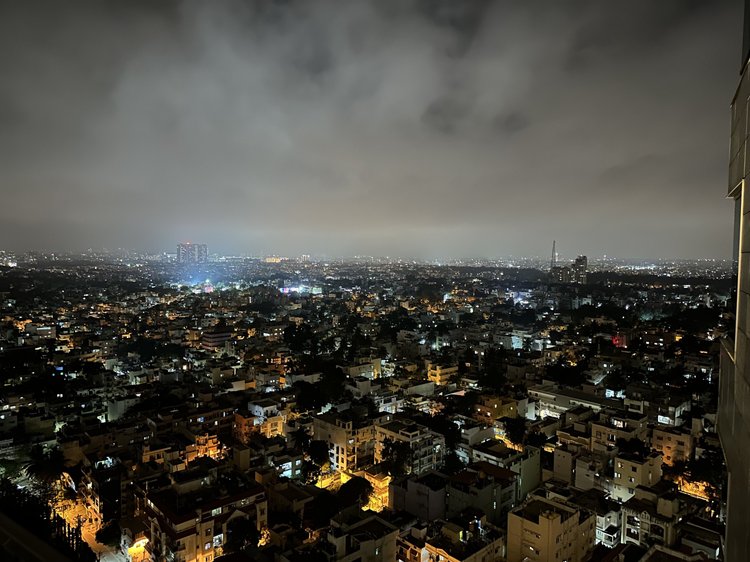
Rooftop of the Four Seasons Bengaluru at Night
I'll lead the witness here a bit: I am very bullish on India's impact in the country and globally (note: none of this includes China, but does the rest of the world). And the below recap communicates why.
In this Brief, I have tried to weave three parts into one. In summarizing my trip, combined with observations and stats on India, I am attempting to communicate the impact I believe India will have on our industry globally.
This trip was my second trip to India. The first was in February of 2020, after leaving Allegion. I then decided to join my wife on a trip for no reason. It would be fun, and I wanted to think deeply about what to do next. I was not sure what my next steps were going to be beyond:
-
Not working for someone.
-
Hunching that there was a market where I highlighted companies globally using a podcast and YouTube for distribution.
-
I want to bring ISC West onto LinkedIn.
Little did I and the rest of the world know that a pandemic was only 30 days away, but I was determined to have fun and think about my next steps. When I left India, India changed me forever. India rewired my brain. I found the place fascinating, and I wanted to go back.
This trip, though, was different. Three years later is a long time. I already had established a global community hungry for a platform to tell its story. I also knew India was special and wanted to highlight it and the people behind it. I have gotten to know many people in or from India over the years, and there was a thirst by those individuals to help tell their stories. The desire by India and the people of India to be taken seriously and to showcase that what you may know of India is not really who and what it and they are is real. I say that in a very positive way. The country has a reputation by the West that is only sometimes perceived as very positive. Most of the time, when I tell friends or colleagues that I am going to India or how much I love going to India, it is met with questions like "Isn't it dirty?" and "I hear it pure chaos" or "isn't it a cheap market to do business in?" and on and on.
To say India has a branding problem globally is an understatement. But it's a well-known problem. That is why you see work being done by India and the people of India to get out and tell their stories. It is also why I suggest that if you can go there, even if you have been before, go. Experience it. Walk the streets. Meet the companies. Meet the people behind the companies. You will walk away with a fresh perspective that matches my beliefs that India is a formidable global player and should be taken very seriously. Severe in doing business in the country and very serious in India-based companies entering your domestic markets.
My travel took me from New Delhi on Monday and Tuesday, travel day on Wednesday, to Bengaluru on Thursday, Friday, and Saturday, and a flight home on Sunday. I would love the opportunity to spend more time in the market on these trips, but with a 10 and 12-year-old, I try to maximize my time when I am there.
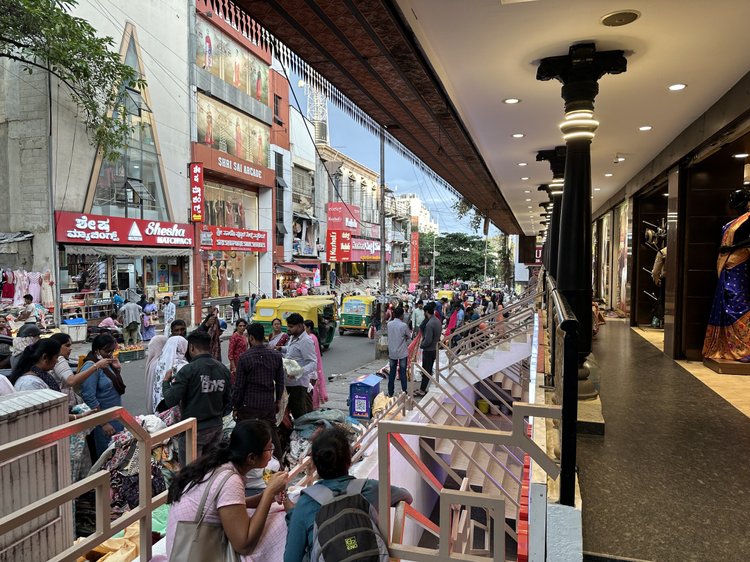
Streets of Bengaluru
There are three main reasons I love going to India. First, I love the people and the culture. They are open, warm, intelligent, curious, and gracious. Someone explained it to me, saying, "Atithi devo bhav" (Guests are forms of God). Whether that is true or not is for another Brief, but one of the defining characteristics of the culture is hospitality, which is one to experience. Second, the food is fantastic. India has, hands down, some of my favorite food anywhere in the world. What makes it so interesting is the regional differences between the North and the South, the different coasts, and the mountains. Now, I can only do spicy to a point, but I do my best. The two highlights of this trip were filtered coffee and Dosa. Spintly was kind enough to take me to Shri Sagar Central Tiffin Room (CTR). It has been in business since 1952. The place is pretty simple. The decor, how the food was served (including getting used to a barefoot server), and the menu were straightforward, but the complexity of the coffee and the food were wild. Hard to beat.
And third is the absolute chaos you experience when leaving the airport or your hotel. At first, it is overwhelming, but once you understand it, the chaos has charm. I like to use the roads and driving in India as an analogy for India overall. Sure, there are well-defined curbs; hysterically, there are even signs and traffic officers. But what matters are the boundaries. Stay within them, and you are golden. The system works. Step out of them, and everything falls apart. But within these boundaries, it is absolute organized chaos. There is an obsessive amount of honking, continuous movement, swerving, and many white knuckles. But it works. It is easy: Stay within the lines, you are good, and anything goes. Go outside the lines, you are not good, and the entire system breaks.
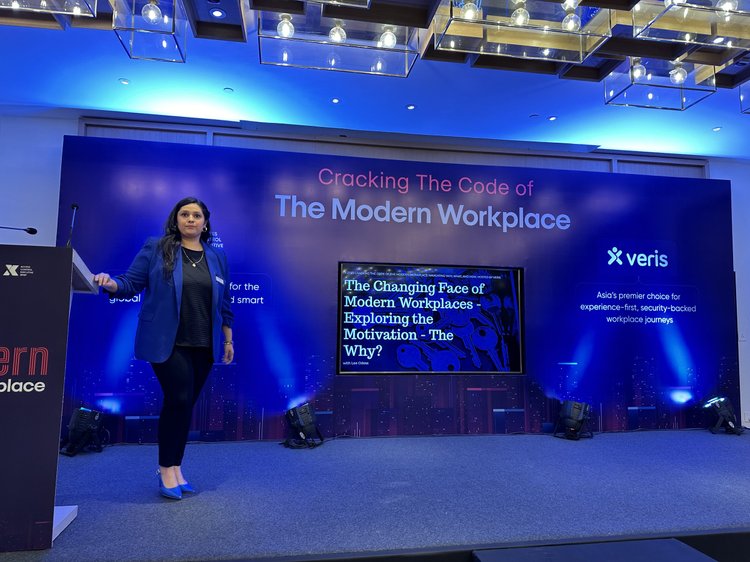
Veris Event Cracking The Code of The Modern Workplace
I arrived in New Delhi Monday morning and, after a few delays, made my way to the first event. Veris, a company focused on providing software tools to "modern, dynamic workplaces that attract and retain top talent," organized an event called "Cracking The Code of The Modern Workplace." Veris hosted the event at the Grand Hyatt in Gurgaon. Gurgaon, officially known as Gurugram district, is one of the 22 districts of Haryana in northern India and is considered a city in the NCR, National Capital Region (just outside of New Dehli). Gurgaon is a perfect example of India's explosive growth, fueled by many well-known multinational enterprises opening massive offices. There are currently over 1.5M people living in Gurgaon. It might not sound that impressive, but remember that 2001 there were 870,000 people. Long and short, it is massive, and you can see the city is trying to keep up with the growth. Skyscraper after skyscraper, but the "roads" between are either brand new or nonexistent, making for an enjoyable commute. That said, the local transit line makes it extremely easy to commute.
The night and event were a smashing success. The team at Veris worked tirelessly to make sure the room was packed, with over 50 people in attendance. This effort was not small, given it was wedding season and a holiday. That said, the turnout was great. I had the opportunity to present the global trends, take questions and answers, learn about the local market, and participate in panel discussions.
The local market showcased a vibrant technology scene that is not reliant on multinational companies. Local brands are gaining market share, taking advantage of the ecosystem's ability to build software solutions on affordable hardware. There was a strong sense of national pride, and the attendees expressed a desire to stay informed about developments in the US.
During the panel discussions, several key themes emerged. The first panel focused on navigating the future, with talks on customer experience, sustainability, deep learning, and privacy. The importance of automation, workflow, and adopting QR codes for convenience were also highlighted. The panelists emphasized the need to measure baselines, unlock potential, identify and address friction, and conduct proof-of-concepts for cybersecurity health checks. ROI and customer journey mapping were recognized as crucial for success in the next decade.
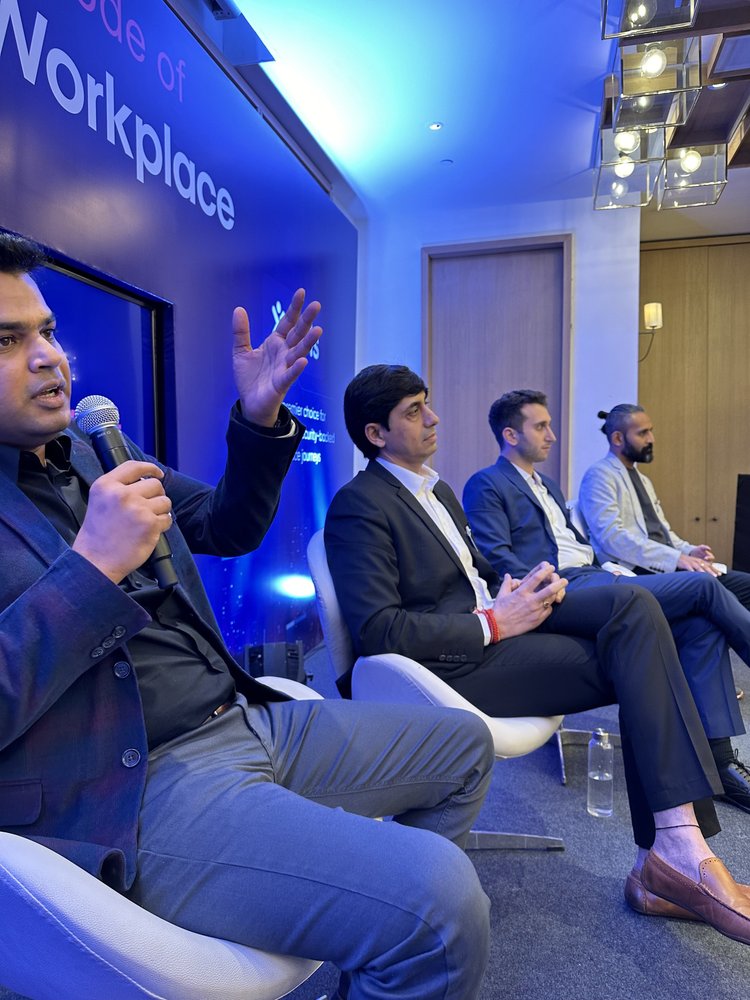
Panel at the Veris Event
The second panel delved into the practical aspects of implementing solutions. Seamless integration and flexibility were emphasized, along with the importance of considering the needs of Gen Z. Access control was seen as an integral part of every software solution, and HR tech was identified as an area where AI implementation lagged. The desire for seamless automation and user-friendly workplaces was a recurring theme.
The night was capped off with a whisky tasting, where I could sample the cherry cask whisky by Diageo. Although I am not a huge drinker when I travel, I found this experience too good to say no to and jumped in. I am glad I did.
The event overall was impressive, with Veris and their team demonstrating a youthful yet experienced approach. Their marketing was crisp and vibrant, reflecting their hunger for success. The food served was exceptional, and the entire experience was memorable.
It was the perfect way to start the trip.
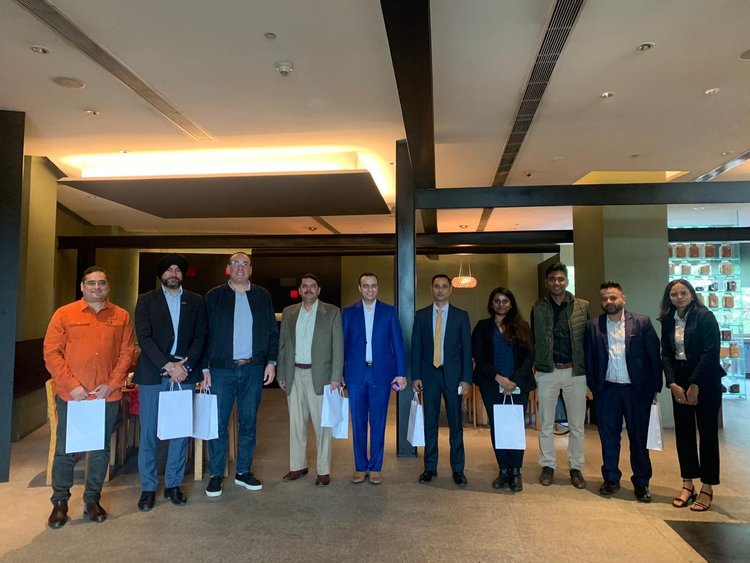
Attendees of the Hipla Lunch
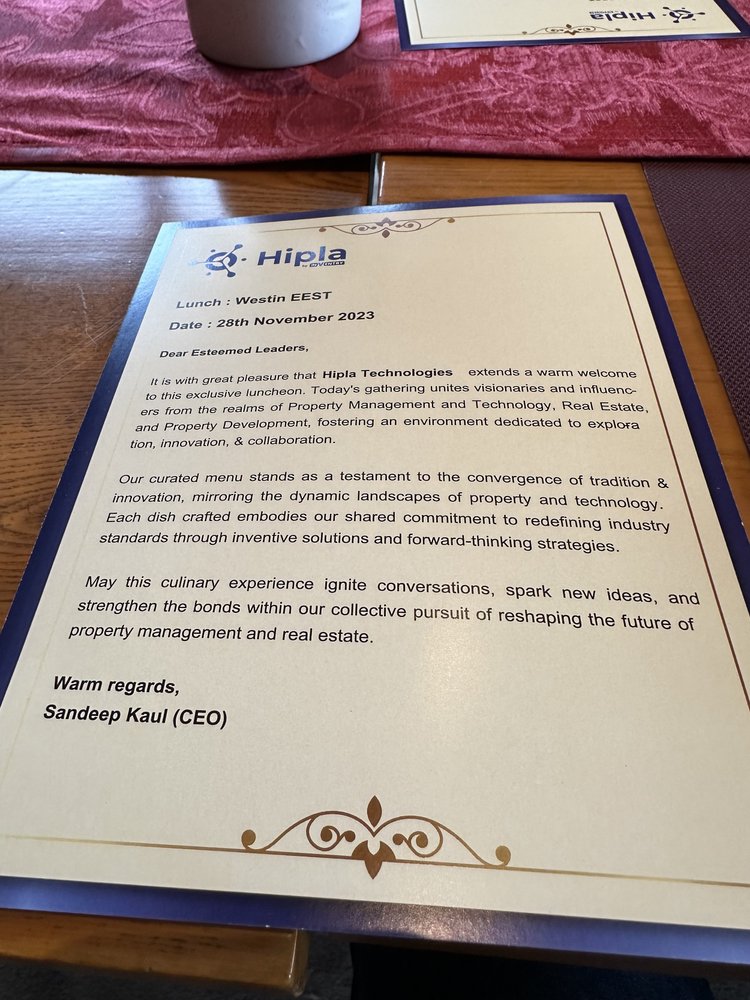
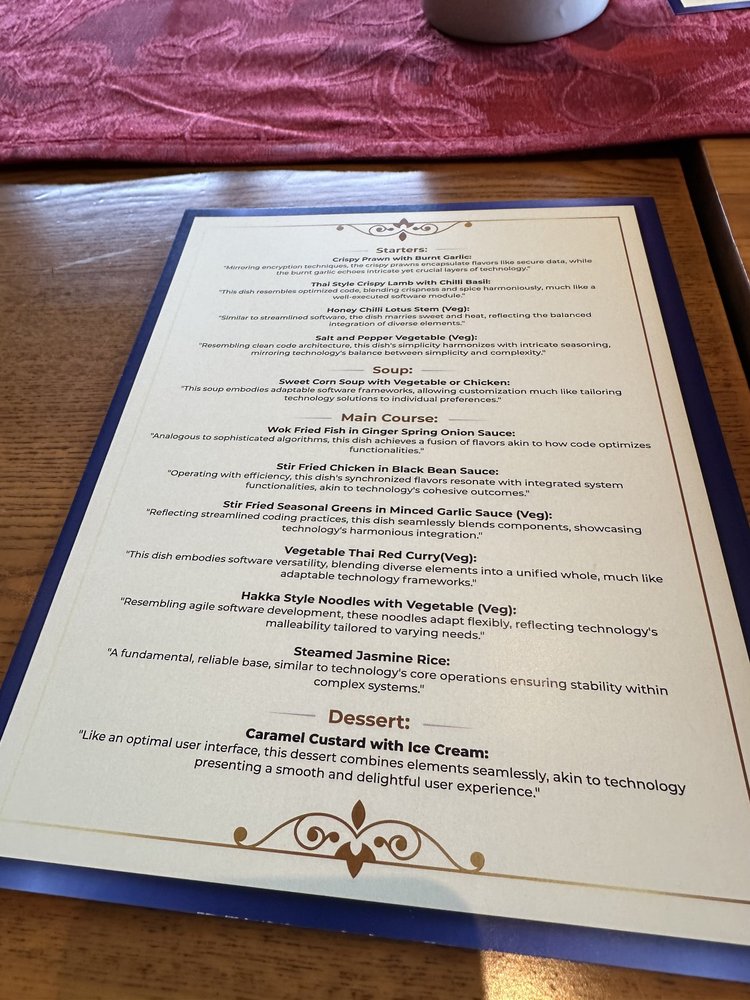
Then, on Tuesday, I was off to a roundtable lunch hosted by the team at Hipla at the beautiful and extensive Westin Gurgaon. Hipla, recently acquired by UK-based InVentry, is a visitor management system and meeting room management software. Sandeep Kaul, CEO of Hipla, and the team went above and beyond curating an attendee list that had the likes of JLL, CBRE, and many other influential real estate companies in and around the region, as well as prominent end users and even the local press. On top of that, they painstakingly created an Indo-Chinese menu that "stands as a testament to the convergence of tradition and innovation, mirroring the dynamic landscapes of property and technology. Each crafted dish embodies our commitment to redefining industry standards through inventive solutions and forward-thinking strategies." I value a team that makes sure every detail is covered. Sandeep and the team did just that.
We spent the next 2 hours of nonstop discussions that covered many topics. I was asked about my impressions of India, the global market, and biometrics. I did not attend a meeting where biometrics, especially facial, was not discussed. Finger biometrics, more or less, came and went with Covid. Palm and vein, where you don't touch, have plenty of applications, but facial is the preferred biometrics modality. There was also no meeting where I was told about their Unified Payments Interface (UPI program), Digital Public Infrastructure (DPI), and Aadhaar.
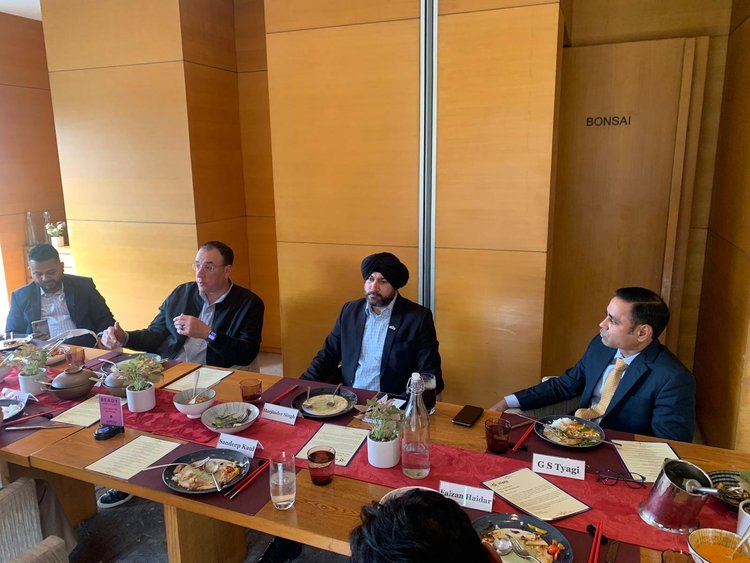
Hipla Lunch Discussion
Unified Payments Interface (UPI), Digital Public Infrastructure (DPI), and Aadhaar all work together to create a robust digital infrastructure in India.
Unified Payments Interface (UPI program) is an instant payment system developed by the National Payments Corporation of India in 2016. This system facilitates quick inter-bank transactions using mobile devices. UPI uses QR codes, making it widely accessible and easy to use everywhere. Not like "kind of" everyone, everywhere… but everyone, everywhere. From the people begging on the streets with a cardboard sign and a QR code to pay for parking, meals, gas…everywhere. The entire week I was there, no cash or coins were used. Everyone used their phones to pay via UPI and the QR code.
Digital Public Infrastructure (DPI) is a policy championed by the Indian Government that encourages governments to open source their apps. This allows other nations to quickly create digital services by re-using existing code, fostering rapid digital development.
Aadhaar is a unique identification system that assigns a 12-digit unique identity number to all Indian residents based on their biometric and demographic data. Aadhaar is used for various essential services in India, including banking, mobile phone connections, and government subsidies.
Together, these three systems create a comprehensive digital public infrastructure. UPI facilitates easy, quick payments; DPI enables rapid digital development; and Aadhaar provides a secure basis for identity verification. This integrated digital framework significantly enhances the ease of business and everyday life in India.
And to address what many of you might be thinking as I've had numerous healthy conversations about the topic - Yes, there are many questions and risks around a program like this, and I'm not lost on some of the negative sentiments and well-documented concerns or misuses around such a system. I am not here to prosecute any of that; frankly, I am not educated enough to have an informed opinion. I look forward to becoming more educated on all of it to understand it all.
Couple Unified Payments Interface (UPI), Digital Public Infrastructure (DPI), and Aadhaar with the fact they have skipped over 2G and 3G and have gone straight to 5G and even 6G, India as a digital native far exceeds many countries globally.
It's wild. I highly recommend everyone looking into UPI, DPI, and Aadhaar.
We had a rich conversation about what this means regarding Big Tech Wallets and using NFC, and the consensus is "wait and see." There is a lot of work the Big Tech still needs to do with the Indian government, mainly around data, till you see adoption, but it is coming, and there is an appetite for it, especially around the high end of the market and Apple. But it will take some time.
At lunch, I also got a first-hand appreciation for how this is a solution-based selling market and how operational efficiency is essential. Still, it can be understood that the desire to reduce manual labor is not a problem in India and that the Make in India initiative is vital. India does not have a problem finding labor. They have no problem having four people do the job that one or even some automation could handle. For instance, getting out of the New Dehli airport is a case study of how labor is cheap in India, and they have no problem putting people to work. It was explained to me that it was intentional. The population is so significant that they are mindful of automation and its impact on labor, so they purposely use technology with labor. Whether it was the airport check-in, the baggage porters, retail stores, or security, people were everywhere doing a job. As I said earlier, this does not mean there isn't a thirst for technology adoption. Almost all of the people I ran into or helped used some aspect of technology with their job. The conversation at lunch also cemented that when we discussed visitor management and workplace optimization.
But the biggest underlying initiative separating India from many countries worldwide, which I heard at this lunch and throughout every meeting or event, is their Make in India initiative.
And as far as Make in India, it is not just a government initiative for government politics sake. Make in India is a movement that encourages, through investments, companies to develop, manufacture, and assemble products in India. And from everything I saw, heard, and subsequently have had reconfirmation on, it is real and working. Most of the conversations were asked to be kept in the room so that I would respect the requests, but to summarize, between Make in India, the growing population, low costs of labor, and a thirst for technological advancements, India is a market of growth. There is still concern over price, but those who figure out how to develop state-of-the-art solutions with a price that fits the market demand will be very successful. This "home market advantage" also opened my eyes to why I believe the rest of the world is in for some disruption. For companies like Hipla, before they go internationally, they are battle-tested, well-funded, and feature-rich solutions. Again, this is before they leave their home market. They do not have the same problem many European companies do where their home country does not have the financial or commercial market opportunity, so they are forced to look outside and, in many cases, prematurely expand to other regions like North America. This maturity is a success unlock that is hard to replicate and only seen in the US and China (although for different reasons) and should not be underestimated or disregarded.
This lunch opened my eyes to just how big of an opportunity India has in and out of the country.
From there, I met back up with the team at Veris to tour their offices, see the product in person, and have an opportunity to discuss the event from the night before. Like many markets worldwide, India is working through "getting back to the office," it was a great way to see how their software is helping companies customize their tool to create a great experience for all stakeholders. It is also eye-opening to see how the offices in India are built like a mini city. This development is not the only way developments are done; they are everywhere. These developments include commercial offices, residential (apartments/condos), retail, hospitals, hotels, and schools. A guard gate at the entrances and exits typically exists, and a complete massive ecosystem is inside.
After the meeting with Veris, I had dinner with one of the top 3 global consulting companies implementing a global mobile, credential, employee experience, and IT workflow strategy that blew my mind. The plan is ambitious, and selecting best-of-breed technologies will surprise and reassure simultaneously. I was impressed with the thoughtfulness, complexity, and scale. It showed me that this digital transformation is not an idea; it's an enormous fact. I am not allowed to go into the details of who, what, and how, but what I can tell you is they are not outliers. They are part of a beginning norm that some choose to ignore, and some choose to overstate, but they shouldn't be taken lightly.
Wednesday was a travel day from New Delhi to Bengaluru. The airport in New Delhi is an experience in itself. First, I'll start with security. Like many hotels and malls in India, there are metal detectors before entering everywhere. The user experience is terrible and feels more security theater than anything. Still, the reason they put this measure in place is due to the 1993 Mumbai bombings at 12 different locations, killing 257 people and injuring 1,400. From that point forward, security measures like this have been in place. I'm not convinced this will be the standard operating procedure moving forward as it's clunky, and I'm guessing it's doing little other than deterring some bad actors and security theater. That could be all they want it to do. I bring this up because, at the airport, you go through security to get into the airport itself. The process is slow and unpredictable. This process, though, does serve a purpose as the only people in the airport building are there because they have a flight. Unlike many airports worldwide that are more like malls, inside airports in India are for customers only. Once inside the airport, it's reminiscent of the traffic—absolute chaos inside the strict curbs of the four walls and checkpoints of security. Once I got my bearings, I quickly went to Bengaluru.
Side note: is it Bangalore or Bengaluru? The city formerly known as Bangalore is now officially called Bengaluru. The name change was formalized on November 1, 2014. Bengaluru is the original name of the city in the local Kannada language. The renaming was part of a broader initiative to reflect the original names of cities in their local languages, moving away from the anglicized versions that were often a legacy of British colonial rule. You will find this all over India.
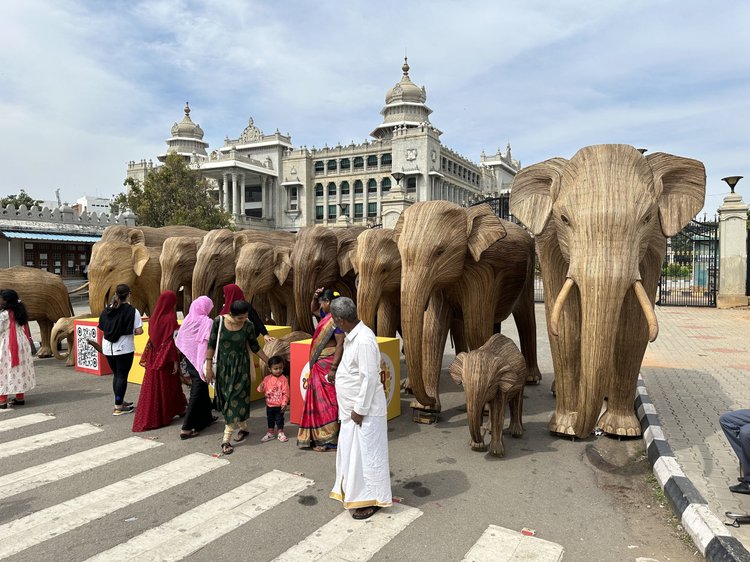
Landing in Bengaluru was like flying from Chicago (minus the air quality and many other things) to California - two very different places. While I was in Delhi, it was cold and had the worst air quality in the world. You could feel both. In Bengaluru, it was tropical. I'm not saying one city is better than the other, as I don't need to. Ask anyone from Delhi or Bengaluru; they will be open about telling you what city they think is better. But for me, Bangalaru just felt more like home.
After a long wait for my bags and a ride to the hotel that took most of the day, I was excited to get some food, a run-in, finish a webinar on EST and quickly walk through the local park before I could fall asleep.
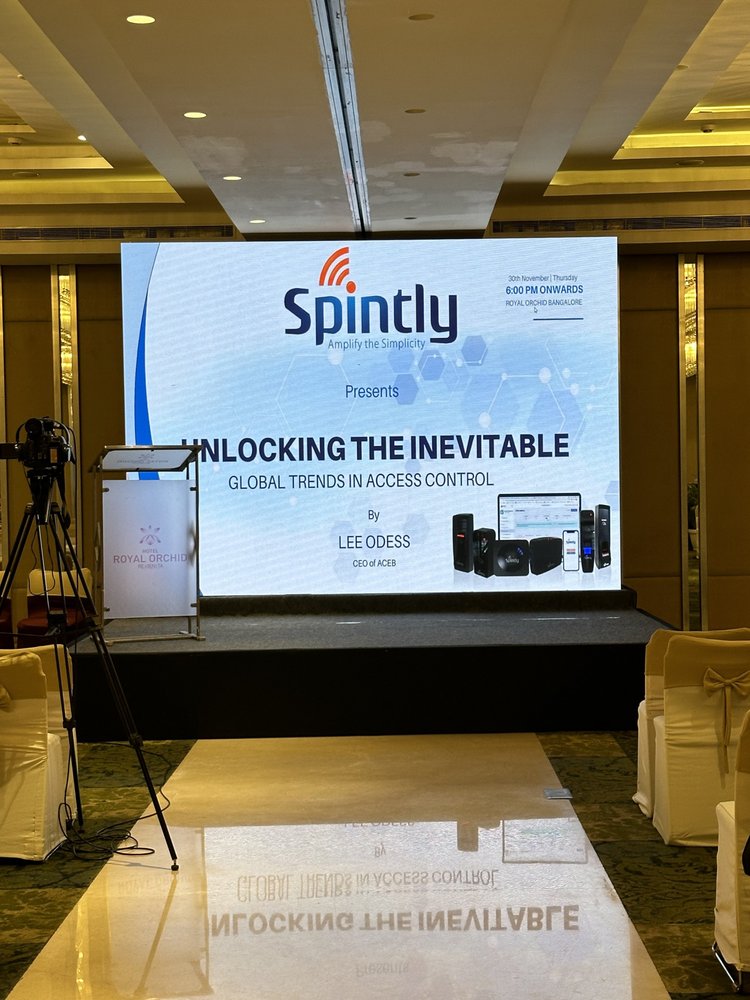
Spintly Event “Unlocking the Inevitable”
The next day, Thursday, was a complete and fulfilling day spent with Santhosh Ranganathan and Malcolm Dsouza from Spintly. After lunch at a local restaurant in what I can only describe as a mini city built by a local developer that included a gated entrance to an office complex, hospital, school, high-rise residences, park, hotel, and shopping. Mixed-use developments like these are popping up everywhere in India and are a way to control costs and maximize returns. It also, unfortunately, appears to sanitize populations in the same way master plan communities do in parts of the US, Canada, South America, and beyond that are building these neighborhoods. Still, the simplicity and gravity of opportunities within them is very appealing. On top of that, if you are on board with the "15-minute cities" where commutes are easy and you also like walkable cities, it's hard to beat this model.
The lunch allowed me to understand the Spintly in India growth story from a GOA start-up to a serious player that evolved like many India-based organizations: two technical founders who grew up together and spent some time at large US-based technology companies, saw an opportunity to be an OEM provider, only to pivot and deliver a stand-alone solution, and filling the gaps where the incumbents won't. They have also expanded their operations to the US, and their growth is admirable. Their small but growing team is well-positioned. It should be considered in the same group of access control fighter brands right along with Kisi, Defigo, Swiftlane, PDK, and Geokey, set to lead the broader market of mobile first, cloud first, and untethered to the old truths of how the product goes to market in our industry.
I heard many stories over lunch, but one that stood out was the legacy hardware companies working closely with new software companies to help bring along the best-in-class solution. What it also sounded like was self-awareness by both the legacy and newcomers. These competitors working together also highlight a trend we have discussed: competition. I am unsure if this type of teaming extends beyond India-based organizations, but either way, it is a decisive move by all companies involved.
One of those companies is Godrej. Godrej is an Indian multinational conglomerate with a broad business portfolio encompassing consumer goods, real estate, appliances, agriculture, and more. Founded in 1897 by Ardeshir Godrej, the company originated from India's Independence and Swadeshi movement. Headquartered in Mumbai, Maharashtra, the Godrej family predominantly manages and owns it. The group has a global consumer base of 1.1 billion and generates over USD 4.1 billion in revenue. Godrej is dedicated to social responsibility, with about 23 percent of the promoter stake in the group in trusts that contribute to environmental, health, and educational causes. Godrej's product history reflects its commitment to innovation, quality, and meeting the evolving needs of its consumers. The company continues to expand and diversify its product offerings, maintaining its position as a leading player in various sectors.
The company's product history is pretty wild, but it all started in 1897, with the production of locks, and they are well known for their Godrej Almirah, also known as the Godrej Storwel. It is often gifted during significant milestones such as marriage or moving into a new home. From there, Godrej's product history is marked by innovations and expansions. In 1918, the company introduced the "Chavi Bar," the world's first soap made entirely of vegetable fats. They began manufacturing forklift trucks in 1961 and started the Animal Feeds division, Godrej Agrovet Limited, in 1971. Godrej was the first Indian company to introduce polyurethane foam in 1989, and it started its food business in 1991. In 1994, Godrej acquired Transelektra Domestic Products and launched Goodnight and Hit Spray. The company ventured into gourmet retail in 2005 with the launch of Godrej Nature's Basket. Godrej launched GoJiyo, a free, browser-based 3D virtual world in 2010. They shut down their typewriter manufacturing plant, the world's last, in 2011. 2014 Godrej launched FreeG, India's first non-web-based mobile browsing experience. Godrej Agrovet was publicly listed in 2017, and in 2020, The Godrej Group entered the financial services business with Godrej Housing Finance.
They are a formidable but under-appreciated player in the lock industry (especially for those who spend most of their time in North America).
After lunch, I visited the Spintly office and met that team and game plan for the evening event.
On our way to the event, Santhosh and Malcolm were nice enough to take me to Santhosh's hometown for a filtered coffee and Dosa. The place they picked was CTR. It is no secret that being a newbie to local cuisine, you should be careful about where you eat and drink. But on this occasion, I did not care. It was a rare treat to experience something with the team and an opportunity to experience the local scene. The food was terrific. It served without glitz and glamour, but the food was delicious. And the filtered coffee is something everyone (that likes coffee) should try at least once. I discovered that coffee is a big deal in central and southern India. I was ignorant as I thought it was more of a tea culture. I wasn't wrong. I came to find out that there is more in the North, which makes sense given the proximity to China. India is among the largest coffee bean producers, consumers, and exporters. And flirted coffee, like flat whites of Australia, didn't disappoint. It would be fair to compare it to hot chocolate but with a certain pomp and circumstance. You drink it by taking a large thimble of coffee, pouring a small amount into a larger cup, then pouring the rest of the thimble into the cup and doing the pour back and forth till it mixes perfectly. I'm telling you, I changed my coffee preferences forever, and the cups and accessories are fun (and beautifully crafted). Why does this matter to access control and smart locks? Because we are an industry of people and culture. We are also a very social industry; experiences like this build deep relationships. You can do a direct line to how business is done globally based on the number of coffees shared just like this. It was an honor to be with the team in their neighborhood l, sharing their food and drink and participating in their culture.
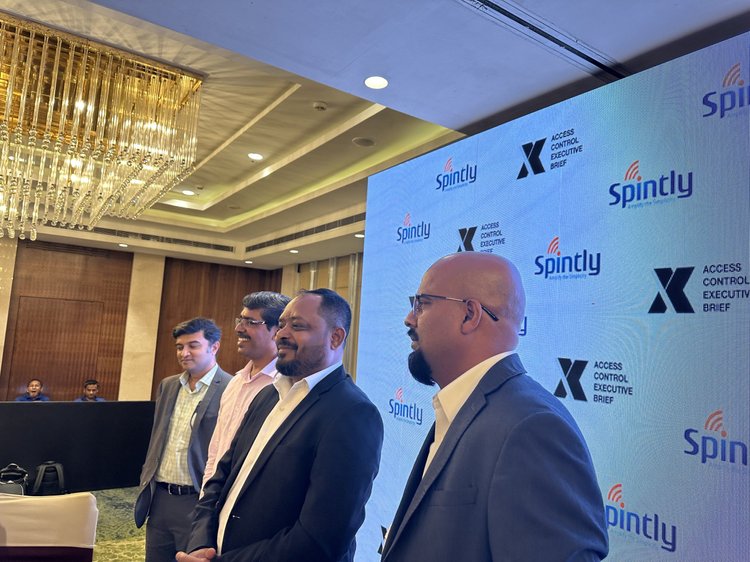
From there, we headed over to a hotel called Hotel Royal Orchid. What could only be described as a Wes Anderson movie, the place was lush and beautiful and the perfect spot to hold an event. In what became a clear cultural norm, the event started late, just after 6 pm, with a welcome and video by their CEO, Rohin Parkar. Rohin lives in the Bay Area (USA) as they grow their North American focus. After a very gracious introduction, I gave my presentation on global trends called "Unlocking the Inevitable." The presentation is a potpourri of observations in an attempt to synthesize what is happening right now in the market. I purposely do not cover all of all trends, for instance, cyber security, as those are well covered. I want to dig deeper, which was a perfect setup for the following item on the night's itinerary. From there, we moved into a panel discussion moderated by Malcolm, co-founder of Spintly, to click further into other observed global along with local trends in Access controls. I'm happy to report that most of the trends were acknowledged, and I was even more intrigued by the tone the panelists from all different regions and sectors in India set. There was a sense of "the times now. Here is how we are doing it, and you should too."
The night was capped off with dinner and strong networking. It was a late night but a great night. I was impressed with the depth of discussion around the enterprise vertical in India. There was an appetite for new technology, new partners, and a new way to say yes to their use case. The room was packed (50 or so) with commercial developers, coworking and shared office space owners and operators, property managers, enterprise customers, partners, and the ecosystem. Again, I'm reminded how if you don't get out and meet people where they are, it's hard to get a proper impression of how much progress is being made in adopting new products and solutions. That's why my trends presentation is not about "if" changes, such as SaaS models enterprise software solutions using mobile and cloud-first architectures, with more modern ways of commuting value propositions, but about when and the when is right now. Globally. The breadth is not quantified outside the $70B total addressable market we often discuss at the Access Control Executive Brief. So, it is hard to know if what you are doing or seeing in your business or home market is the truth or an anomaly. It is my opinion that it is true. What you are experiencing is exactly what you are experiencing, but if I've learned anything, that doesn't mean something else is not happening elsewhere. I'd bet my house what it represents is that the market is indeed larger than reported, nuanced, and with opportunity everywhere. It is net positive. You just need to make it such. In the Hotel Royal Orchid, put on by Spintly, was a room that represented all the truths of our industry, both locally and globally.
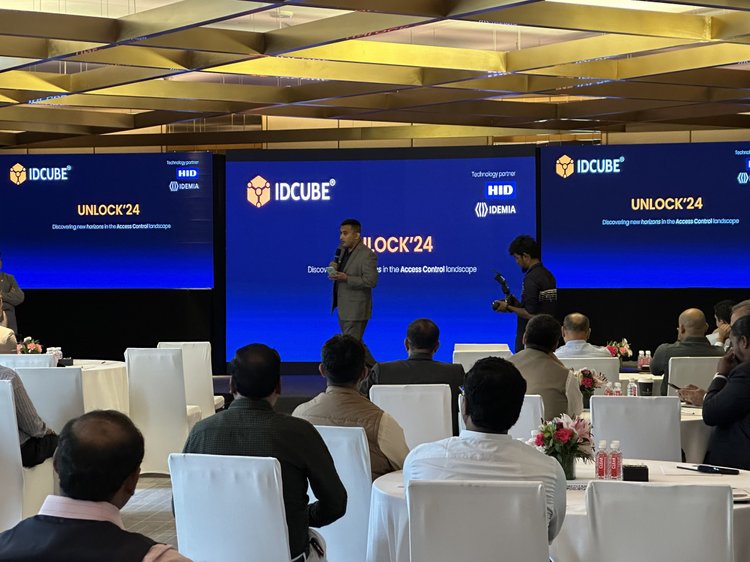
IDCUBE Event: Unlock’24
The following Friday, it was time to meet with the team at IDCUBE and kick-off Unlock'24 -Discovering New Horizons in the Access Control Landscape. It was held from 9 am to 5 pm at the beautiful Four Seasons Bengaluru. The hotel opened in 2020, so it sat dormant until about 2023. It's new, vast and beautiful. It also was full of SALTO Systems locks.
The team at IDCUBE, especially Garima Gupta, pulled no stops. The first event ever done like this by IDCUBE was an absolute success. What made this event different was their focus on their end customers. End customers and a few hardware partners, such as Idemia and HID, were the only people invited. I took away more than anything the deep "ownership" many IDCUBE customers had in where IDCUBE is today. Customers often say, "I was there when they started, and here's why we are invested deeply into the team and solution." That pride, trust, and comfort sentiment won't appear in a spec sheet or bid document. That appeal can't be bought. It's earned.
IDCUBE choreographed an engaging day. After a welcome and keynote by IDCUBE’s co-founders Divyakant Gupta and Rishi Chahal, there were back-to-back panels and presentations with a nice mixture of live polling of the crowd that showcased just where everyone was around topics like AI, cyber security, identity, and more. They were generous enough to allow me to present the Inevitable Trends presentation as well as moderate three panels on a variety of topics with titles such as Fortifying the Gates: Exploring the Critical Role of Cyber Hardening in Physical Access Control System, Future is now: The Crucial Role of AI in Access Control Systems, and Power Shift: The Evolution of New Stakeholders in the PACS Universe. A moderated panel discussion followed each presentation to give first-hand customer feedback on their views, experiences, and observations. In between the presentations and panels were partner presentations from HID on Power Shift: The Evolution of New Stakeholders in the PACS Universe and Idemia on their lineup of product offerings. The one stage presentation that stood out the most for me was a role-play discussion between Captain Dinesh Desai (BASF) and Divyakant Gupta (IDCUBE). It was titled Unlocking Imagination: A Theatrical Exchange on Access Control, Bridging End User and OEM. It was a unique way to showcase a real-life use case scenario. I loved how they tried something new, and Captain Dinesh was impressive. He's seen a lot, knows a lot, and has an uncanny ability to express it.
What stood out from the day was the scale at which this entire room represented. The scale of the market (total number of locations, people, size), scale in complexity, and scale in opportunity globally. Sure, it was heavily focused on India, with government, banking, industrial, and enterprise represented. Still, it showed me how battle-tested IDCUBE is and how ready they are to go beyond India and the Middle East and become a formidable player in North America. India is on the verge of becoming the global leader in manufacturing. While we focus on seeing this trend start with the world's largest company (Apple), I saw in the room (and over the prior four days) that India is also taking on itself as a formidable player in the global enterprise software industry. And I'm not talking about the systems integration or off-shored software development companies of yesterday. Sure, the Infosys and Wipro’s are ever more relevant, but so are the full-stack enterprise software companies like IDCUBE.
IDCUBE represents the new platform play happening right now. Yes, they have their physical access control system (PACs) built to work with Mercury controllers and a long list of readers. Still, the value they bring is higher operational efficiency, workflows, automation, and flexibility, a horizontal software platform that can be expressed through vertical applications. Something is compelling in saying "yes" to customers and having the software back end and resources to deliver it. Believe it or not, a global movement is happening, and it's as simple as saying "yes." Think about it: we've been in an industry of "yes, but, " which is usually followed up with a "no, but." There is a steady shit to "yes," and those that are configured to do so will see exponential growth and be able to move freely globally.
The attendees of the IDCUBE event also highlighted how rural India is emerging as the world's largest new middle class. The ever-growing purchasing power of this group will continue to emerge and allow capital to grow new sectors, companies, and opportunities. The collective group and one-on-one conversations showcased the appetite felt by every type of customer there - industrial, banking, housing, critical infrastructure, and more.
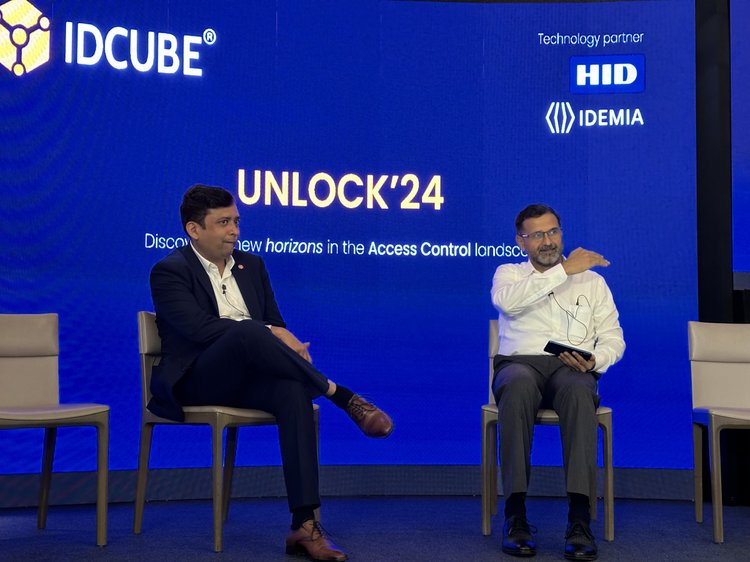
Captain Dinesh Desai (BASF) and Divyakant Gupta (IDCUBE) discussing Unlocking Imagination: A Theatrical Exchange on Access Control, Bridging End User and OEM
Final Observations
Just like I found on my trip to New Zealand, where I learned about "8 wire," I was taught similar worth by Manish Dalal or ZKTeco. The word is Jugaad (or "Jugaaṛ"). Jugaad is an informal word in Indo-Aryan languages, which refers to a non-conventional, frugal innovation, often termed a "hack." Whether it's a lack of resources, ingenuity, or the need to get it done, every culture has its Jugaad, its 8-wire, or its duct tape. But I have found all over the globe that it starts there and magically quickly becomes innovation, a culture, and a movement.
I believe India's time of reckoning is now, not just in India. It will be global, and it will not be a service-oriented entity. It will be a well-funded, resourced, and battle-tested enterprise software movement by making it in India first. The companies coming to your market are not focused on their next round of funding. They are focused on healthy expansion and global relevancy.
Thank you, Veris, Hipla, Spintly, and IDcube, for taking me in as one of yours. Thank you for the hospitality and the opportunity to meet your team, customers, and partners and learn more about you. You all should be very proud of what you've built. I'm forever changed and forever grateful because of this. I hope I have expressed this gratitude throughout this Brief. I tried to balance an honest take with insights and observations that can only be seen and felt by being there.
धन्यवाद
Some Additional Wild stats on India:
Economy: In 2022, India overtook the UK as the world's 5th biggest economy. Economists say it could go to be the 3rd by 2030.
India STEM Graduates: India is on pace to produce the most significant number of English-speaking STEM graduates.
Inflow of Outside Capital: Tens of billions of dollars will continue to be invested in India from outside investors.
