Volume 53 | May 6, 2024
Welcome to Brief 53 titled "Global Insights: Reflections on Intersec, ISC West, and The Security Event."
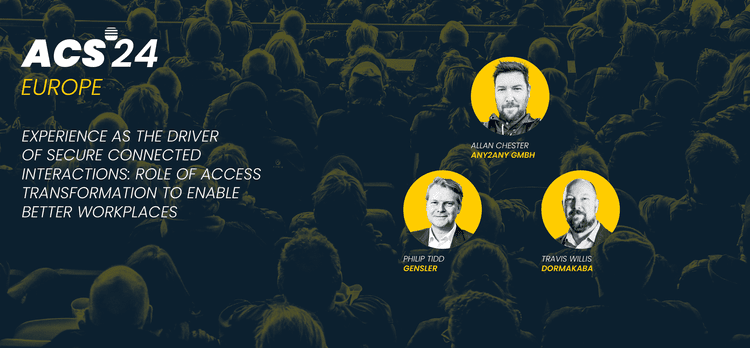
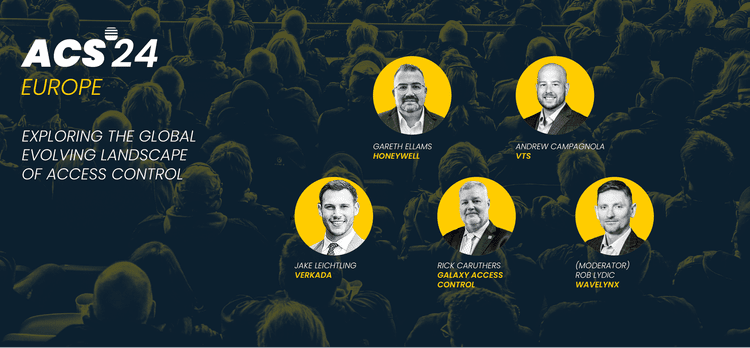
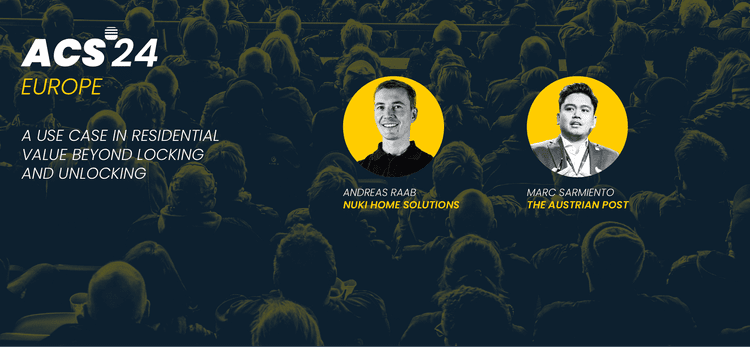
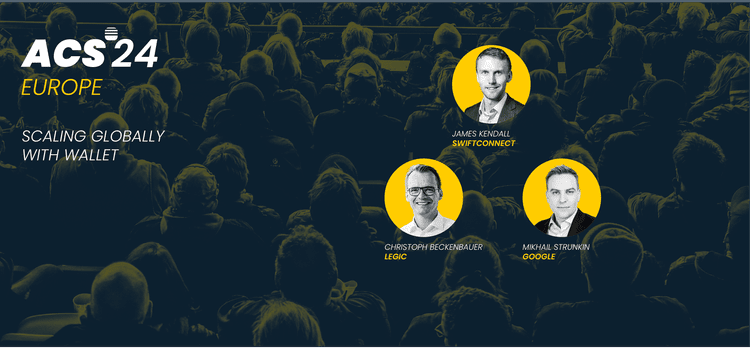
What a fantastic week last week was! Hilary and I hopped straight from ISC West and dove into the XForum at The Security Event in Birmingham, UK. And, without missing a beat, on the horizon is PSA TEC in Dallas before jumping right back over the Atlantic to the Access Control Summit. We are co-hosting ACS24 Europe in Zurich with Google, featuring 64 speakers from around the globe. The blend of industry professionals, end users, integrators, and the ecosystem is unique and marks a progression from ACS23 in DC. I highly recommend attending. You can view the full agenda and purchase your tickets here.
As I write this from the plane back from London, I'm reflecting on my experiences and insights. I find myself drawing comparisons between the insights I gleaned from Intersec Dubai in January, the packed halls at ISC West, and the engaging dialogue at the XForum at TSE, all while anticipating the insights that are sure to come from ACS24 Europe.
Below is a grab bag of thoughts, impressions, and observations. Some of these were snippets I briefly shared in the last Brief and felt compelled to delve deeper into. Others stem from insightful panel discussions held at these events, which I plan to share on a broad level as LinkedIn Articles (first one here) - a testament to my commitment to partnering with The Security Event and providing added exposure for the participating companies and individuals. Don't worry. I will only share my in-depth thoughts here and on our member Slack.
Some of these thoughts are brand new, fresh off hours on trains and planes. Let's get into it…

We need to reimagine our identity as an industry.

The biggest aha for me lately is that we are no longer just a security industry; we are essentially a data industry applied within physical security. See this shift when stated that way? Yes, it might seem like a mere play on words, but it carries significant weight and shifts the perspective on what we build, how we market and sell, and what our customers want. Whether it's the financial evaluations of companies or the roadmaps of entities, both big and small, for old and new, our focus is shifting increasingly towards data. Our industry is evolving beyond gathering data for reports to leveraging data for its core offering. Don't get me wrong, security has been our bread and butter; it will continue to be our applied differentiator, but we are quickly branching out into the data domain, and we need to start acting as if. Why? Because of the external threats and the $70B market opportunity warranting it.
Supersizing SIA and Bidding Farewell to ASIS, GSX, and IFSEC

Post-show vibes are always a unique mix of exhilaration, fatigue, excitement, technological awe, and possibilities. However, one often underrated yet frequently discussed element is the sense of community. This sense has been amplified in the wake of COVID-19, with the yearning to reconnect in person and celebrate the industry we're a part of. This vibrant camaraderie is palpable during the after-hours events at ISC West and resonates throughout the hall of The Security Event (TSE).
This period has also seen the ascendancy of the Security Industry Association (SIA), which is on an impressive run. I'm actively involved with SIA and currently serve on its Executive Advisory Board. I speak solely for myself; any inside information does not inform my views.
Returning to the main point, if you had to wager on relevance, SIA is your best bet and shows no signs of slowing down. ISC West is the biggest testament to this. And the antithesis? ASIS, GSX, and IFSEC. ASIS is a hot mess, and GSX and IFSEC look just like what you'd imagine your grandfather's show would look like. If it weren't for the memories and the hopes of those who have spent time in the organization or walked the halls, they all would be a thing of the past by now. For some reason, our industry holds on to yesterday as though it has any relevance for tomorrow. Sure, you should build off of the past, but at what point does standing on the shoulders of yesterday turn to carrying it on your back?
I'm here to tell you it doesn't need to be this way, and it's time to look ourselves in the mirror and have some real talk. ASIS, GSX, and IFSEC are not relevant anymore. It is time to move in a different direction. So, what's the ideal course of action? SIA should acquire ASIS, shut down GSX, absorb the chapters, modernize the education and certification, and harmonize its international, national, and local qualities. As an industry, we should concentrate on a single global association catering to the needs of its members and member companies. SIA should replicate its RX Global ISC West partnership with The Security Event and Intersec Dubai, circling the globe and adding a ton of value for its members with top-tier shows. Use the shows as launching pads that foster community. Build and grow. And as for IFSEC? It is time just to shut it down.
The Significant Influence of Big Tech, Beyond the Wallet

Our industry is abuzz with excitement about the integration of big tech wallet-based technologies. I've noticed companies eagerly announcing the "firsts" or rebranding their entire messaging to support it. A conservative company in our field even advertised "Apple Wallet: Coming Soon" at The Security Event. For an industry that usually prizes its "slow and steady in the name of security" over speed, this rush to the front of the line of wallets is noteworthy. Are we flexing that "wallet is coming soon?" SMH.
This enthusiasm isn't misplaced. Wallet technology is the first mainstream luxury good our industry has had at its disposal - nothing else has had such a universally positive and mainstream impact. But amid this excitement, we should ask: where's the differentiation? What value is created beyond simply putting a card in a phone? How am I going to create exponential value for my customers with it.
In every panel discussion I've moderated about mobile technology, the honest value conversations emerge in the follow-up questions, not at the outset. We usually start by talking about how much better it is than cards, how it's more secure, and how cool it is. But the real value surfaces when we ask, "What value does it create?" That is where we need to start. We need to do better. We need to understand the importance. We need to build with it. We need to start the marketing and messaging now. We're playing in the mainstream. Act like it. Lead.
Alongside this big tech moment and wallet, I've been pondering whether companies truly comprehend the deep-rooted costs and business transformation that cloud systems and AI will impose. And I'm not speaking to the value it will bring; I'm talking to the expenses it will have on the businesses, and the inevitably win by the mega techs. To what degree? We're transitioning from an industry of predictability, where we understood costs and processes well, to an industry of unpredictability and constant newness.
When you manufacture an offline lock or even a connected lock with an app or an onsite access control system, you control 99% of the inputs and costs. We pay executives in our industry a truckload of money because of their ability to manufacture locks at a consistent and predictable fat margin. Now? You don't. And frankly, you still have these same manufacturing experts, those who know how to operate a plant, leading technology software decisions that I need clarification on to what end. That's a disaster waiting to happen. These cloud providers, mainly big tech, are aware of this. Your business is more dependent on them than ever before.
What's the endgame? Will our industry resemble the advertising industry, where 20% of every dollar made goes to one of the tech giants? This topic has been on my mind for weeks. Frankly, I don't think there's an alternative other than to reconsider how we price and operate.
Choosing Between a Single Pane of Glass or a Vertical SaaS Solution?

The access control industry in the Middle East and North America tends to discuss the concept of a "single pane of glass" and "vertical SaaS Solution" more frequently than in Europe. This recurring theme resonated throughout ISC West but was noticeably less prevalent at The Security Event. Here's my take on why that could be:
Europe's Proptech community is noticeably stronger in building automation. That's mainly due to a more pronounced appetite for ESG and a practical mentality that says, "We do what we're best at and collaborate with others who excel in their areas."
This mentality is less evident in North America, where we seem to say, "We are the best at what we currently do, so why wouldn't we also be the best at this new thing? Collaborate with others who excel in their areas. Nah, we got this." North American businesses show a more ambitious inclination to extend their reach throughout a building. I suspect this is due to the opportunist nature of North American companies, the more mature electronics market, and the feasibility of adding to existing utilities.
However, I predict we'll see a shift as companies like Verkada expand into Europe (Ring and Alarm.com's impact on the UK alarm industry is a relevant example). North American companies realize that becoming an ecosystem is more challenging and costly than it first appears. Consequently, they might revert to focusing on being the best access control product that collaborates effectively with the larger ecosystem.
Shows are about the ecosystem more than blue blinky lights and hinged panels.

Soon enough, our shows will catch up to how we are executing in the market and how customers are looking to buy. Gone are the days when it was only about showing off your hardware, and now, when you show off the value they create and the customers they serve solutions. This is about solution-based selling and vertical-based solutions. Also, as the market goes to be best in breed unless you are 100% proprietary, which none of you are, you will need to show off your partners more. I'd move to it now. Some have started in this direction, like ZKTECO USA at ISC West, but I'd go even further if I were you. I suspect more booths will get embedded with partner products, and more shows will start to group areas of the show that serve the verticals.
While I am on trade shows: Companies treat trade shows as a singular offline event and have the wrong success metrics.

They are not single events. You can engage before, during, and after - globally - and you should plan and prioritize accordingly. Want an example of who is doing it right? acre security on LinkedIn and the global connection. Why are they being successful? They hire people who are experts in it, and they are empowered to do their job (and do it well).
Also, while I'm at it, most companies are measuring a show based on yesterday's metrics: leads. Sure, leads are great, and you should track those, but show shows have many more impacts that are not in your booth and are measurable. For instance, impressions online from employees posting, impressions felt offline when you run in the morning and run into customers or partners, strategic partner meetings at the bar, and so on. Why don't we track accurate metrics? Most companies still have the sales or product teams leading marketing efforts, and they treat their trade show team as glorified booth jockeys versus strategic partners driving business. Just stop. Your product and sales leaders are not experts in marketing.
End users are frustrated and feel ignored by manufacturers.

This one I heard at all three shows, but most prominently at ISC West. Why? The industry hasn't kept up with how customers engage with other sectors, like enterprise software or IT, and how they learn or discover online. Why? Most of the industry still believes that manufacturers aren't allowed to talk to end users and must have everything, including information and products, flow through the channel. We confuse business development with sales and fear upsetting the channel, so we take a reluctantly modest investment and market motion strategy. It's time to change this, and we can 💯 learn from the enterprise software industry. Going direct is different than selling directly. We need to invest in building relationships, having tools and resources, and making the end user a critical part of our business.
Integrators need clarification on how mobile helps their business other than being cool and in the mix.

There is an opportunity for sure, but most do not see how they will make money as they have with cards and historical credentials. Well… I have two words: "managed services." As an integrator, please don't build your middleware (I'm looking at you, Northland Controls). Go and build out your systems integration business and expand beyond security to other enterprise software systems like Salesforce and a thousand different systems that need our industry as a source of record.
Defining the New Enterprise in Access Control Systems

At TSE, ISC West, and in many conversations being had behind closed doors, is a shared view that what constitutes "the enterprise" in access control systems has changed. And it's confusing because, at the same time, it's the same. You've heard it from me before the industry is in the process of morphing, and both ice and water exist at the same time. It's confusing and complicated to manage. But the rate of change is accelerating, and we will wake up one day and realize it's happened. When? Condense is that we are 3-5 years away from the outliers of our industry being the norm. From top to bottom. On what customers want, expectations, leaders, products, how we market…all of it. My money is more on the 3 than the 5, and if you haven't started or are just getting started on your cloud, mobile, and AI journey, woof. And if you are already there, I'd suggest accelerating some of your investments in how you market, sell, and service because you have a lead, but it won't last forever. What will the norm be? Proactive and automated dynamic security features, a depth of user experience for all stakeholders, and a tailored approach to meet diverse security requirements.
What's the One Thing Driving the Power Shift in the Global Access Control Market?

I'd say it is evolving customer expectations. Out of everything else, this is the most universal reason, beyond technology, big tech, or potential standards. Like above, expect significant changes in the industry over the next five years. Note: not incremental.
The Future Modality of Access Control is?

All of them are for the short run. Still, I agree and believe mobile and wearables are the dominant modality of choice in North America and the UK. At the same time, biometrics will also be part of the mix in the Middle East and Asia. While QR codes saw a spike before and after COVID-19, I don't think they will be as impactful as some would desire.
Is "data on card" and mobile the future?

I'm shocked at how much talk in Europe is focused on offline technology like "data on card." One person I respect heavily said recently, "The future in some regions may be the past." This is also why I'm bullish on OSS as a standard, and I need help figuring out why North America doesn't adopt it over PKOC or anything the CSA plans to do.
What's the Quickest Way to Know Someone in Our Industry is Threatened by the Changes Happening in the Market Right Now?

They say, "You can't have security and convenience." Balancing Security and User Experience in Physical Access Control Systems is a must (in caps for a reason). There is nothing else needed to say. That horse is out of the barn, and the biggest reason is the shift towards identity-based systems.
I have more, but my plane is landing, and I'm ready to go to the softball field to watch my daughter's doubleheader 😀💪🥎.
Thank you for the opportunity to help with the changes in the market and our industry. It's an honor, and I don't take it lightly.
See you in Zurich. 🇨🇭

ACS24 Europe is not just another event; it's the first access control and smart lock thought leadership conference in Europe. Building off of what we did at ACS24 in Washington, DC, we have 60 speakers from all over the globe, including our industry brands, end users, and ecosystem partners. Your presence at this event is highly valued, and I strongly recommend you attend. As members, you receive a 50% discount on the ticket price. We charge for tickets because we do not do sponsorships for the event. This ensures that we serve you and the attendees and are focused on creating an amazing thought leadership agenda and networking opportunity. ACS24 Europe opens with a reception on 5/29 at 6pm and kicks off at 8am on 5/30. We are thrilled to be cohosting it with Google at their amazing facility. I look forward to seeing you in Zurich. More information and how to get your tickets can be found here.
Here are some examples of the panel discussions we have planned: