
Volume 63 | July 16, 2024
Welcome to Brief 63…During a flight over the Atlantic Ocean en route to Oslo, Norway, for a two-week European trip (full report and read out to come in a future Brief), I dug into the State of the Global Workplace 2024 Report by Gallup. I approached it from the perspective of the access control industry. The report intrigued me with its insightful discussion and thought-provoking acknowledgments about the value we CAN (COULD?) create beyond the locking, unlocking, and keeping bad people out. It's one thing to talk about value creation but another to see it in action. This report did just that for me; it can do the same for you. Here's my review of the report and the questions it sparked for me about our industry.
Up next: “When will the alternative access control market become the mainstream market?”
As always, your feedback is invaluable to us. Please let me know if there's any area where we can better meet your expectations.
Thank you!

PS: I am sure some of you may forward this, but please do so sparingly and encourage others to sign up here. Thank you!
Gallup's State of the Global Workplace 2024 Report: Insights and Questions as it Relates to the Access Control Industry
Let's Start with Demographics
The State of the Global Workplace 2024 Report by Gallup, based on findings from over 183,000 business units in 53 industries and 90 countries, is a comprehensive resource. It sheds light on the experiences and wellbeing of employees globally, focusing on factors such as engagement, mental health, and the impact of management practices. Understanding these demographics is crucial for the access control industry to tailor solutions that support employees and enhance their sense of safety.

Insights and Industry Questions
Employee Mental Health and Wellbeing
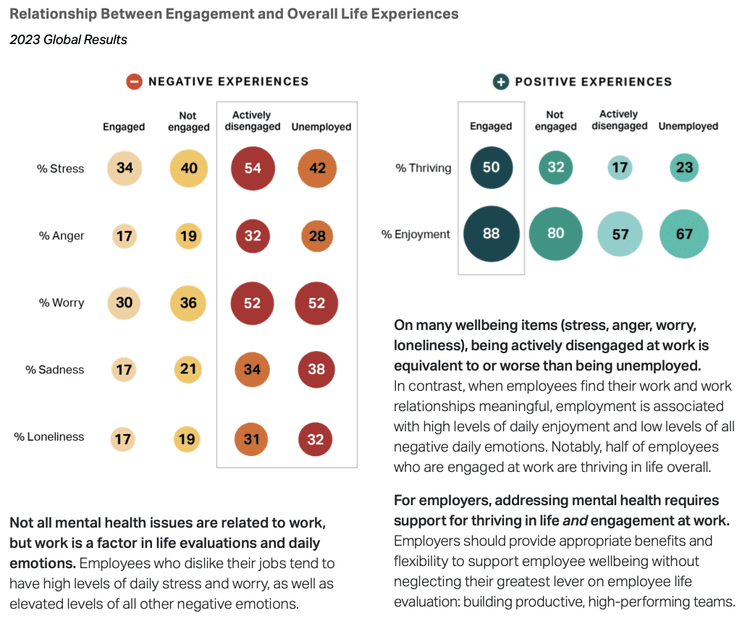
Finding: Employee mental health is deteriorating globally, with 41% of employees experiencing high stress. Younger employees report lower wellbeing compared to their older counterparts.
Questions: In the access control industry, this is interesting. In one way, we work to ensure the general public's safety. But are we providing the same thing for our employees (I've worked for companies selling "state of the art" but had 1970s technology in its buildings)? Does they feel safe and secure at their workplace, and does it mitigate stress? Secure environments are critical for all sectors, significantly where stress levels impact performance and safety. Are we dogfooding enough, or are we cobblers without shoes?
Role of Economics and Policy
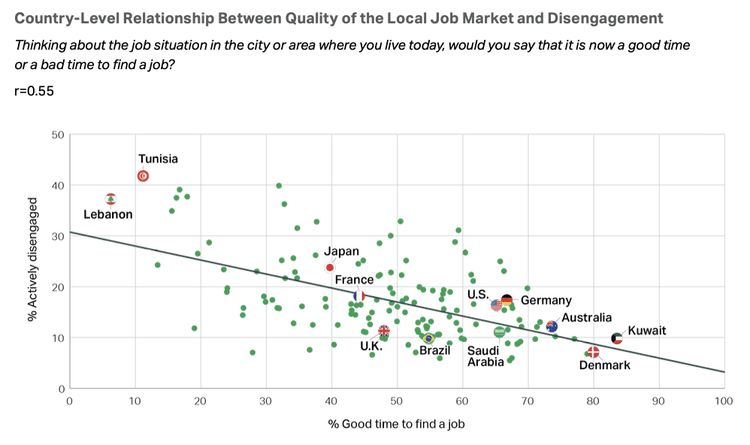
Finding: Labor laws and economic conditions significantly influence employee engagement and wellbeing. Countries with strong labor protections report better overall life evaluations.
Questions: For access control companies, understanding local labor laws and economic conditions can help tailor solutions that support employee rights and enhance their sense of safety. For example, in regions with high crime rates or weak labor protections, can state-of-the-art access control systems help provide a secure working environment, thus supporting employee retention and satisfaction? Does anyone build with employee retention in mind as a value proposition we then sell?
Managerial Influence on Engagement
The report's finding that managers account for 70% of the variance in team engagement is significant. It underscores the need for features, data, insights, and opportunities in our products and services to help managers foster a secure and supportive work environment.
Questions: Are there features, data, insights, and opportunities in our products and services to help managers foster a secure and supportive work environment?
Technological Integration and Remote Work
Finding: Remote workers report higher levels of loneliness and disengagement.
Questions: Access control systems must adapt as remote work becomes more prevalent. How do our systems help remote employees remain connected and secure? How do we help reduce feelings of isolation by providing remote employees with a sense of inclusion and safety?
Impact of Engagement on Organizational Outcomes
Finding: High-engagement organizations see significantly better performance, including higher productivity and lower turnover.
Questions: Can offering solutions that enhance employee engagement be a selling point for access control companies? Are our systems user-friendly, so employees find them easy to use, reducing frustration and increasing compliance, leading to a more engaged and productive workforce?
Some Thoughts and Recommendations for the Access Control Industry: A Call for Innovation
We Need to Reconsider Our Training Programs
For instance, how do we incorporate a better understanding of the psychological benefits of a secure environment and how to leverage access control data to improve employee engagement?
Promote Employee Wellbeing
Market and tell stories about how our access control solutions keep bad people out and contribute to a safe, stress-free workplace. Highlight the role of PACs in providing peace of mind to employees, which can enhance their overall wellbeing.
Adapt More to Remote Work Trends
Innovate and offer remote access solutions that ensure security without compromising user experience. The access control industry should be integrated to support the growing remote workforce.
Who is Leveraging Data for Better Access Control Management? We Are.
We are a data industry that is being applied in the security sector. Access control data can be utilized to monitor and improve security measures continuously. Can this data also identify organizational stress points, allowing for proactive management and support?
Wrap Up
The insights from Gallup stretched my thinking as they provided a different angle on the workplace than we usually see. The report underlines the critical role of a secure working environment in enhancing employee engagement and wellbeing, and the definition of "secure" morphed during COVID-19.
This represents an opportunity for the access control industry to innovate, provide solutions that protect people, places, and things, and contribute to a supportive and productive workplace. By focusing more on these areas, the access control industry can drive better organizational outcomes and support the global workforce's evolving needs.
Why wouldn't we?
