
Volume 68 | August 7, 2024
Welcome to Brief 68, titled Is it Channel, Canal, Kanal, Canale, チャネル? What We Call It Matters. In this Brief, we delve into the ongoing debate about the role and importance of channels in our industry. I challenge the binary thinking of 'direct vs. channel' and emphasize the need for the right channels for different jobs and what we need to call them. With a $100B opportunity ahead, it's time to rethink our approach, embrace new ideas, and redefine the roles of both channels and manufacturers. There is no better time than now and no better person than you.
Before we jump into the Brief, I want to thank those who filled out the survey from Brief 67 based on Monday's market meltdown. It prompted me to ask, "How do you anticipate your company's sales revenue and growth to perform in the second half of the year (2024)?" I asked a similar question on LinkedIn. I shared the results on Slack already, but for those of you not active in the Slack group, here is the information:
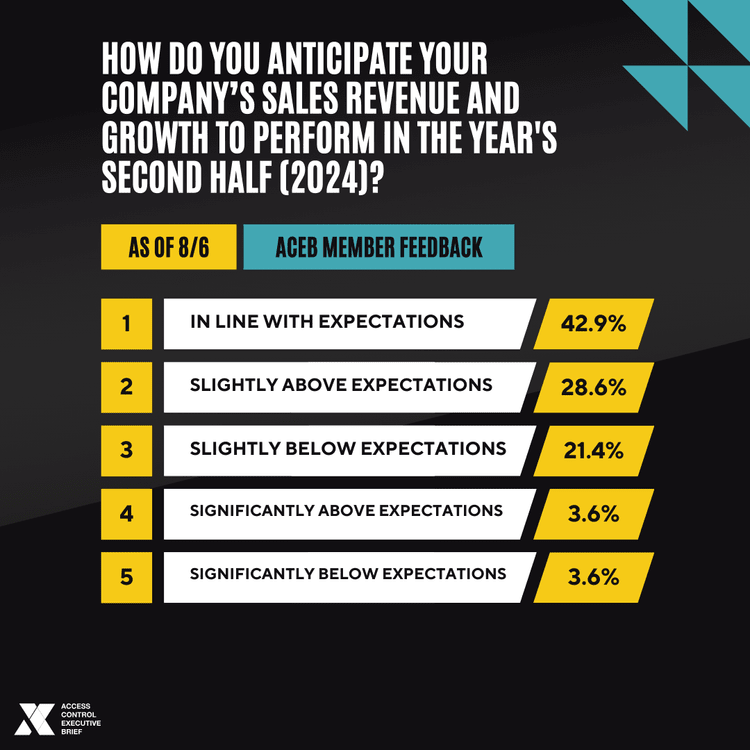
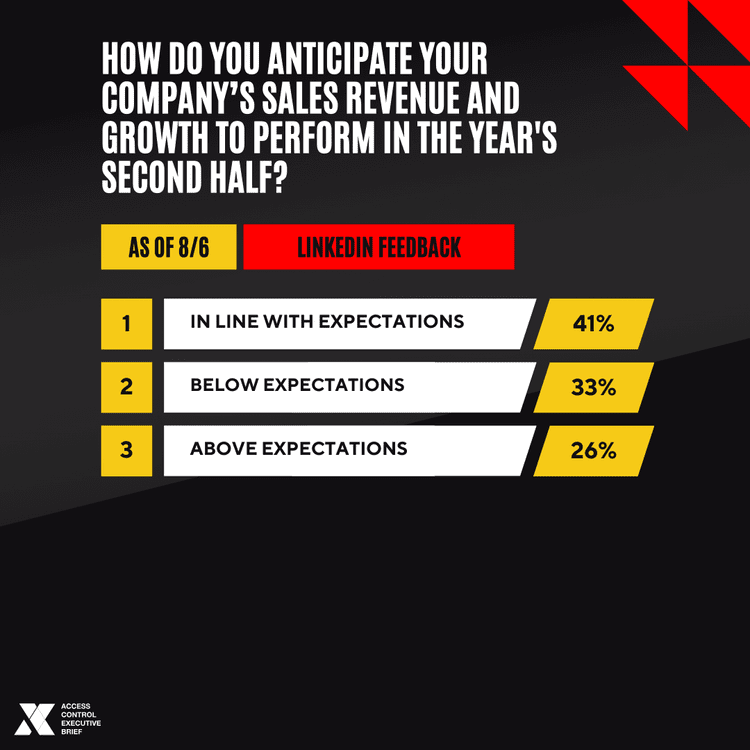
|
Key Takeaways:
|
|
As always, your feedback is invaluable to us. Please let me know if there's any area where we can better meet your expectations. Thank you! |

PS: I am sure some of you may forward this, but please do so sparingly and encourage others to sign up here. Thank you!
Is it Channel, Canal, Kanal, Canale, チャネル? What We Call It Matters

Enough with the noise. Let’s discuss a constant conversation in our industry: the channel debate. "The channel" is not just “another topic” but a significant aspect that shapes our industry's future.
Amidst the “We don't need the channel” or “We need the channel” rhetoric, it's crucial to understand that the issue is not binary. We genuinely need more than "just any channel" but the right one. We all should be directing our attention to “the right channel for the right job.”
It is important to note that the “blame” cannot be solely attributed to the channel. The situation and the opportunity ahead are shared responsibilities between the channel and the industry manufacturers.
As a disclaimer, as I have had to say this repeatedly lately, this is not a story about how the legacy is terrible and all we need is new. The $100B opportunity knocking on our door is big enough for everyone. We can keep our existing channel for the $10B high-security market while building something new for the other $90B. It's not about old vs. new; it's about dynamic vs. stagnant.
The Old Guard and The New Frontier
I get it. The high-security tribe has been doing things their way for years, and it's worked. The $10B market justified a 100% channel approach. Manufacturers didn't have to worry about market development, and the channel earned their keep by executing and providing extra services.
But the times have changed. The methods that got us to $10B won't get us to $100B. We need fresh ideas, new approaches, and a new channel.
Direct vs. Channel: A False Dichotomy
Another hot topic is the whole 'direct vs. channel' debate. It's time to move past this binary thinking and embrace a more nuanced approach. Don't get caught up in the nonsense and lose sight of growth and innovation opportunities.
Some companies even market themselves as “more channel-focused than others.” Come on, that's just lazy storytelling. The reality? Our sales formation is going to be a mix. Sometimes, we'll go direct, sometimes through the channel, and often, it'll be a blend of both. And that's okay.
We all know that most of the industry does not have a “100% channel.” It's all about finding the right flow for each situation.

Manufacturers in the Mix
Now, let's discuss business development and sales. Historically, integrators did everything while manufacturers made and supported products. However, the market has changed, and manufacturers are now involved in business development.
Before you reply to this Brief, this doesn't mean they're all going direct. It means they're helping develop the market. It's not new either (look back to 1973…it happened then just like it is happening now); it's evolving.
The $100B Question
What should we ask ourselves? The answer is simple: What's the right channel for industry success and the customer?
Only a few existing channel partners can handle what's coming right now. Only some manufacturers actively create the right channel with proper programs, training, tools, and incentives.
We need to stop relying on historical channel partners to do it all, and channels need to reimagine their identities to do it all. Some will adapt, but let's be real—most won't. "We" can redefine what "we" expect from channels: their expertise, mentality, culture, pricing, all of it, including their security expertise, and "we" can redefine what "we" expect from manufacturers: great product, services, resources, customer service, and help in growing the market.
Where Do We Go From Here?
Nomenclature. We need precise terms to describe our channels. The broad categories with diverse attributes based on yesterday are causing us confusion for today and tomorrow.
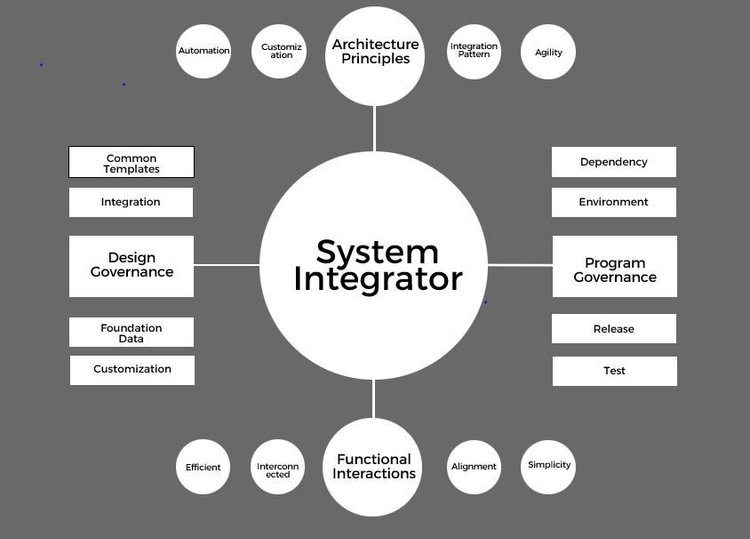
What do we call these new channel partners? Look to the enterprise software industry: "System Integrators" (SIs) and "Independent Software Vendors" (ISVs).
Breaking It Down
-
Security Integrator (SecI): The channel that designs, installs, and manages security systems.
-
System Integrator (SI): This channel combines subsystems into a cohesive whole, focusing on software, networking, and IT systems integration (including security systems).
-
Independent Software Vendor (ISV): Companies or individuals developing software solutions for specific business needs (including security systems).
[Note: I picked old articles to just show how these definitions have been around A LONG TIME]
That is it. We need to start here. Let's converge. We talk about convergence with the IT and enterprise software industries a lot. Let's do it. Converging rather than talking about convergence will be far more fun and fruitful for all of us. Let's bring out security integrators and converge with their system integrators and independent software vendors.
The Reality
The labeling of companies is a mess right now. We're transitioning, and everyone is trying to get their share. Companies like Convergint, SAGE Integration, Northland Controls, and Securitas could be SIs. Deloitte, Wipro, and Accenture could be security integrators (they already are in parts of the world). Then you've got companies like SwiftConnect, Wavelynx, Sharry, Cohesion, CoreWillSoft, LEGIC, BraXos, Trecerdo, Soloinsight, VTS, and a long list (don’t hate me if I didn’t list you) in the mix. They often play multiple roles but need to slot themselves appropriately as either one of the above or as an application, a platform, hardware, and more.
In Conclusion
We must refactor our definitions, formations, and expectations to fit the modern era of electronic access control. We must do more than bolt new parts onto the old system and hope it works.
It takes work to balance serving legacy and future markets, but the reward is substantial. It's hard, and that's precisely why we need to do it.
Let's stop the binary thinking, embrace the complexity, simplify as one, and go after this $100B opportunity together.
Let’s start using Security Integrator, System Integrator, and Independent Software Vendor. If we don’t, who is going to?
