
Volume 49 | March 18, 2024
Welcome to Edition 49 of our Brief! I'm back from an amazing trip to Zurich, where I had the opportunity to meet with Google to finalize ACS24 Europe, and Cannes for the MIPIM, where I had the privilege to host a breakfast for 22 individuals from the real estate ecosystem in association with Brivo and Brave Corp. Nothing beats getting out to the market.
In this issue, we welcome back Tony Dong with a thought-provoking piece titled "What the Access Control Industry Can Learn from The Tech Sector's Best Kept Secret." The discussions in Brief 47 sparked his insightful article, "The Future of the Industry: Why Data-Driven, Asset-Light Companies Will Lead."
In it I write that the future of the security industry will likely be driven by companies that can leverage AI and data, as well as those that adopt asset-light models. These AI-centric companies can unlock substantial productivity and efficiencies. In contrast, due to their lower capital expenditures and operational costs, asset-light companies have the agility to adapt to market changes. The secret to success lies in being data-driven from inception, understanding the extensive applications of AI, and mastering effective marketing to drive demand.
Tony's spot-on example of Constellation Software (TSX: CSU) resonated deeply with me and brought to mind another company with similar potential: Eptura.
I am confident you will find his article as engaging, if not more, as I did.
Also, look for upcoming events and opportunities to connect and engage in our community below.
As always, your feedback is invaluable to us. Please let me know if there's any area where we can better meet your expectations.
Thank you!
PS: I am sure some of you may forward this, but please do so sparingly and encourage others to sign up here. Thank you!

What the Access Control Industry Can Learn from The Tech Sector's Best Kept Secret by Tony Dong

This week's brief takes its cue from Lee's observations made back in February about where the access control industry is headed.
Lee believes the future belongs to those who go all-in on asset-light strategies that aren't about having lots of physical assets like buildings or equipment. This approach has been a game changer for companies in many sectors, allowing them to become more flexible, scale faster, and cut down on costs.
Instead, they focus on software that can run the show, making companies more adaptable, lowering the money they need to spend upfront, and cutting down ongoing costs. This makes companies a lot like Uber - they provide valuable services without the need to own all the physical stuff usually involved.
The manned guarding sector, known for its thin profit margins and less-than-stellar financial returns, is exactly what we're moving away from. By adopting asset-light models, companies in our industry can avoid these financial traps, becoming more efficient and profitable.
At the heart of this week's case study is Constellation Software (TSX:CSU), an entity far removed from the conventional players in our industry yet exemplary in its success through an asset-light model.
Although not a participant in the access control sector, CSU serves as an asset-light tech paragon, having achieved an astonishing annualized return of 37.27% from 2007 to present. To put this into perspective, an initial investment of $10,000 in CSU back in 2007 would have ballooned to over $2.3 million by now.

CSU's Business Model
CSU operates as a software conglomerate, holding a vast array of vertical market software (VMS) companies under its expansive umbrella. These VMS entities are distinct because they develop software solutions designed for, and customized to, the specific needs and niches of different industries.
To demystify what VMS means, consider software as not just a tool but as a tailor-made solution that fits into the unique operations of a particular sector.
For example, a VMS company under Constellation's portfolio might focus on creating specialized software for agricultural management, helping farmers track crop yields, manage livestock health, and forecast weather impacts.
Another hypothetical company might develop legal practice management software, aiding law firms in case management, billing, and client communication. This level of specialization ensures that the software not only meets the industry's demands but becomes embedded in its core operations.
Spanning over 70 verticals with more than 600 companies, CSU's approach is to invest in these specialized entities, nurturing and growing them within their specific markets. This strategy deviates from the typical tech company growth model, which often focuses on "big tent" solutions, disruptive technologies, or gobbling up and stripping competition for parts.
CSU's business model is really somewhat of an anomaly in the tech world. While many might label it a tech giant, its core strategy aligns more closely with that of a private equity firm specializing in the software industry.
By functioning more like a private equity shop, CSU is able to target privately owned, small to mid-sized software companies instead of competing with titans in the enterprise space like Microsoft. These companies typically already have a strong foothold in their respective niches, offering stable and recurring revenue streams.
The acquisition strategy is twofold: it allows Constellation to diversify its portfolio across various industries, mitigating risk, and it capitalizes on the synergies and efficiencies gained from owning multiple, related software entities.
This model offers several advantages. It provides CSU with a steady flow of income through the diverse, industry-specific solutions its subsidiaries offer.
It also allows for cross-pollination of best practices and technologies across different industries, fostering innovation and operational efficiency.
Lastly, by targeting smaller, established companies, Constellation minimizes the risks associated with startups or highly volatile tech ventures, positioning itself for sustainable, long-term growth.

What Makes CSU Successful?
What truly underpins CSU’s unprecedented success is not just its unique position as a software conglomerate but also its innovative approach to business structure and management. CSU's operational model is highly decentralized, organized around six "Operating Groups" (OGs).
Each of these OG's acts as a holding company for different business units (BUs), granting them autonomy and enabling managers within these units to deploy capital tactically with strategic oversight from their respective OG and from Constellation at a higher level.
Mark Leonard, CSU's founder & president, (I highly recommend reading his shareholder letters here) has consistently emphasized the importance of decentralization.
Leonard explains that CSU seeks vertical market software businesses where small, motivated teams can achieve superior results in niche markets.
He points out that the most potent tool for fostering organic growth is maintaining BUs at a human scale, where teams are small enough for all members to know each other, trust is high, and the focus remains on growing the business rather than internal politics and procedures.
CSU also prefers engaging in dozens of accretive acquisitions—those that add to earnings per share—in a quarter over making big, industry-consolidating moves. This strategy not only ensures steady growth but also minimizes risk to its balance sheet.
The traits that CSU looks for in its underlying acquisitions further cement its successful model: high gross margins, products or services that are sticky (hard for customers to switch away from), and high free cash flow. These characteristics are particularly valuable in legacy niche markets.
The high switching costs for customers act as a barrier to entry for competitors, effectively allowing CSU to achieve growth through what can be described as 'death by a thousand cuts' for its would-be competitors, assuming they don't outright get acquired.
Finally, the asset-light nature of CSU's business model plays a critical role in its success. With fewer major capital investments, CSU's companies have the flexibility to adjust to business fluctuations, making them less cyclical and more resilient compared to traditional, asset-heavy industries.
How to Emulate CSU
To truly harness the lessons from CSU's success, I think the access control industry needs to adopt a strategic approach that combines mission-driven focus, decentralization, asset-light operations, and the cultivation of high switching costs.
Be Mission-Driven, Not Product-Driven
Shift your focus from obsessing over the next groundbreaking product or service to understanding the core mission: securing entrances and exits more efficiently and cost-effectively than competitors.
Start with this end goal in mind and engineer your solutions backward. This approach ensures that every product development or service innovation directly contributes to enhancing your core value proposition, making your offerings more relevant and impactful.
Decentralization: Empower Smaller, Focused Teams
Decentralization means creating smaller, focused teams responsible for specific products or market segments. This strategy encourages agility and rapid response to market changes.
Empower these teams by giving them autonomy over their profit and loss (P&L), product development, and customer engagement, effectively making them mini-CEOs of their domains. This not only fosters a culture of ownership and innovation but also aligns with the need for specialized solutions in various segments of the access control market.
Building High Switching Costs
To create a moat around your business, focus on making your access control solutions as sticky as possible. This doesn't just mean relying on technological features but also structuring contracts and customer relationships to maximize retention.
Consider long-term contracts with built-in upgrade paths, loyalty discounts, or bundled services that enhance the value proposition over time. Offer exceptional support and service to create a sense of partnership with clients, making the thought of switching to a competitor laden with friction.
Adopt Asset-Light Strategies
Embrace the role of a deployer of capital by acquiring local access control firms to consolidate regional markets. While enterprise clients might seem like the most lucrative target, there’s a significant opportunity in serving small to mid-sized businesses (SMBs) that currently rely on off-the-shelf solutions from big-box retailers or local integrators.
Consider the asset-light approach by acquiring local firms with established market presences instead of heavy investments in R&D for new products. This approach allows you to quickly expand your footprint, leveraging the existing customer relationships, brand recognition, and infrastructure of these firms.
By becoming the dominant player in regional markets, you can achieve economies of scale that lower operational costs and improve service delivery, making your offerings more competitive against both local players and national chains.
ACS24 Europe to Take Place in Zurich in Collaboration with Google
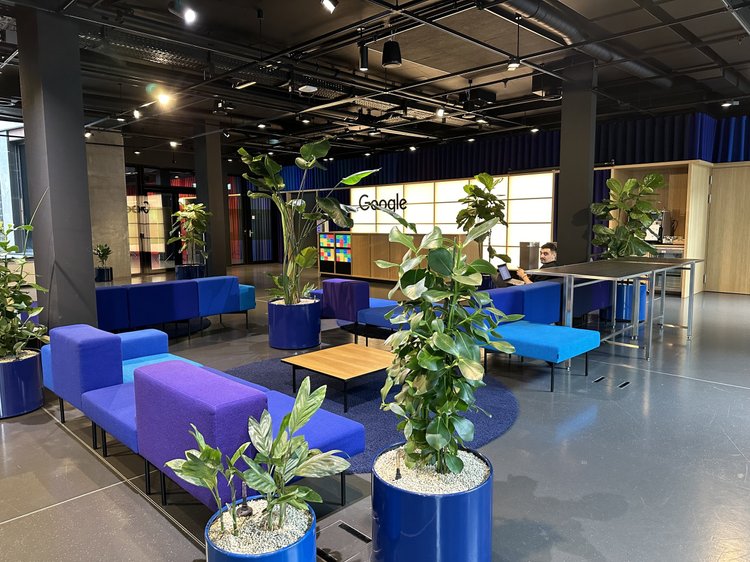
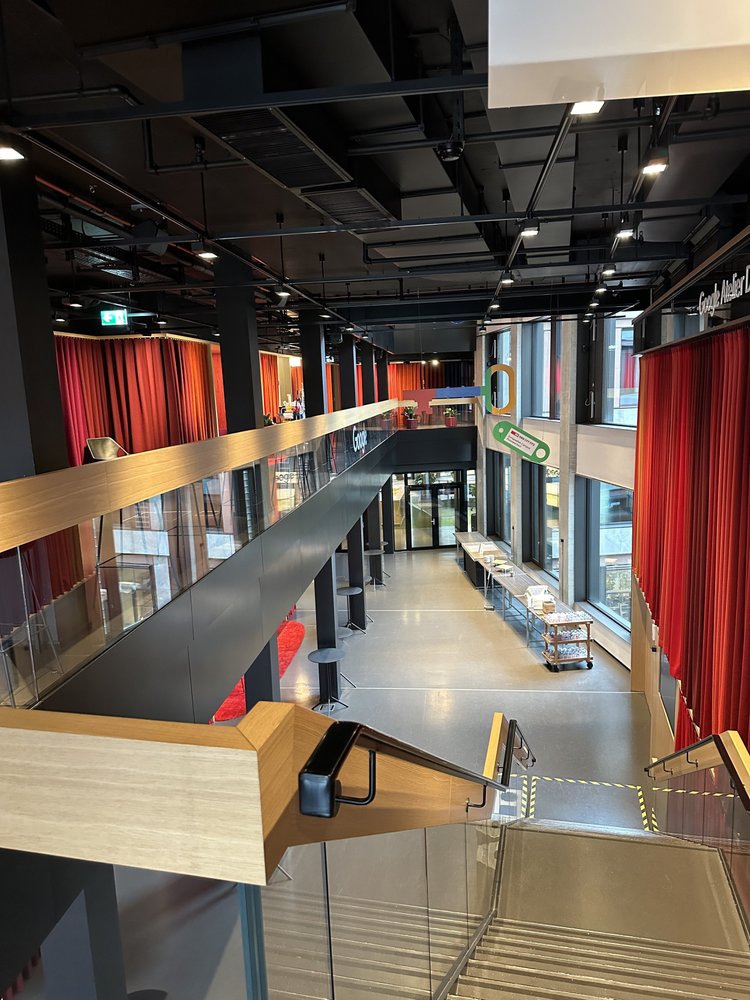
We are excited to announce that ACS24 Europe will be taking place in Zurich on 5/29 (networking reception at night) and 5/30 (all-day conference) in collaboration and hosted by Google. Building off of ACS23, which was in October in Washington DC, where we had 166 executives from all over the globe join us, we can't wait to bring this executive-level thought leadership summit to Europe and focus it on the "power of the ecosystem."
We have over 50 speakers committed: C-suite executives from leading manufacturers, integrators, specifiers, and end users.
Please let me know if you are interested in speaking at the event or attending. There will be a combination of 1:1 fireside chats and panels discussing various topics focused on today and tomorrow of the access control and smart lock industry. There is no other event like this, and you want to attend.

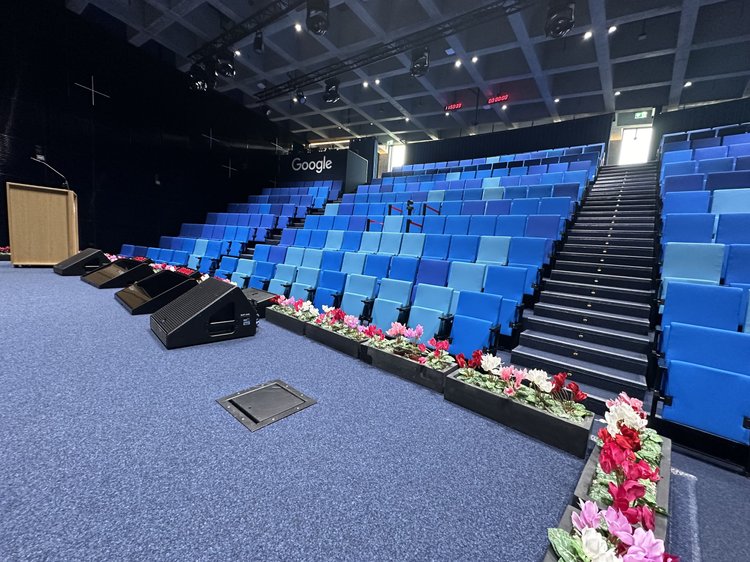
For more information or to sign up, please go to the landing page for the event here. Again, please get in touch with me directly if you or your leadership team are interested in speaking. I am actively finishing up the agenda together as we speak. There are limited speaking spots and only 250 tickets, so act fast.
SIAcademy on Access Control Modalities Deep Dive, March 5-21, 2024 (Tuesdays/Thursdays 3:00–4:00 pm ET)
The Security Industry Association (US), aka SIA, asked us to help organize a virtual series they call SIAcademy LIVE! The series is on Access Control Modalities Deep Dive and will dive deeply into identity management, credential issuance, mobile applications, and choices surrounding access control system (ACS) technologies.
This live, online program is a great way to learn about new developments and capabilities in ACS, as well as scalability considerations and deployment challenges to discuss with your clients and channel partners. Per SIA, "We recognize how busy security integrators are nowadays, so we record each session for added convenience. If you cannot attend the live discussion, you'll have access to the recording OnDemand for 90 days." To sign up, please use the discount code "ACS2024" to receive $50 off registration!
Registration: https://mysia.securityindustry.org/Meetings/Meeting.aspx?ID=17304
Series Info:
-
Dates: March 5-21, 2024 (Tuesdays/Thursdays, 3:00–4:00 pm3:00–4:00 pm ET)
-
Individual Access: $199 SIA member/ $299 non-member
-
Corporate Access: Contact [email protected]
ACS at ISC West: ACS Quest + In Booth Activations
ACS Quest: Get ready for a unique experience at ISC West! ACS Quest is not your ordinary scavenger hunt, as we highlight companies, people, and the community within the access control and smart lock industry. We've limited the "hunters" to 500 people, engaged with industry influencers and manufacturers, and offered real prizes and engagement like never before. Our top prizes are $25,000 💰 🤑 😎 for the winners on Wednesday and another $25,000 💰 🤑 😎 on Thursday. Want to be a hunter and have a chance to win? Sign up now using the link here and be the first to complete the tasks. The info is https://www.leeodess.com/acsquest if you or your company want to join as a sponsor to drive engagement at ISC West. The more companies that sign up, the bigger the cash prizes get. To be clear, you do not need a booth to sponsor. The ACS Quest is open to anyone there, as we can set up challenges for "hunters" to find you on the show floor, at a partner booth, or in a suite.
In Booth Activations: We are partnering with acre security, Genea Security, LiftMaster, and ZKTECO USA to deliver a new style of activation within their booths during ISC West, and you are invited to come check it out and engage in the discussions. Inspired by the dynamic styles of ESPN and Squawk on the Street, ACS at ISC West breaks away from other traditional activations. Over two days, the pop-up will showcase exclusive interviews and discussions in ten-minute blocks, featuring insights from prominent industry figures, thought leaders, and innovators, the company says. These discussions range from intimate one-to-one conversations to enlightening panel sessions, offering diverse perspectives on crucial industry topics. Attendees can participate in conversations, engage in Q&A sessions, and partake in giveaways. This experience aims to cultivate meaningful connections and encourages knowledge exchange within the access control community. Here is what to expect on Wednesday and Thursday (panel names and speakers to come shortly):
-
Thursday, April 11
-
Genea Security booth from 11 am - 1 pm
-
Liftmaster booth from 2 pm - 4 pm
-
-
Thursday, April 11
-
acre security booth from 11 am - 1 pm
-
ZKTECO USA from 2 pm - 4 pm
-
The Forum at The Security Event in Birmingham

We partnered with The Security Event, held April 30 - May 2 in Birmingham (UK), to activate The Forum. The Forum is a thought leadership pavilion hosting over 25 companies and 30 discussions on various topics. You can find the full schedule, topics, and presenters here.
Companies participating are IDCube, Tapkey, ISEO, Galaxy Systems, acre security Syngaurd, CoreWillSoft, Touch2Access, Sharry, STiD, ILOQ, Comelit, Honeywell, Keynetics, Wavelynx, Gallagher, AMAG, Suprema, Hivewatch, and HID.
We are taking a different approach to presenting ideas and discussions. We broke down the topics into five different formats:
-
Trends: Innovative Approaches to Presenting Industry-Impacting Trends
-
Vertical Market Discussions Conventional approach to addressing particular industry verticals
-
State Your Claim: Introducing a new format: presenters will have 2 minutes to state their claim on controversial industry-related topics. This unfiltered insight into leading manufacturers' views will shape the industry for tomorrow. Attendees' views will be collected and shared in a cohesive report after the show.
-
Your POV & Live Poll: Presenters will have 2 minutes to express their views on a topic in the new format. This will provide attendees with unfiltered insights into how leading manufacturers perceive controversial issues affecting the industry today and shaping it for the future. At the end, attendees will vote for the presenter they believe best conveyed their point of view.
-
Position Paper Live In the new format, presenters will use a previously published position paper as a foundation to develop their perspective on the topic. Subsequently, the position paper will be updated to incorporate the shared views.
Topics will include:
-
AI in Access Control and Smart Locks: Today's Innovations and Applications for Tomorrow's Future
-
Vertical Discussion:
-
Industrial Vertical
-
Critical Infrastructure Vertical
-
Commercial Real Estate Vertical
-
Hospitality Vertical
-
Residential Vertical
-
High-Security Government and Federal Vertical
-
Retail Vertical
-
Education Vertical
-
-
Merging Horizons: Are Video Surveillance and Access Control Now Indistinguishable?
-
Integrating Access Control: Enhancing Business Operations with Digital Keys, Companion Apps, and Add-Ons
-
Is going direct to customers by manufacturers good or bad? A case and a conversation on both.
-
State Your Claim:
-
Convince Us Why Proprietary or Non-Proprietary is Better
-
What defines the new enterprise in access control system?
-
Balancing Security and User Experience in Physical Access Control Systems: Challenges and Best Practices
-
What Modality Will Win and Where - cards, mobile, biometrics, etc?
-
-
Breaking Barriers: Advancing Inclusion in the Physical Access Control Industry
-
Your POV & Live Poll: Is Cloud, Onsite, or Hybrid architecture better? Why?
-
Establishing and Maintaining a Robust Cybersecurity Framework: Strategies for Enterprise Security Excellence
-
Are Visitor Management and Access Control One in the Same?
-
Position Paper "Live": Your Thoughts and Why a Power Shift is Happening Right Now in the Global Access Control Market
-
Optimizing Security and Communication: Strategies for Efficient, Scalable, and Integrated Access Control Systems
-
State of Digital Credential Market Adoption in the UK and Surrounding Areas
Designed by the industry for the industry, The Security Event returns to the Birmingham NEC from April 30 - May 2, 2024, reuniting manufacturers, distributors, installers, integrators, consultants, and end users.
The exhibition will showcase the world's leading security brands, offering you the best opportunity to source the latest products, technologies, and solutions while networking and meeting with key experts from across the industry. Ensure you're up-to-date with the latest developments and issues in security via our comprehensive education program.
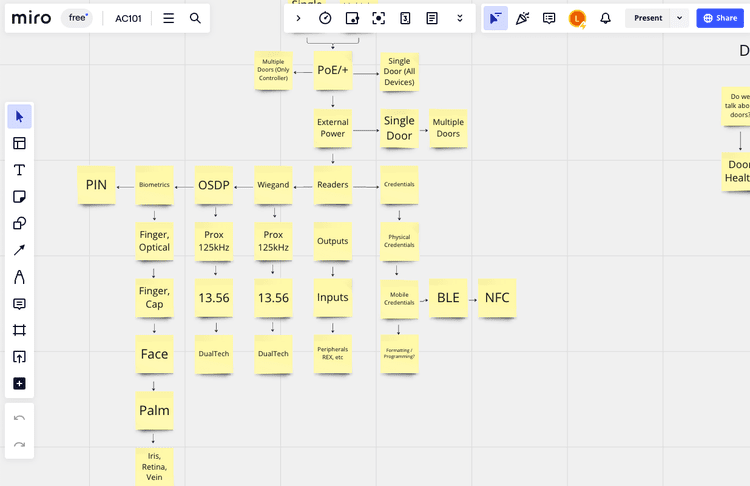
ACS101 Course Development
Access Control Executive Brief members collaborate weekly to develop the industry's first 2-week Access Control 101 education sprint. Through 12 planned modules and weekly 1 hour webinars, the members want to bring a highly effective and non-influenced primer course for everyone and anyone looking to enter the access control industry. We hold weekly calls on Fridays and work together in shared docs, Miro boards, and Slack to create this curriculum. If you want to contribute, please message me and join us on Slack at channel #acs101. Thank you to the following members who have contributed so far.
