
Volume 27 | July 25, 2025
This Weeks Featured Articles & Media
Tony Dong | Take-Private Acquisitions: Case Studies in Accretive EPS Outcomes for Public Companies
The Berkshire Hathaway and Oracle acquisitions of BNSF Railway and Cerner, respectively, demonstrate how large-scale M&A deals can create long-term shareholder value when driven by strategic fit, disciplined execution, and favorable financial structure—each transaction proved accretive to earnings per share and strengthened the acquirer’s core business. Despite being in vastly different industries, both deals highlight the power of buying stable, underappreciated assets at reasonable valuations and unlocking growth through operational leverage.x
Ivan Kravchenko | NFC Mobile Access Without Wallets: What iOS 18 Changes for Our Industry
With iOS 18, Apple now supports NFC Host Card Emulation (HCE), enabling third-party apps to offer tap-to-enter access without relying on Apple Wallet—bringing iPhones in line with Android for the first time. This shift gives organizations more control, privacy, and flexibility in mobile access systems, while reducing costs and accelerating deployments across platforms.
Mike Niola | Security Sensors in Schools: Separating Helpful From Hyped - How to guide your school customers beyond buzzwords and toward security solutions that are scalable, realistic, and rooted in a facility’s broader strategy
As school security needs evolve, advanced sensors and real-time alert systems are playing a growing role in enhancing safety and supporting physical security measures. This article originally appeared as the cover story in the June 2025 issue of Security Business magazine and dives into all of the advancements in security that are beneficial to school environments.
The Access Control Collective | PhySecJobs.com
Below you will find all of the latest jobs in the physical security industry.
Find them all below!

Trains are back in the headlines, this time not for a catastrophic derailment, but because of a major shakeup at Norfolk Southern following pressure from rival Union Pacific. It’s the latest in a series of headline-grabbing moves among North America’s Class I railroads.
Just a couple of years ago, Canadian National Railway and Canadian Pacific Kansas City were locked in a bidding war over Kansas City Southern, with the latter ultimately winning the deal, but also taking on significant debt to do so.
When a public company wants to acquire another, it’s relatively straightforward: buy up enough of the float, win a shareholder vote, and install your preferred board and management.
But in access control we tend to hear about private market consolidation when it comes to conglomerates like Assa Abloy or Allegion, which routinely buy smaller competitors. These “roll-ups” often target niche operators that lack the scale to remain independent.
When a public company acquires a private one, things are far opaquer. But just because these companies don’t file quarterly financials or trade on an exchange doesn’t mean the accounting math behind the transaction changes.
Today, we’re looking at two take-private acquisitions that worked for public companies (not disasters like Time Warner–AOL): Berkshire Hathaway’s 2010 acquisition of BNSF Railway and Oracle’s 2022 acquisition of health IT provider Cerner.
These were deals that actually benefited shareholders by being accretive to earnings per share, meaning, in accounting terms, that they boosted EPS for the acquiring company after the deal closed. That’s the litmus test for whether a merger or acquisition creates value at the per-share level.
Berkshire Hathaway and BNSF Railway (2010)
At the time of the deal in 2009, Burlington Northern Santa Fe (BNSF) was the second-largest freight railroad in the United States, trailing only Union Pacific. It hauled everything from coal and grain to manufactured goods across 32,000 miles of track.
The company had been publicly traded since 1995 and was seen as a vital player in America’s industrial backbone. Berkshire Hathaway, meanwhile, was already a partial owner, holding about 22.6% of BNSF’s shares and treating it as a core long-term holding in its equity portfolio.
But in 2010 Warren Buffett made a move that surprised even seasoned observers: Berkshire Hathaway would buy the remaining stake in BNSF for $100 per share, a 31.5% premium over its previous closing price, in a deal valued at approximately $44 billion.
Berkshire doesn’t often acquire large, established public companies outright. Most of its deals involve buying minority stakes in high-quality businesses. But this deal was different. Coming out of the 2008–2009 financial crisis, capital was scarce. Buffett, armed with Berkshire’s fortress balance sheet, was one of the few buyers with both the credibility and the cash to make a move of this size.
The deal was structured as a combination of 60% cash and 40% stock, totaling roughly $44 billion. This included Berkshire issuing about $10 billion in new shares and using cash reserves for the rest.
Because Berkshire’s own stock traded at a higher price-to-earnings (P/E) multiple than BNSF’s, the transaction was immediately accretive to earnings per share. Analysts at the time estimated BNSF’s P/E at around 18x forward earnings, compared to Berkshire’s 20–22x.
Here’s why that matters: Berkshire was essentially using a “more expensive” currency (its own stock) to buy a company with “cheaper” earnings. For example, if Berkshire’s shares were trading at 20× earnings and BNSF at 13×, then every $1 of earnings Berkshire acquired from BNSF cost fewer shares to obtain than if it were buying a company valued similarly to itself.
When a company trades at a higher P/E, its stock is more "expensive" relative to its earnings. So, if it issues shares (that expensive stock) to buy a business with a lower P/E (i.e., cheaper earnings), it's effectively getting more earnings per dollar of stock issued. That math means the deal added more earnings than it diluted, boosting overall earnings per share.
Post-acquisition, BNSF subsequently became one of Berkshire’s largest and most consistent sources of earnings. To give a sense of scale:
-
In Q1 2024, BNSF contributed $1.143 billion in after-tax earnings.
-
In Q1 2025, that number grew to $1.214 billion, a 6.2% year-over-year increase.
In short, Berkshire bought a long-duration cash engine. That segment-level growth added directly to Berkshire’s bottom line and helped sustain per-share earnings growth during periods when the company’s public stock portfolio was more volatile.
Oracle and Cerner (2022)
In late 2021, Oracle announced its intention to acquire Cerner Corporation, one of the largest electronic health record (EHR) companies in the U.S., in an all-cash deal valued at $28.3 billion, or $95 per share.
At the time, Oracle was a cloud software and database giant looking to deepen its presence in the healthcare sector. Cerner, while publicly traded, operated more like a private enterprise in terms of visibility and analyst coverage, as it wasn’t a headline stock, and its growth had plateaued.
Oracle’s strategy with Cerner was twofold. First, it wanted a stronger foothold in the massive and under-digitized U.S. healthcare market. Second, it saw a path to applying its cloud infrastructure and AI capabilities to improve Cerner’s products and profit margins.
From a financial standpoint, Cerner brought in steady recurring revenue but had room for operational improvement. Oracle believed it could unlock efficiencies by moving Cerner’s systems to the Oracle Cloud and applying its own software engineering discipline. It also saw Cerner’s healthcare customer base as a strategic lever for future cloud expansion.
Oracle is typically conservative with large M&A, and Larry Ellison rarely green-lights mega-deals. But in a low-rate environment and with a strong balance sheet, the company saw a rare opportunity to buy a stable, cash-generating business at a reasonable multiple.
The Cerner acquisition was an all-cash transaction. Oracle paid $28.3 billion upfront financed with some debt. While the price tag was high, Oracle emphasized that the deal would be immediately accretive to non-GAAP earnings in the first full fiscal year post-close. That guidance held up:
-
In fiscal Q2 2023, Oracle reported that the acquisition had boosted total revenue by 18% year over year—Cerner contributed over $1.5 billion in quarterly revenue.
-
Oracle’s non-GAAP EPS rose to $1.21, compared to $1.13 the year prior, a 7% increase, despite currency headwinds and inflationary pressure.
-
By fiscal year-end 2023, Oracle reiterated that Cerner had been EPS accretive and had begun to realize early cost and cloud migration synergies.
Investors responded positively. Oracle’s stock jumped nearly 20% in the two weeks following the initial announcement in December 2021. Analysts cited the deal’s strategic logic and near-term EPS boost as reasons for the market’s enthusiasm.
Qualitatively, the deal signaled Oracle’s shift toward vertical integration in mission-critical industries. Quantitatively, it delivered on the accretion promise: faster revenue growth, higher EPS, and a new recurring revenue stream that complemented Oracle’s cloud business.
What Berkshire and Oracle Got Right
At first glance, Berkshire Hathaway’s acquisition of a railroad and Oracle’s buyout of a health IT company couldn’t be more different.
-
One deal was driven by old-world infrastructure; the other, by cloud and digital transformation.
-
One was financed with a mix of cash and stock; the other was all cash.
-
One came from a conglomerate known for avoiding big-ticket public M&A; the other from a tech firm known for aggressively scaling its software empire.
But both deals shared core ingredients that made them accretive to earnings per share and successful for shareholders.
First, both acquirers bought at reasonable valuations. Berkshire picked up BNSF at a time when credit markets were tight and few bidders could compete. Oracle stepped in with cash when Cerner’s growth had stagnated and its stock was underappreciated. Neither overpaid.
Second, both had a clear strategic fit. BNSF gave Berkshire durable, cash-generating infrastructure to anchor its portfolio for decades. Cerner gave Oracle a recurring-revenue engine and a pathway into healthcare cloud services.
Third, they each used financing structures that played to their strengths. Berkshire issued stock at a premium P/E to buy BNSF at a discount P/E, making the deal EPS accretive on day one. Oracle used its balance sheet to fund a cash deal that immediately boosted non-GAAP EPS, even after taking on debt.
Finally, both acquirers had the operational discipline to execute. Berkshire left BNSF largely alone, allowing it to keep running efficiently while benefiting from stable ownership. Oracle began migrating Cerner’s systems to its cloud stack to drive margin improvements and long-term integration.
Different sectors, different styles, but both showed that when valuation, strategy, and structure line up, even massive acquisitions can create value per share. That’s the essence of accretive M&A.

For more than ten years, NFC Host Card Emulation (HCE) has been a practical tool for enabling tap-to-enter access on Android. Until recently, iPhones were not part of that picture. That changed recently, and it matters.
With the release of iOS 17.4 in the European Union and iOS 18 globally, Apple made NFC APIs available to third-party developers worldwide. Even though apps must still go through Apple’s validation and receive the correct entitlements to use HCE, this shift creates new ways to build alternative mobile access that better fits operational needs.
Why it matters
Before iOS 18, mobile access on iPhones meant using Apple Wallet. That came with trade- offs: hardware that requires upgrading, higher costs over time, and less control over how things work. Of course, wallets have their strengths, especially for familiar consumer use. However, they often fall short in access control, particularly in privacy-sensitive or offline systems.
Now that NFC HCE is available on both iOS and Android, providers can manage credentials directly in their apps. This means better control, more privacy, and fewer compromises. It also means there is finally a real choice.
What changes
Using HCE for mobile access across platforms solves a problem that used to slow everyone down. Manufacturers no longer need to upgrade the hardware and run hardware certifications with Apple or adapt to third-party requirements. Many current readers already support HCE with minor firmware updates.
This update is also not just about saving money. It makes rollouts faster and easier. Rather than reshaping your roadmap to fit another company’s model, you can plan based on what makes sense for your users and systems.
Beyond door access
A credential managed in your own app can do much more than unlock a door. It can be used for logging into workstations, accessing lockers, checking in visitors, and more. These examples highlight the broader potential of NFC HCE on both iOS and Android.
If you are revisiting your mobile access plans in light of these changes, now is a good moment to consider what level of control, cost structure, and functionality makes sense for your system. And in case you have a question about how to implement it effectively, we explored that in detail in the article “Mobile access without wallets: Open doors with NFC HCE on iOS and Android.”
This article originally appeared as the cover story in the June 2025 issue of Security Business magazine.
In the rapidly shifting landscape of school security, the role of advanced sensor technologies continues to grow in both importance and complexity. With the rise of new threats and heightened awareness of student safety, schools are turning to a variety of sensors, detectors, and real-time alert systems to supplement their physical security strategies.
Amid the pressure to adopt the latest tools, integrators and school districts alike are increasingly challenged to separate truly effective technologies from those driven by marketing hype. As a security consultant who works closely with university campuses, school districts, security integrators, and architects, I have witnessed how the rush to adopt cutting-edge technology can sometimes backfire – both from a budgetary and operational standpoint.
While some sensors have matured into proven tools with well-documented outcomes, others remain experimental at best. As trusted security advisors, our role is to guide clients beyond marketing buzzwords and toward solutions that are scalable, realistic, and rooted in the school’s broader security strategy.
It is essential for integrators and consultants to understand the evolving sensor landscape to be able to effectively offer the right combination of sensors – thoughtfully selected, well-integrated, and tied to real operational needs – to make a measurable impact on safety.
The Rise of Smart Sensors in Schools
Security sensors have become more than passive data collectors. Modern solutions are often integrated with access control systems, video surveillance, and security officer workflows, turning them into proactive elements in threat detection and response.
Common categories of emerging security sensors in educational environments include: Gunshot detection sensors; vape detection and air quality monitoring; aggression detection and audio analytics; environmental and hazardous substance sensors; weapons detection using AI visual recognition; and occupancy and movement sensors.
Each sensor type comes with unique capabilities, deployment challenges, and integration requirements. The effectiveness of a security sensor is not just a function of its technical accuracy, but also of how it is integrated into a school’s operational model.
Gunshot Detection: Maturing, But Not One-Size-Fits-All
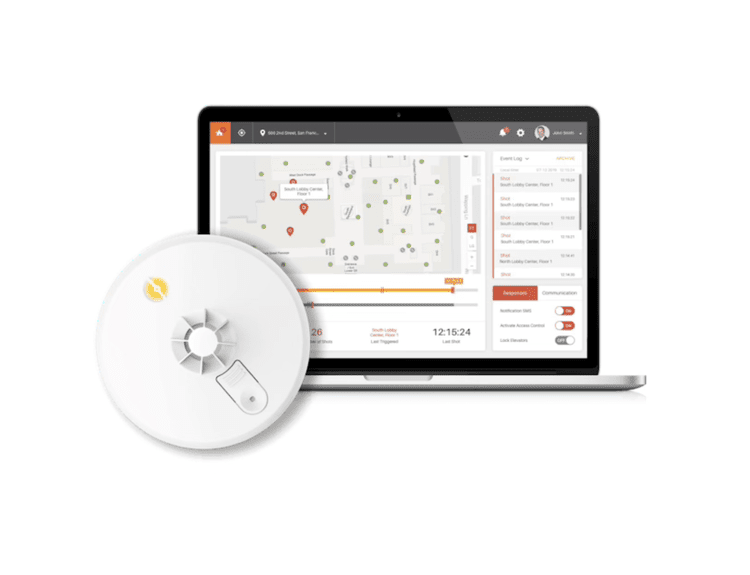
Gunshot detection technology has evolved significantly over the last decade, particularly in urban public safety settings. In schools, where the stakes are high but the acoustic environment is unique, adoption is increasing but must be approached carefully. This technology should only be implemented to supplement an already comprehensive approach to preventing violence on a campus.
What Works: Gunshot detection sensors that combine acoustic triangulation with machine learning can differentiate between firearm discharges and false positives, such as lockers slamming or fireworks. When these systems are integrated with mass notification systems, the sensors can be used to trigger immediate lockdown protocols and provide precise location data to first responders.
Avoid: AI-only gunshot detection marketed as “plug-and-play” should be avoided or very carefully assessed. Also, systems that do not support real-time API integrations should not be considered. Today’s security solutions should all be integrated to achieve the best outcomes.
Deployment Guidelines: We may be tempted to look for a “silver bullet” solution to firearms on school grounds, but a layered approach should be the primary goal when addressing this issue. Encourage your clients to address the prevention and mental health aspects first; then augment this with technology. Layer gunshot detection with video verification and lockdown response automation.
Gunshot sensors should be installed in high-risk areas such as entryways, corridors, and large gathering spaces like gyms and cafeterias. Ensure the system supports local law enforcement protocols and is tested in real-world school acoustic environments.

Vape Detection: High Demand, Varied Results
The rise in vaping among students of all ages has created a new challenge for administrators and security teams. Vape detection sensors are now being widely deployed in restrooms and locker rooms, with varying degrees of success.
What Works: Sensors that detect not just vape particulates, but also THC and elevated CO₂ or ammonia levels, provide a more complete picture of air quality and are a better use of a single sensor. Devices that offer time-stamped data, camera activation triggers, and alert escalation pathways are also the most actionable.
Avoid: Sensors or system designs that generate excessive false alarms without offering environmental context or historical trend data should be avoided. Also, systems that do not comply with local privacy laws or ADA requirements (some units emit sound/light that may cause disruption) should be avoided.
Deployment Guidelines: These sensors are best used when installed in restrooms, locker rooms, and other unsupervised areas where students congregate. The alerts issued by these sensors should also be combined with live camera feeds outside the doors (not inside) and automatically trigger alerts to security officers or administrators who can react to the alert. Lastly, it is imperative that school staff are educated on interpreting alerts to avoid over-policing or false accusations.

Aggression and Audio Detection: Promising but Complex
Audio analytics tools are emerging that can detect yelling, aggressive speech, or signs of bullying, and escalate alerts in real time. Similarly, computer vision technology embedded in security cameras promises the ability to monitor red flags in visual behavioral cues. These tools can address incidents before they escalate, but they also raise operational and ethical concerns.
What Works: Audio sensors that detect decibel spikes and stress-related vocal patterns have been deployed in high-traffic areas with documented success. Systems integrated with behavioral threat assessment protocols and mental health response teams offer the most benefit.
Avoid: It is important to avoid overdependence on audio detection for discipline enforcement. This data should be used as an indicator, not a verdict. It is also critical that deployment in areas where audio monitoring could be deemed a violation of privacy rights be avoided entirely. State laws vary widely in this regard.
Deployment Guidelines: These sensors are best used in hallways, stairwells, and other areas where fights may occur, and they are not recommended in classrooms or private spaces. As is the common theme, the alerts should be integrated with video surveillance to allow contextual review before a response is deployed. Training of staff on response protocols tied to sensor alerts is also important.
Environmental Sensing: Underrated but Essential
While often overlooked, environmental sensors play an important role in the enhancement of a safe educational environment, especially for STEM labs, cafeterias, and areas with hazardous materials or conditions. Security designs and operations should look to integrate these sensors with other security devices across a common monitoring platform.
What Works: Sensors that detect elevated CO₂, ammonia, cleaning chemical vapors, or refrigerant leaks can prevent health crises and should be part of a holistic security system. Furthermore, integrating these with building automation systems (BAS) allows ventilation to ramp up automatically under the necessary conditions.
Avoid: “Smart air sensors” that promise pollution tracking but lack school-specific chemical detection capabilities should be avoided. These devices often do not have clear thresholds for the common environmental substances present in this environment. Purpose-built sensors are needed.
Design Guidelines: These sensors are best placed in chemistry labs, maintenance closets, kitchens, and close to mechanical equipment. It is recommended that the sensors trigger both alerts to security and automatic MEP adjustments via BACnet or Modbus integration.
AI Visual Recognition and Concealed Weapons Detection: Proceed with Caution
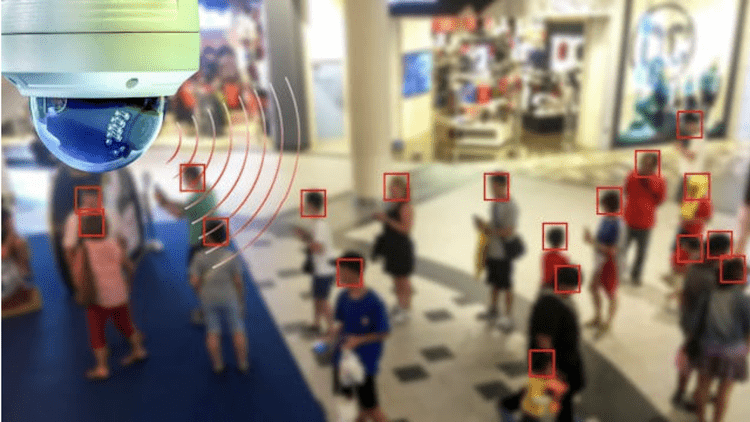
Visual AI solutions that claim to detect concealed weapons solely through the use of cameras are gaining traction, but most remain in the early stages of reliability. While the use of traditional video analytics has shown promise in visually detecting weapons in the past, the reliability of those systems has always been less than ideal.
Now, recent developments in AI technology have led to a huge influx of technology solutions claiming to use AI to significantly increase the accuracy of detection. These are claims that all school security stakeholders should be cautious in accepting at face value.
What Works: Screening systems that identify the presence of physical weapons through the use of walk-through portals or wands still remain more reliable than AI visual recognition technologies. To leverage camera views, expect low reliability from alerts; thus, couple them with other forms of verification.
Avoid: Any system marketed as “autonomous decision-making” should be avoided. These tools are still fallible and need verification. Solutions that lack transparency about AI training data or produce unexplained false positives should also be avoided.
Design Guidelines: Use these types of tools as just one part of layered security at entrances. Always deploy with a human review process before any intervention is triggered.
Occupancy and Real-Time Movement Sensors
Occupancy sensors, people counters, and BLE-based tracking systems have new relevance post-COVID, with schools using them to monitor hallway traffic, class densities, and emergency evacuation patterns.
What Works: Thermal or LiDAR-based sensors that count people and detect motion trends can provide useful behavioral analytics and have high accuracy rates. BLE (Bluetooth Low Energy) systems can also be embedded in staff ID badges to confirm who is where in real-time during emergencies. These systems work best when integrated to share data to cross-check accuracy.
Avoid: Avoid rolling out systems that require students or staff to carry tags without their informed consent. These systems should be clearly communicated as an opt-in function, which is a good privacy practice. Occupancy tools that lack integration with access control and video analytics platforms should also be avoided.
Design Guidelines: Use in entry/exit zones, major corridors, and special event spaces, and connect these systems to an emergency operations plan (EOP) and mass notification platforms.
Sensor Deployment Best Practices in Schools
Regardless of sensor type, several guiding principles should inform any deployment strategy:
1. Start with a security risk assessment: Don’t recommend technology before understanding the threat landscape. Identify a school’s highest risks and vulnerabilities, then select sensors that address specific operational gaps.
2. Prioritize interoperability: Standalone systems that do not integrate with access control, video, or mass notification platforms quickly become siloed and underutilized. Look for sensors with open APIs and integration with security management systems.
3. Beware of vendor hype: Many startups promote exciting sensor technologies that lack peer-reviewed data, field testing, or security certifications. Ask for pilot program results, customer references, and failure rate data.
4. Involve stakeholders early: Include facilities teams, school administrators, security officers, and IT in early planning. Sensor technology affects workflows, student privacy, and even custodial routines.
5. Help establish alert management protocols: Every sensor alert must go somewhere. Define clear SOPs for who receives alerts, how they are validated, and what actions should follow. Avoid alert fatigue by ensuring alerts are relevant and actionable.
6. Do not replace people with sensors: Technology should augment human awareness, not replace it. The best outcomes come when trained personnel are equipped with better tools, not when sensors are seen as autonomous solutions.

Below are the highlighted jobs and companies this week. New jobs are bolded.
-
KIWI.KI GmbH - Mid-Level Fullstack Developer - apply here
-
Triton - Regional Sales Manager - Southeast - apply here
-
Acre Security - Material Master Data Specialist, NAM - apply here
-
Nedap - Key Account Sales Executive - apply here
-
ZKTeco USA - Sales Support Engineer - apply here
-
- Senior Software Engineer Java – apply here
-Pre-Sales Consultant – apply here
-Staff Engineer – apply here
-Channel Account Manager DACH – apply here
-End User BDM - Emerging Technologies – apply here
-Director of Quality – apply here
-Director of Product Management - Readers – apply here
-Sales Development Representative – apply here
-Product Manager, Credentials – apply here
-Business Development Leader, Controller Apps – apply here
-
Kastle - Project Manager, Implementations - apply here