Volume 40 | December 5, 2025
This Week’s Featured Articles & Media
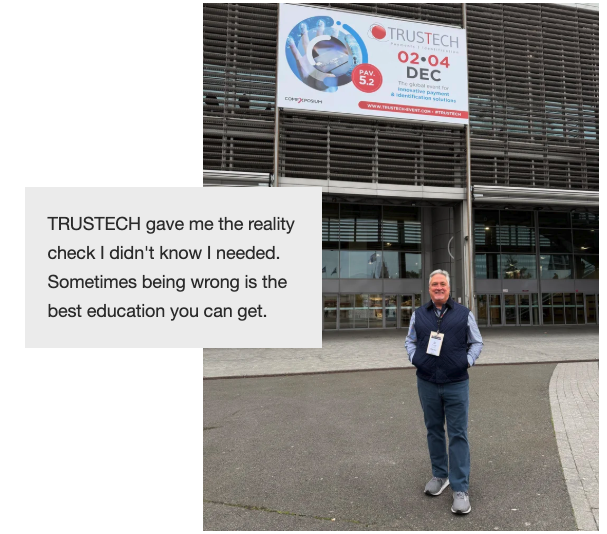
Danny Smith | The Physical Card Renaissance: My TRUSTECH Wake-Up Call
Danny’s trip to TRUSTECH flipped his assumptions about the future of credentials. Instead of a mobile-only world, he found a global market doubling down on both physical and digital, creating a hybrid reality that demands smarter strategies, better integrations, and real adaptation across the industry.
Lee Odess | Startup and Scale Up Success Stories at ISC East
Lee set the stage at ISC East with a challenge to the industry: 2026 must be the year startups and scale-ups move to the center of the security story. The Security Industry Association (SIA) Startups in Security Symposium showed that they sector is ready to evolve. Originally published on LinkedIn.
The Access Control Collective and RealSense | The Ethical Application of Facial Authentication in Enterprise Access Control
Discover how enterprise organizations in North America and the EU are implementing biometric systems that balance security, privacy, and compliance. Download the whitepaper.
Breaking News | Verkada Hits $5.8 billion Valuation
Verkada has reached a $5.8 billion valuation after a new funding round led by CapitalG, Alphabet’s venture capital arm, marking a roughly $1.3 billion jump from earlier this year. The round underlines investor confidence in Verkada’s cloud-native, AI-powered physical-security platform as demand surges for integrated surveillance, access control, and real-time analytics. Read Lee’s take on LinkedIn.
Breaking News | James Segil Joins HiveWatch Board of Directors
In their latest leadership move, HiveWatch added one of the most effective marketers and communicators in the security industry to their board of directors. James Segil’s startup experience, operational depth, and strong industry network are reasons why the move will accelerate HiveWatch’s growth and strengthen its market presence. Read Lee’s take on LinkedIn.
The Access Control Collective | PhySecJobs.com
Visit PhySecJobs.com to see the latest jobs in the physical security industry.
Find them all below!

I'll admit it. I went to TRUSTECH with all the wrong expectations. And I've never been happier to be so off base.
After years of considering the trip to what began over 40 years ago as CARTES Secure Connexions, I finally made the pilgrimage. With ColorID’s expanding global footprint and our recent acquisition of CardExchange, the timing seemed right to explore the European market and connect with potential partners. Having attended similar conferences in the U.S., I arrived assuming I’d meet the usual suspects: access control hardware, biometric readers, and endless conversations about mobile credentials shaping the future.
Paris in early December had different plans.
When Perception Meets Reality
Here's what I didn't see at TRUSTECH: card readers, mobile credential demos, biometric scanners, or the typical physical security hardware that dominates American trade shows. Not one.
Here's what I did see: An ecosystem I'd somehow missed while watching the mobile credential hype cycle dominate industry narratives.
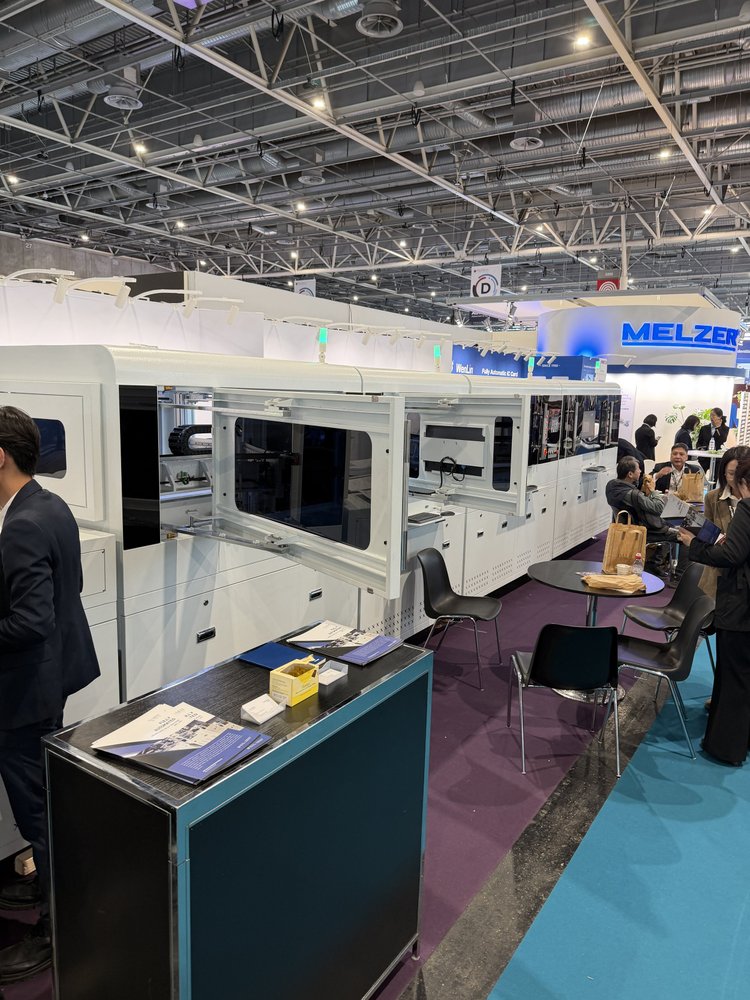
Card manufacturers lined the exhibit halls alongside large-scale lithographic printers, many with advanced fulfillment automation. I spotted half a dozen desktop card printer manufacturers, including two promising startups and two Chinese manufacturers completely new to me. Chip manufacturers shared space with companies offering everything from classic overlays to cutting-edge secure holographic solutions.
The real revelation? The startup area. Innovation was thriving in unexpected directions with ultrafast encoders, fabric-embedded chips for inventory tracking in healthcare and retail, and solutions I hadn’t even considered.
The Plot Twist I Didn’t See Coming
Conference veterans set me straight quickly: "If you'd been here two years ago, mobile and biometrics were everywhere."
That’s exactly what I expected in 2025. Instead, the conversation had shifted, or, more accurately, matured. When mobile did come up, it wasn’t positioned as the long-promised replacement for physical credentials. It was framed around something more pragmatic: co-existence. Physical and digital credentials working together, not fighting for dominance.
It wasn’t the story I expected. It was a better one.
Why This Matters for ColorID (And Maybe For You)
Being one of North America's leading credential providers and a global identity solutions integrator gives ColorID a front row seat to every variation of this evolution. We work daily with Apple, Google, HID, and many others, building the bridge from physical to digital.
But TRUSTECH crystallized something we've been seeing in our customer conversations for months: Organizations aren't following a single playbook.
Some universities are sprinting toward mobile-first strategies. Some healthcare systems are taking more measured, deliberate steps. Some enterprises are running sophisticated, dispersed, hybrid models that might persist for a decade or more.
And they’re all making the right choices for their unique circumstances.
The exhibit floor at TRUSTECH validated exactly what we’ve built our business around: end-to-end support that meets customers where they are—not where analysts think they should be, or where venture capital thinks the market is heading, but where their real infrastructure, needs, and user populations require them to be.
Our unique position bridging credential production and identity systems integration gives our access control partners significant leverage. We understand not just the reader on the wall, but the provisioning workflows, data flows, and integration requirements behind them. That’s real value in a market where end users want more sophisticated identity solutions but often lack the expertise to put the pieces together.
With ColorID’s decades of expertise and the CardExchange® Cloud Suite, we can support both ends of the spectrum: the aggressive digital adopter and the organization whose physical credential program still has years of life ahead. Both strategies are valid. Both deserve equal innovation.
The Billion-Dollar Signal Nobody's Talking About
My biggest takeaway from TRUSTECH contradicts much of the industry narrative: while mobile adoption gains traction in selected verticals, physical credentials aren’t fading. They’re being reinvented.
The show floor told that story in investment dollars, not in aspirational keynotes. Companies aren’t abandoning physical credentials; they’re reimagining them. Serious capital is flowing into card materials, chip technology, security overlays, encoding systems, and production automation.
TRUSTECH also offered something we don’t always see in American conferences: an unfiltered view of where European markets, and by extension global markets, are actually allocating resources. The bets remain heavily weighted toward cards, even as digital pathways emerge alongside them.
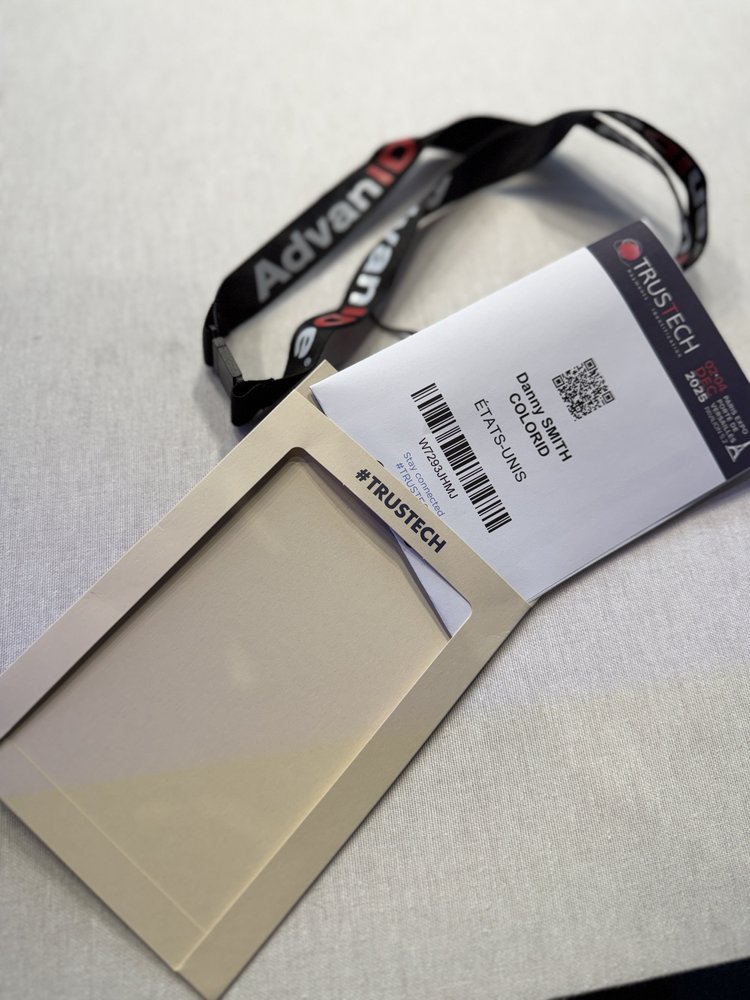
It's becoming clear that physical credentials will be here for many years to come.
Not as a legacy holdover, but as a deliberate choice that makes sense for countless use cases, populations, and operational requirements.
The Competitive Imperative
An uncomfortable truth kept surfacing in my conversations throughout the show: adaptation isn't optional anymore.
End users want mobile where it makes sense, robust physical programs where it doesn’t, and seamless integration across systems that were never designed to talk to each other.
The partners who guide customers through this complexity will win. Those who can’t will be displaced by those who can.
This is why our access control partnerships matter. We’re not competing; we’re complementing. You bring hardware expertise and customer relationships. We bring credential production and identity integration. Together, we can help customers modernize without the paralysis that often comes with complex technology decisions.
Because if we don't help them adapt, someone else absolutely will.
The Bottom Line
As you map out 2026, question your assumptions. The mobile credential future we keep hearing about? It's more nuanced than the keynotes suggest. Physical credentials aren’t limping toward obsolescence. They’re evolving and claiming their rightful place in hybrid ecosystems.
Institutions racing toward digital need partners to accelerate that journey. Organizations taking a measured approach deserve equal innovation in their physical programs. And the vast majority navigating both simultaneously need solutions that avoid false choices.
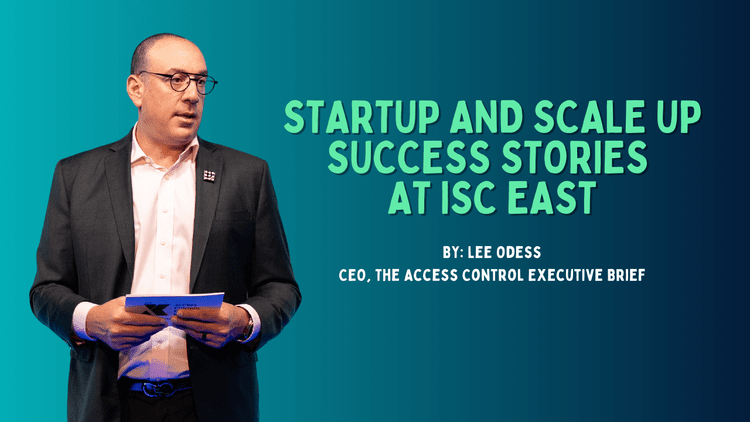
Thursday morning at ISC East, I kicked off the Security Industry Association (SIA) Startups in Security Symposium with a simple goal: Set a tone that reflects where our industry needs to go and that need moves from future tense to present tense...today. Our industry has spent decades defined by incumbents and predictable growth, while the energy of most mainstream industries, the entrepreneurial energy, has been in the background. I wanted the morning to signal that the shift is not just underway, but is here and now.
Mature industries thrive when scale from incumbents and innovation from startups and scale-ups coexist. For too long, we have had only one of those forces. 2026 is the year the innovation engine, the startups and scale-ups, finally move to the center of the story.
That is why this show-within-a-show and the Startups area on the show floor mattered so much. They gave physical space and real visibility to founders and scale-ups building what comes next. They give voice and tell stories on stage and in the halls, where incumbents usually dominate. A healthy startup network lifts the entire global ecosystem. It brings new ideas, talent, and new urgency. It is what the mainstream looks like. And it benefits every company, both those already here and those yet to come. The work of SIA's Startups in Security committee is creating that structure. And there is room for more people and more companies to get involved. There is a need, there is momentum, and at this stage, actions will matter more than words.
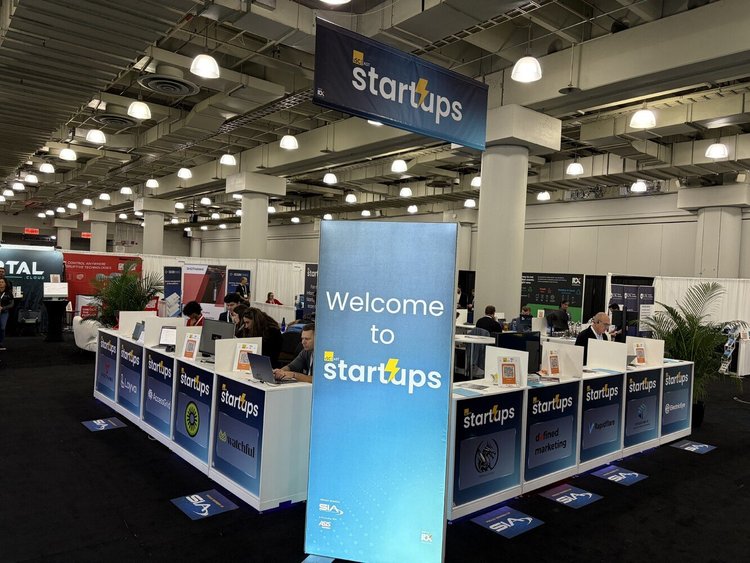
The opening message was also a thank you. As I said, "These moments only work because people show up." Thank you to all of you who have already shown up, and I look forward to welcoming the others who will join us.
From there, we flowed straight into our first panel. "The Startup Stories."
Instead of the usual "tell us your journey" panel, we broke it into four chapters that every founder knows all too well: (1) The spark, (2) The struggle, (3) The shift, and (4) The ask.
Three founders, Michael A. Johnson CPP, president of 78Dragons, Jason Veiock, founder and CEO of Bearing, and Mike Intag, co-founder and CRO of ElectricEye, joined me on stage, each at a different stage of the startup journey and with a different perspective. Each is searching for the same thing: a path to build something meaningful in an industry that often resists change.
The Spark. What started it all…
We opened with introductions and the moment that pushed each founder to leap.
Jason Veiock came from the end-user side, having served GoDaddy's CSO. He built something internally, caught the attention of a major software company with a venture arm, and suddenly had the opportunity to turn an internal tool into a real business.
Mike Johnson founded his company after seeing energy waste in large multi-unit buildings. That led to the creation of a mesh protocol that can support a thousand devices through a single gateway. They had a technical spark, with a clear problem, and a product born out of frustration and creativity.
Mike Intag focused on integrity-based data insights, driven by a personal frustration with the status quo and a belief that the industry could make far better use of data.
All had different sparks, but the same pattern, and a problem too big to ignore.
The Struggle. What makes it hard?
No startup story is complete without the painful parts. And these founders did not sugarcoat them.
As online threats continue to escalate, so too do physical security risks. According to the most recent World Security Report, companies experienced $1 trillion in revenue losses due to physical security incidents in 2022. In response, enterprises are investing in more sophisticated physical access control systems (PACS) to protect their environments.
However, many of the PACS put in place to prevent risks inadvertently create them, and it all comes down to how they verify and authenticate a user’s identity.
Authentication methods generally fall into three categories: what you know (PIN codes, passwords), what you have (key cards, fobs, mobile credentials), and who you are (biometric identifiers such as fingerprints, iris, and facial structure). Methods relying on knowledge can be easily shared or forgotten, while those based on physical credentials can be lost, stolen, or cloned.
Biometric authentication, however, is inherently tied to an individual, making it a more secure and convenient option.
And of the biometric authentication methods available, facial authentication stands as one of the most effective and secure solutions for enterprise access.
To continue reading, download the full whitepaper by The Access Control Collective and RealSense.