
Volume 53 | March 20, 2026
This Week’s Featured Articles, Media, & Breaking News
✍🏻 Articles
Vikrat Pelia | AI took centre stage at VerkadaOne London
The move from “cloud” to “AI” is more than a messaging shift. It reflects where investment, innovation, and the future of physical security are going.
Read below
Hailey Canady | ISC West Through a New Lens: What a Gen Z Newbie Actually Saw
ISC West was a storm of noise and pressure. This piece looks at what actually stood out and why experience, storytelling, and relationships cut through.
Read below
Lindsay Martin-Nez | The Badge Is Back In the Conversation
Mobile may be growing, but the badge is far from done. The real story is coexistence, not replacement.
Read below
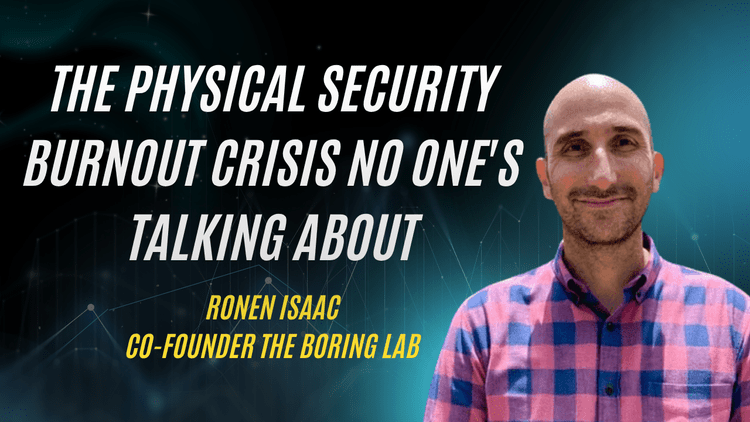
Ronen Isaac | The Physical Security Burnout Crisis No One’s Talking About
Cybersecurity got automated. Physical security got stuck with repetitive manual work and burnout that still is not being taken seriously.
Read below
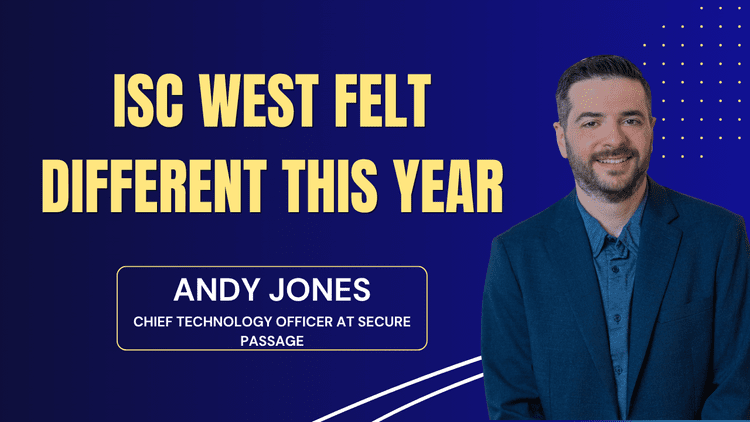
Andrew Jones | ISC West felt different this year
Physical security is not short on data. It is short on understanding. This piece explores why identity may be the foundation the industry has been missing.
Read below
🎙 Secured Podcast
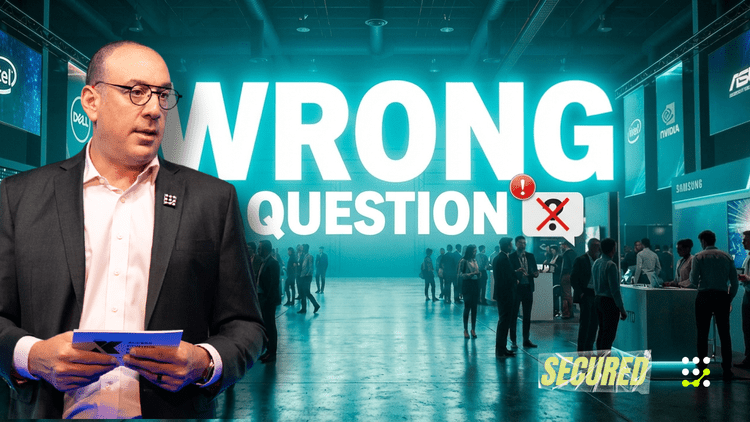
Episode 9 | ISC Recap: Why the Security Industry is Asking the Wrong Questions
45 podcasts, hundreds of companies, and one clear takeaway: the future of the industry is not about picking sides, it’s about building better systems.
Listen now.
🚨 Breaking News
Scroll down to go deeper ↓
I went along to the VerkadaOne London event on March 19, and honestly, it was a great day all round. The Verkada team put on a fantastic event with solid hospitality.
Things kicked off with a welcome from Mark Coates (VP, EMEA), followed by Filip Kaliszan (CEO), who opened with his ‘Future of Cloud Physical Security’ keynote. If you’ve seen his keynote from VerkadaOne 2025 in Chicago, you’ll recognise it, as it was largely the same. I’d recommend giving it a watch if you haven’t already, because it sets the scene nicely for where things are heading.
One particular remark from Filip really stood out to me. He said that VerkadaOne is no longer the “cloud physical security event”… it’s now the “AI physical security event”.
That shift in language might sound small, but it pretty much defined the rest of the day.
From cloud to AI (and fast)
It’s no secret that Verkada has been going hard on AI recently, but this event made it feel a lot more real. This isn’t just a roadmap idea or a few experimental features, it’s a major priority.
The most insightful session for me was Babak Behzad’s (Head of AI) ‘AI Deep Dive’.
Babak walked through how AI at Verkada has evolved over time — from early iterations of motion search back in 2016, all the way through to what they’re doing now with things like the AI-powered Unified Timeline. He also touched on newer capabilities like activity recognition, loud noise alerts, and automatic incident reports.
What I found interesting is that none of this was framed as “done”. It all felt like steps along a much bigger journey.
The technical side (if that’s your thing)
Babak went fairly deep into the technical side of things — especially around how their AI-powered search actually works under the hood.
I’ll be honest, parts of it will land differently depending on your background. If you’re into AI models, infrastructure, and how all of this gets built — there was a lot to take away. If not, there’s a good chance it may fly over your head. I myself had to do a lot of follow up reading!
That said, it’s good to see that level of transparency. And if there’s appetite for it, I’d be keen to explore if Babak would be open to an AMA session with the community to unpack it further (no promises, but we can try).
The bit that matters: where this is going
What will definitely interest everyone, though, is the vision.
Babak spoke about building a ChatGPT-like search experience inside Verkada Command — essentially making it as simple as talking to a security guard, using plain language.
Now, this isn’t a new idea. It’s been talked about for the past few years. The difference is that it’s starting to feel a lot less like theory, and a lot more like reality.
And that was the biggest takeaway for me.
It’s not easy (and they’re not pretending it is)
Babak didn’t pretend this is just around the corner.
He was pretty open about the challenges. Including compute and memory constraints, and the complexity of training large visual-language models that can understand and search video in a meaningful way.
These aren’t small problems. They’re the kind of challenges that take serious time, talent, and investment to solve.
But the impression I got is that Verkada is all in on figuring it out.
Why this matters beyond one company
What stood out most to me isn’t just what Verkada is building, it’s what this kind of work unlocks for the wider industry.
We’ve had a lot of conversations about AI in physical security over the years. Plenty ideas, panels, and vision statements.
But as we all know, talk is cheap.
What feels different now is that we’re starting to see real movement. Real products. Real technical progress. The kind that could genuinely change how we use security systems day to day.
If natural language search becomes viable, it doesn’t just make systems easier to use — it fundamentally changes who can use them effectively. It lowers the barrier, speeds up investigations, and potentially makes security teams far more responsive.
That’s a big deal!
Final thoughts
For me, VerkadaOne London wasn’t just a good event — it felt like a signal.
The shift from “cloud” to “AI” isn’t just marketing language. It reflects where the focus is, and more importantly, where the investment is going.
Verkada is leading from the front in terms of actually building and shipping AI capabilities, and I’m hoping that pushes the rest of the industry to move faster too.
Because this is where things are heading, and the next few years in physical security are going to look very different from the last few.
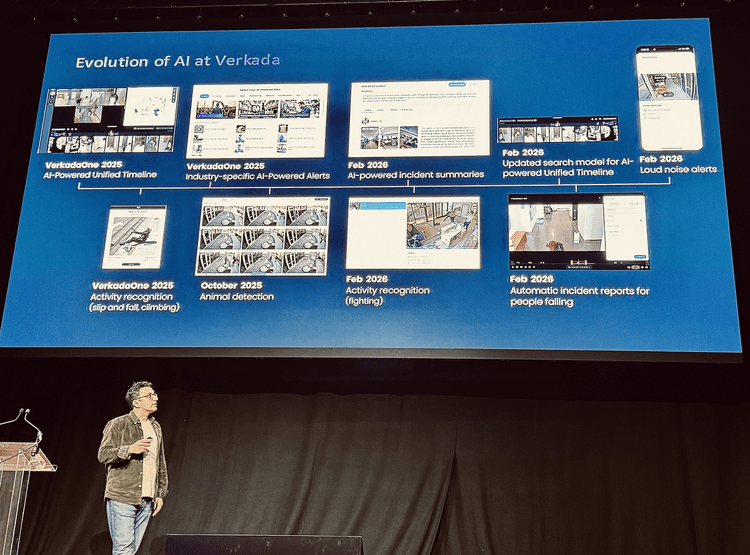
Babak Behzad (Head of AI, Verkada) giving his 'AI Deep Dive' keynote at VerkadaOne London on March 16 2026.
ISC West feels like walking into a storm of intelligence.
Not a slow build. Not a warm welcome. A storm.
And if I’m being honest, it was intimidating.
I’m new to this industry. About a month in. And I walked into a space that’s largely shaped by people who have been doing this for decades. So instead of pretending I understood everything, I paid attention to what stood out.
Here’s the truth from my perspective. There’s a lot of noise.
Everywhere you turn, companies are promoting products, pushing features, trying to win attention. Booth after booth, pitch after pitch. It’s impressive, but it’s also repetitive.
What I noticed quickly is that most companies are selling products. But very few are selling experiences.
And the difference is obvious.
Take Verkada, for example. Whether you loved their booth or not, you cannot deny the investment. The scale, the presence, the intention behind it. It pulled people in.
It worked.
When I first stepped onto the show floor, I genuinely felt like I walked into a different universe. It didn’t feel like a convention center. It felt like a city built entirely around security.
That’s what people mean when they say “drinking from a firehose.” You don’t just take in information. You try to survive it. And in that environment, something became really clear to me. It’s hard to tell the difference between what’s good and what’s just loud.
Flashy booths. Big claims. Endless conversations. It all blends together if you’re not careful.
Which is why catching attention matters more than ever. This era is about grabbing someone’s eye first, then earning their attention.
Not the other way around.
The competition is massive, and it’s only going to grow. More companies. More solutions. More overlap. Which means we don’t just need better products We need better storytelling. Better marketing. More voices.
Honestly, no plug intended, but we need more conversations happening in places like the podcast with Lee Odess.
Because the most valuable thing I experienced at ISC West wasn’t a product demo.
It was people.
This industry runs on relationships more than anything else. I heard multiple times that this space is “incestuous.” Everyone knows everyone. And after being there, I understand why people say that.
But I also noticed something else.
There are relationships that should exist… that don’t.
There are opportunities for collaboration that get blocked by opposing views, competition, or just a lack of effort to connect. And that feels like a missed opportunity.
Because this industry is too important for that.
Coming into ISC West, I didn’t fully understand how critical this space is. But being there, seeing the scale, the conversations, the responsibility behind what these companies do, it changed my perspective. This isn’t just about access control or security systems. It’s about trust. Safety. Infrastructure. The environments people rely on every day.
That realization stuck with me. And it’s also what made me want to be part of it even more.
ISC West wasn’t just an event for me. It was an entry point.
A fast, overwhelming, eye-opening introduction into a community that I now feel genuinely excited to grow in. And I didn’t do it alone.
Being there with The Access Control Collective team made all the difference. Getting to work alongside people like Hilary Gallagher and Lee Odess, and seeing firsthand the level of effort, creativity, and execution that went into everything we did, was something I don’t take lightly
They don’t just show up. They build. They connect. They create momentum.
And as someone brand new, being trusted to contribute to that at my first ISC West meant a lot.
If this was my first look at the industry, I can only imagine what’s ahead.
But one thing I know for sure is this: If you’re only focused on selling products, you’re going to get lost in the noise.
The ones who stand out are the ones building experiences, relationships, and conversations people actually want to be part of.
That’s what I saw.
And that’s what stuck.
After spending a few days at ISC West last week, I left Las Vegas feeling extremely energized. Not just because it’s the family reunion of the security industry, and therefore, one of the best opportunities to run into every friend I’ve ever made in my career, although that is a nice benefit. But because there was a real shift in the conversations happening around credentials and badge issuance, and that’s very exciting to me!
For the past few years, walking ISC West meant bracing for some version of the same narrative in every booth, every keynote, and throughout every panel discussion: mobile credentials are the future, physical badges are the past, and if you're still talking about card design and issuance workflows, you clearly missed the memo.
And look, I understand the enthusiasm. Mobile credential technology is genuinely impressive. I've personally never been anti-mobile. But the insistence that there had to be a winner and a loser in this debate always felt off to me. It never made sense to completely reject or alienate a technology that so many organizations in the real world, including government agencies, K-12 schools, and healthcare facilities, depend on, not just for use cases like access control, but for visual identification purposes as well.
This year at ISC West, I was relieved to find that the "mobile only" messaging was much quieter. What replaced it was something more nuanced and, honestly, much more useful: a real conversation about how physical and mobile credentials work together, and what it takes to make that process work well.
End users and partners were no longer debating about form factors. They were asking real questions about the issuance process itself: how credentials get created, validated and ultimately delivered to cardholders. They were asking about the identity itself and whether the data behind each badge is accurate, consistent, and actually reaching the systems that depend on it.
The question used to be, “Can I issue a mobile credential?”
This year the question was, “How do I issue all credential types and ensure the right cardholder data gets where it needs to go, every single time?”
That’s a fundamentally different, and much better, question.
Because here’s what I have always believed: physical badges and mobile credentials aren’t competing solutions. They’re complementary ones that work best when they work together. There is no one-size-fits-all approach to credentials in the market. Every vertical, Restricted every customer site, and every use case is different. It’s our job to find the solution(s) and issuance process that makes the most sense for each customer.
TL; DR: The physical badge is back in the conversation, and not as the thing that everyone is trying to replace. It’s awesome to see, and I couldn’t be more excited to be in this industry than I am right now.
When cybersecurity professionals started reporting that 71% of them were experiencing burnout, the industry took notice.
Billions were invested in SOAR (Security Orchestration, Automation, and Response) platforms, AI-driven threat detection, and automation tools.
But there's another security team that's been stuck in click-pergatory: the physical security professionals managing your cameras, access control, and surveillance systems.
I know because I was one of them.
My Breaking Point
I still remember the night that opened my eyes to this crisis. I'd spent the entire evening—from dinner time until well past 4 AM—doing something that shouldn't require years of experience: renaming cameras and creating camera groups in Milestone XProtect.
Camera_001, click.
Camera_002... click, click
Building A_Entrance_1… click
Building A_Entrance_2... click.
rename, save.. click, click.
So much clicking… for hours.
It wasn't the first time I'd lost an evening to this kind of mind-numbing work. It wouldn't be the last. But that night, after 17 grueling hours, I had a moment of clarity:
This is insane.
Here I was, a security professional with years of experience, essentially doing data entry.
Manual, repetitive, soul-crushing data entry that a computer could do in seconds.
And I realized I wasn't alone—every integrator and VMS admin I knew had similar stories.
While Cyber got SOAR, Physical Security got… Excel
What made it worse was knowing that the cybersecurity team down the hall was dealing with their own version of this problem—but they had solutions. When IT SOC analysts started reporting that they were drowning in 11,000 alerts per day, the industry responded with SOAR platforms, AI-driven triage, and automated playbooks.
But physical security? We were still renaming cameras one by one like it was 2005.
The Data Paints a Disturbing Picture
The research on IT security professional burnout is both extensive and alarming. Studies show that 63% to 71% of security professionals are experiencing burnout, with the Tines Voice of the SOC report finding that more than a quarter spend over half their work time on repetitive manual tasks—identifying this as a leading source of burnout.
The average IT security operations team receives over 11,000 alerts per day, with 28% never being addressed due to sheer volume. Nearly two-thirds of analysts say manual work consumes more than half their time, and 65% believe half their security tasks could be automated.
But here's what's troubling: virtually all this research focuses exclusively on cybersecurity teams. The physical security professionals managing our cameras, access control systems, and surveillance infrastructure? We're not even part of the conversation.
Same Problems, Different Departments
The parallels are striking. While cyber SOC analysts drown in 11,000 digital alerts per day, physical security teams face their own version of alert overwhelm: camera down notifications, storage capacity warnings, motion detection false positives, equipment maintenance alerts, and compliance deadline reminders that flood inboxes and dashboards with the same mind-numbing repetition.
The monotonous tasks that break cybersecurity professionals—manual investigation, repetitive reporting, routine system checks—have exact equivalents in physical security: password updates across hundreds of IP cameras, manual health checks on recording servers, generating compliance reports by copying and pasting data from multiple systems, and creating and updating device groups and user permissions.
Consider the scope: a typical enterprise might have thousands of cameras across multiple sites, each requiring individual configuration, monitoring, and maintenance. Unlike cyber alerts that can often be filtered algorithmically, physical security issues frequently require contextual knowledge about specific locations, equipment, and operational requirements.
Two Security Worlds, Two Different Responses
When cybersecurity recognized its burnout crisis, the response was swift and substantial. The SOAR market grew from virtually nothing to billions in investment. AI-driven threat detection, automated playbooks, and intelligent alert correlation became standard tools.
Physical security took a different path—or rather, stayed on the same path. We accepted manual processes as inevitable.
"That's just how video management works," became the industry mantra, even as our teams burned out from the same repetitive tasks that cyber teams were busy automating away.
This isn't because physical security problems are inherently unsolvable. It's because we never had the industry-wide recognition that these problems were worth solving systematically.
What We’re Really Losing
The cost isn't just personal—it's strategic.
When skilled security professionals spend 64% of their time on manual tasks, organizations lose 64% of their expertise to work that doesn't require human judgment. Those hours could be spent on threat analysis, system optimization, strategic planning, or innovation.
More concerning is the retention crisis brewing beneath the surface. If cybersecurity's 71% burnout rate led to massive industry turnover and recruitment challenges, what does a similar rate mean for physical security? We have the same pressures—increasing threats, growing system complexity, compliance demands—but fewer resources dedicated to solving the underlying workflow problems.
When experienced physical security professionals leave the field due to burnout, they take with them years of institutional knowledge about threat patterns, system quirks, and operational best practices that can't be easily replaced.
Building Solutions That Actually Work
That night of creating device groups wasn't a technical challenge—it was a wake-up call that we'd accepted inefficiency as inevitable. I couldn't stand being bored at work anymore. When you're over the monotony and repetition, you either quit or you build a better way.
The cybersecurity industry's transformation offers a roadmap, but not a direct copy. Physical security automation needs to account for the unique workflows and requirements that define our field. It's not about adapting cyber tools—it's about building solutions designed specifically for how physical security actually operates.
This means understanding that a camera failure isn't just an alert to acknowledge—it might require coordination with facilities, scheduling technician visits, updating security patrol routes, and notifying stakeholders. Compliance reporting isn't just data aggregation—it's about proving operational effectiveness to auditors who understand physical security contexts.
The most promising developments come from solutions built by practitioners who understand these nuances intimately, rather than generalist approaches trying to serve every platform and use case. The Boring Toolbox is a perfect example of this approach—created by someone (cough-me) who survived those late night device grouping sessions and designed it specifically for Milestone XProtect workflows.
What The Industry Needs To Acknowledge
Physical security deserves the same attention to operational efficiency that transformed cybersecurity. This means acknowledging that burnout isn't a personal failing—it's a systemic problem that requires systemic solutions.
It means investing in tools that respect our professionals' expertise by automating the monotonous tasks that don't require human judgment. It means measuring and tracking the time spent on manual processes with the same rigor we apply to security metrics.
Most importantly, it means changing the conversation. When we accept that "this is just how things are done," we're accepting that our people's time and mental health are less valuable than maintaining the status quo.
The Path Forward
The cybersecurity industry's massive investment in automation wasn't just about stopping hackers—it was about recognizing that talented professionals shouldn't spend their careers on tasks that machines can do better, faster, and more consistently.
Physical security professionals deserve the same recognition. Because whether you're triaging network alerts at 2 AM or checking camera health across fifty sites, the human cost of inefficiency is the same.
Any time I hear about another security professional leaving the industry due to burnout, I think about that night spent creating device groups. Because somewhere tonight, there's another administrator staring at their screen at 4 AM, doing work that shouldn't require a human brain.
The question isn't whether we can automate these tasks—The Boring Toolbox is proof that we can.
The real question is: what will we build next? Because the future of physical security isn't about accepting burnout as inevitable—it's about creating an industry where talented professionals can focus on what they do best.
I think ISC West felt like a real shift moment for a lot of us Physical Security practitioners.
For years in physical security, we’ve all been chasing the “next big thing.” AI, cloud, analytics—every year there’s something new that’s supposed to change everything. And to be fair, a lot of it has moved things forward.
But if we’re being honest, it’s also created a lot of noise.
More alerts.
More dashboards.
More systems that don’t really talk to each other.
We don't need or want more dashboards or any more single-pane-of-glass “over-marketed” systems... we need understanding...
And if you’ve actually sat in the seat of someone responsible for security, you know what that feels like. You’re not lacking data—you’re drowning in it. And somehow still asking, what actually happened here?
That’s the part that always felt off.
This year at ISC, something felt different.
For the first time, identity wasn’t just a side topic or buried in a panel—it was front and center. There was a real focus on it. And not in a hypey way, more in a “finally, we’re talking about the thing that actually matters” kind of way.
Because at the end of the day, most organizations don’t wake up wanting more alerts. They want Identity understanding. From signals generated across all domains...
Who is this person?
What did they do?
Was it expected?
Should I care?
That’s it.
And that’s why identity feels like such a big shift. It’s not adding more—it’s simplifying. It’s giving everything else context.
A door alarm or camera clip by itself doesn’t mean much.
But when you can tie those things back to a real person, in a real moment, with real context—that’s when it clicks.
That’s when it becomes useful.
It also feels like this is where physical security and cyber are finally starting to meet in a real way. Cyber teams have been thinking in terms of identity for a long time—access, permissions, behavior, compliance. Physical has had all these rich signals, but we’ve never really lined them up the same way.
Now we can.
And it’s not about replacing what we’ve built—it’s about connecting it in a way that actually reflects how the real world works.
People move. They badge. They show up on cameras. They interact with systems. All of that is part of their identity in a given moment.
When you start to see it that way, things get a lot clearer.
It also cuts through a lot of the AI conversation, honestly.
AI is powerful, no doubt. But without context, it can just create faster noise. Faster alerts. More things to look at.
With identity, it starts to feel different. More grounded. More useful. Identity is the baseline AI needs to thrive!
Less “something happened,” and more “here’s what happened, and here’s who it involves.”
That’s a big difference.
I don’t think this is one of those hype cycles that fades out in a year or two. It felt more foundational than that. Like the industry is starting to re-center around something that actually makes sense for the people using these systems every day.
You could feel it in conversations. People weren’t just talking about features—they were talking about clarity. About making sense of everything they already have.
That stuck with me.
We don’t need more data.
We need better understanding.
And identity feels like the way we get there.
Maybe I’m reading into it—but it didn’t feel like just me. It felt pretty widespread.
It was palpable.
Podcast | Secured: Episode 9
In this episode of Secured, Lee and Hilary unpack the biggest takeaways from ISC West, from the industry’s obsession with the wrong debates to the deeper shift toward openness, flexibility, and customer choice. They also reflect on what stood out across the show floor, why mindset may be more disruptive than the technology itself, and how the market is moving beyond product arguments into bigger structural change.
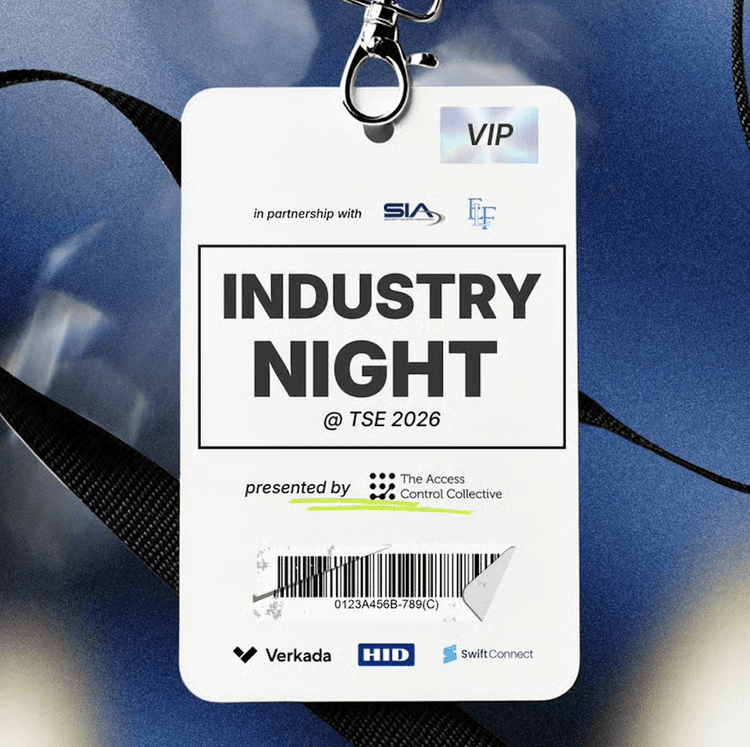 |
Industry Night at TSE returns for its second year on Tuesday, April 28 at 6:00 PM at The Botanist. Join us for an evening of connection and conversation with professionals from across the access control and security ecosystem. Attendance is capped at 120 guests, with food and drinks included, and a portion of proceeds supporting FAST. Sign up here to register .
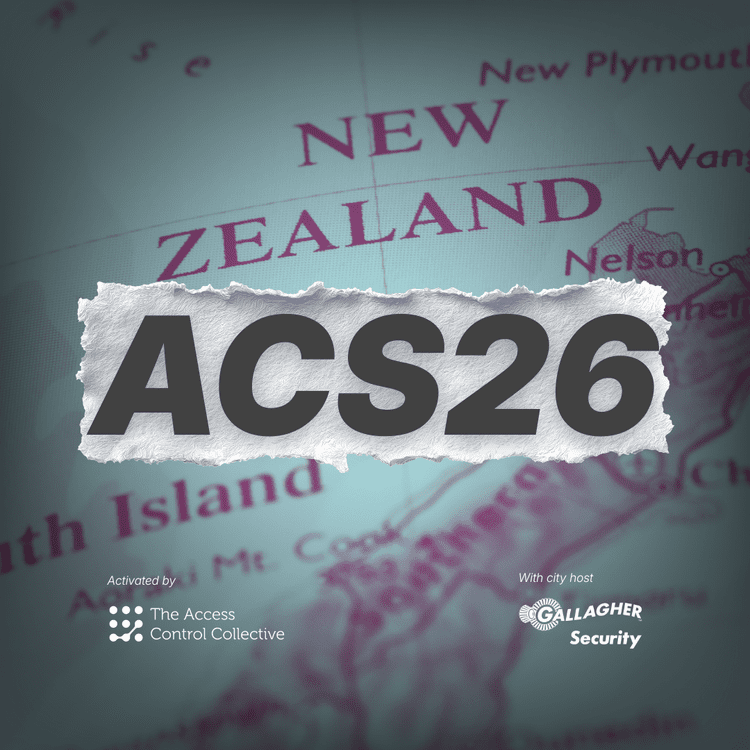
ACS26, The Access Control Summit, is heading to New Zealand in 2026, hosted in collaboration with our city-host, Gallagher Security. Join us October 7–8, and sign up here to be notified first when registration goes live.
