Volume 59 | May 15, 2026
This Week’s Featured Media, Articles, & Breaking News
🎙 Secured Podcast
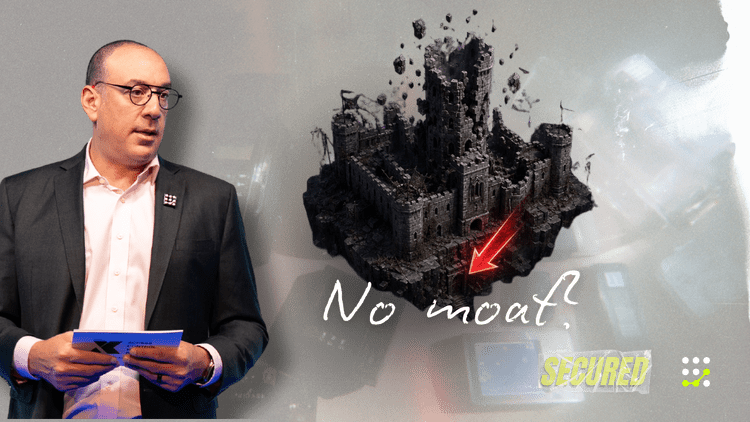
Episode 15 | Physical Security Moats Are Crumbling
The next real moats in physical security are starting to form, from vertical operators to agent-friendly APIs. Physical access is turning into a bigger conversation. Does the industry lead the shift or wait to be told?
YouTube: Listen here PodBean: Listen here
West to East series | This week we are featuring:
Dan Rothrock, Julia Webb-Twoomey, Bjorn Lidefelt, and Andrew Bowers
✍🏻 Articles
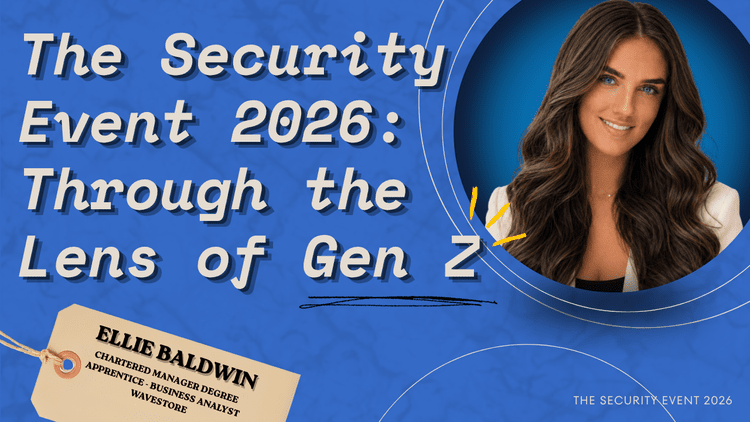
Ellie Baldwin | The Security Event 2026: Through the Lens of Gen Z
A reflection on visibility, future talent and what more the industry can do for the next generation
Read below
Michael Stuer | Physical access is becoming a government conversation
Physical access is becoming harder for governments and regulators to ignore, especially as cyber investment continues to outpace the systems controlling who can enter a facility.
Read below
🚨 Breaking News
Breaking: Just a reminder, that the 🚨Breaking posts we put on LinkedIn are open to anyone in the physical security industry and a great way to get visibility to all the great stuff going on in our industry (we also add them to the weekly Secured Podcast and the PhySec Collective Slack group).
Breaking: Outpost has launched its second-generation gate automation platform, processing over three million gate events annually across its terminal network and customer sites.
Breaking: Brivo announced that the Brivo Security Platform API is now fully AI agent-friendly.
Scroll down to go deeper ↓
Podcast | Secured: Episode 15
This episode looks at what may actually create advantage in the next era of physical security. Lee breaks down Outpost and Brivo as two different examples: one built on vertical depth and real operational data, the other on APIs that make faster integration possible. He also gets into government pressure around physical access, the future talent pipeline, and why the industry needs to broaden how it talks about itself. The episode closes with a direct call for higher standards, stronger community, and more focus on the work that actually moves the industry forward. YouTube: Listen here PodBean: Listen here
From West to East, the conversation doesn’t stop at the show floor. This podcast series brings together 45 voices from across the industry to share what’s actually top of mind right now. You can stream right from our Secured Youtube channel or on Secured PodBean.
Dan’s episode: here
Julia’s episode: here
Bjorn’s episode: here
Andrew’s episode: here
This year was my second time attending The Security Event (TSE) and that changed the way I experienced it.
Last year, I was mainly taking everything in: the scale of the event, the stands, the technology, the conversations and the number of people involved in shaping the security industry.
This year, I found myself looking at it through a more reflective lens.
Instead of only asking, “What is here?”, I found myself asking, “What has changed?”, “Who is being represented?” and “How is the industry creating space for people who are still early in their careers?”
Events like TSE are a valuable way to understand the industry. They show you what businesses are prioritising, what conversations are gaining momentum and where the industry might be heading next.
They also expose who is being invited into the conversation.
What Felt Different This Year
One of the biggest differences I noticed compared to last year was the increased visibility of women in the industry.
There seemed to be more intentional space for women to connect, share experiences and be part of the wider conversation through panel sessions, podcasts and networking events. The Women in Industry Podcast, hosted by Marie Diane Tyler DIR.IPSA, was a clear example of that. It brought women’s voices onto the show floor in a visible way, rather than keeping those conversations on the sidelines.
That felt important.
Security has traditionally been seen as a male-dominated industry. While that is changing, representation still matters. It matters who is visible. It matters who is speaking. It matters who is given a platform.
As a young woman building my career in security, seeing more focus on women in the industry made the event feel more encouraging and more forward-thinking.
Because visibility creates possibility.
When people see others like them in an industry, it becomes easier to imagine themselves belonging there too.
Why Visibility Matters for the Next Generation
The same applies to young people.
From my perspective, security is still not always an obvious career choice for the next generation. Many young people may hear “security” and think of guards, cameras or control rooms before they think of AI, data, software, customer experience, marketing, sales, product, leadership or business strategy.
But security is much broader than people realise.
It is an industry built around people, technology, trust, risk, relationships and problem-solving. It needs technical thinkers, creative communicators, commercial minds and future leaders.
That is why the way we describe the industry matters.
When we lead only with systems, hardware, policies, cameras, credentials or control rooms, we risk making security sound purely technical. Those things are important, but they do not tell the full story.
They do not show the human impact, range of roles or the opportunities.
Not every young person will immediately see themselves as a “security person”. But they might see themselves in an industry that helps people live, work, learn and travel with more confidence.
That is a much more powerful message.
The UK Has Momentum Around Technical Talent
One positive thing I noticed is that there is visible momentum in the UK around developing young technical talent.
At TSE, Skills for Security had a clear presence and there was activity around apprenticeships, practical skills and routes into technical areas of the industry. The WorldSkills zone also helped put young technical talent in front of the industry, with apprentices demonstrating practical skills linked to fire systems, intrusion detection and access control.
That is brilliant to see. The industry absolutely needs skilled engineers, installers and technical specialists. It needs people who understand the systems, standards and practical realities that keep security working.
But it also made me think about a bigger question.
What about the other talent the industry needs?
The Wider Talent Question
The future of security will not only depend on the next generation of installers and engineers.
It will also depend on the next generation of salespeople, marketers, product specialists, software developers, customer success teams, business development professionals, project managers and leaders.
Who is building those pathways?
Who is showing young people that security is not only a technical career route, but also a business, technology, communication and leadership opportunity?
This is where I think the industry has a real opportunity.
There were moments at TSE where this conversation started to appear. Podcasts and panel sessions included discussion around the next generation, apprenticeships and the industry’s talent gap, which felt like an important signal.
But from my perspective, it still needs to become a bigger and more consistent part of the conversation.
Because if we only talk about future talent through a technical lens, we risk missing the wider ecosystem that makes this industry work.
Learning From the US
This is where I think the UK industry could look at some of the activity happening in the US.
In the US, there seems to be more visible structure around attracting and supporting the next generation across the security industry. Programmes like the Security Industry Association’s SIA RISE community and the Security Industry Association (SIA) TIME mentorship programme show a more intentional approach to young professionals, networking, mentoring and career development.
What also stands out is that people actively want to contribute. You have industry professionals signing up to become mentors through the TIME programme, giving their time and experience to support people earlier in their careers.
This is not just about saying, “We need more young people.”
It is about creating spaces where young professionals can meet, learn, build confidence and see long-term career opportunities in the industry.
That is the difference between recognising a talent challenge and actively doing something about it.
It is building spaces for future talent.
It is creating community around it.
It is giving people a reason to feel part of something before they have fully found their place.
What More Could be Done in the UK?
From a Gen Z perspective, I think the UK security industry has a huge opportunity to make early-career talent more visible.
That could look like more young professional networking sessions at major events. More apprentice and graduate voices on panels. More mentoring opportunities. More content showing the range of career routes across the industry. More space for younger professionals to ask questions, share reflections and contribute while they are still learning.
But I also think it goes deeper than event formats or early-career initiatives.
The industry needs to think carefully about how it presents itself to people who are not already in it. If we only lead with systems, hardware, cameras, credentials and control rooms, we risk making security feel like a purely technical world that only certain people can enter.
That is not the full story.
Security is about people. It is about trust, confidence, technology, problem-solving and helping organisations and communities operate safely. It is an industry with space for engineers, but also for marketers, salespeople, software developers, product specialists, project managers, customer success teams and future leaders.
If the industry wants young people to care, it needs to give them a reason to care before giving them a system to understand.
My Biggest Takeaway
My biggest takeaway from Nineteen Group's Security Event is that the industry is moving in the right direction, but there is still a real opportunity to go further.
I noticed more space being created for women in the industry, which felt like a positive and important step. The visibility of conversations showed that representation is becoming a more active part of the industry conversation, not just something happening in the background.
I also saw encouraging momentum around technical apprenticeships and practical skills. That focus matters, because the industry needs strong technical talent.
But the next-generation conversation cannot stop there.
If security wants to attract and retain more people, it needs to show the full range of opportunities available across the sector. That means creating visibility not just for future installers and engineers, but also for future marketers, salespeople, product specialists, developers, customer success professionals, business development teams and leaders.
The Security Event reminded me that the industry is evolving. Now, I think the opportunity is to keep widening the conversation.
For women.
For young professionals.
For the next generation of security leaders.
Because if the industry wants to attract more talent, it needs to create space for the people who will shape its future.
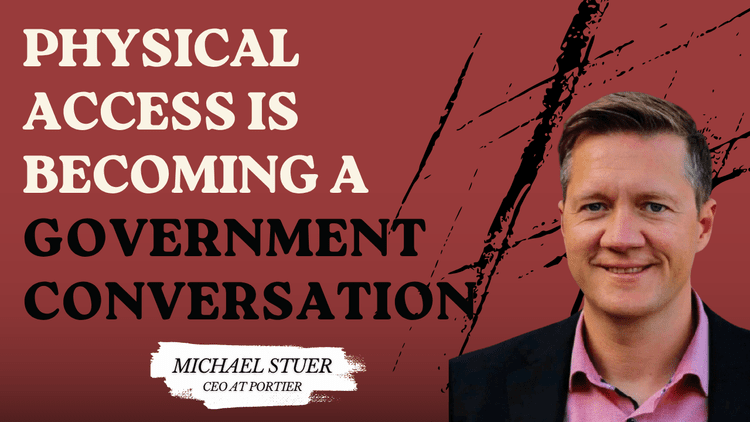
I've spent the past few months engaging Australian government on physical access at both state and federal level. Not selling. Asking how physical access to facilities is managed and whether it's keeping pace with the investment going into cyber security.
The short answer: it's not.
At the state level, I presented to the Queensland Government and followed up with a briefing paper mapping physical access controls against ISO 27001 requirements. At the federal level, I raised the question with Andrew Wallace MP at a Defence Forum, specifically around AUKUS and allied personnel at shared Australian sites. His response was direct: physical access management across the wider industrial and contractor base is uneven, and not yet as mature as cyber security. AUKUS will continue to highlight those gaps rather than remove them quickly.
This is not unique to Australia or to government.
When you map physical access controls against what ISO 27001 A.7 actually requires, the gap between standard and practice is significant in most large organisations. The standard is clear: physical entry must be documented to individuals, access must be reviewed regularly, revocation must be timely across all credential types, and records must be retrievable on demand.
Four patterns consistently fall short.
The offboarding gap. When someone leaves, electronic access may eventually be disabled. Mechanical keys almost never come back on the last day. Across sites with different access systems, there is no single view of what a departing person still holds.
Card as group key. Swipe cards treated like mechanical keys, handed from one person to the next without reprogramming. The door opens. The audit trail shows a card number, not a person. A.7.2 is met in form but not in substance.
Reconstruction takes days, not minutes. If a security event occurred last Tuesday at 2am and someone asks who had access, the answer in most organisations requires pulling logs from multiple systems, cross-referencing with personnel records, and hoping the credential was tied to an individual. For mechanical keys, the answer may not exist.
Audit as the trigger. Organisations rarely discover their physical access gaps through proactive review. Key registers live in spreadsheets, in the memory of long-serving facility managers, or in software no longer maintained. The gap only becomes visible when someone asks a question the current systems cannot answer.
Every integrator, every manufacturer, every consultant in this space has seen these patterns. The difference now is that governments and regulators are starting to see them too.
IT, HR, and finance all went through a period where data lived in silos, processes were manual, and integration felt optional. Regulatory pressure forced convergence. Physical access is reaching that point. NIS2, DORA, AUKUS, and tightening ISO 27001 attestation requirements are making disconnected systems harder to justify.
The question for our industry is whether we lead that conversation or wait to be told.
👀 As Seen in the PhySec Community this Week:
#ai
-
Salvatore D’Agostino shared
#security-research

The ALOA Convention & Security Expo is coming up fast. From technical training to meaningful connections, ALOA 2026 is where the people behind physical security come together to learn, connect, and move the industry forward. This is where the industry gets back to the fundamentals, real skills, real conversations, and the people who actually make security work every day. Learn more and register here.
ACS26, The Access Control Summit, is heading to New Zealand in 2026, hosted in collaboration with our city-host, Gallagher Security. Join us October 7–8, and sign up here to be notified first when registration goes live.
