Volume 61 | May 29, 2026
🎙 Secured Podcast
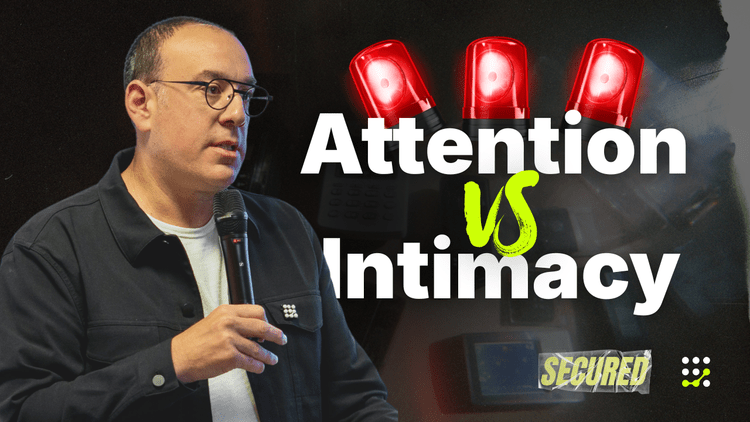
Episode 17 | The Truth About The Attention Economy
Lee Odess shares what he believes about the future of physical security, from building real community to rethinking identity, mobile, audio, and AI-led systems.
YouTube: Listen here Podcast: Listen here
West to East series | This week we are featuring:
Steve Womer, James Gammon, and Andrew Rapsey
✍🏻 Articles
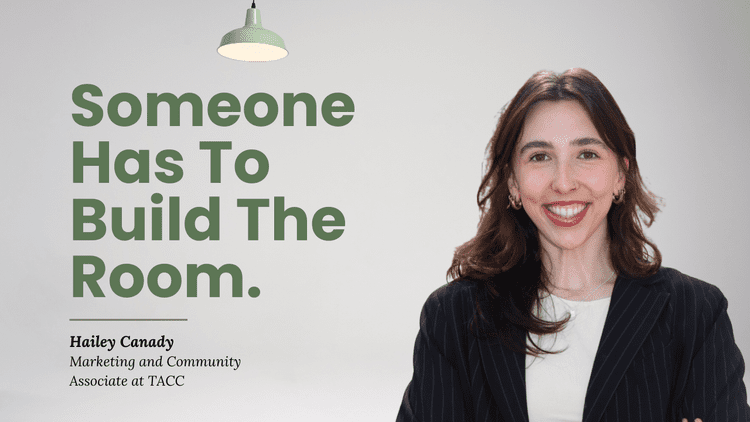
Hailey Canady | Someone Has to Build the Room.
This piece reflects on the unseen work behind industry events, and why building community takes more than getting people in the room.
Read below
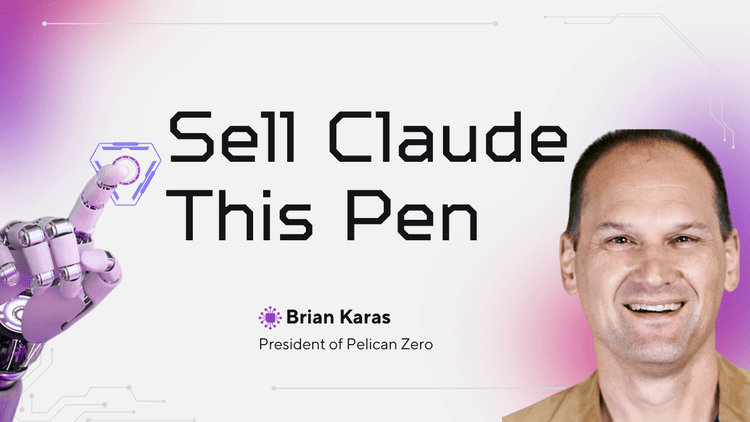
Brian Karas | Sell Claude This Pen
AI is not just for building sales materials, it can help evaluate them too. This piece explores how AI can pressure test pitch decks, agreements, and messaging before they reach the wrong audience.
Read below
🚨 Breaking News
Breaking: May is Mental Health Awareness Month.
I just heard from someone in our industry about a horrific story that none of us want to live through. It reminded me of something we do not say often enough, and before this month closes I want to say it…
Scroll down to go deeper ↓
Podcast | Secured: Episode 17
In this episode, Lee Odess steps back from the weekly news cycle to share what he believes about the physical security industry and where it is headed. He covers the difference between audience and community, why mobile should be seen as a modality instead of a replacement, and the questions we need to start asking as AI-led security systems move closer to reality.
YouTube: Listen here Podcast: Listen here
From West to East, the conversation doesn’t stop at the show floor. This podcast series brings together 45 voices from across the industry to share what’s actually top of mind right now. You can stream right from our Secured Youtube and Secured Podcast channels.
Steve’s episode: here
James’ episode: here
Andrew’s episode: here
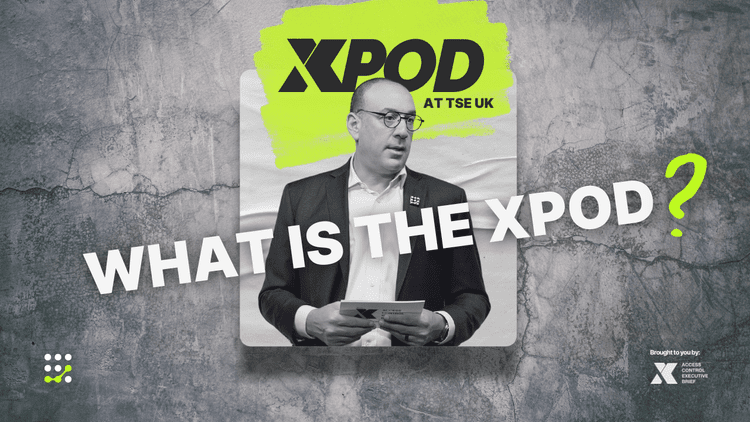
Secured Presents: XPod from The Security Event
Over two days at The Security Event in Birmingham, we set up a microphone, called it XPod, and sat down with more than forty operators, founders, and leaders from across the global physical security industry.
We asked everyone the same four questions. What came back was not a recap. It was a read on where the industry actually is, told through the people doing the work.
Three episodes. Three theses. Thirty-three voices.
You can stream directly from our Secured Youtube and Secured Podcast channels.
We talk about connection, community, networking, leadership, collaboration, and the conversations that happen when the right group of people finally sits down together. And those moments really do matter. Some of the most valuable parts of this industry happen in the spaces between panels, during dinners, in quick side conversations, or over coffee before the day officially starts.
But something I have started to appreciate is that those moments do not happen on their own.
Someone has to build the room first.
This piece came from getting my first real glimpse into what it takes to plan and support an industry event from behind the scenes. After recently seeing how much work goes into bringing a group of industry leaders together, I walked away with a much deeper appreciation for the amount of thought, time, coordination, and care it takes to create a space where people can actually connect.
And once you see it, you start to notice it everywhere.
I could point to so many events in this industry, from ISC West to LeadHER, TSE, ACS, and beyond. Each one may look different from the outside, but all of them take an incredible amount of planning to bring to life. There are teams and individuals behind every event thinking through the details most people never have to see, and that is part of what makes the experience feel so seamless once attendees arrive.
From the outside, an event can look simple. People show up. They get a badge. They find their seat. They attend the session. They have a few good conversations. They post a photo afterward and talk about how great it was to be there.
And when an event feels seamless, that is usually a sign that a lot of people did their jobs really well.
Behind every smooth experience is a long list of details that most attendees may never see. The timelines. The run of show. The registration questions. The reminder emails. The speaker coordination. The room setup. The signage. The catering details. The printed materials. The schedule changes. The last-minute requests. The follow-ups that keep everything moving.
It is not always glamorous work, but it is important work.
That is one of the things I have come to admire about event planning and coordination. When it is done well, it creates space for everyone else to be fully present. People get to focus on the conversation, not the calendar invite. They remember who they met, not the logistics that made the meeting possible. They enjoy the room without needing to think about every detail that went into building it.
And honestly, that is the point.
A great event is not only about the agenda, the speakers, or the venue. It is about how people feel when they walk in. Do they feel welcomed? Do they know where to go? Do they understand why they are there? Are they able to connect with the people they hoped to meet? Do they leave feeling like their time mattered?
Those things do not happen by accident.
In physical security, relationships are everything. This is an industry built on trust, introductions, partnerships, referrals, shared experience, and showing up for each other over time. We say that often because it is true.
But if relationships are that important, then the work that brings people together is important too.
Marketing is not just making the event look good. Event planning is not just picking a venue. Coordination is not just sending a few emails. Community building is not just putting a group of people in the same place and hoping something valuable happens.
It is creating the conditions for connection.
That means communication before, during, and after the event. It means thinking about timing, tone, flow, accessibility, follow-through, and the small details that make people feel considered. It means understanding that a strong event is not only about what happens on stage, but also about the experience surrounding it.
I am still new to this industry, and I know I have a lot to learn. But one thing I have noticed quickly is that the physical security community genuinely values being together. People want to meet. They want to talk. They want to learn from each other. They want spaces where conversations can go deeper than a quick LinkedIn comment or a five-minute trade show interaction.
That kind of community is special.
And it takes people behind the scenes who care enough to build it.
People who follow up again and again. People who remember the small details. People who solve problems before most others even know there is a problem. People who make the room feel easy for everyone else, even when getting there took a lot of work.
I see this piece as a thank you to everyone who helps create events in this industry. Event planning takes an incredible amount of time, care, and behind-the-scenes effort, and this article is my way of recognizing the people who work so hard to create spaces where others can connect.
So maybe the next time we talk about the value of industry events, we should talk about more than who was in the room.
We should also recognize what it took to get them there.
To anyone who has spent countless hours building a space for people to connect, learn, grow, and feel part of something bigger, thank you. The work may not always be visible, but it is felt. This industry would not be as strong, connected, or community-driven without the people willing to do the work behind the scenes.
Someone has to build the room.
And because of that work, people get to walk into one.
Hey look, another AI thing, but hopefully from a different perspective than everything else you have been reading. AI is all the rage for building presentations and writing documents, but have you used AI to evaluate your own sales and marketing materials?
I get a lot of pitches these days. Investment decks, people contacting me about new products or services, companies wanting to get into new markets, etc. I have begun feeding the majority of the materials I am sent through Claude and asking it to do a critical evaluation with me. What surprises me is how often I mention this process back to whomever sent the materials and while they might have built their pitch with AI, they have not evaluated it with AI.
Included here are some examples, I have stripped out company and product names and identifying info. I will apologize in advance if these examples are too vague, but hopefully this gives some ideas on how you can pre-evaluate your own pitches and optimize messaging for the best impact.
Example 1, Pitch Deck:
Startup company raising funding for a hardware product. Like most pitch decks they project world domination and an easy path to success. One very noteworthy thing that Claude picked out is that the funding goal stated was most likely insufficient for their projected outcome. This is not always a bad thing, you might have a team with prior successes that knows exactly how to go about things, but it raises an important point to dig into.
[CLAUDE RESPONSE — Headline Rating] HEADLINE RATING Conditional yes — at the right valuation, with diligence on the items in Section 8 first. The product is real and the timing is good, but the moat is narrower than the deck implies and the funding is light for the stated plan.
Claude ultimately generated a very detailed 12 page response to a slide deck with 13 slides, and a couple of whitepapers. Part of this was a section with this heading:
[CLAUDE RESPONSE — No true competitor section] 2.3 "No true competitor" — assessed This claim, repeated in the overview deck, is incorrect and will not survive a sophisticated diligence review.
Side note: A company with no competition most often indicates that you are WAY too far ahead of the curve, or more realistically that you are not aware of actual competitors. I see too many startups thinking that claiming no competitors is a strong point, but it never lands the way you think it does. Avoid this and instead show why your approach is better than the existing options.
Using this feedback from Claude, and some additional effort, we were able to find some weak spots in the pitch deck and restructure the materials in a way that better withstands scrutiny.
Example 2, Term Sheet:
In this case I read through a proposed term sheet on my own first, as it was the result of some prior back and forth, but then I asked Claude to evaluate it as well with the following prompt:
[USER PROMPT TO CLAUDE] "What is your take on this document in terms of fairness, milestones, and overall practicality? Does it strike a balance between risk and effort appropriately?"
Claude noted a few small issues, and a couple of items that were contradictory, things that I had also spotted on my own. But it did pick up something I missed on the first pass, which was that the document was worded in a way that would potentially cause major tax implications if left as-is:
[CLAUDE RESPONSE — Tax issue] 2. The tax/grant mechanics need to be nailed down now. This is the one that quietly bites people. If the milestone tranches are granted as new stock when each milestone is hit, then each grant is taxed as ordinary income.
This is easy to address, as the spirit of the agreement should allow this to be corrected so that all stock can be granted in a way that allows for a single 83(b) election, avoiding future tax hits.
On this one, Claude confirmed some things I was already pretty sure of, and caught one potential issue that could potentially pay for almost a lifetime worth of Claude subscriptions on its own. While this was not really a customer facing sales document, we could have potentially saved a round of edits and negotiations if Claude has seen the document before I did.
Example 3, Pitch Deck:
Another product pitch. I liked the general concept, and knew the market they were selling into, but was not sure if the people listed in the slide deck would be able to bring things to market as intended.
I put the following question to Claude, and started to get some immediate feedback:
[USER PROMPT TO CLAUDE] "Let's analyze this pitch deck and materials together. Does this team have the experience to fully develop and bring to market the products outlined?"
[CLAUDE RESPONSE — beginning of analysis] I'll dig into these materials. Let me start by reading the documents, focusing on what they say about the team, then I'll assess the experience question.
And after about 2 minutes of Claude Clauding:
[CLAUDE RESPONSE — Team assessment] Here's my read after going through all four documents and researching the people named.
Short answer: this is a commercially-led team that is strong exactly where the pitch is strongest — utility sales, channel relationships, and category positioning — and thin exactly where the execution risk actually lives: hardware productization, firmware, manufacturing scale-up, and the laser-safety/regulatory work. As presented, the team does not yet have the in-house engineering and operations depth to "fully develop and bring to market" a three-product hardware + SaaS ecosystem. They're planning to bridge that gap with outside partners, which is reasonable but shifts the core execution risk onto third parties.
That verifies some of my own concerns and also re-validates part of what my involvement with this company would be: helping finalize the products and get things to market.
Next, I asked Claude about PMF:
[USER PROMPT TO CLAUDE] "Does the product itself seem like something that would stand out in the market against alternative approaches?"
[CLAUDE RESPONSE — PMF analysis] Good question — this gets at whether the differentiation is real or just framing. Let me verify the "world's first / new category" claim against what's actually deployed for this kind of perimeter defense before I give you my read.
Note: this is another pitch deck claiming to be a world's first kind of thing. Spoiler alert: Claude felt otherwise.
[CLAUDE RESPONSE — Web search result] Short version: the product stands out on packaging and positioning far more than on underlying technology — and the headline "world's first / new category" claim is marketing, not a literal description of the landscape. There's a real, differentiated wedge here, but it's more defensible as a go-to-market story than as a technical moat, and there's a
And:
[CLAUDE RESPONSE — New category rebuttal] Where the "new category" claim doesn't hold up The category is not empty. There are several adjacent approaches already deployed against exactly this problem:
Summary:
[CLAUDE RESPONSE — Net assessment] Net assessment Against alternatives, this product would stand out commercially — the integration story, the channel model, and the "active security" narrative are differentiated and saleable, and there may genuinely be no one packaging it exactly this way.
Ultimately this read like a standard pitch deck to me, and I mean that in mostly a good way. A core team with good experience, they see a hole in the market and have developed a viable solution that should get market traction. Like many founding teams, they have some gaps to fill, and not having done a lot of pitch decks in the past they are leaning on crutches like "worlds first". However, with a little AI optimization we can turn this into a much stronger pitch, and most importantly re-feed it through Claude so that another investor, or potential customer, looking to do an AI-assisted critical read is more likely to get a summary that showcases the team and product in a more compelling way.
Your customers, investors, and partners are most likely feeding your materials through AI and asking it to provide an opinion. If you are lucky, they factor whatever they get back with their own perspective and experience, but I would not always count on that. Make sure that these AI tools are not limiting your potential: optimize your sales materials, partner agreements, and other things through them to make sure you are being seen in the best light by our new overlords.
Today, having tried both Claude and OpenAI for these tasks, I have found them both to be helpful and sufficient at flushing out a lot of things, but I keep returning to Claude. OpenAI's analysis often feels a bit shallower to me and leans a bit more towards a skeptical summarization than an actual deep-dive analysis. In either case, if you are not running your materials and pitch decks through these tools, you may be missing out, delaying your ability to attract investors and customers, or otherwise limiting your traction.
👀 As Seen in the PhySec Community this Week:
#ai
#security-research
-
Salvatore D’Agostino shared
-Fiscal Year 2025 Cybersecurity and Privacy Annual Report
-ML-DSA for JSON Object Signing and Encryption (JOSE) and CBOR Object Signing and Encryption (COSE)
Unify is coming up June 16-18, and we’ll be there joining the conversation on what Aliro could mean for the commercial sector.
Lee will be moderating a session on why commercial may be the next sector to move, covering interoperability, offline and online access, quantum readiness, multi-badge challenges, and what it takes to move Aliro from inevitable to deployed. Register here.
The ALOA Convention & Security Expo is coming up fast. From technical training to meaningful connections, ALOA 2026 is where the people behind physical security come together to learn, connect, and move the industry forward. This is where the industry gets back to the fundamentals, real skills, real conversations, and the people who actually make security work every day. Learn more and register here.
ACS26, The Access Control Summit, is heading to New Zealand in 2026, hosted in collaboration with our city-host, Gallagher Security. Join us October 7–8, and sign up here to be notified first when registration goes live.
