
Volume 65 | June 26, 2026
This Week’s Featured Media, Articles, & Breaking News
🎙 Secured Podcast
Episode 21 | The Most Downstream Trade in Physical Security Reacts to Its Own Disruption: Live from ALOA
Recorded live at ALOA in Las Vegas, Lee Odess brings three locksmiths into the room to react to the week's biggest stories in physical security — and nothing is off the table.
Listen here
🎧 West to East series | This week we are featuring:
HID Access Fellowship
Joelle Hushen
Charles Johnson
Scott Harkins
🎧 TSE 2026 XPod Series
Listen here
✍🏻 Articles
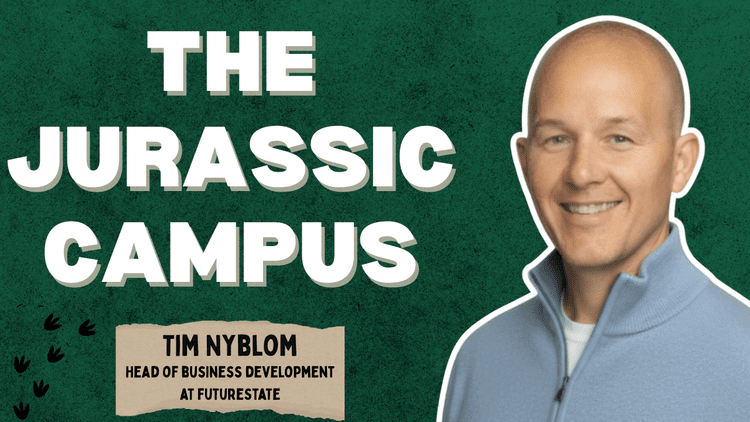
Tim Nyblom | The Jurassic Campus
Campuses have modernized nearly everything — buildings, dining, mental health, wifi — but the identity and credentialing infrastructure underneath it all is still living in the Jurassic era. It didn't happen by design; it happened by contract, and it's time to ask who really owns the backbone of campus operations.
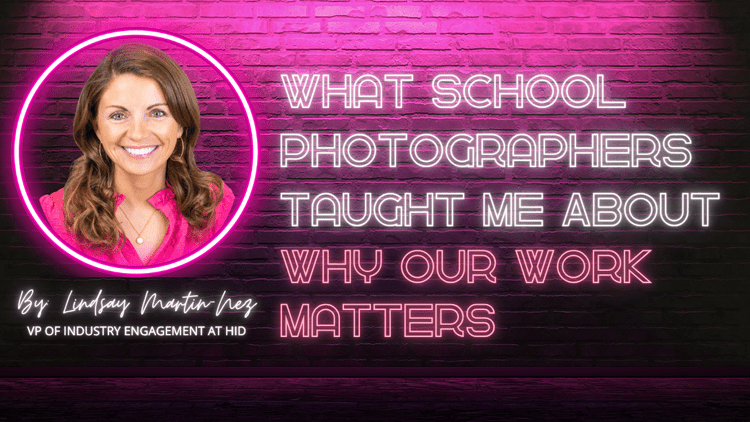
Lindsay Martin-Nez | What School Photographers Taught Me About Why Our Work Matters
A story about an 80-year-old with Alzheimer's recognizing his wife's photo in an old yearbook stopped a security industry veteran cold — because it made the case he'd been trying to make for two decades better than he ever had. Our industry is great at talking about systems and features, and long overdue at talking about the people those systems actually serve.
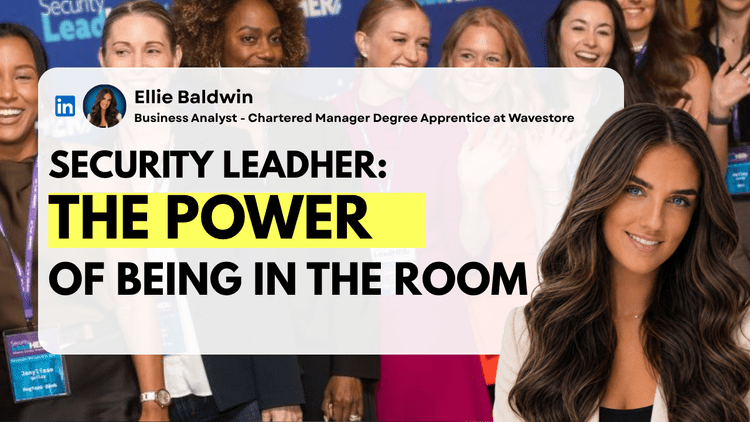
Ellie Baldwin | Security LeadHER: The Power of Being in the Room
At 20 years old, traveling alone from England to Minneapolis for Security LeadHER, the author arrived knowing one person out of 470 — and left with a network, new confidence, and a clearer sense of what the security industry gets wrong about inclusion. Being invited and truly belonging are not the same thing, and this event was built around knowing the difference.
Scroll down to go deeper ↓

Podcast | Secured: Episode 21
Recorded live at the ALOA conference in Las Vegas, Lee Odess is joined by three locksmiths — Wayne Winton, Dave O'Toole, and Jason Montague — to react in real time to the week's biggest stories in physical security. On the table: burned-out marketers, Paxton's market-timing bet, AI becoming a coworker with building access, and whether PIAM ever actually had a shot at owning identity in the first place.
YouTube: Listen here
Watch the sneak peak for the following episodes here
HID’s episode: here
Joelle’s episode: here
Charles’ episode: here
Scott’s episode: here

Secured Presents: XPod from The Security Event
Over two days at The Security Event in Birmingham, we set up a microphone, called it XPod, and sat down with more than forty operators, founders, and leaders from across the global physical security industry.
We asked everyone the same four questions. What came back was not a recap. It was a read on where the industry actually is, told through the people doing the work.
All stories:
Intro: What We heard at TSE
Episode 1: Identity Is The Center, Hardware Is The Floor.
Episode 2: Regulation Is Not the Tax. It Is the Moat.
Episode 3 — The Mainstream Moment Is Real, But It Is Not Singular.
You can stream directly from our Secured Youtube channel.
The Dinosaurs Still Roaming Your Campus
Walk a campus today and the pace of progress is everywhere. New residence halls and academic buildings rise where parking lots used to be, designed for daylight, collaboration, and accessibility from the ground up. Mental health and wellbeing have moved from afterthought to budget line, with counseling, peer support, and a genuine institutional vocabulary for how students are actually doing. The wifi is, astonishingly, world-class: dense, fast, and simply assumed, the way running water is assumed. Even dining has been reinvented, with allergen labeling, halal and kosher and vegan stations, and dietary accommodations that would have been unthinkable a generation ago, all handled with care and without fuss.
In nearly every dimension that touches a student's day, the institution has earned its modernity. It has listened, invested, and changed.
And then there is the layer underneath all of it, the part nobody photographs for the admissions brochure. The systems that decide who a person is, what they are allowed to do, and which doors open when they tap a card or a phone. Identity, credentials, and access: the backbone of campus operations, and very often the one exhibit that never evolved. While the buildings and the programs and the network leapt forward, the credentialing infrastructure stayed in a Jurassic era. Not because anyone chose it, but because nobody designs a legacy system. It accumulates.
How the Contract Worked
It accumulates the way these things always do: contract by contract, integration by integration, each decision sensible at the time. The vendor had the best product the year you signed. The term was a reasonable length. The integration was bespoke because that was the only way to make two systems talk. Then the contract renewed, quietly, automatically, on an evergreen clause that wants cancellation in writing and well in advance, long before anyone is thinking about it.
The terms were never hostile; they were just sticky. A multi-year agreement here, an auto-renew there, a fee schedule that climbs a little faster than the budget. None of it looked like a trap on the day it was signed. All of it adds up to one, and renewal by renewal, the campus stopped owning its credentialing infrastructure and started renting it.
What Accumulates Is Identity
What sits on top of those contracts, more than anything, is identity. A single student is a cardholder at the door, a balance at the register, a resident in housing, a member at the rec center, a permit in the lot, and a mobile credential on a phone, each one fed, ideally in real time, from the system of record. Issuing the credential is the easy part. The hard part is the quiet layer in the middle that keeps every one of those systems telling the same story about the same person.
Where the Connections Come From
Some of the most consequential work on a campus is also the least visible: the integrations that carry a credential from the system that issues it out to every service that depends on it. It is worth pausing on a simple principle. The integrations that connect a credential need not come from the same system that produces it. When issuance and integration are bundled under a single provider, an institution's room to maneuver tends to narrow over time, quietly, and usually without anyone deciding that it should.
Why Campuses Stay
Which explains the staying power. Leaving a credentialing platform is not like swapping a help-desk tool. It can mean re-credentialing an entire population, re-pointing every door reader, register, and turnstile, and rebuilding integrations that were never documented because they were never yours. The identity data sits in formats only the incumbent reads, and the roadmap that would have eased migration has been "coming soon" for years. The cost of leaving is real, and the incumbent has spent the whole relationship making sure of it.
Lock-In Is a Design Choice
None of this is a law of physics, however often "switching costs" get cited as though it were. Lock-in is a design choice, which means it can be designed out, the same way every other part of the campus was reimagined. The questions worth asking at the next renewal are unglamorous but clarifying: Who owns the integration layer, the institution or the vendor? Can identity data leave in a format you can read, without asking permission? Does adding a new mobile-credential provider or door system mean one more integration, or one more negotiation?
How the Era Ends
Unlike how the meteor ended the dinosaurs, the Jurassic period on a campus won't end with a meteor. It ends the way most eras do, and the way every other corner of the campus already moved on: with the people who run these critical systems — PhySec, IT, Auxiliary, Card Offices — deciding that the infrastructure should answer to the institution, and not the other way around.
I walked into the School Photographers of America Conference not entirely sure what to expect. After all, school photography isn't my industry. I've spent my entire career in identification and security. But I had a hunch there was something to learn from a room full of people who've built their careers around capturing moments, and I was right in a way I didn't expect.
A speaker in one of the sessions said something that stopped me mid-notetaking. He talked about how photos and yearbooks aren't just products. They're memories. The kind that people pull out of shoeboxes decades later to show their grandkids or tear up over quietly. His point was that in the grind of managing spreadsheets, logistics, and production schedules, it's easy for school photographers to forget why they do what they do. He wanted them to remember the why behind their day to day and the impact of what they're making.
Then someone in the room shared a story that I haven't been able to stop thinking about.
Her father was 80 years old with Alzheimer's, and he hadn't spoken in almost five years. A friend found his old high school yearbook and gifted it to him on a whim, not really knowing what to expect. He spent an entire morning going through it, page by page. He recognized old friends. He pointed at photos and named former classmates and teammates. And then he found a picture of his high school girlfriend, the woman who would go on to become his wife, and he said her name out loud for the first time in years.
A yearbook did that. A collection of photographs, names, and memories printed on paper and bound together did that.
The room was quiet for a moment after she finished. Several people cried.
And I sat there thinking about the fact that the photography and yearbook industry has far more in common with the security industry than I could have imagined.
I've spent the better part of two decades making the case that what we do in the ID and security industry matters far beyond access control and security compliance. And I believe it completely. But I had just watched a school photographer make that case better than I ever have, while talking about a yearbook.
The security industry has our own versions of that story.
People save their first ID badge. Their first school badge. The one from the job they loved, or the one from the job they finally left after ten years. A little piece of plastic that somehow holds whole chapters of a person's life.
I've heard from friends who kept old badges saved by family members who passed away. From veterans who still have their base access card from their first deployment. From teachers who saved the ID from their first classroom and pinned it to a bulletin board at home.
We just don't talk about it the way school photographers talk about yearbooks. And I think that's a mistake.
The security industry is exceptionally good at talking about itself in terms of systems, integrations, features, and threat mitigation. We are not nearly as good at talking about the human beings those systems serve.
Walk the floor at any major industry conference and count how many conversations center on what the technology does or what new features are coming versus the problems we solve, or the stories of the people using those systems every day. The ratio is not flattering.
That's not a criticism. It's just a pattern worth paying attention to.
The school photography industry has figured out something we haven't fully applied yet: when people understand why the work they do matters, they care more about doing it well. Photographers who know they're making someone's future memory print differently than photographers who think they're just filling an order. That same dynamic applies to every badge we print, every opening we secure, every visitor we identify, every experience we make more frictionless.
We know this. Most of us got into this industry because we felt it at some point. But our content, our conference sessions, our sales conversations, and our trade press coverage don't reflect it nearly enough. We default to specs and features because they're easier to quantify and defend.
The human side is harder to put in a slide deck. But it's worth the effort anyway.
The next time you're presenting to a client, or writing about a product deployment, or putting together a case study, leave room for the story underneath the data. Ask the school administrator what it felt like to hand out badges on the first day. Ask the security director about the parents who thanked them. Ask the nurse what it felt like to work in a building where they finally felt safe.
Find the moment where security stopped being a feature and started being something else.
That's the story our industry needs to be telling. And we have more of them than we realize.
I travelled alone from England to Minneapolis to attend Security LeadHER as a NavigateHER grant recipient. Before arriving, I had met only one of the over 470 attendees in person. It is safe to say I was nervous.
I attended representing both Wavestore and a generation that is still too often described only as the future of the security industry.
But Gen Z is not waiting outside the sector. We are already working within it. We are learning, contributing and forming views about what the industry does well (and what it could do better).
Security LeadHER gave me the opportunity to bring that perspective into an international room.
Walking into an event alone can be daunting at any stage of your career. At 20 years old, surrounded by women whose experience spanned different sectors, countries and decades, I was very aware that I was entering a new professional space.
But that feeling did not last long.
LinkedIn connections became real-life conversations. Complete strangers invited me to join them, introduced me to others, invited me to dinners and made sure that attending alone did not mean feeling alone.
By the end of the event, I understood why so many women return to Security LeadHER year after year. It is not simply because of the speakers or the programme. It is because of what happens when hundreds of women enter a space ready to learn, contribute and actively support one another.
I was given access to the room through the NavigateHER grant.
The women inside it made me feel that I belonged there.
Being invited is not the same as being included.
An invitation gets somebody through the door.
Inclusion determines what happens once they arrive.
Security LeadHER brought together more than 470 attendees from 40 US states and 11 countries. Before attending, I had never seen so many female security professionals together in one place.
This was not a women-focused drinks reception attached to the side of a larger trade show. It was not a short panel added to an agenda so that an organiser could say women had been represented.
It was an event specifically designed to educate, connect and develop women working within security.
That distinction matters.
Meaningful inclusion requires more than inviting women into existing spaces. It requires dedicated time, investment, platforms and opportunities for development. Security LeadHER demonstrated this through the support of 21 external sponsors who invested in creating a space dedicated to the education, development and advancement of women in security.
Security LeadHER created a space in which women were not the visible minority. They were the speakers, facilitators, experts, emerging professionals, senior leaders and decision-makers.
They were not standing at the edge of the room.
They were the room.
Talent is everywhere, but access is not.
Receiving the NavigateHER grant did much more than cover the cost of attending an event. It gave me the opportunity to travel internationally, learn directly from senior industry leaders and represent the next generation of women entering security.
It allowed me to participate in conversations rather than watching them from a distance. It enabled me to develop relationships with people who may become mentors, sponsors or members of my own personal board of directors as my career develops.
Most importantly, it gave me the opportunity to share my perspective now.
Not when I have a more senior title.
Not when I have spent another decade in the industry.
👀 As Seen in the PhySec Community this Week:
#ai
#shameless-plugs
#marketing-communications
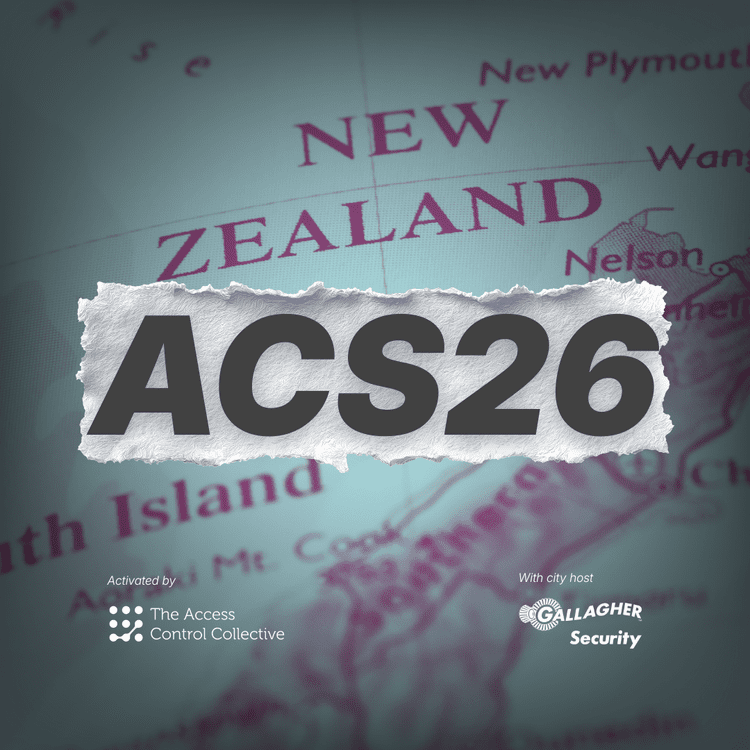
ACS26, The Access Control Summit, is heading to New Zealand in 2026 October 6 & 7th, hosted in collaboration with our city-host, Gallagher Security. Registration opens next week. Sign up to be notified first — early access pricing ($200 off) is available to the first registrants. Pre-register now to lock it in: Sign up here.
Want to view some testimonials from previous years? Go here.
🗣️ Your Voice Matters.
Share your feedback, suggest topics, and tell us what questions we should be answering. Help us shape future issues and contribute to the conversations that move the industry forward.
