Volume 9 | March 21, 2025
This Weeks Featured Articles & Media
Angie Barnes | Rethinking Storage: Better Options Than Just in Case
In the world of video storage, ever really gets viewed or even used?
Josh Dempsey | The Power of Genuine Relationships in the Security Industry
As ISC West approaches, Josh is reminded why he anticipate this event every year.
Chris Wilson | Light the Night: The Impact of LED Lighting on Species, Safety
How will the shift to LED lighting impact the security cameras that are in the field today and what can we do to ensure we are using the proper camera for the environment moving forward?
Brian Karas | A Look At ZKTeco USA’s Omni30 Biometric Reader
Is this a “hold my beer” moment?
Lee Odess | Where You Can Find Me at ISC West
A guide to where you will find the Access Control Executive Brief during ISC West and how you can join them.
Find them all below!

One of the things I am most excited about in my new role as I have mentioned is the build! Building relationships, partnerships and connecting our value ultimately with the customer. This week is a big week for us as we onboard new channel partners and show them the “Why Evolon” and “Why Now” story! One of the topics that came up this week as we were conducting our training was how much video in the world of video storage, ever really gets viewed or even used? Hmm, I dare you to Chat GPT this to see the answer? When I tried, it could only give me an answer of a small percentage. Is that 2 percent of all video? Is that 10 percent? In the world of video storage, it’s really a Just in Case methodology, isn’t it? We have to store the video just in case we need it. Something happened, a crime has occurred, police requested it, a customer needs it for legal reasons, etc.…. That also determines how long you think you need to store it. I have heard some people ask for up to 2 years’ worth of storage. Who gets rich on the Just in Case methodology? AWS, and maybe any other data center that charges to store that video, that also includes hard drive manufacturers, and all the cloud providers for storage. My question is why would we continue to pay for something we only use 2 percent of the time? Just in case? Laughing.
My old boss always said, there will be a day when all you need to store is the person, or short clip of the event, based on the rules engine you have created for detection and triggers. That really is what AI is doing today, and getting better every second I type this in, right? I am prejudice, but ours is the best of course, but I also recognize there are some great AI tools and filters out there doing just that. Do you ever wonder how much your or your customer’s company has paid for storage of video over the last 10 years? That would be an amazing exercise to ask yours or their CFO to do, wouldn’t it? And then being able to pivot that you will build a roadmap and plan to use up to 50 percent of the video that is stored or pushed to the cloud. Now, I am bullish that the number will also only climb, I sincerely hope it will be 98 percent in the next few years, but we are not there yet. There is still a tremendous number of variables in even AI detection with masking, anomalies, and triggers that wont always be usable or valuable video.
But man, 2 percent to 50 percent is a pretty amazing jump if you could evaluate the cost to store local or even in the cloud. This is no offense to AWS and the world of Data Centers, but do we really need to keep making them richer, or do we need a better solution for the Just in Case methodology to stop the crime before ever happens, that will reduce storage right away, but also changing the landscape of the sheer amount of storage never touched or ever seen. When it is no longer valuable does it go to storage heaven someday! Laughing. NO! Hard drives get smashed and destroyed, and the cloud, well not really sure about the wiping of the cloud! That’s a question to be answered.
To wrap this up, if we are using 2 percent of our Video today, the Just in Case theory is flawed and expensive creating the explosion of AI technology and companies. As we keep advancing the world of AI, analytic triggers, etc. it just might create a world where a 50 Gigabyte storage could last you 90 to 120 days, because you are only storing what you really need, not the trees, dogs, flags, you name it! What does that ROI look like? Isn’t it fun to see where we are going as an industry and how it’s getting better every day for the customer, channel and the strategic manufacturers. Next time you are in front of a customer, ask them this question? How much video do you store a month and how much do you use? If they answer less than 10 percent, you have just built the first part of your ROI. If you are presenting any AI solution today, best in class VMS’s, Camera’s, Filters, etc.…. This just got real.
The video storage revolution may have just begun but its climbing, quickly Mt. Everest of the storage world, so be prepared to jump onboard.

As ISC West approaches, I’m reminded why I anticipate this event every year. For me, ISC West is about reconnecting with colleagues, strengthening partnerships, and fostering new, genuine relationships. It’s also fun. Some of my fondest memories are the dinners, events, and meaningful conversations I’ve had at ISC West over the years.
I've debated writing this for a while—not because I don’t feel it, but because I’ve felt it may come across as self-serving. After recent conversations and reflection, I realized the importance of sharing, not only for myself but also because it highlights something vital about our industry.

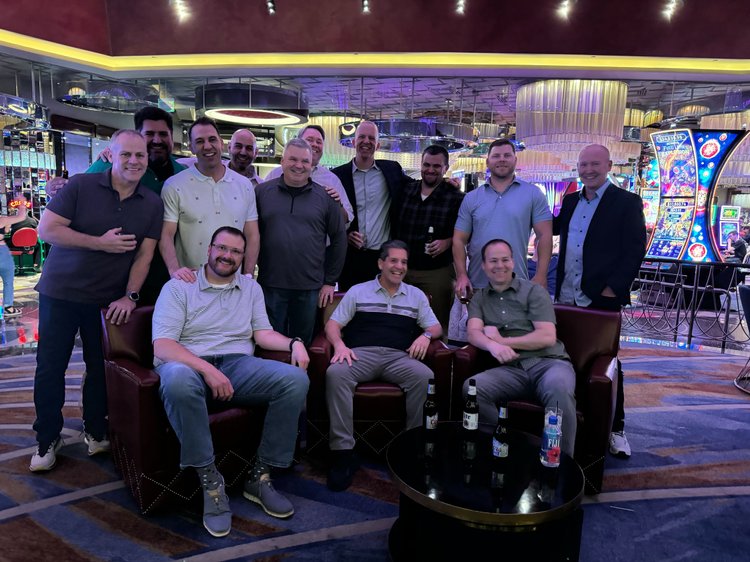
The security industry hasn’t just shaped my career; it’s shaped my personal life as well. I started out of college with a technology distributor and spent ten years navigating various roles within that organization that touched the fringes of the industry. My career accelerated significantly in 2015 when I entered the access control field at a company I feel incredibly lucky to have been a part of. That move introduced me to some of the most talented, thoughtful, and generous people I've ever encountered—many of whom became lifelong friends.
A few years ago, I stepped away from the industry briefly to explore other opportunities. While that experience provided valuable perspective and growth, I was surprised at what I missed the most—the people. It was the authenticity, camaraderie, and deep relational bonds I'd built with colleagues, customers, and partners. That realization drew me back into the industry, eventually leading to my current role at i-PRO, a company I’m proud and excited to represent.
Outdoor lighting is rapidly transitioning to Light Emitting Diode (LED) sources. As we see this transition happening, how will this impact the security cameras that are in the field today and what can we do to ensure we are using the proper camera for the environment moving forward?
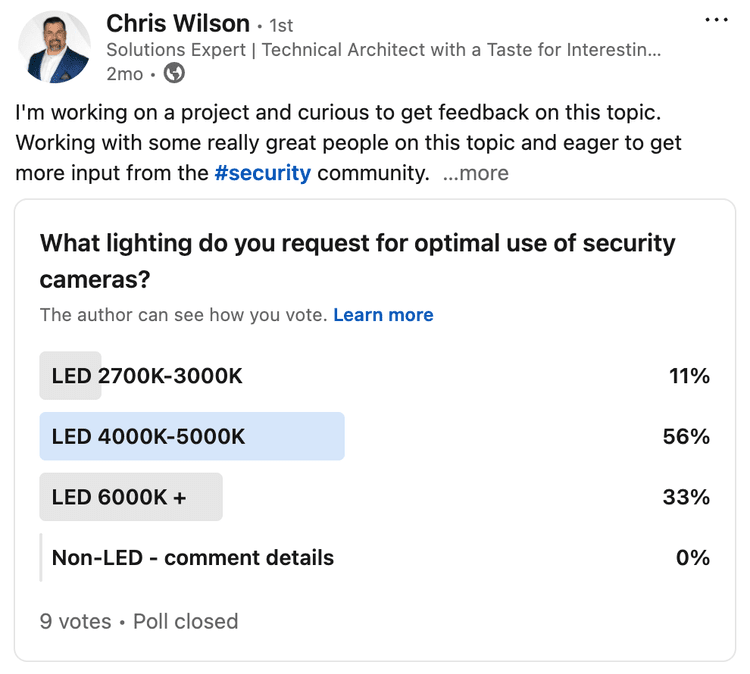
In a recent poll on LinkedIn, all responses were for LED lighting (thank goodness no one is requesting sodium lighting!):
-
11% requesting 2700K-3000K
-
56% requesting 4000K-5000K
-
33% requested 6000K or higher.
So, which of these is the “right” answer? Well…it depends. Let’s have a look at some recent testing that I did; and the related the findings, which led to some surprises.
In parallel to the increased use of LED fixtures in outdoor lighting, studies using ground-based analysis show that night sky brightness has increased nearly 10% each year for the past decade. LEDs come in many forms with widely varying operating characteristics. The most recent research shows that the light pollution increase is strongly correlated to with blue-rich LED lighting. An ever-increasing collection of research documents the negative impact on humans and other species when LED lighting is carelessly applied.

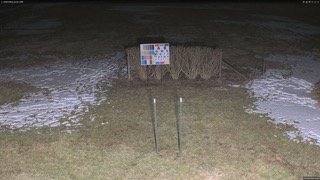
Based on this, how many of you would feel comfortable placing a camera in the scene below, with confidence that the analytics will perform correctly?
Would your response change if I told you this is using a lighting fixture that is less than 3000K?
This is a scene using an 2200K LED fixture, mounted 12’ off the ground, with the ‘target’ you see on the left at 50’ away from the wall where the lighting is installed – do you think the proverbial search for a ‘red car’ would work correctly in a scene like this? How about a person wearing a green shirt?
What if I told you that this is the image from 2 different cameras looking at that target, at 50’, using the lighting scene above?
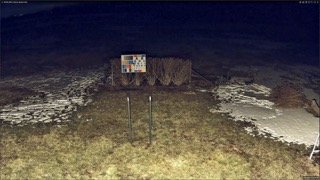
(*images cropped to fit inline)
Even with the differences in color in the images, and the fact that both of these are 4K cameras (historically not as good in low-light conditions), there are still colors which can be clearly delineated in each image which leads me to believe that the analytics we have available in the market today would work effectively.
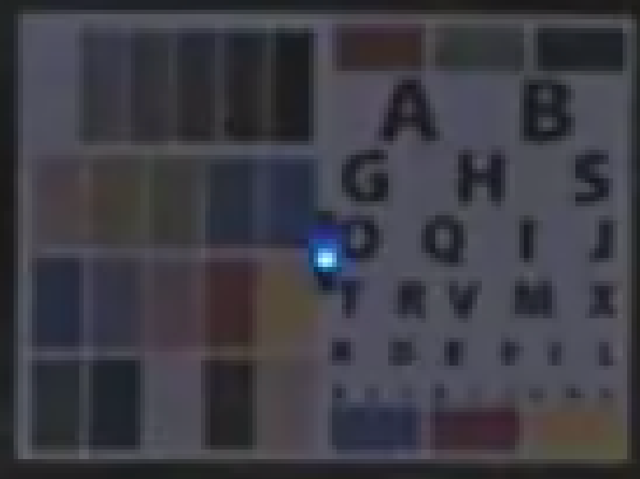
What if I then told you that the image below is also from that exact scene, with the target all the way out at 100’ from the wall, not the 50’ in the image above, from one of the cameras?
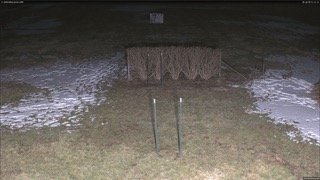
(*image cropped to fit inline)
Note: The blue light in the center of the target is a light meter, there to measure lux on target.
Certainly, this isn’t a perfect image (details still a little blurry) but I’m very surprised at how well the camera was able to provide reasonable resolution and color rendering, despite such low light conditions and distance.
Also surprising was how non-amber the image looks from the camera, even knowing that the light source was a much lower CCT than many security professionals recommend today.
In addition, the details were not significantly improved when changing the lighting color to a higher CCT (more coming on that in a separate article).
So what does all of this mean?
When human eyes transition from low light to bright light, a process called light adaptation takes place. This involves the constriction of pupils and the activation of photoreceptor cells in the retina, allowing the eyes to adjust to the increased brightness. The use of lower correlated color temperature (CCT) LED lighting in outdoor environments can significantly enhance this adaptation process. Lower CCT LEDs produce warmer light that is less glaring and closer to natural evening light, which can improve the comfort and efficiency of the eyes' adjustment. This not only enhances response times and overall visibility for humans but also has a positive impact on wildlife. Many species rely on the natural transition from dusk to dawn, and warmer, lower CCT lighting helps preserve these natural light cues, reducing disruptions to their behaviors and habitats. By implementing lower CCT LED lighting, we can create a more harmonious and adaptive environment for both humans and other species.
In addition, lowering the CCT of outdoor lighting has been shown to reduce insects near the fixture (who wouldn’t love less bugs near the camera too!) as well as reduce overall skyglow.
My opinion is that we should NEVER spec or recommend anything above 3000K, and always at or below that level whenever possible, which also means the specifications can be ‘Dark Sky Approved’ when used with zero-uplight fixtures (they mandate 3000K or less).
In response to the ‘ideal’ CCT for all of these aspects, my opinion is:
-
2700K is suitable (and often the best option we have today based on the fixtures available)
-
2200K is optimal and the best option for most parking areas and other outdoor spaces (and available today from some notable, large lighting manufacturers)
-
1800K, as it becomes more prevalent with fixtures and availability, is a great option for parks and other nature focused spaces.
While there are far more results to come (we are still compiling the 100+ tests we completed – out of over 1,200 + possibilities), I think this shows that cameras can still perform well in reduced blue tone LED lighting conditions. We know that some will perform better than others, but we are also working with the manufacturers of these cameras to give them feedback and work with them to improve this performance.
It turns out that many best practice lighting designs for security applications are also the best way to minimize skyglow, glare, harm to birds, insects and other species. Why not work to recommend these benefits to our clients and customers?

If you follow some of the back and forth between Lee and I on LinkedIn, or in the Access Control Executive Brief Slack group, you might have spotted a recurring theme: Lee says the access control industry is prepped for massive growth, and then I ask why most of the products don’t look like it. A few months back I commented somewhere about how the average card reader still isn’t very advanced, and definitely not very future proofed. I now feel like the product team might have seen one of those comments and issued a “hold my beer” response.
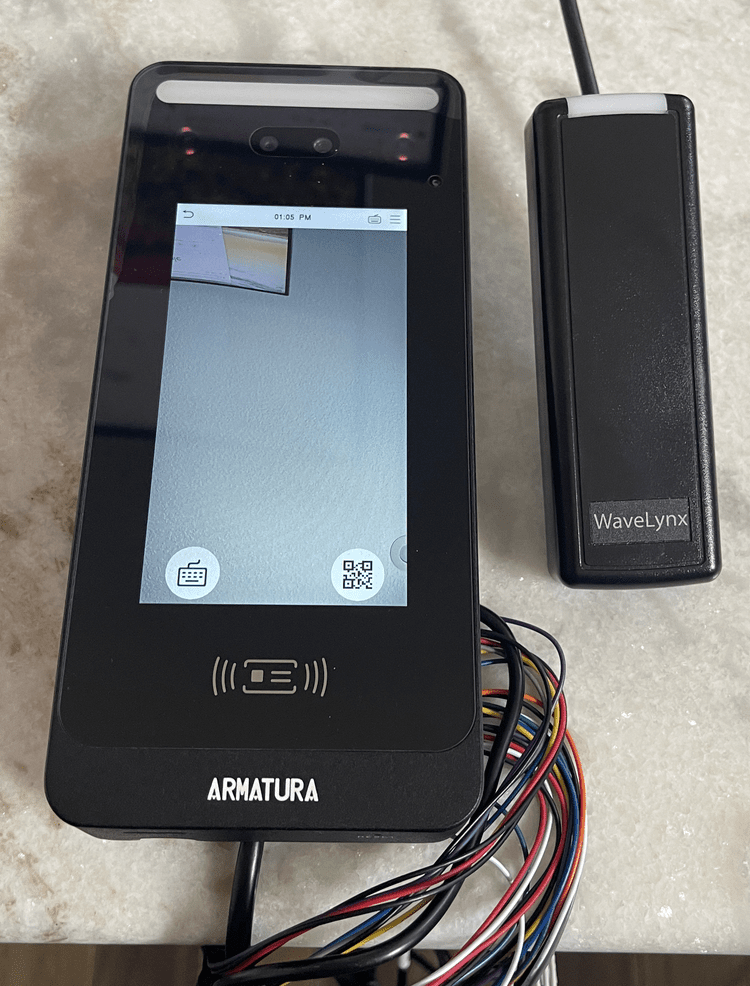
The ZKTeco Omni30 attempts to cram as many access control features and functions as possible into a rather slim device. We are taking a little bit of liberty with the term “slim” here. If you compare it to a mullion-sized reader, like the Wavelynx unit pictured below, it’s roughly 4x the footprint. But if you compare it to a PC+5” Touchscreen+door controller+cameras+IR illuminator+visible illuminator+standard card reader, it’s not that large, and it is all those things and more in one device. Price wise, they look to go for about $1100 street price, so it’s not overly expensive in that regard either.
I’m going to feature some upcoming deeper dive content on the Omni30, and it’s little brother, the Omni20, for now consider this more of a highlights piece.
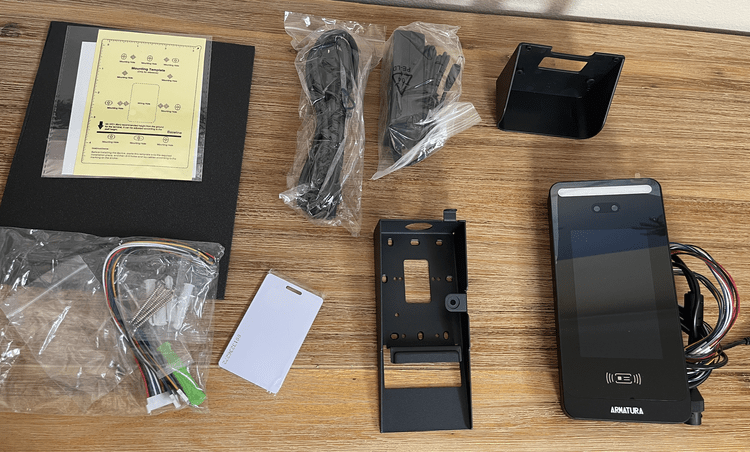
The Omni30 is basically a BYOD (bring your own door) access control system in a box (minus any kind of electronic strike or lock). The unit can be powered via PoE, the included 12V power brick, or an existing 12V power supply capable of supplying the 3A current the spec sheet calls for. Along with the unit itself, you get the expected mounting template, a plastic hood, and a metal bracket to angle the unit out from the wall if it’s being mounted low, as in a retrofit to a traditional reader location. There is also a nice quick-attach wiring harness pigtail and a test card.
From a credentials perspective, the Omni30 supports just about everything except for an iris scanner or a DNA sequencer. Cards are of course supported, including 13.56MHz and 125kHZ with a read range of about 2”. Onboard memory can hold 50,000 cards. The cameras support reading faces, palms, and QRCodes. 10,000 faces and 5,000 palms can be stored internally on the device. Mobile credentials are also supported with an optional module, with Wavelynx and HID formats both available.
There are two on-board relays, which allows for the unit to have direct control of unlocking a door with no need for an external controller. This does of course come with the drawback that you expose exploitable wiring behind the device to the insecure side of the door.
Face and palm reads are very fast once you get within the read range. For faces you need to be within a couple of feet from the unit, and for palms you need to hold your palm about 6” away. Faces have optional liveness detection, which I turned on for initial testing. Given that my unit only had my face enrolled it is not possible to determine if a database of thousands of faces would significantly delay read time.
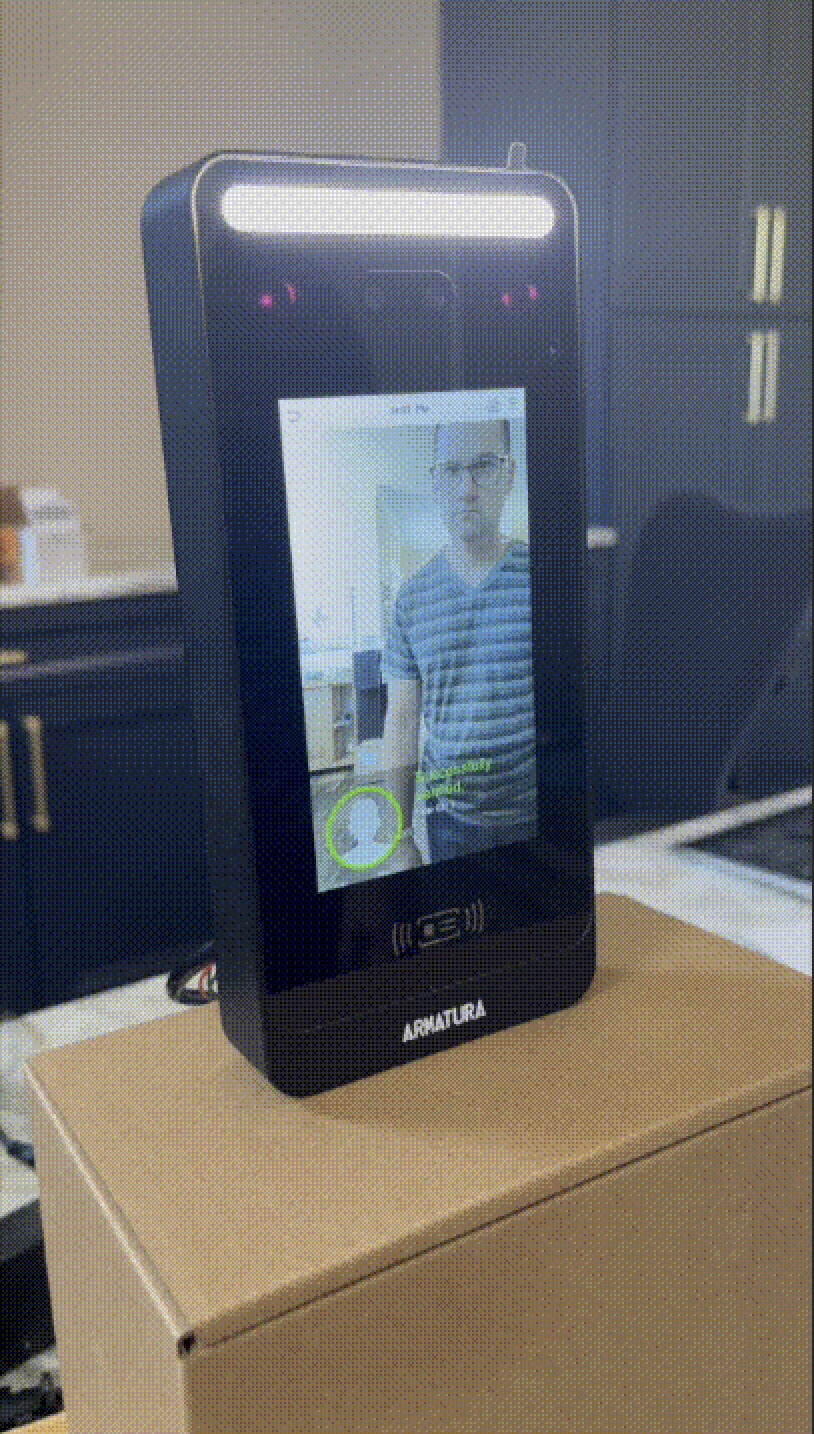
There is a lot more to dig into on this unit, as well as the Omni20, but my first impressions of it are positive. Build quality feels rugged and the setup and configuration options are very flexible with a ton of customization available.
If you do not want to use it as an all-in-one controller, you can communicate with it over Ethernet, OSDP, or Wiegand.
There are also video intercom features, which I will delve into next time. Overall this is a highly flexible unit that would be a good option for high end commercial real-estate, multi-tenant residential buildings, or similar locations where you want to be able to support a variety of credential options to give users and guests flexibility while maintaining security.

-
Amazon Key Executive/Influencer Breakfast, Sign Up Here.
-
From Innovation to Implementation: How to Transform the Legacy Security Industry to the Modern Era, Casanova 507, Wednesday, Apr 2nd, 01:00 PM - 03:00 PM, Find More Information Here.
-
Turn Over a New LEAF: An Exhibition Experience: Sign Up Here.