Volume 112 | September 9, 2025


Click on the above image and use code sxst3gkbkn to hear the audio version.
Before diving into this week's Brief, I want to highlight something that has grown into one of the most powerful parts of what we're building together: the community on Slack.
If you're a member of the Access Control Executive Brief, you already received an invite to join the community on Slack. Some of you have joined, many of you haven't yet. If you're in the "haven't yet" group, I can't encourage you strongly enough…JOIN! You can sign up here, or reply to this Brief and I'll happily resend your invite.
What started as an "extra" has become a resource all its own. We now see different types of members: those who read the Brief, those who engage only in Slack, and those who do both. What's clear is this: the people who feel the deepest value are the ones active in the community. Deals get done there. Partnerships form. Questions find answers that often have no other place to go (at a speed that always makes me smile). And because it's global, the conversation never really stops. The community is alive 24/7.
As the community has grown, it has also expanded beyond access control into the broader security industry (video, guarding, etc). I love this evolution. Our industry needs spaces like this. We need places to connect, learn, trade ideas, and accelerate careers and businesses, which is why we're taking the next step.
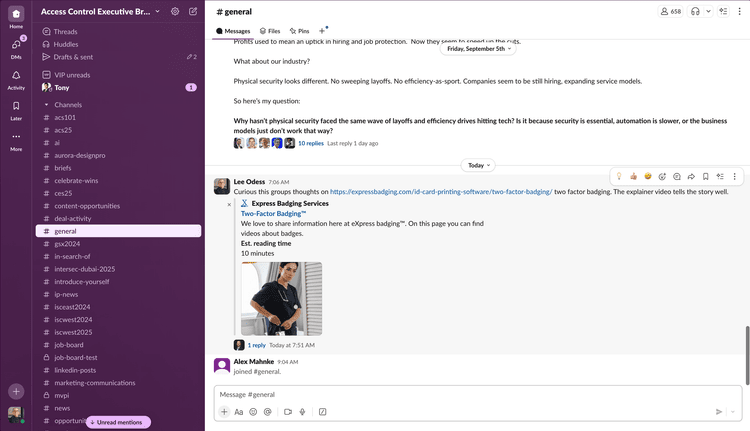
From here on, the community will have its own identity: The PhySec Collective. The name matters. A collective isn't a top-down organization. It represents people coming together around shared goals, values, and ideas. A collective is exactly what we've been building.
And we're going to invest in it. We'll be bringing on a dedicated community evangelist to keep conversations rolling and ensure every member has a voice and getting as much value out of it as possible. The job description will be posted soon on physecjobs.com, so if you know someone who would be a great fit, let me know.
Nothing else is changing. The PhySec Collective will continue as the community side of what we’re doing, while the Access Control Executive Brief will remain the focused resource you read today.
Together, they’ll grow side by side. Some will come for one, many will stay because of both.
Please reach out if you need anything. Next up for me is acre security’s partner show in Austin, Texas today.
See you online!
Lee
One last thing, I’d love your input. I’ve put together a quick one-question survey: What would you like to see, read, or hear more of from me and The Access Control Executive Brief?
Your feedback helps shape what we do, and I’d love to hear directly from you. Please let me know your thoughts here: https://mqt7vln1m2y.typeform.com/to/N1XYy3uw.
Alright, back to the Brief and AMAG’s Glow Up.
I had the privilege of attending and presenting at AMAG's North American Security Engineering Symposium (SES) this week in Dallas, Texas. The event was hosted at the Gaylord Texan Glass Cactus, which proved to be a fantastic venue. I'll be honest. When I first saw "Dallas Gaylord Texan," I was more "ugh, Dallas" than "yes, Dallas!" But I was happy to see the Glass Cactus venue on their property. The setting wasn't another boring hotel conference room; it was about creating an intentional environment where attendees could focus, connect, and enjoy the experience. I love seeing it and we need more of it. You could see Sam Lord's fingerprints all over the format. Well done.
And the format worked. Day one started with a casual networking reception on arrival, no forced structure, just space for people to connect and network. The next morning offered a half-day of presentations, followed by a choice of activities, including golf, relaxing poolside, or a tour of Cowboys Stadium. Day two mirrored this, with another half-day of sessions in the morning before people could head home. It created the right balance of content, connection, and breaks. You could see that people left feeling engaged but not drained. (And no, before anyone asks, we're not adopting this format for ACS).
This was the second SES under AMAG’s new leadership team I could attend (third in total they’ve done). I was at their first, in Tewksbury, UK, which I wrote about in a previous Brief. In many ways, Dallas felt like a continuation of that journey. Many of my impressions from Tewksbury held, but there were also some new ones and clear signs of progress.
I also had the chance to try out a new presentation I’ve been working on: Trends Review: Hits, Misses, and Some New Things. It landed well with the group, and I’ll share it with members soon. Let me know if your company is interested in me delivering it directly.
With that, here are my takeaways from SES25, Dallas, or as I’ll call it, the “Yeehaw” edition.
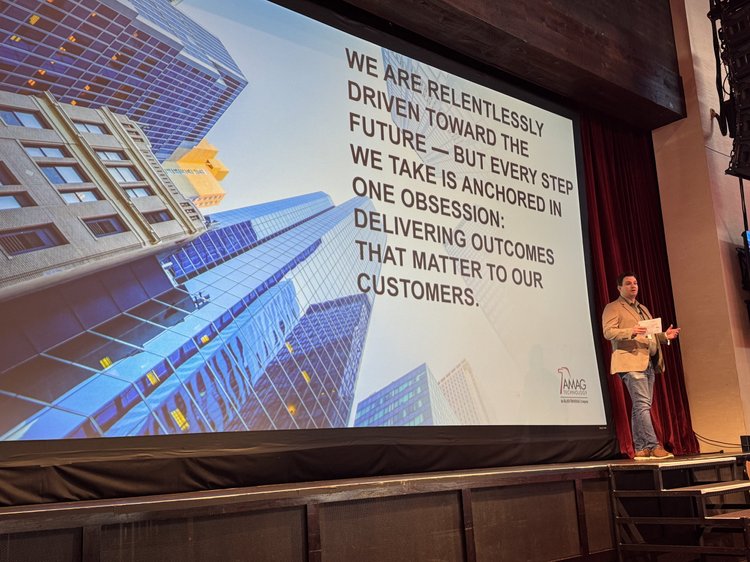
“Customers at the center”
The dominant theme was unmistakable: customers. Repeated often and on purpose. You can tell they were telling not only the customers, but also the AMAG team in the room.
Now, a lot of companies say they’re customer-first. It’s almost become a tagline, like the “marketing beard” of Open. But what struck me here is that AMAG isn’t just saying it; I believe they’re actually doing it. You could see it in the room's composition: enterprise customers right next to channel partners, ecosystem players, AMAG’s engineering and product teams, and leadership. The accessibility was total. No silos. No executives hiding in the back. AMAG has chosen to be exposed…completely naked, and comfortable with it.
The focus on customers comes from two sources: first, necessity. Attrition and common sense have forced clarity on where attention needs to be. Second, simplicity. Rallying around the customer is something everyone in the company can align on, and customers appreciate it. The result is a cultural anchor that informs not only the rhetoric but also the roadmap, operations, and investments.
Building the foundation: a house analogy
If you know me, you know I like analogies to simplify my thoughts. Here’s the one that hit me in Dallas: AMAG reminds me of my neighbor, who painstakingly restored his childhood home after his parents passed away.
Stay with me. I promise it lands.
Brick by brick, he’s/they’re rebuilding with a clear vision of what “good” looks like. Some projects can wait for tomorrow, but the overall direction is clear. Compromises will happen: less headroom here, a missing fixture there. But the foundation gets reinforced first.
Then comes other “stuff” that’s not fun but needed for longevity. The waterproofing is done right. Lead paint is gone. The house isn’t just being patched, it's being built to serve the next chapter.
The process requires more than vision. It demands capital, patience, the right skilled hands, and the humility to adjust when you discover mold behind a wall or structural flaws you didn’t anticipate.
If you’ve ever remodeled, you know what I mean. More times than not, you say, “How? Why? What were they thinking?” But then you adjust and carry on. The people who endure the dust and disruption don’t just have a nice house; they have a transformed home. A home that can stand for generations.
That’s exactly what AMAG is attempting. They’re not chasing shiny new features or bolt-on gimmicks. They’ rebuilding a foundation of trust, comfort, and capability on top of their past. They’re self-aware, contrite about past missteps of people who are most likely not even their anymore, and unapologetically real about where they are.
They’re not pretending “everything is perfect.” They’re naked. And from what I saw in Dallas, it’s working. Not perfectly. But effectively. Brick by brick.
Leadership in simplicity and empowerment
I liked the strategy but mostly because the strategy’s mechanics and leadership philosophy.
Simplicity matters. In complex industries like ours, companies often drown themselves in feature creep, fragmented integrations, and endless roadmaps chasing a project or a customer customization request. AMAG is resisting those past sins (it was mentioned many of times that when the new team came in they found a product roadmap of over 200 custom development projects needed).
Instead, it’s empowering its people to focus on fundamentals: customer-first engagement, deliberate product development, and integrated storytelling.
And they’re empowering their customers too. Rather than saying, “Here’s the shiny thing we think you want,” they’re saying, “Here’s the foundation we’re building. If you’re with us, come along. If you’re not, that’s fine too.” That kind of clarity is refreshing, and I think it will resonate with the customers who are ready for a long-term partnership and have invested in the relationship. All? No. But I saw many in that room.
Will it work?
I think so. I really do, mostly because of the leadership I keep seeing and the feedback I’m getting from customers and partners I respect.
But I also have concerns.
The incentives have changed. The people have changed. The path forward has changed, and all signs point to good. But the scale of the challenge is enormous. My three concerns are:
-
Time. Rebuilding foundations takes longer than most organizations anticipate, and none is sexy or hard to articulate.
-
The sheer amount of work isn’t a “check the box” effort. It’s exponential. If AMAG wants to capture a meaningful piece of the $70 billion access control opportunity, it can’t be incremental growth off last year’s baseline. It has to be ambitious. This is that.
-
Allied Universal. The big unknown. I don’t know the Allied team enough to read whether they’re ready to invest appropriately. That’s the wildcard.
I’m still bullish but also practical.
Other observations
A few specific highlights from SES25:
-
PSIM, but done right, and not called PSIM, but through partnership. Through a deep collaboration with SwiftConnect, AMAG is bringing“PSIM” to life again. And note: I didn’t say “integration.” It’s a collaboration. That matters.
-
Thank You Thursdays. A cultural practice where gratitude is expressed for teammates, partners, or customers. It sounds small, but it’s not. Culture gets built brick by brick, and this is one of those bricks.
-
Business excellence. A theme woven through everything from customer-first roadmaps, empowered employees, and deliberate product development.
-
Market presence. Plans are underway for new demo centers in the UK and Boston. They are not just showrooms but hubs for the community. I like that they used the word "community."
-
Digital transformation. From organic marketing to upgraded resources to a refreshed brand, AMAG has taken steps to modernize its external face.
-
Operational modernization. Factory flow improvements were presented as process changes. Still, to me, it was a story about building a new type of trust and comfort with their customers, who had lost trust and become incredibly uncomfortable. That’s a subtle but powerful shift.
-
Product ecosystem. Access control remains at the core, but the vision is identity-centric, interoperable, and cloud-enabled.
-
Customer and partner engagement. Through symposiums, forums, and vertical-specific solutions, they’re deepening the ecosystem conversation.
-
As mentioned before, customer obsession is built through the right team, consistent presence, courageous conversations, and intentional communication.
I was asked not to share specific product updates or roadmaps, and I’ll respect that. But I can say this: the roadmap aligns with alot of what I've been writing about and presenting. It reflects strategy, not Frankenstein patchwork product design. It reflects vision, not reaction.
And it reflects a clear understanding, their understanding, of where the market is going, not just where it’s been (identity, hybrid, ecosystem, and platform)
Unfortunately, I couldn’t stay for day two. But even after one and a half days, the impressions were clear.
AMAG is rebuilding, brick by brick. It is naked, self-aware, and deliberate. Not perfect, but effective. It is giving its people and customers something rare in this industry: clarity.
And clarity builds trust.
Thank you, AMAG, for the invitation and the openness. Attending, presenting, and sharing takeaways without restrictions is refreshing. I saw a company that isn’t hiding, isn’t pretending, and isn’t afraid to admit that the work ahead is massive. That’s leadership. That’s empowerment.
That’s the beginning of something that could be very interesting.
Download the white paper here.
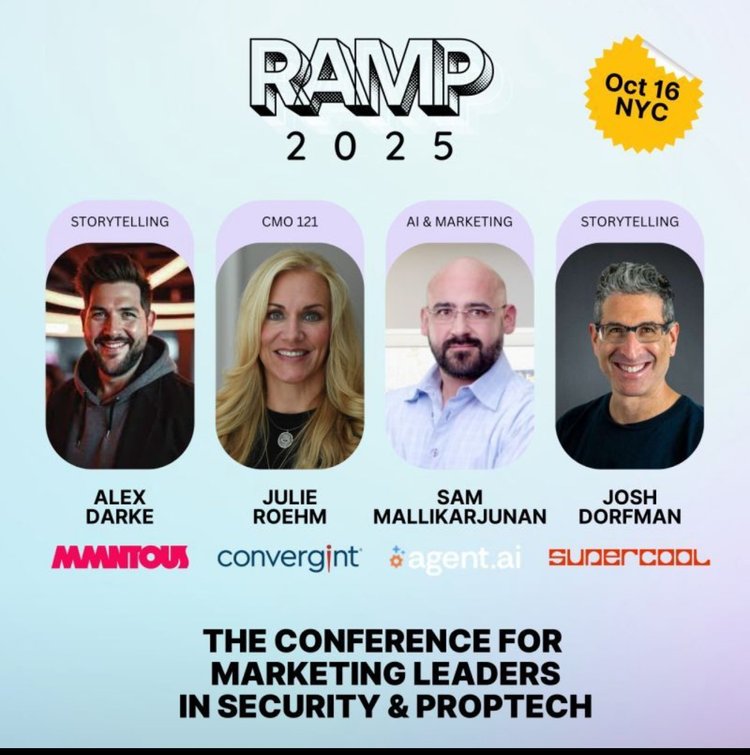
If you're a marketer in security or proptech, you already know: most industry events aren't really built for you.
𝐓𝐡𝐢𝐬 𝐨𝐧𝐞 𝐢𝐬.
Hilary and I have talked about this since day one.
We wanted to create an event for marketers. We've both felt the gap, not just in content, but in community, and we believed we could help fill it, because we’ve lived it.
So we teamed up with the crew at Bloxspring (Adam Malik PJ Appleton) to make it happen.
The first event is this fall in NYC. The next one will be on Bloxspring’s home court in London.
𝐓𝐡𝐞 𝐂𝐨𝐧𝐟𝐞𝐫𝐞𝐧𝐜𝐞 𝐟𝐨𝐫 𝐌𝐚𝐫𝐤𝐞𝐭𝐢𝐧𝐠 𝐋𝐞𝐚𝐝𝐞𝐫𝐬 𝐢𝐧 𝐒𝐞𝐜𝐮𝐫𝐢𝐭𝐲 & 𝐏𝐫𝐨𝐩𝐭𝐞𝐜𝐡
Thursday, October 16
8:00 AM – 4:00 PM
New York City
𝐑𝐞𝐠𝐢𝐬𝐭𝐫𝐚𝐭𝐢𝐨𝐧 𝐢𝐬 𝐧𝐨𝐰 𝐨𝐩𝐞𝐧. Register here and select the member discount.
If you’re a marketer in this space, we made this for you. Hope to see you there.
LATAM at the Center of Access Innovation
ACS LATAM 2025 is an exclusive (and free) regional edition of the Access Control Summit, co-hosted with Google and supported by HIDand ASSA ABLOY. This special gathering brings together 150 industry leaders from across Latin America to explore the future of access control.
Held at Google’s LATAM HQ in São Paulo, the summit offers a curated platform for strategic dialogue, cross-sector insights, and high-impact networking. From mobile credentials to AI-driven infrastructure, ACS LATAM highlights the technologies and partnerships shaping the region, fast emerging as a global hub for innovation and collaboration.
Find out more information and register here.
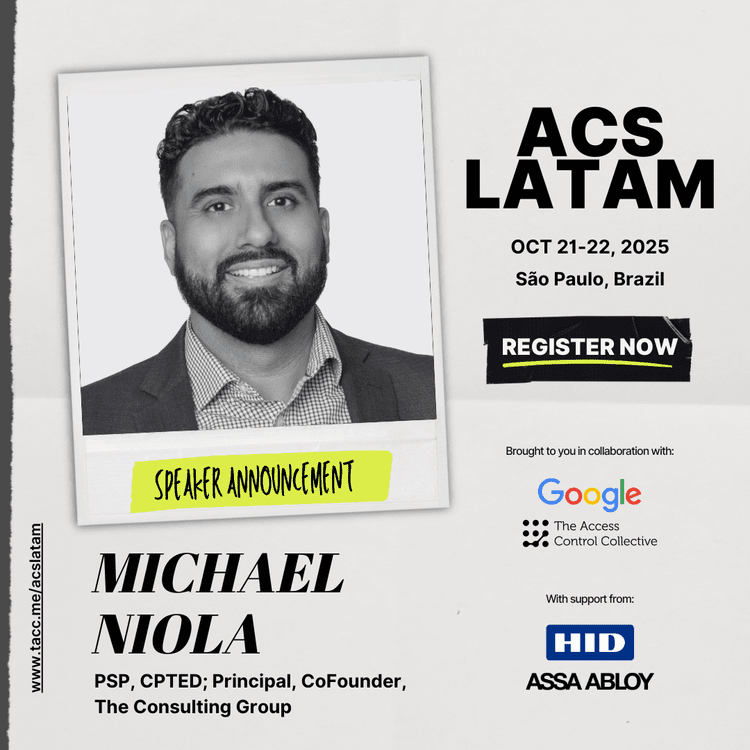
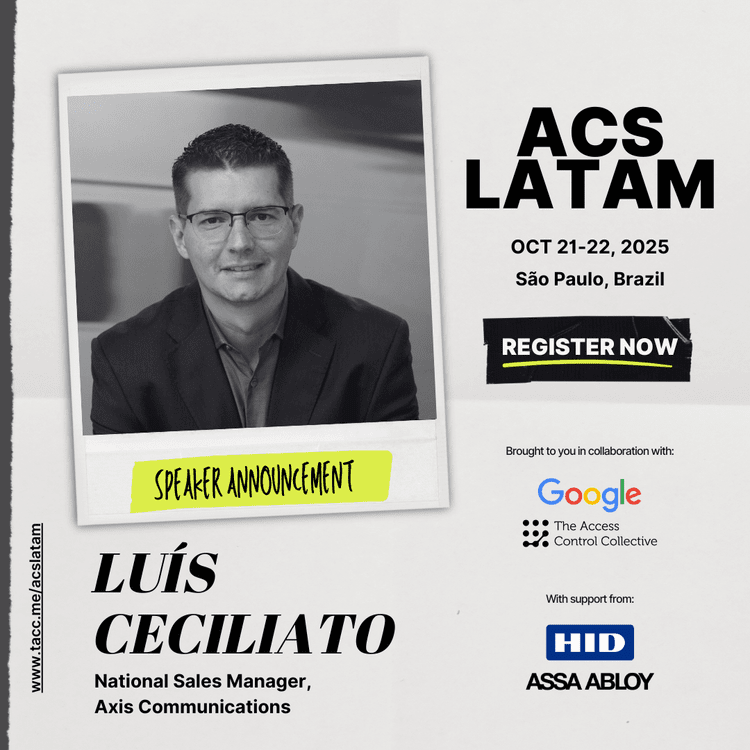
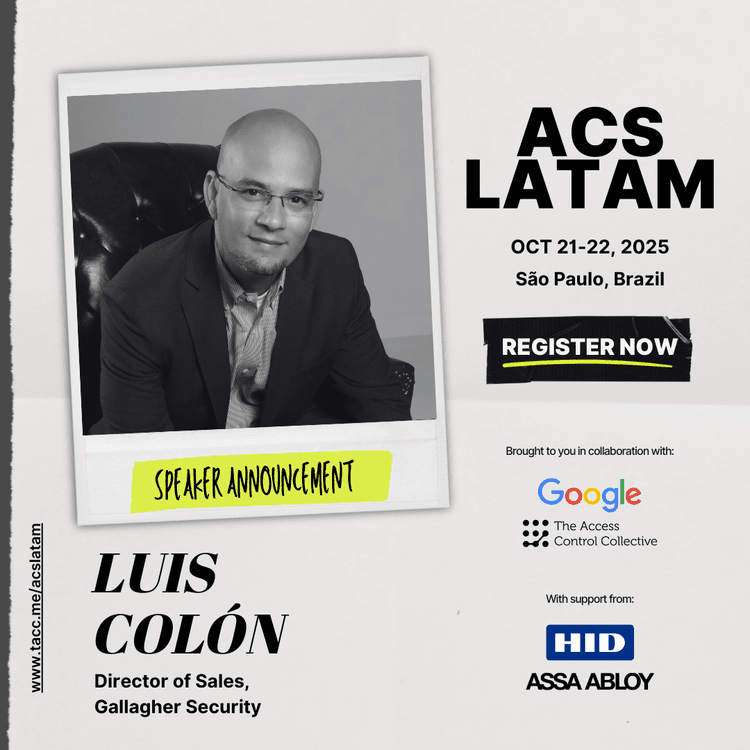
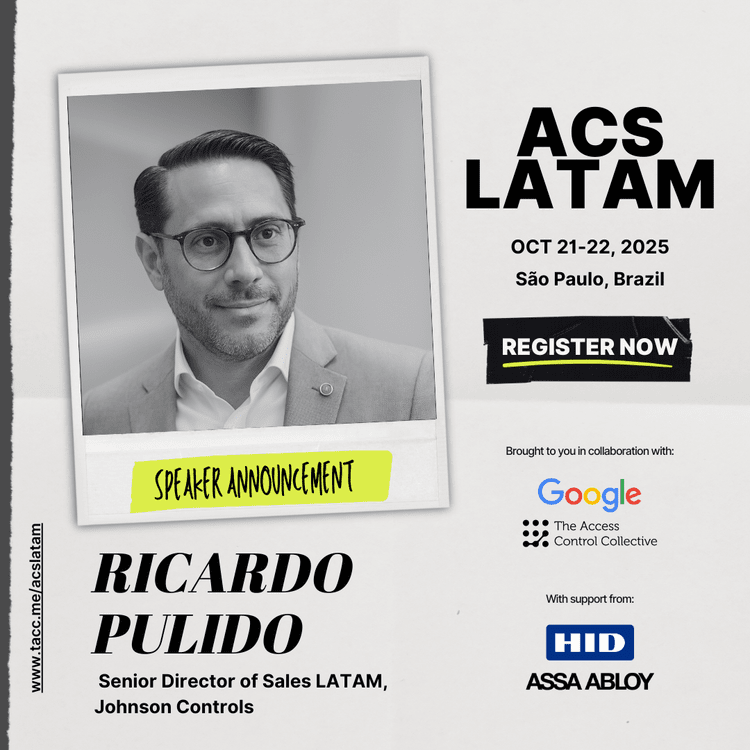
Here are some of the 20+ speakers scheduled to be at ACS LATAM:
PS: I am sure some of you may forward this, but please do so sparingly and encourage others to sign up here. Thank you!
