
Volume 121 | November 10, 2025


Click on the above image and use code sxst3gkbkn to hear the audio version.
Reminder to JOIN the The PhySec Collective community Slack channel to network, engage, and be part of something big! You can sign up here.

In São Paulo, an overriding question that was raised and a thread throughout wasn’t whether Latin America is ready for the next era of security… it was whether “who will lead it?”
I am always curious to see how messages are delivered. Are they “stage posture” or “reality of what’s happening in the field?”
From my perspective, the answer is “reality in the field,” and this aligns with the other market I’ve traveled to. However, the Latin American market presents its own unique opportunities and challenges.
That’s what we try to tackle at all ACS’s, especially when we focus regionally, and we accomplished it here.
Across ten panels and one keynote at ACS LATAM, a clear story emerged: Latin America isn’t playing catch-up in digital transformation. It’s leading. The region has the digital DNA, the talent, and the momentum. Yet there is a lot of work to be done. It became clear on stage that what’s missing is the alignment between the existing technology, a local community, infrastructure, and an industry that is still clinging to outdated operating models.
Below is a recap of the keynote and six of the ten panels (the other four will be covered in a follow-up Brief).
Thank you, Google, ASSA ABLOY, HID, and everyone who attended and helped make ACS LATAM a huge success. I want to single out Mikhail Strunkin of Google. He has single-handedly proven himself to be a true partner in our industry, with many of you and the industry as a whole. And I am happy to call him friend.
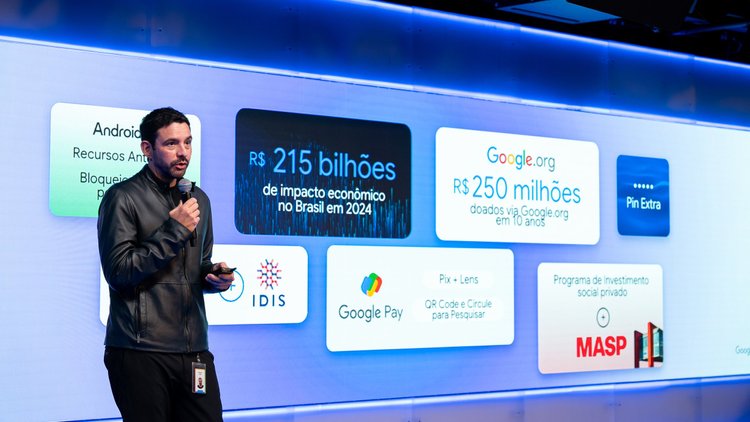
I wrote about Newton Neto’s Google keynote in Brief 119 in a different context, but I wanted to dig in a bit deeper into the message. Newton took the stage for Growth Zones and Pressure Points: A Strategic Look at LATAM, and he didn’t talk about search or ads, nor card readers or credentials. He talked about protein, floods, and data. He painted Google not as a tech company, but as “companies”… a healthcare company, a meteorological company, and many other types of companies…but, one obsessed with human systems, resilience, and then applied technology.
I’ll be honest, it was refreshing. It was such great framing.
His point was uncomfortable and straightforward: if an organization like Google can think that broadly about its purpose, why can’t you?
And, especially one that delivers such deep value as safety and security.
Newton shared data that still sticks with me. As mentioned in Brief 119, Brazil has an internet penetration rate of 89%, 188 million connected users, and more than 13,000 startups. 74% of small businesses already use AI. 75% of connected Brazilians use generative AI tools.
It prompted me to ask myself and others throughout the day, and it still resonates with me today.
If all of this is true, why does my hotel here in São Paulo still use mag stripe technology?
Why was the visitor management at the office building we were in so convoluted?
Why aren’t we seeing the adoption you can feel right around the corner?
The day's conversations were a constant reminder of two parallel universes overlapping and distant all at the same time.
It’s about “mindset.” Mindset leads to “priority.” Priority leads to “action”… or “stagnation.” You pick. We pick every day.
We have chosen stagnation with a hint of progress.
Sure, the answer we often got on stage when I asked “why” was “infrastructure.” Sure, no doubt that is true, but that, and most of what’s in the way, is solvable.
The future isn’t theoretical. The future isn’t waiting.
The future is what we want it to be. And the future can start today.
The problem isn’t access to technology; é a nossa mentalidade.
Here is a recap of 6 of the 10 panels.
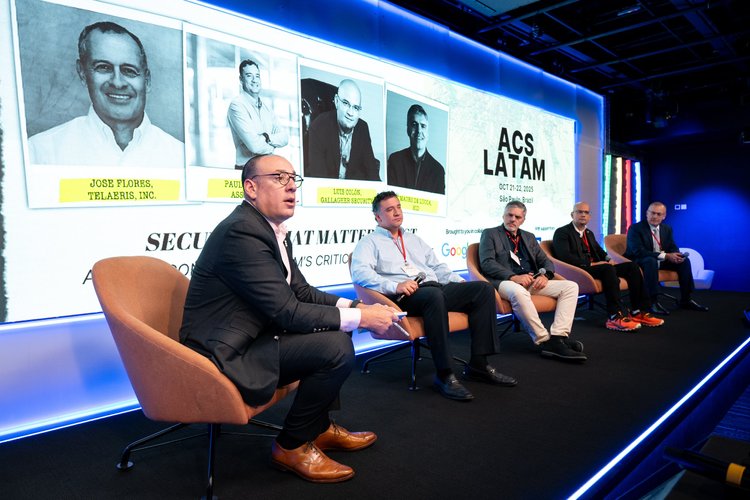
Panel 1: Critical Infrastructure and the Predictive Gap
The first discussion, Securing What Matters Most, brought together Jose Flores (Telaeris), Paulo Santos (ASSA ABLOY), Luis Colon (Gallagher Security), and Mauro de Lucca (HID).
Their message was clear: LATAM critical infrastructure doesn’t have a technology problem; it has a data problem. Too much of it used too late.
The conversation called for predictive systems, not reactive ones; for standards that govern commissioning and operations; and for deeper public-private partnerships. Everyone agreed that the region remains high-risk and underprepared.
The takeaway: Without global standards and shared accountability, modernization will remain episodic, rather than systemic.
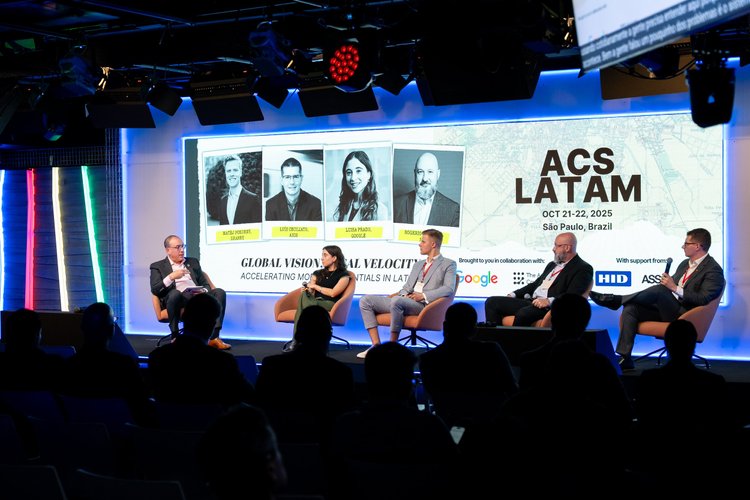
Panel 2: Mobile Credentials and Local Velocity
In Global Vision, Local Velocity, Matej Pokorny (Sharry), Luis Ceciliato (AXIS Communications), Luisa Prado (Google), and Rogerio Coradini (HID) explored the accelerating adoption of mobile credentials.
It was noted that “growth is up 60 percent year-over-year,” but the gaps to mass adoption are glaring: infrastructure, pricing, and education. While fintech adoption has exploded in the region with the use of PIX, stablecoins, and instant payments, access control remains lagging.
Their advice was very pointed: stop waiting for alignment. Build around what’s already working. LATAM’s fintech ecosystem has already proven that local innovation, open APIs, and user simplicity scale better than imported complexity.
My question: Why isn’t the local developer community engaging with our products at the same fever as they are with others?
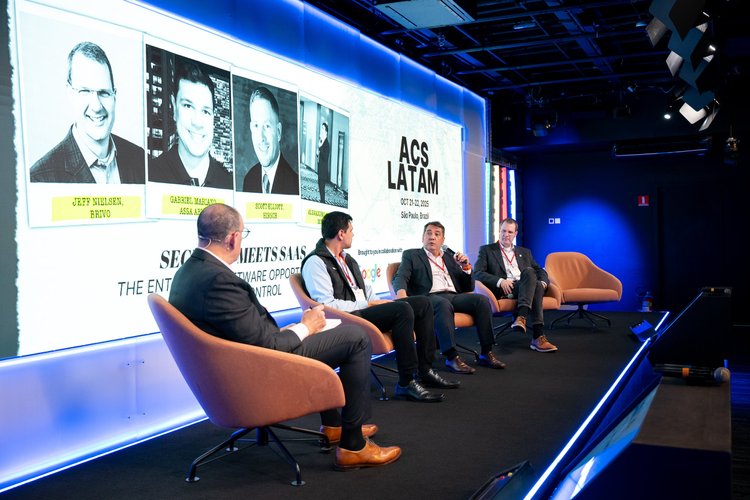
Panel 3: SaaS as the Next Platform
Security Meets SaaS with Jeff Nielsen (Brivo), Gabriel Mariano(ASSA ABLOY), and Alejandro Angeletti (Motorola) made one thing clear: the shift from hardware to software isn’t coming, it’s here.
Companies are shifting from CapEx to OpEx, reducing customer acquisition costs, and prioritizing user experience and lifetime value. Integrators are turning into consultants. Platforms are becoming “sources of truth.”
The opportunity isn’t just recurring revenue; it’s the reinvention of how security gets done.
My thought: I want to ensure that we also acknowledge the other truth: it’s not happening at scale and there is plenty of work to be done. That isn’t negative. In fact, the lack of scale gets me excited as I see it only as an opportunity ahead.
Panel 4: Platforms, Partners, and Profit
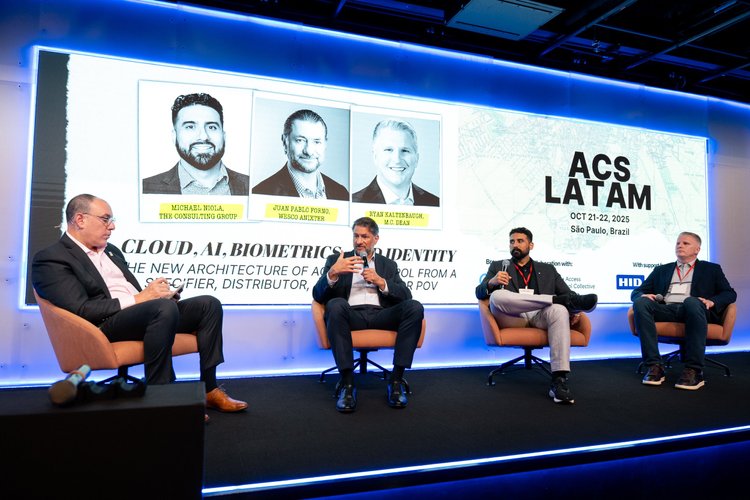
When Ryan Kaltenbaugh (MC Dean), Ricardo Vernizzi (HID), and Tino Urbina (Commend) took the stage for The New Access Control Value Chain, they challenged the room to rethink the ecosystem itself.
Distribution still drives the channel, but its influence is fading. The future will be defined by co-ownership, transparency, and speed. The audience was polled on what matters most to end users: not lower costs, but faster innovation.
The insight was telling to me: profit pools are shifting from hardware margins to software services and managed outcomes. Those who cling to the old stack risk becoming suppliers in someone else’s platform.
Panel 5: Mobile Credentials and the Margin Stack
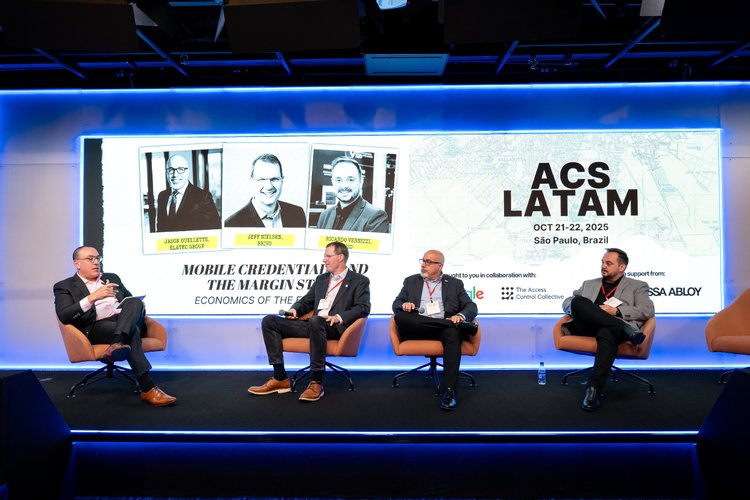
Jason Ouellette (ELATEC Group), Jeff Nielsen (Brivo), and Ricardo Vernizzi (HID) closed the day with an honest look at economics.
PIX and other payment innovations have redefined trust in Latin America. Access control can learn from that.
The discussion exposed a fundamental tension: cost versus value. Hardware-as-a-service is struggling, but new bundling and storytelling models, like packaging credentials, identity, and analytics, are emerging as viable paths forward.
Two panelists predicted that manufacturers would bear the greatest margin risk if they fail to adapt to the new market conditions. Integrators, they argued, have the most to gain.
The message is that identity is the new currency, and standards are the new regulator.
Throughout these sessions, the threads were clear to me.
-
Education is infrastructure. We talk about infrastructure in the sense of hardware already installed. But, every conversation returned to the topic of talent and training. We should treat education as infrastructure as well.
-
Open APIs are oxygen. Without interoperability, innovation suffocates… and it is. We lack the ability to tap external talent to push our limits.
-
Local innovation is leveraged. LATAM’s “digital fluency” is its superpower. Will they use it? No better angels are coming.
-
Data is the differentiator. The companies that learn faster will lead. And plenty are starting.
-
“We” over “Me.” Collaboration, not control, is how this region will scale.
As I mentioned above and wrote in Brief 119, no better angels are coming. The keynote was a mirror, not a map. It showed us what’s possible and how far we still have to go.
The truth is simple: LATAM’s digital transformation already happened. Ours hasn’t. We are the ones behind.
The opportunity now is to act “as if”…as if our industry already operates with the speed, openness, and human-centered design that define every other part of the digital economy.
Just be it.
If we do, we’ll fall forward into the world Newton described…one that is connected, data-literate, and user-obsessed, an industry that belongs in this century.
If we don’t, we’ll be the last ones holding the keys to doors no one uses anymore.
… I liked that ending. The inspiration of early morning treadmill walks ;) I’ll leave it there. More information on the other panels will be available shortly.
Now? Singapore and The Security Event Asia and the XForum.
PS: I am sure some of you may forward this, but please do so sparingly and encourage others to sign up here. Thank you!
