
Volume 33 | September 5, 2025
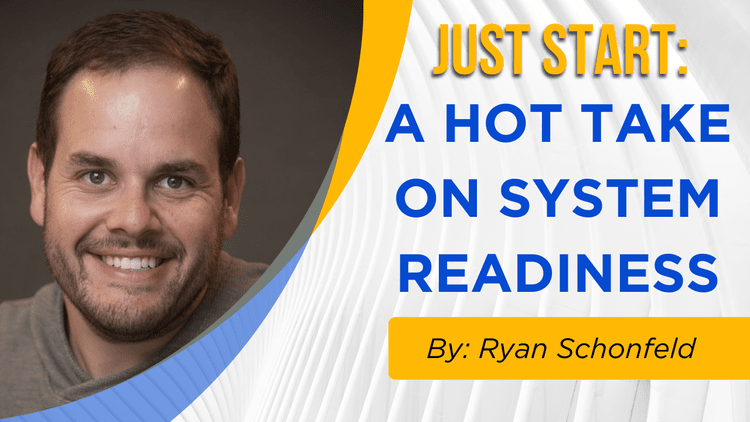
Ryan Schonfeld | Just Start: A Hot Take on System Readiness
Still waiting for your security system to be “ready” before making a move? This bold take challenges that mindset, calling out the real reasons behind the delays—and why the future of security depends on leaders who are willing to just start.
Alert Enterprise x The Access Control Collective | Want to Win in Access Control? Kill Your Legacy.
The access control industry is shifting fast—those clinging to outdated systems are being left behind. Discover why forward-thinking integrators embracing mobile tech are not just surviving the change, but thriving in it. Find the blog link below.
RealSense x The Access Control Collective | RealSense WhitePaper: The Ethical Application of Facial Authentication in Enterprise Access Control
Think facial authentication and ethics can’t coexist? This white paper challenges that assumption—revealing how smart regulation might be the secret to unlocking secure, privacy-first access control. If you care about the future of identity tech, this is a must-read.
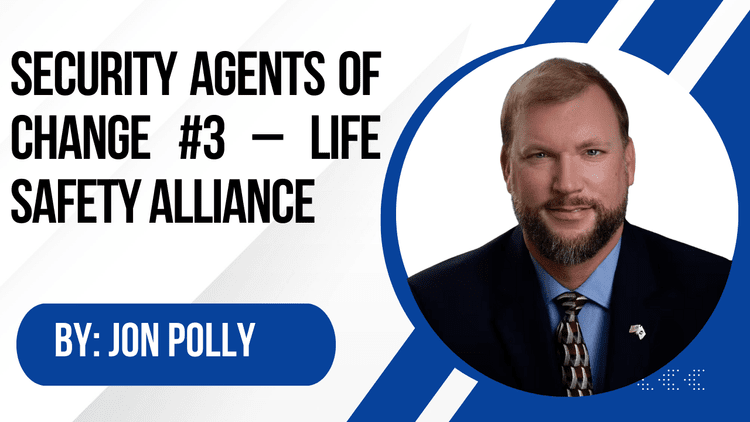
Jon Polly | Security Agents of Change #3 – Life Safety Alliance
This issue of Security Agents of Change pulls back the curtain on the Life Safety Alliance — a rising, invite-only organization redefining what it means to lead in the security industry through collaboration, credibility, and real action. If you're tired of pay-to-play awards and passive associations, this read might just restore your faith in what true industry innovation looks like.
The Access Control Collective | ACS LATAM
The Access Control Collective is heading to São Paulo for ACS LATAM 2025! In partnership with Google and with support from HID and ASSA ABLOY, this event is set to be a cornerstone gathering for the region. Don’t miss it. Find the link to register below.
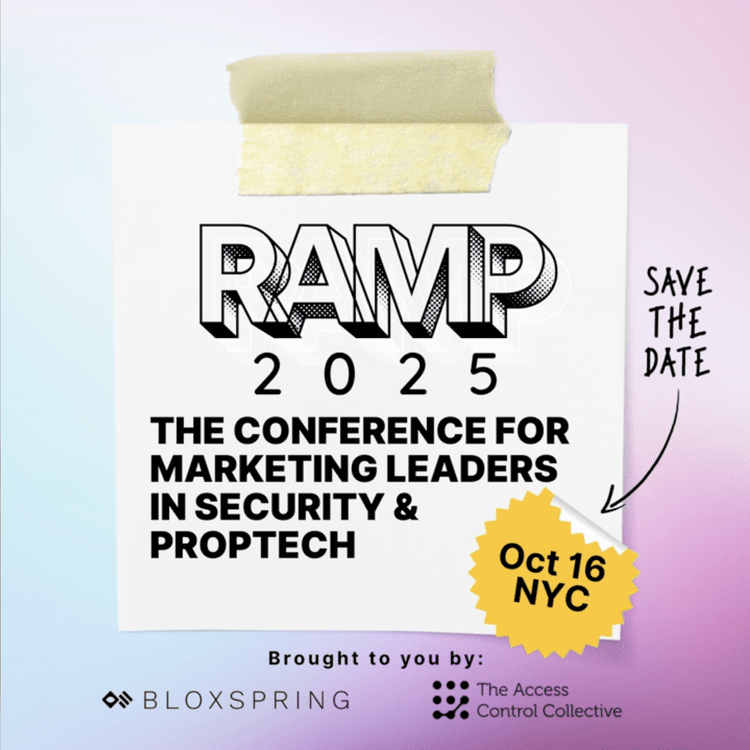
The Access Control Collective x Bloxspring | RAMP: The Conference for Marketing Leaders in Security and Protech
RAMP 2025 is a conference designed specifically for marketers in built environment technology and security—bringing industry leaders together in New York City for a full day of insight, innovation, and meaningful connection. Find the link to register below.
The Access Control Collective | PhySecJobs.com
Below you will find all of the latest jobs in the physical security industry.
Find them all below!
This take may come across as “spicy,” or like I’m down on systems teams. For those who don’t know me, I’ll start by saying that before starting HiveWatch I used to run Global Security Systems & Technology for a Fortune 500 company. Shortly after that I ran a consulting firm that helped organizations build tech-forward security programs. While I may now be on the manufacturer/software side of things, I do still have deep context when it comes to security programs as an end user.
In all of the conversations I have had with prospective and current customers I have learned: no security program or system is ever “done” and it’ll always be far from finished – and certainly far from functioning perfectly.
Yet somehow, so many conversations I have start the same way: “We’d love to move forward, but we need to get our system ready first.”
Here's the uncomfortable truth that you might not want to hear: Your system will never be “ready.”
Let me explain.
The Myth of the Perfect System
That gleaming, fully configured “doesn’t ever need to be touched again” security infrastructure you're chasing at the end of a rainbow? It doesn’t exist. The same way your program will never achieve zero risk. The reality is, improving your system is a practice, not an end state. It’s an ongoing initiative with no end date.
The Real Reason for the Pushback
Let's be honest about what's really happening when the systems team says they need more time to “clean up the data” or “upgrade the hardware”:
-
The right alarms are not getting to the right people
-
More than half the devices likely aren't configured properly
-
Implementing something new and unknown is uncomfortable and can feel like losing control
-
Many of the system problems stem from hardware in the field
-
In some cases, the systems team may even be “protecting their turf”
That systems administrator who's been running the same system for 10 years? They may see a new system or tool as a threat to their job security. If the security team can suddenly manage rules and automation without needing their expertise, where does that leave them? The reality is new platforms aren’t a threat to their job – the platforms make them better at their job and enable them to focus their attention on higher impact activities.
As I’ve gone out and witnessed for myself in various GSOCs in organizations of all sizes, the pattern is always the same. Many of the individuals providing the push back want to keep spending money on what they know, with vendors they trust (or who have been around forever), maintaining relationships that keep them indispensable. This is a big part of why so many companies are still on-prem with their access control. Or why when a systems person changes companies, all of a sudden the new company is doing a rip and replace. In most cases, the system that was there was probably fine, but more importantly, did the new system actually pull the organization forward or just increase the comfort of the systems team to something that’s familiar?
The Accountability Problem
Right now, your security operations exist in silos:
-
Some of the systems leaders decide which alarms to mask, but these decisions may not be aligned with operational priorities operations teams know which alarms matter, but often don’t get to influence the configuration
-
Leadership wants programmatic metrics, but gets buried in technical details
This creates a convenient accountability vacuum. When things go wrong, everyone can point fingers. When leadership asks tough questions, they get technical jargon instead of answers.
The bottom line is: there are platforms that change that equation. Suddenly, management can ask meaningful questions: How many alarms are we processing daily? What's our resolution rate? Why are we getting so many false positives from Building A versus Building B? How are our vendors performing against their SLAs? Who are our top performing vendors? Which systems or facilities have the most technical issues? Where can we reduce guard staffing or move from fixed to roving posts to consolidate spend?
That level of transparency can make some people very uncomfortable, but it’s a good thing – it’s what takes your program to the next level.
The "Just Start" Philosophy
I’ve started to embrace a saying across our company that’s now trickling into the message we give to potential customers: Just start.
You can spend an eternity planning, or you can start generating actionable data using a platform that works for you (not against you). The intelligence you gain from actually running a platform like this can enable you to make smarter investments, measure real return on investment, and drive programmatic improvements that trickle up to the C-suite through business goals met.
But your systems team might want you to believe the opposite. They want you to think that without perfect data cleanliness and flawless hardware configurations, you can't possibly succeed.
They're wrong.
Moving from Reactive to Strategic
Here's what happens when you stop waiting for perfect systems and just start:
-
You can automate a majority of your alarm resolution and elevate the real threats accordingly
-
You can automate the routine stuff and focus human resources on what actually moves the needle
-
You translate system and program data into executive insights
-
You create accountability across silos
-
You move from reactive firefighting to strategic security operations
The Bottom Line
Your CSO gets it. They see the value immediately. But progress is undermined by other members of the team who keep saying “not yet” and “we need more time.”
Those people will be retired before their systems are “ready.” The system is never ready.
If you choose to ignore this rhetoric, you might get to leverage a system that actually works for your security program instead of against it.
So here's the challenge to security leaders: Stop letting perfect be the enemy of good. Stop letting members of your team hold your security program hostage with promises of future readiness.
The data you need to make better decisions exists today. The automation that will free up your team's time is available now. The executive visibility that will transform how your organization thinks about security is one implementation away.
Just start.
Your future self will thank you. Your team? They'll adapt and get leveled up or get left behind

“There are winners and losers in every wave of innovation,” said Rob Lydic, President of Wavelynx. “Those who stick with analog, proprietary systems will be left behind.”
In the rapidly evolving access control industry, that wave is mobile—and it's already reshaping the competitive landscape. Organizations are no longer satisfied with rigid, outdated systems that limit flexibility and frustrate users. Instead, they’re demanding seamless, secure, mobile-first experiences that align with the way people live and work today.
Lee Odess, CEO of The Access Control Collective, doesn’t mince words:
“If you’re an integrator not leaning into mobile right now, you’re losing your future customers.”
The message is clear: integrators who fail to adapt risk falling behind. But those who invest in new skills, embrace open platforms, and align with innovative vendors are setting themselves up for long-term success. These forward-looking professionals are already seeing results—closing deals faster, standing out in competitive bids, and delivering smarter, more intuitive solutions that drive real ROI for their clients.
The choice is simple: evolve, or be replaced by those who do.
Click here to view the blog post.
What if the very regulations you believed were slowing down the adoption of facial authentication... were actually the foundation for doing it right?
That’s the surprising insight at the heart of our latest white paper, developed in partnership with The Access Control Collective and the team at RealSense:
The Ethical Application of Facial Authentication in Enterprise Access Control in Western Markets.
This paper explores how privacy laws and regulatory frameworks—often viewed as obstacles—can actually guide the responsible and scalable implementation of facial authentication technologies in enterprise environments.
Special thanks to Mike Nielsen, Eyal Rond, Penny Malsch, and the entire RealSense team for their invaluable collaboration on this important project.
Now available for download — click here.
Welcome to edition #3, episode #3, issue #3? Let’s go with that. Issue #3. I mentioned in issue #2 that I am a superhero and comic book fan, so just like comic books have issues, Security Agents of Change will have issue numbers. I will do my best to ensure the issues do not have issues.
As I mentioned in issue #2, Security Agents of Change are poised to be innovators to make change, creating the Art of the Possible – NOW!
While Security Agents of Change will primarily focus on tech companies driving innovative advancements in the security space, this issue will feature an organization making a significant impact in the security industry.
Cue the superhero reveal…
I have been involved in several security industry organizations for the last 20-plus years. Most are ones that every security practitioner has heard of. But there is a new kid on the block that is making some waves I want to give my nod to them, because they are bringing innovation and change to the security industry. The organization is the Life Safety Alliance (https://www.lifesafetyalliance.org/) or LSA.
I first heard about these folks, like many in the security industry, in July 2024 when they released their “Top 40 Leaders in Security & Life Safety” for 2024. A quick read through the winners was a veritable” who’s who” of the security industry. Selfishly, I wanted to know more. So I sought them out. Reached out to the organization. What I found was two-fold intriguing. First, not all of the Top 40 winners were part of the LSA. In fact, only a few were. Second, the mission, vision, and promise of the LSA were very intriguing.
Mission: "To be a global resource and authority on best practices for the Security & Life Safety industry through cooperation with trade associations, academic institutions, and members."
Vision: "To bring Security & Life Safety professionals together in the interest of International collaboration."
Promise: "To provide expert support in the areas of industry standards, professional growth, technology innovation, research, and certification."
WAIT! What?! A global security organization that values bringing together thought leadership to promote support and change in the security industry! To give members a stage to collaborate and create actual industry action, awareness, and facilitate more than just showing up to a meeting? Sign me up.
So that’s what I did. I asked to join the LSA. But here is the interesting thing. You don’t just join the LSA. You have to be sponsored. Thank you, Michael Gips, for taking a chance on me. The Life Safety Alliance is not for everyone, and not everyone is for the LSA, although I encourage everyone to see if we are for you. While they want to grow their membership, just giving them yearly membership dues is not enough. You have to be committed to more. And embarrassingly, I have not done what maybe I needed to have done over the last 10 months. The Life Safety Alliance is an Agent of Change, and I want to be an Agent of Change. The LSA is just one way I am attempting to do that.
The membership of LSA is still small, partly because it has only been active for a few years, and partly because it is intentionally limited. Because of their size and intentional limitations, everyone who joins is vetted to be an expert in their field. But here’s the thing, it’s not the good ol’ boys club that has plagued the industry, but rather thought leaders who actually are doing something. One thing that was also interesting to me, having been a part of a few industry organizations that have struggled with leadership, unlike other organizations, the leadership of LSA is unpaid and completely volunteer-led; typically, the first sticking point with any organization. What the LSA is doing is bringing thought leadership, including risk management, security technology, cybersecurity, life safety, and more to the table. It is not just an organization focused on physical security, and the members help tie together the neighboring industries of Life Safety and Cybersecurity. Wait, what? You mean there is an organization that is willing to reach across the aisles to leverage thought leadership from Life Safety and Cybersecurity into what Physical Security is doing? Hmm… “with great power comes great responsibility”.
The Life Safety Alliance is an Agent of Change. I think they are just beginning to break the ice on what could be a whole new chapter in thought leadership that leads the security industry.
Top 40 Leaders in Security and Life Safety
I mentioned earlier that I originally found the LSA because of the Top 40 Leaders in Security and Life Safety. Here’s what I also found out about that award. Two things. One, unlike other security industry “awards,” the Top 40 is not a pay-to-play award. Yes, you heard me. There are awards out there that, for the right money, you too can be an award winner. If you remember from “In Living Color”, “Homey don’t play that.” Two, membership in the LSA does not merit a Top 40 Leader. Membership in LSA does not mean you are guaranteed a spot as a top 40 Leader, although there are a few members who did receive Top 40 Leader in 2025.
The Top 40 Leader award was created to be a merit-driven award for security industry leaders. The Life Safety Alliance in 2024 identified more than 120 people who were providing thought leadership in the security industry. In 2025, that number jumped to more than 200 people who either registered or were invited by the LSA to submit. LSA Submission is not for the faint of heart, either. To be considered, applicants had to submit detailed information to the LSA for the previous calendar year. Each category and response was weighted, and most importantly, it was evaluated blind by a third party. The LSA took every step possible to prevent any chance of favoritism.
Categories for evaluation per calendar year (June-May) included:
Academic Positions, Authored Articles, Awards & Honors, Blog Posts (Non-LinkedIn), Board Positions, Books Written, Book Chapters Authored, Citations and Quotes, Fellowships, In-Person Presentations, LinkedIn Posts, LinkedIn Shared Content, Podcasts, Public Reports and Studies, Trainings Conducted, Volunteer Leadership Roles, Webinar Panels.
I don’t think it had anything to do with it, but I added in Industry Events like the @wineandsecurity event that @protechtsolutionspartners hosts at ISC West. If you are interested in that event, please send me a DM.
I am honored to have been one of the recipients of the Top 40 Leader award for 2025, and I hope to do enough to have a repeat in 2026. I would highly encourage anyone who is producing thought leadership to apply. Registration link is here: http://www.lifesafetyalliance.org/top40
Congratulations again and also to the rest of the 2025 Top 40 Leaders in Security and Life Safety
Obadare Peter Adewale Professor of Practice - Cybersecurity Melissa Agnes Farah B. Garry Bergin PC MSc CSyP MSI CPP SRMCP CTSP F.Sec.I.I FSyI F.ISRM Dave Cohen RPP M.ISRM Mike Croll Chris Cubbage CPP, CISA, GAICD Terry Cutler Shawnee Delaney Nicholas Dynon Jane Frankland MBE ✨ Michael Gips Alex Goldenberg Scott Goldfine Florian Haacke Yolanda Hamblen Kasia Hanson Mike Hurst, CPP® CPOI Eduardo Jany Kathy Lavinder Kirk MacDowell Taylor May, MBA Tim McCreight Bruce McIndoe Don Morron, MBA Fredrik Nilsson Kevin Palacios Elizabeth Parks Paul Sarnese, CHPA, MSE,MAS,CAPM Tyler Schmoker, MPA, LSSYB, PROSCI Dr. Gavriel (Gav) Schneider Gaston Hernan Schulmeister Jeffrey A. Slotnick, CPP, PSP Confidence Staveley Christopher Stitt Tino Urbina Tim Wenzel, CPP Alfredo Yuncoza DHC. CSSM. CPOI. CPO. CRM Matthew Porcelli, MSc, CPP, MSI, F.ISRM, FSyl
I also highly encourage anyone who is active in the physical security, life safety, or cybersecurity industries to look at the Life Safety Alliance as a place to share that thought leadership. It's not a perfect organization, but the things that the LSA is doing, getting involved with, and has on the roadmap is both important and industry-changing as well.
The Art of the Possible is NOW. It is exciting to see the @Life Safety Alliance and their members have that mindset of becoming Agents of Change, offering a fresh take on what we as a security industry can do. I make no apologies, I want to be an Agent of Change, not to tear down the security industry, but to help change mindsets and focus, before the industry gets left behind. Let's learn from the lessons of old, but be willing to grow using that knowledge.
ProTecht Solutions Partners, LLC is your security advocate: a security technology consulting firm dedicated to helping companies keep people and assets safe. We realize security technologies are part of a larger solution for most companies, with requirements to bring business intelligence, sustainability, and more. With ProTecht Solutions Partners, LLC, the system you implement is always tailored to the specific needs of your company. If this, or any of the technologies mentioned in Security Agents of Change, are interesting to your company, please reach out for a more in-depth discussion.

Below are the highlighted jobs and companies this week. New jobs are bolded.
-
- Regional Sales Manager - South - apply here
- Director of Sales - apply here
-
Lockmasters, Inc. - VP of Specialty Door Division - apply here
-
EyeOTmonitor - Account Executive - apply here
-
- Senior Product Manager, Government Solutions-North America – apply here
- Product Manager, Mercury Controllers – apply here
- Senior Product Manager, Readers – apply here
- Senior Product Manager, Biometric Readers – apply here
- Senior Software Engineer Java – apply here
-Pre-Sales Consultant – apply here
-Staff Engineer – apply here
-Channel Account Manager DACH – apply here
-End User BDM - Emerging Technologies – apply here
-Director of Quality – apply here
-Director of Product Management - Readers – apply here
-Sales Development Representative – apply here
-Product Manager, Credentials – apply here
-Business Development Leader, Controller Apps – apply here
-
Kastle - Project Manager, Implementations - apply here
